
Desserts
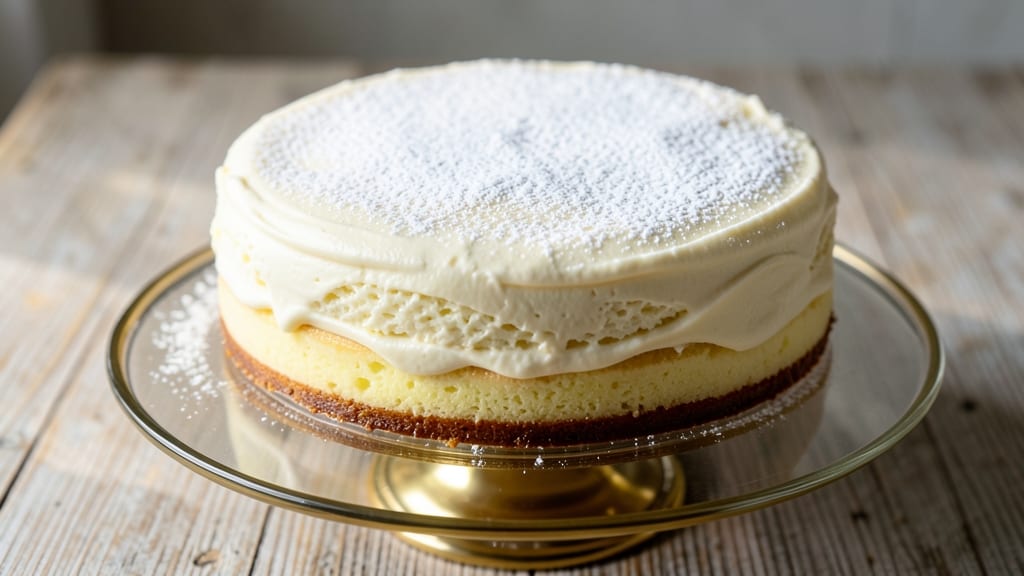
This steamed egg cake recipe delivers the perfect balance of silky layers and subtle vanilla infusion that makes every slice feel like a dessert masterpiece. 💛 The secret lies in the precise egg-to-sugar ratio and gentle steaming technique that creates a light, airy texture without a single crumb of cake flour.
I've perfected this method over years of baking, ensuring each batch achieves that signature tender crumb and delicate vanilla aroma that defines this classic dessert.
The beauty of this recipe is its simplicity—just eggs, sugar, and vanilla, steamed to perfection in a traditional bamboo steamer or modern electric steamer.
What sets it apart is the technique: beating the eggs to ribbons before folding in the sugar creates those signature silky layers, while the steaming process ensures even cooking without drying out the cake.
The result is a dessert that's elegant enough for special occasions but simple enough for everyday indulgence.
What you'll end up with is a cake so tender it practically melts in your mouth, with a delicate vanilla flavor that's neither overpowering nor subtle. The texture is what makes this recipe truly special—light as a cloud yet substantial enough to satisfy even the most discerning dessert lovers.
Each slice reveals those beautiful, even layers that are the hallmark of a well-made steamed egg cake.
This recipe works beautifully as a standalone dessert or paired with fresh fruit compote, making it versatile for any occasion. The steaming method also means you can prepare it ahead of time, allowing the flavors to meld even more beautifully.
Perfect for brunch gatherings, family dinners, or when you simply crave something light yet luxurious.
Ingredients for steamed egg cake
Six simple ingredients transform into a dessert masterpiece with just steaming time.
| Ingredient | Amount | Notes |
|---|---|---|
| Large Eggs 🥚 | 6 whole | Room temperature for best results |
| Granulated Sugar 🍚 | 1 ½ cups | Superfine preferred for silky texture |
| Pure Vanilla Extract 🌿 | 1 tbsp | High-quality Madagascar bourbon preferred |
| Unsalted Butter 🧈 | ¼ cup | Cold, cubed for even distribution |
| All-Purpose Flour 🌾 | ¼ cup | Sifted for smooth batter |
| Baking Powder 🧂 | ½ tsp | Freshly opened for best lift |
| Salt 🧂 | ¼ tsp | Fine sea salt preferred |
| Water 💧 | ¼ cup | Room temperature |
The eggs are non-negotiable here—use large eggs at room temperature for the silkiest texture. Trader Joe's or Whole Foods carry the best quality, but any store's large eggs work. Sugar matters too: superfine sugar dissolves faster for those signature layers, but regular granulated works if you pulse it in a food processor. For vanilla, Madagascar bourbon extract adds depth, but pure vanilla extract is fine. The butter should be cold—cubed and chilled—to create those delicate pockets of flavor without overmixing.
No superfine sugar? Pulse regular granulated sugar in a food processor until it's ultra-fine—about 30 seconds. Short on vanilla? Almond extract at half the amount adds a different but lovely note. Need to substitute butter? Coconut oil, fully solidified, works in a pinch, though it yields a slightly denser cake. The water is crucial—room temperature ensures even distribution, but if you're in a hurry, tap water works. For the flour, sift it with the baking powder and salt together to avoid lumps in the batter.
This cake keeps beautifully—covered at room temperature for 2 days or refrigerated for 4 days. For longer storage, slice and freeze portions for up to 3 months. The steaming method means it reheats perfectly: 20 seconds in the microwave or 10 minutes at 300°F restores that tender crumb. I always make an extra batch to freeze—perfect for spontaneous dessert cravings. Serve warm with a dusting of powdered sugar or fresh berries for an elegant finish.
Why You'll Love This Recipe
- No Steam Basket Needed: I’ll admit, I was skeptical too—until I realized you can use a heatproof bowl and a colander over boiling water. No fancy equipment, just what’s in your kitchen. The eggs and sugar foam up like magic, and honestly? The texture is worth the minimal effort.
- Vanilla Butter Bliss: That rich, buttery vanilla flavor? It’s the star. The melted butter gets folded into the egg mixture until it’s silky smooth, and the vanilla extract makes every bite feel like a little dessert. Between us, I’ve made this for breakfast and dessert—no judgment.
- Make-Ahead Magic: Slice it cold for a snack, warm it up for a quick dessert, or pack it for lunch. The cake keeps beautifully for days in the fridge, and reheating it just takes a few seconds in the microwave. My kids grab slices straight from the fridge on school mornings—no fuss, no complaints.
- Pantry Staple Power: Five ingredients, zero specialty items. Eggs, sugar, vanilla, butter, and flour—that’s it. If you’ve got those, you’re golden. I’ve made this on grocery-store budgets and last-minute runs, and it never lets me down. Plus, the leftovers? They disappear faster than I can say “seconds, please.”
Step-by-step instructions for steamed egg cake
Here's how to achieve that signature silky texture and delicate vanilla aroma every time.
👨🍳 Step 1: Prepare the Steaming Equipment and Ingredients
First, prepare your steaming setup. Line a heatproof bowl with parchment paper, leaving an overhang for easy removal. Place this bowl inside a steamer basket that fits snugly in your pot. Fill the pot with 2 inches of water and bring it to a boil over medium-high heat. Keep the water boiling gently throughout the cooking process.
While the water heats, separate the 6 whole large eggs into yolks and whites. Place the egg whites in a clean, grease-free bowl—they need to be completely free of any fat for proper whipping. Keep the yolks in a separate bowl. Let all ingredients, including the 1.5 cups granulated sugar and 0.25 cup water, come to room temperature for best results.
🍳 Step 2: Whip Egg Whites to Stiff Peaks
Using a stand mixer fitted with the whisk attachment, beat the egg whites on medium speed until soft peaks form. Gradually add the 1.5 cups granulated sugar while continuing to beat. Increase the speed to high and whip for 3-5 minutes until the meringue is glossy and holds stiff peaks when the whisk is lifted.
Here's the thing—don't rush this step. The sugar needs time to fully dissolve and create that stable structure. You'll know it's ready when the peaks stand straight up and don't flatten immediately. The meringue should be thick enough to hold its shape when you lift the bowl.
🥘 Step 3: Combine Yolks and Prepare the Batter
In a separate bowl, whisk together the egg yolks, 0.25 cup unsalted butter, 1 tbsp pure vanilla extract, 0.25 cup all-purpose flour, 0.5 tsp baking powder, and 0.25 tsp salt until smooth and fully combined. The mixture should be pale yellow and homogeneous.
Gently fold one-third of the whipped egg whites into the yolk mixture using a spatula, being careful not to deflate the meringue. Once incorporated, add another third and fold gently until just combined. Finally, fold in the remaining egg whites until the batter is smooth and no streaks remain. This folding technique ensures you maintain the airiness of the meringue while incorporating the yolk mixture.
⏰ Step 4: Steam the Cake to Perfection
Carefully pour the batter into the prepared parchment-lined bowl, smoothing the top with a spatula. Place the bowl in the steamer basket and cover with a clean kitchen towel. Steam over the boiling water for 1 hour and 15 minutes.
Don't lift the cover during steaming—this maintains even heat distribution and prevents the cake from collapsing. You'll know it's done when the top springs back when gently pressed with a finger and the center is just set (a toothpick inserted should come out clean with a few moist crumbs). The cake should have a slightly domed top and jiggle slightly in the center.
🍽️ Step 5: Cool and Serve
Remove the cake from the steamer and let it cool in the bowl for 10 minutes before inverting onto a serving plate. Use the parchment overhang to help lift it cleanly. Allow the cake to cool completely at room temperature before slicing—this prevents it from falling apart.
The finished cake should have delicate, silky layers with a tender crumb and subtle vanilla aroma. For best texture, serve at room temperature. This cake is perfect for brunch, dessert, or even as a light afternoon treat. Store leftovers covered at room temperature for up to 2 days or refrigerate for up to 3 days.
Pro Tips For Making Steamed Egg Cake
- Whisk Eggs Until Ribbon Stage: Stop when the egg mixture holds a slow ribbon when you lift the whisk—no need to overbeat. I learned this the hard way after making mine grainy twice; the second you see that thick, glossy trail, you’re golden.
- Melt Butter Fully: Use just enough heat to melt the butter completely—no lumps, no cold spots. Cold butter in the batter makes the cake dense, and you’ll end up with a sad, heavy texture instead of that light, fluffy steamed cake.
- Sift Flour Twice: Yes, twice. First before measuring, then again after mixing with sugar—this cuts clumps and ensures even distribution. My first attempt had flour pockets that made the cake uneven; now it’s smooth every time.
- Steam on Medium Heat: Low and slow is your friend—medium heat keeps the steam steady without boiling over. I used high heat once and ended up with a waterlogged mess; now I stick to a gentle simmer and adjust the lid if needed.
Make-ahead tips for this recipe
Prep Ahead for Perfect Texture
Beat the egg whites and yolk mixture separately the night before, then store them in airtight containers in the fridge. This gives the sugar time to fully dissolve and the eggs to chill slightly, creating a more stable batter.
When ready to bake, simply fold them together and steam as directed. The flavors meld beautifully overnight, and you'll avoid last-minute rushing. 💛
Steamer Setup in Advance
Assemble your steamer basket and parchment-lined bowl the evening before. Place it in your kitchen sink or a large bowl to catch any drips. This eliminates setup time on baking day and ensures your steamer is ready to go when you are.
Just add water and heat when you're ready to steam.
Freezing for Future Indulgence
Slice the fully cooled cake and freeze individual portions between layers of parchment paper in a freezer bag. This prevents freezer burn and makes it easy to thaw just what you need.
To serve, microwave a slice for 15-20 seconds or warm it in a 300°F oven for 5 minutes—both methods restore that tender crumb perfectly. I keep frozen slices on hand for spontaneous dessert cravings.
Make-Ahead Serving Ideas
Prepare the cake up to 3 days ahead and store it covered at room temperature. For a special touch, brush the top with a simple vanilla glaze (mix 2 tbsp powdered sugar with 1 tsp vanilla extract and 1 tsp water) just before serving.
This adds a beautiful shine and enhances the vanilla flavor without altering the delicate texture.
Steaming Schedule for Busy Days
If you're hosting a brunch or dinner party, start the steaming process 1 hour before your guests arrive. The cake continues to set as it cools, so it will be perfectly firm by serving time.
Keep it covered with a clean towel while it steams to maintain even heat and prevent drying. This timing ensures you can focus on other preparations without worrying about the cake.
Portion Control for Leftovers
Slice the cake into 6 equal portions before storing to make serving easier later. Wrap each slice individually in plastic wrap and refrigerate. To reheat, microwave each wrapped slice for 10-12 seconds—just enough to restore warmth without drying it out.
This method keeps the cake's signature silky texture intact for up to 4 days in the fridge. 💡
Nutrition facts
Frequently asked questions
Why does my steamed egg cake turn out dense instead of silky? Overmixing the egg whites or under-whipping them to stiff peaks is the most common cause.
Can I use this recipe without a bamboo steamer?
Any steamer basket that fits snugly in your pot works perfectly. For electric steamers, use the cake pan that comes with it. Just ensure there's 2 inches of water in the bottom and maintain a gentle boil throughout the 1 hour and 15 minutes cooking time. Cover with a towel to prevent drying.
How do I know when the cake is fully cooked?
The cake is done when the top springs back when gently pressed and a toothpick inserted in the center comes out with just a few moist crumbs. It should also have a slightly domed top and jiggle slightly in the center. Never lift the cover during steaming—this disrupts the even heat distribution.
What's the best way to store leftovers?
Store the cake covered at room temperature for up to 2 days or refrigerate for up to 4 days. For longer storage, slice and freeze portions between parchment paper in a freezer bag. To serve, microwave a slice for 15-20 seconds or warm in a 300°F oven for 5 minutes for perfect texture.
Can I add fruit or chocolate to this recipe?
While this traditional recipe relies on the purity of its simple ingredients, you can absolutely add variations! Fold in 1/2 cup chocolate chips or 1/2 cup finely chopped fruit (like raspberries or blueberries) when combining the yolk mixture with the egg whites. Just be gentle to avoid deflating the batter.