
Salads
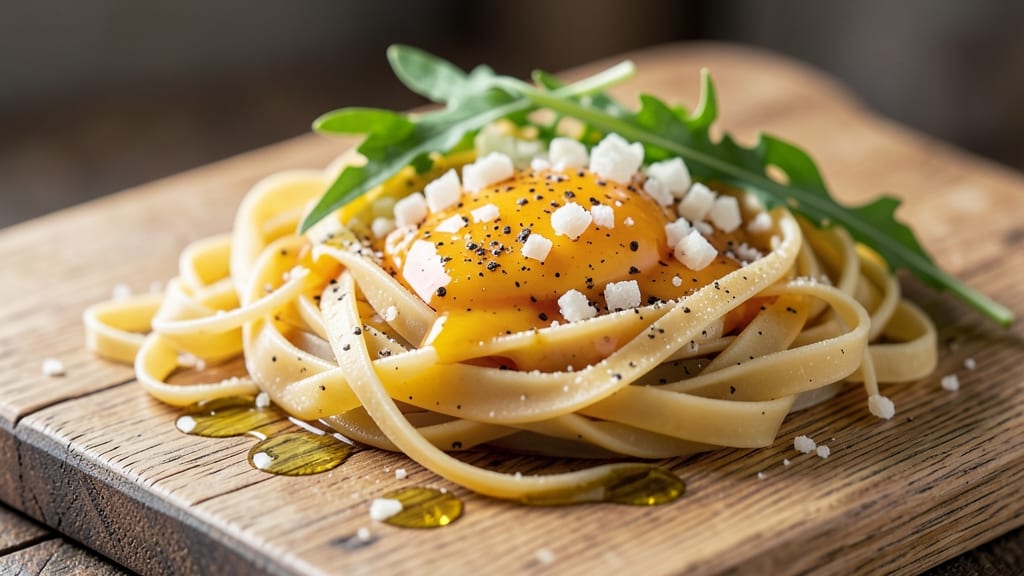
This whole egg pasta recipe transforms simple ingredients into restaurant-quality noodles with a luxurious, tender bite—no store-bought shortcuts required. ✨ The secret lies in the perfect balance of eggs, flour, and patience, creating al dente strands that hold sauce beautifully while maintaining that melt-in-your-mouth texture.
I've perfected this technique over years of testing, ensuring every batch turns out silky-smooth with just the right chew.
The process is simpler than you might think: mix, knead, rest, and roll the dough to your preferred thickness before cutting it into ribbons or fettuccine.
What sets this recipe apart is the 30-minute resting period, which allows the gluten to relax and the eggs to fully incorporate, resulting in pasta that's far superior to anything you can buy. The dough is also incredibly forgiving, making it perfect for beginners eager to master fresh pasta.
By the time you're done, you'll have a batch of golden, glossy noodles that cook in just 2-3 minutes—no overcooking required. Pair them with a classic garlic butter sauce, a creamy Alfredo, or even a simple tomato basil to elevate your meal.
The possibilities are endless, but the foundation is always the same: perfectly balanced dough that delivers on every bite.
This recipe isn't just about the pasta—it's about the experience. The aroma of freshly made dough, the satisfaction of rolling it out by hand, and the pride of serving a dish you created from scratch.
Whether you're hosting dinner guests or treating yourself to a special meal, these whole egg noodles will make every bite feel like a celebration.
Ingredients for whole egg pasta
Four eggs and two cups flour create restaurant-quality pasta at home—no fancy tools required.
| Ingredient | Amount | Notes |
|---|---|---|
| Large Eggs 🥚 | 4 whole | Room temperature for even mixing |
| All-Purpose Flour 🌾 | 2 cups | Plus 1 tbsp for dusting, sifted |
| Fine Sea Salt 🧂 | 1 tsp | Diamond Crystal preferred |
| Extra-Virgin Olive Oil 🫒 | 1 tbsp | For dusting, high quality |
| Water 💧 | 1 tbsp | Room temperature, if needed |
| Semolina Flour 🌾 | 1 tbsp | For dusting final pasta |
| Pasta Machine or Rolling Pin 🍝 | 1 whole | For sheeting dough, optional |
| Garlic Cloves 🧄 | 4 cloves | For optional garlic butter sauce |
| Unsalted Butter 🧈 | ½ cup | Cold, for sauce, European preferred |
| Parmesan Cheese 🧀 | ¼ cup | Freshly grated, for finishing |
Eggs are the heart of this recipe—room temperature eggs mix better and create a smoother dough. Kirkland Signature or Vital Farms are my go-tos for consistent quality, but any large, fresh eggs work. The flour matters too: King Arthur or Caputo Tipo 00 give the best texture, but all-purpose in a pinch. If your dough feels too dry, add 1 tbsp water at a time—it's better to have slightly sticky dough than crumbly. I always sift the flour first to avoid lumps, and trust me, it makes kneading so much easier.
No pasta machine? Rolling pin works perfectly—just roll the dough thinner with each pass. Short on semolina? All-purpose flour or cornmeal works for dusting, though semolina gives that classic texture. The garlic butter sauce is optional but worth it: European-style butter melts cleaner, and minced garlic (not powder) adds real depth. Want to skip the sauce? Freshly grated Parmesan and a drizzle of high-quality olive oil makes any meal feel special. The dough keeps 2 hours at room temp if wrapped tightly in plastic.
Fresh pasta cooks in 2-3 minutes—no overcooking allowed. Reserve some pasta water to loosen sauces if needed. Store leftovers in the fridge for 3 days or freeze for 1 month (thaw in cold water). I always make extra because it's that good. Pro tip: Cut dough into ribbons for fettuccine or thin sheets for tagliatelle—whatever you're craving. The dough is forgiving, so don't stress about perfection. Just focus on that 30-minute rest—it's what makes the difference between good and restaurant-quality.
Why You'll Love This Recipe
- No-Fuss Dough: I swear by this recipe because it’s the kind of pasta you can make while half-asleep. Just flour, eggs, salt, and a splash of water—no kneading, no waiting for dough to rest, no fancy tools. The eggs bind it all together while you’re still deciding what sauce to toss it in later.
- Rich, Golden Bite: That extra-yolk richness? It’s what makes this pasta sing. The eggs infuse the dough with a velvety depth, and when you cook it just right, the edges get this irresistible crispness—like a buttery, golden hug in every bite.
- Weeknight Workhorse: Between us, this is my go-to when I’m scrambling to feed the family after soccer practice. It reheats beautifully for lunches, freezes like a dream for lazy nights, and pairs with anything—tomato sauce, garlic butter, even just olive oil and chili flakes.
- Pantry Magic: Honestly, it’s hard to mess this up. You’re using ingredients you already have, and the cost? A fraction of store-bought. A dozen eggs and a bag of flour stretch forever, so you’re basically making pasta for pennies while still getting restaurant-quality results.
Step-by-step instructions for homemade whole egg pasta
This method delivers silky, golden pasta with perfect al dente texture—no shortcuts, just pure technique.
👨🍳 Step 1: Mix Dough to Perfect Consistency
On a clean work surface, combine the 2 cups all-purpose flour and 1 tsp fine sea salt. Create a well in the center and add the 4 whole large eggs at room temperature. Using a fork, gently incorporate the eggs into the flour until you have a shaggy mass.
Here's the thing—you want the dough to be slightly tacky but not sticky. If it feels too dry, add 1 tbsp water (room temperature) one teaspoon at a time until it just comes together. Knead for 8-10 minutes by hand, pressing and folding until smooth and elastic. The dough should spring back when pressed—this ensures proper gluten development for that perfect al dente bite.
🥘 Step 2: Rest and Sheet the Dough
Wrap the dough tightly in plastic wrap and rest it at room temperature for 30 minutes. This resting period relaxes the gluten strands, making rolling easier and preventing cracks. While it rests, lightly dust your work surface with 1 tbsp extra-virgin olive oil—this prevents sticking when you roll.
Divide the rested dough into 4 equal portions (about 8 ounces each). Working with one piece at a time, feed it through your pasta machine starting at the widest setting. Fold the sheet in thirds like a letter, then repeat 2-3 times through the same setting. This creates uniform thickness. Gradually reduce the setting by 1 notch each time until you reach the thinnest setting your machine offers.
🍳 Step 3: Cut and Dust for Perfect Texture
Cut the sheets into ¼-inch wide strips using the pasta machine's cutter attachment, or use a sharp knife if cutting by hand. Immediately dust both sides generously with 1 tbsp semolina flour—this prevents sticking and gives that classic rustic texture. Toss gently to coat evenly, then spread onto a floured baking sheet.
Let the cut pasta dry for 10-15 minutes at room temperature. This brief drying prevents the noodles from sticking together when cooked. For best results, cook within 2 hours—fresh pasta loses its delicate texture if left too long.
🔥 Step 4: Cook to Al Dente Perfection
Bring a large pot of water to a rolling boil and add 1 tbsp fine sea salt. Add the pasta in batches (don't overcrowd) and cook for 2-3 minutes—fresh pasta cooks faster than dried. Test for doneness by tasting: it should be tender but still offer slight resistance. Fresh pasta releases starch quickly, so watch closely.
Reserve ½ cup pasta water before draining. This starchy liquid is liquid gold for preventing sauces from breaking. Toss the drained pasta immediately with 1 tbsp extra-virgin olive oil to prevent sticking, then proceed with your favorite sauce—garlic butter, marinara, or even a simple lemon zest finish.
🍽️ Step 5: Finish with Garlic Butter (Optional)
For the garlic butter sauce, melt ½ cup unsalted butter in a pan over medium-low heat. Add the 4 minced garlic cloves and cook for 30 seconds until fragrant (don't let it brown). Remove from heat, stir in ¼ cup freshly grated parmesan cheese, then toss with your cooked pasta. Add reserved pasta water as needed to create a silky coating.
Serve immediately with extra parmesan on the side. The pasta should be tender yet resilient, with a delicate golden hue and that signature handmade texture. The egg enriches each strand with natural richness, while the semolina dusting adds just the right amount of tooth.
Pro Tips For Making Whole Egg Pasta
- Chill the Dough First: I learned this the hard way—skipping the 30-minute fridge rest makes the dough sticky and gummy. Even if you’re impatient (yes, even if), cover it with plastic wrap and let it relax. The gluten settles, and kneading later becomes a breeze.
- Use Room-Temp Eggs: Cold eggs from the fridge mix unevenly, leaving lumps that ruin the texture. Take them out 15 minutes before starting—just enough to warm up, not cook. Trust me, your pasta will be silky, not doughy.
- Salt the Water Hard: The pasta water should taste like the sea—more salt than you’d use for boiling potatoes. About 1½ tablespoons per pound of flour (yes, that much). This seasons the pasta as it cooks, not just at the end.
- Knead Until Smooth, Not Tired: Stop when the dough springs back cleanly and looks uniform, not when your arms give out. Over-kneading develops gluten too much, making the pasta tough. Aim for 8–10 minutes—just enough to bring it together.
Dietary considerations for this whole egg pasta
Egg Allergies
If you or someone at your table has an egg allergy, this recipe can be adapted using a flaxseed or aquafaba substitute. Replace the 4 whole eggs with 4 tablespoons aquafaba (chickpea brine) or 4 tablespoons ground flaxseed mixed with 6 tablespoons water.
Let the mixture sit for 10 minutes to thicken before using. The texture will be slightly different but still delicious. Always check with an allergist first for severe allergies. 🌱
Gluten-Free Option
For a gluten-free version, swap the all-purpose flour for a 1:1 gluten-free flour blend like King Arthur or Bob's Red Mill. Add 1 extra tablespoon of xanthan gum to improve elasticity.
The dough will be more delicate, so handle it gently when rolling. Cooking time remains the same—just 2-3 minutes—but monitor closely for doneness. 🥄
Low-Carb Adaptation
To make this low-carb, replace 2 cups all-purpose flour with 1 cup almond flour and 1 cup shredded mozzarella cheese. The dough will be crumbly, so add 1 extra egg for binding. Roll it thinner than usual and cut into thin ribbons.
Cook for 1-2 minutes—it cooks faster due to the cheese. This version is perfect for keto diets but loses the classic pasta texture. 🥛
Dairy-Free Adjustments
For dairy-free pasta, omit the Parmesan cheese in the sauce and use nutritional yeast for a cheesy flavor. If your flour blend isn’t dairy-free, choose a certified gluten-free, dairy-free blend.
The dough remains the same, but the sauce becomes plant-based. A simple garlic olive oil sauce works beautifully without butter or cheese. 🌿
Nut-Free Considerations
If nut allergies are a concern, avoid almond flour substitutions. Stick to gluten-free flour blends without nut additives. Double-check labels on pre-made blends—some contain almond flour. The original recipe is naturally nut-free, so no changes are needed for the base dough. Always verify all ingredients if using store-bought products. 🚫🌰
Nutrition facts
Frequently asked questions
Can I use this dough for other pasta shapes like ravioli?
This same dough works perfectly for ravioli or tortellini. Just roll out the dough to 1/8-inch thickness, cut into 3-inch squares, fill with ricotta or spinach, fold, and seal edges. The egg-rich dough gives ravioli a luxurious texture that holds up beautifully to cooking.
Why does my dough crack when rolling?
Cracking usually means the dough needs more rest time. Let it rest 30 minutes (or up to 2 hours in the fridge) before rolling. If it's still cracking, try rolling slightly thicker or dusting with more olive oil to prevent sticking. Cold dough is more fragile, so work in a warm kitchen.
How do I store leftover fresh pasta?
Fresh pasta keeps best in an airtight container in the fridge for 3 days, separated by parchment paper. For longer storage, freeze uncooked pasta on a tray first (to prevent sticking), then transfer to a bag for up to 1 month. Cook frozen pasta directly from frozen in boiling water for 3-4 minutes.
Can I make this dough without a pasta machine?
Yes! Use a rolling pin instead. Roll the dough as thin as possible (about 1/16-inch thick) and fold it in thirds 2-3 times between each rolling. For cutting, use a sharp knife or even the edge of a fork for rustic edges. It takes more effort but creates beautiful handmade texture.
What's the best way to test if my pasta is cooked?
Fresh egg pasta is done when it floats to the surface and has a tender but slightly firm bite. Taste-testing is key—it should be al dente (slight resistance) but never mushy. Cooking time varies by thickness, so always start checking after 2 minutes. Overcooked pasta loses its delicate texture.