
Salads
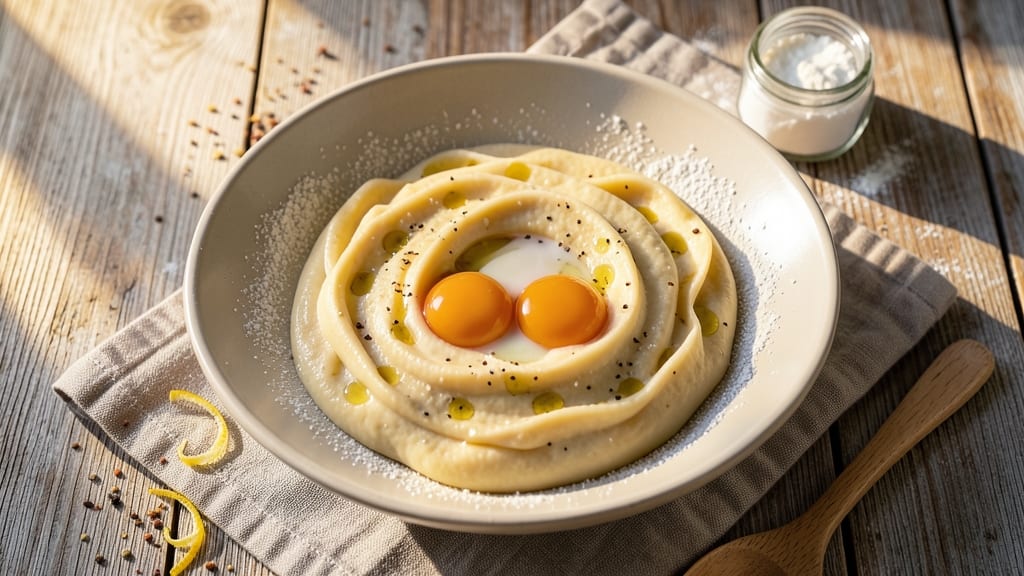
This whole egg pasta dough recipe transforms simple pantry staples into silky ribbons that rival any Italian trattoria. The secret lies in the perfect flour-to-egg ratio—just 100 grams of flour per egg—creating a dough that's tender yet sturdy enough for hand-rolling.
I've perfected this no-knead method over years of testing, ensuring even beginners achieve professional results with minimal effort.
The beauty of this recipe is its versatility—use it for classic tagliatelle, delicate farfalle, or rustic pappardelle. The dough rests for 30 minutes, allowing gluten to relax and making rolling effortless.
For extra flavor, fold in spinach, herbs, or colored flours before shaping. The key technique? Rolling the dough paper-thin and cutting immediately to prevent sticking.
What you'll end up with is pasta that's al dente in just 2-3 minutes of cooking, with a delicate texture that clings beautifully to sauces. The egg richness creates a natural golden hue and subtle nuttiness that elevates any dish.
Whether paired with classic ragù or zesty lemon butter, this homemade pasta delivers restaurant-quality results every time.
Perfect for feeding a crowd or treating yourself to a special meal, this recipe scales beautifully while maintaining its signature texture. The best part? You'll never want to buy dried pasta again. Let's get started on making your fresh pasta masterpiece.
Ingredients for whole egg pasta dough
Eight simple ingredients transform into restaurant-quality pasta ribbons with just 30 minutes rest.
| Ingredient | Amount | Notes |
|---|---|---|
| All-Purpose Flour 🌾 | 2 cups | Sifted for smooth texture |
| Large Eggs 🥚 | 4 whole | Room temperature for even mixing |
| Fine Sea Salt 🧂 | 1 tsp | Diamond Crystal preferred |
| Extra-Virgin Olive Oil 🫒 | 1 tbsp | High quality for richness |
| Water 💧 | ¼ cup | Room temperature for smooth dough |
| Semolina Flour 🌾 | ¼ cup | For dusting and rolling |
| Fresh Basil Leaves 🌿 | ⅛ cup | Optional for green pasta |
| Spinach Leaves 🥬 | ⅛ cup | Optional for green pasta |
| Purple Sweet Potato 🍠 | ¼ cup | Optional for orange pasta |
| Parchment Paper 📄 | 1 sheet | For rolling and cutting |
The flour is non-negotiable—King Arthur or Caputo Tipo 00 if you want to splurge, but regular all-purpose flour works perfectly fine for home cooks. Eggs should be large and room temperature—cold eggs make the dough tough. I always grab organic eggs from the grocery store because they have more flavor, but any brand works. The olive oil adds richness, so pick a fruity, extra-virgin bottle—none of that cheap stuff. For colored pasta, farmers market greens or sweet potatoes give the best natural hues. Pro tip: chop the sweet potato into tiny pieces for even color distribution.
No semolina? Rice flour or cornmeal works in a pinch for dusting. Running out of basil? Spinach or kale works just as well for green pasta—just make sure it's finely chopped. The dough can be too sticky if you overmix, so add water one tablespoon at a time until it just comes together. For extra flavor, add a pinch of garlic powder or red pepper flakes to the dough before rolling. And if you're feeling fancy, fold in a tablespoon of nutritional yeast for a cheesy note without dairy. The dough should be smooth but slightly tacky—like Play-Doh, not glue.
This dough keeps beautifully—wrap tightly in plastic and refrigerate for up to 2 days. For longer storage, freeze between parchment sheets for 3 months. Thaw overnight in the fridge before rolling. The best part? Make extra and freeze portions—nothing beats fresh pasta straight from the freezer. When rolling, keep a bowl of flour nearby to prevent sticking. And if the dough cracks while rolling? Just gently press it back together—it's normal and won't affect the texture. The key is to roll it thin enough to cook in 2-3 minutes, but not so thin it tears.
Why You'll Love This Recipe
- No Pantry Fuss: The ingredients are already in your fridge and cabinet—flour, eggs, salt, olive oil, and water. That’s it. No weird substitutions or forgotten spices lurking in the back of your cupboard. Honestly, I’ve made this on a whim with whatever eggs were left in the carton, and it still turned out rich and tender.
- Rich Without Effort: The whole eggs add a velvety depth you won’t get with just yolks or water. That golden olive oil finish? It’s the secret weapon—just a light brush before rolling, and suddenly your pasta has this subtle, buttery richness that makes it taste homemade. (Yes, even on a Tuesday night.)
- Weeknight to Dinner Party: You can toss this dough in a bowl while you prep sauce, then roll it out in 10 minutes flat. Need fettuccine for spaghetti night? Done. Craving fresh tagliatelle for company? Also done. Between us, my husband doesn’t even notice when I serve homemade—until he takes the second helping.
- Leftovers That Don’t Suck: Unlike store-bought dough that dries out or gets gummy, this keeps for days in the fridge. Freeze half the batch for another night, and it thaws faster than takeout. I’ve even reheated it straight from frozen in a pan with a splash of water—crispy edges, no sad rubberiness. Budget win, time win.
Step-by-step instructions for whole egg pasta dough
This no-knead method delivers silky ribbons every time—no fancy tools required!
Create the Base Dough
In a large bowl, combine the 2 cups All-Purpose Flour and 1 tsp Fine Sea Salt. Give it a quick whisk to distribute the salt evenly. Create a well in the center and add the 4 whole Large Eggs and 1 tbsp Extra-Virgin Olive Oil. Pour in the 0.25 cup Water and let it sit for 2 minutes. The flour will start absorbing the liquid, forming a shaggy dough.
Use a wooden spoon to gently mix the ingredients from the center outward, gradually incorporating the flour into the wet ingredients. You're aiming for a rough, sticky dough that pulls away from the bowl sides. If it feels too dry, add 1 tsp more water; if too wet, sprinkle in 1 tbsp more flour. The dough should hold together when pressed but still feel slightly tacky—this ensures tender, not chewy, pasta.
Rest and Prepare for Rolling
Lightly dust a clean work surface with 0.25 cup Semolina Flour. Turn the dough onto the surface and gently shape it into a rough rectangle about 1-inch thick. Wrap it tightly in plastic wrap and let it rest for 30 minutes at room temperature. This resting period relaxes the gluten, making the dough easier to roll and preventing cracks during cutting.
While the dough rests, prepare your rolling station. Lay the 1 sheet Parchment Paper on the work surface and lightly dust it with semolina flour. If using the optional color variations, blend the 0.125 cup Fresh Basil Leaves or 0.125 cup Spinach Leaves (or 0.25 cup Purple Sweet Potato for orange) into the dough during this step by folding them into the edges before wrapping. The color will infuse beautifully during rolling.
Roll and Cut Perfect Ribbons
Unwrap the rested dough and place it back on the floured work surface. Using a rolling pin, roll the dough as thinly and evenly as possible—aim for about 1/16-inch thickness. Rotate the dough 90 degrees after each roll to maintain even pressure. If the dough resists rolling or sticks, dust with more semolina flour as needed.
Once you've achieved your desired thickness, carefully transfer the rolled dough to the prepared Parchment Paper. Use a sharp knife or pasta cutter to slice the dough into ¼-inch wide ribbons. For fettuccine, roll slightly thicker (~1/8-inch) and cut into ½-inch wide strips. The dough should hold its shape without tearing—if it does, let it rest 10 more minutes before rolling again.
Cook to Al Dente Perfection
Bring a large pot of water to a rolling boil and add 1 tbsp salt. Gently add the pasta ribbons in batches, stirring immediately to prevent sticking. Cook for 2-3 minutes until the pasta floats to the surface and is al dente—it should be tender but still offer slight resistance when bitten. Drain immediately and toss with a little Extra-Virgin Olive Oil to prevent sticking.
Serve immediately with your favorite sauce—this dough's silky texture absorbs flavors beautifully. For best results, cook fresh pasta within 30 minutes of cutting. If you must store, freeze the dried ribbons on a floured tray for 1 hour before transferring to a bag. Cook from frozen by adding 1 extra minute to boiling time.
Pro Tips For Making Whole Egg Pasta Dough
- Weigh Your Flour: I learned this the hard way—scooping flour from the bag packs it too loosely, and your dough ends up dry and crumbly. Use a kitchen scale for 250 grams (or about 2 cups packed tightly). The extra density guarantees a silky, cohesive dough that won’t fall apart when rolling.
- Mix by Hand First: Skip the food processor for the first 2 minutes—your hands are better at judging texture. Press the dough with your palms until it forms a shaggy mass before kneading. This step ensures even distribution of olive oil and eggs, so you don’t end up with sticky patches or dry spots later.
- Rest the Dough Longer: Thirty minutes isn’t enough. Wrap your dough in plastic and let it rest for at least 1 hour (or overnight in the fridge). This relaxes the gluten, so it rolls out smoothly and doesn’t snap when cutting. Trust me, your future self will thank you—no more frustration with stubborn dough.
- Use Room-Temp Eggs: Cold eggs from the fridge will cool the dough, making it tough to handle. Let them sit out for 30 minutes before cracking them in. The slight warmth helps the flour absorb the liquid evenly, so your pasta stays tender and doesn’t turn out gummy. (Yes, even if you’re impatient like me.)
Essential equipment for great whole egg pasta dough
Basic Rolling Tools
You don’t need a fancy pasta machine to make perfect ribbons! A simple wooden rolling pin (like the OXO Good Grips model) works wonders for even pressure. For home cooks, I recommend starting with a marble rolling surface—it’s cool to the touch and prevents the dough from sticking.
If you’re on a budget, a large cutting board with a smooth finish also does the trick. 💪
Flour Essentials
Semolina flour is non-negotiable for dusting and rolling—it creates that signature toothsome texture. I keep a 1-pound container of Barilla semolina on hand for both rolling and finishing. For colored doughs, King Arthur’s all-purpose flour blends beautifully with natural ingredients like spinach or sweet potato. Store these in airtight containers to prevent moisture absorption. ✨
Optional Extras
A pasta cutter (like the Marcato Atlas) makes cutting ribbons effortless, but a sharp chef’s knife works just as well. For colored doughs, a mini food processor (like the Cuisinart DLC-2BC) helps blend greens or sweet potatoes into the dough smoothly.
If you’re freezing pasta, grab a floured baking sheet and parchment paper to prevent sticking. 📄
Sauce Pairing Gear
No equipment needed here—just a wooden spoon for tossing and a large bowl for catching drained pasta. For finishing touches, keep fresh herbs (like basil) and grated Parmesan (a microplane works best) on hand.
A small saucepan is perfect for quickly heating sauces like brown butter or tomato ragù to pair with your fresh pasta. 🍝
Storage Solutions
For short-term storage, plastic wrap keeps dough fresh for up to 2 days in the fridge. Freezing? Use quart-sized freezer bags with parchment paper between layers to prevent clumping.
A sharp knife comes in handy for cutting frozen pasta directly into boiling water—no thawing required. Label bags with dates to track freshness! ❄️
Nutrition facts
Frequently asked questions
Why does the dough need to rest for 30 minutes?
The 30-minute rest relaxes the gluten strands, making the dough easier to roll and preventing cracks when cutting. This step also helps distribute the moisture evenly, ensuring tender, not chewy, pasta ribbons. Think of it as giving the flour and eggs time to become best friends!
Can I use this dough for stuffed pasta like ravioli?
Yes! This dough works perfectly for ravioli, though you may need to adjust the thickness to about 1/8-inch. Roll out two sheets, cut circles with a glass or cutter, fill with ricotta or meat mixtures, then seal with a fork or your fingers. The same resting and rolling techniques apply—just handle gently to avoid tearing.
What if my dough cracks while rolling?
Cracking happens when the dough isn't rested enough or is too dry. Gently press the cracks back together with your fingers and let the dough rest 10 more minutes before rolling again. If it's still cracking, add 1 tsp water and knead lightly. Pro tip: Keep your rolling surface and hands lightly floured to prevent sticking.
How do I know when the pasta is fully cooked?
Fresh pasta cooks in just 2-3 minutes—test it by tasting! It should be tender but still slightly firm (al dente). Look for the ribbons to float to the surface and turn opaque. Drain immediately to prevent overcooking, which makes pasta mushy. Toss with olive oil right after draining to preserve texture.
Can I make this dough without a rolling pin?
Use a bottle with a smooth surface or even a heavy pan as a rolling substitute. For extra-thin sheets, fold the dough in half and roll repeatedly. The key is patience—build up to the desired thickness gradually. This method works best for wider noodles like pappardelle.