
Side Dishes
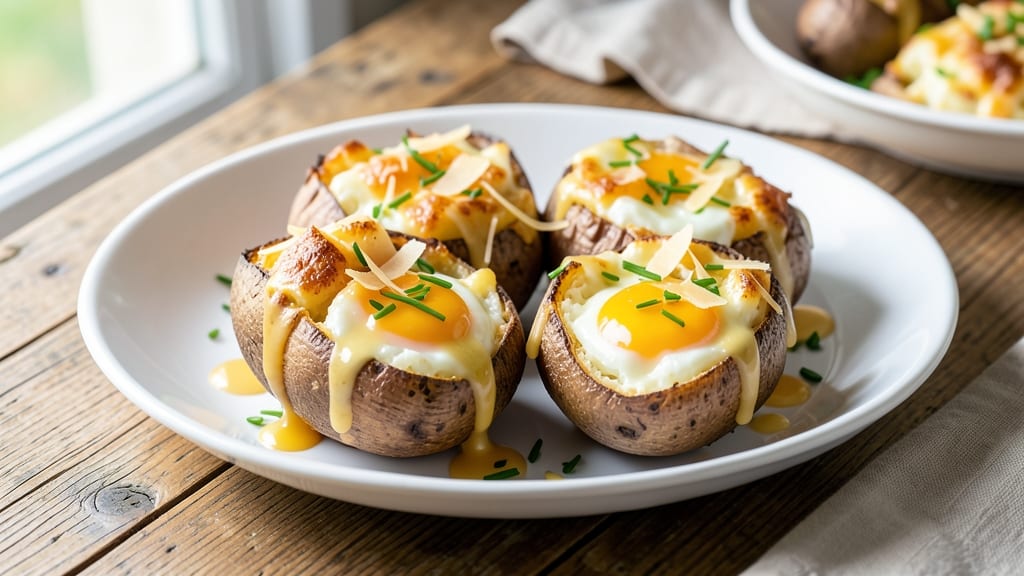
This twice-baked potato with egg recipe delivers the ultimate comfort food experience—crispy golden crust on the outside and a creamy, custardy egg center that oozes with every bite.
The secret lies in baking the potatoes twice: first to achieve tender perfection, then again after stuffing with a rich egg mixture for that signature silky texture. I've perfected this technique over years of testing, ensuring the crust stays crispy while the egg remains velvety and perfectly set.
What sets this recipe apart is the balance of textures and flavors. The first bake transforms russet potatoes into fluffy, buttery clouds, while the second bake—after mixing in a creamy egg custard—creates a golden, crackly exterior that contrasts beautifully with the soft interior.
Optional toppings like sharp cheddar, crispy bacon, or a dollop of sour cream add layers of flavor, making this dish feel indulgent yet simple to prepare. The key is patience: letting the potatoes cool slightly before stuffing ensures they hold their shape when they return to the oven.
By the time you're done, you'll have a restaurant-quality dish that's foolproof and ready in under an hour. The aroma of buttery potatoes baking fills the kitchen, while the final result—a crispy crust encasing a rich, eggy center—is pure comfort food at its finest.
This recipe is perfect for a hearty dinner, game day, or even a cozy weekend brunch. Let's get started on creating your next favorite dish.
The beauty of this recipe lies in its versatility. Swap the scrambled egg for a poached or soft-boiled egg if you prefer a runny yolk, or add sautéed mushrooms and green onions for extra depth.
The possibilities are endless, but the foundation—a crispy crust and creamy filling—remains the star. Whether you're feeding a crowd or treating yourself, this twice-baked potato will leave everyone asking for seconds.
Ingredients for twice baked potato with egg
Four russets and a handful of pantry staples—this is all you need for crispy, golden crusts and silky egg centers.
| Ingredient | Amount | Notes |
|---|---|---|
| Russet Potatoes 🥔 | 4 whole | Medium size, about 1 lb each |
| Unsalted Butter 🧈 | ½ cup | Melted, full-fat for richness |
| Large Eggs 🥚 | 4 whole | Room temperature for best mixing |
| Sharp Cheddar Cheese 🧀 | 1 cup | Shredded, aged for best flavor |
| Milk 🥛 | ¼ cup | Whole milk for creaminess |
| Salt 🧂 | 1 tsp | Kosher or sea salt preferred |
| Black Pepper 🌶️ | ½ tsp | Freshly ground for best flavor |
| Garlic Powder 🧄 | ½ tsp | For subtle depth of flavor |
| Green Onions 🌱 | 3 whole | Sliced, for garnish |
| Crispy Bacon 🥓 | ½ cup | Chopped, optional topping |
| Sour Cream 🥛 | ¼ cup | For serving, optional |
| Chives 🌿 | 2 tbsp | Chopped, for garnish |
Russet potatoes are non-negotiable here—their low moisture and fluffy texture are perfect for this dish. Idaho potatoes are ideal, but any russet will work. Grab the medium-sized ones (about 1 lb each)—they're easier to handle and bake evenly. If you can't find russets, Yukon Golds are a decent backup, though they won't be as crispy. The butter matters too—unsalted, full-fat gives the best flavor without adding extra salt. I always buy Land O'Lakes or Plugrá for this recipe, but any good-quality brand works. Store potatoes in a cool, dark place until ready to use—never refrigerate them or they'll turn gummy.
No sharp cheddar? Parmigiano-Reggiano or Gruyère work beautifully for a different flavor profile. The eggs should be room temperature—cold eggs won't mix well with the butter and milk. For extra richness, swap milk for heavy cream. Want to skip the bacon? Crispy fried onions add a nice crunch instead. The green onions and chives are just for garnish, but if you're feeling fancy, toss in some sautéed mushrooms with the egg mixture. And trust me, freshly ground pepper makes all the difference compared to pre-ground.
Potatoes keep for 2 weeks in a cool pantry, but once baked, store them in the fridge for up to 3 days. Reheat at 375°F for 15-20 minutes until the crust is crispy again. The egg mixture can be prepped ahead and stored in the fridge for 1 day—just let it sit at room temperature for 10 minutes before stuffing. For meal prep, bake the potatoes ahead, cool completely, then refrigerate. Stuff and bake just before serving to keep that perfect crispy crust. The leftovers? Even better the next day—if there are any.
Why You'll Love This Recipe
- One-Pan Magic: I swear by this recipe—just bake, scoop, mix, and bake again. No chopping, no fussing, and one sheet pan that’s basically self-cleaning. That’s right, the only mess is the good kind (cheese on your fingers).
- Cheesy Crispy Core: The sharp cheddar melts into gooey perfection while the edges stay delightfully crispy. Honestly, the first time I bit into that creamy center with that golden crust, I nearly dropped the fork. It’s the kind of dish that makes you forget about salads for a week.
- Meal Prep MVP: Here’s what sold me—make a batch on Sunday, and you’ve got lunch covered for days. The egg keeps it rich but stable, so it reheats like a dream (microwave or oven, no judgment). My kids grab these straight from the fridge like they’re fresh out of the oven.
- Budget Stretch: Russets and eggs are cheap, but this recipe feels like a splurge. Between us, I’ve fed four people for under $10 with this—plus, the leftovers taste just as good cold the next day. It’s my go-to when I need hearty, filling food without breaking the bank.
Instructions for perfectly crispy twice-baked potatoes
Here's how to create that golden crust and creamy center every time.
Bake and Mash the Potatoes
Preheat your oven to 425°F and prick each of the 4 whole russet potatoes with a fork about 8 times. Place them directly on the oven rack (no pan needed) and bake for 45-50 minutes until completely tender when pierced with a sharp knife. You'll know they're done when the knife slides in easily with no resistance.
Remove the potatoes from the oven and let them cool slightly for 5 minutes. Then cut them open lengthwise and carefully scoop out the flesh, leaving a ¼-inch thick shell. Mash the flesh in a large bowl with the 0.5 cup melted unsalted butter, 1 cup shredded sharp cheddar cheese, 0.25 cup milk, 1 tsp salt, 0.5 tsp black pepper, and 0.5 tsp garlic powder until completely smooth and creamy.
Stuff and Bake for Crispy Crust
Spoon the mashed potato mixture back into the potato skins, pressing down gently to fill them completely. Place the stuffed potatoes on a baking sheet lined with parchment paper and spread the 0.5 cup crispy bacon evenly over the tops. Bake at 400°F for 25-30 minutes until the tops are golden brown and crispy.
Here's the thing—don't open the oven door during baking or you'll lose that crispy texture. The potatoes are done when the edges are golden brown and the filling is heated through. If you're unsure, check with a thermometer—the center should reach 160°F.
Top with Eggs and Finish Baking
Remove the potatoes from the oven and make a small well in the center of each one. Crack 1 large egg into each well, being careful not to break the yolks. Return to the oven and bake for 10-12 minutes until the egg whites are set but the yolks remain runny.
I like to watch the egg whites just start to set around the edges—that's when they're perfect. The yolks should still be completely liquid when you serve them. If you prefer fully cooked eggs, bake for another 2-3 minutes, but you'll lose that classic runny yolk experience.
Garnish and Serve Warm
Remove the potatoes from the oven and let them cool for 2 minutes. Then garnish each one with 2 tbsp chopped chives and 3 sliced green onions. Serve immediately with 0.25 cup sour cream on the side for dipping.
This is where the magic happens—those crispy edges, creamy filling, and perfectly runny yolk all come together. The bacon adds a nice smoky contrast to the cheesy potato filling. Don't skip the garnish; it adds freshness and color that makes the dish look restaurant-quality.
Pro Tips For Making Twice Baked Potato With Egg
- BAKE POTATOES TO 200°F INSIDE: I used to pull them out at 210°F and wondered why they’d go gummy when stuffed. Russets need that lower internal temp—200°F—so they’re fluffy but still hold shape when you slice them open. A meat thermometer is worth its weight in butter here.
- GRATE CHEESE FRESH, NOT STORED: Pre-shredded cheese has anti-caking agents that make it clump like sad snow in your potatoes. Sharp cheddar needs to melt smoothly, so grate it yourself right before mixing—just a quick 30-second job with a box grater. Your filling will thank you.
- DON’T OVERMIX THE FILLING: I learned this the hard way—whipping the egg, milk, and cheese mixture like a smoothie turns your potatoes into dense, sad bricks. Stir just until combined, then let the egg’s natural thickness do the work. A few streaks of unmixed cheese? That’s fine. Glue-like batter? Not fine.
- USE COLD BUTTER FOR CRUST: Slather the skins with cold, cubed butter (not melted) before the final bake. It’ll brown beautifully and add that crispy contrast without making the insides greasy. Yes, it’s one extra step, but it’s the thing that matters most when you’re serving this to people who’ll notice details.
Common mistakes when making this dish
Overbaking the Potatoes
One of the biggest mistakes I see is overbaking the potatoes during the first round. If you bake them too long at 425°F, they'll turn dry and crumbly instead of fluffy.
I've ruined more than a few batches by letting them sit in the oven an extra 10 minutes—don't make that mistake! Test with a fork: it should slide in easily with no resistance.
Once they're done, let them cool for 5 minutes before scooping to avoid losing filling later. 🥔
Skipping the Cooling Step
Rushing to stuff warm potatoes is a recipe for disaster. The filling will leak out when you try to spoon it back in, and your crispy crust will turn soggy. Always let the potatoes cool for 5 minutes after baking before cutting.
This gives the skins time to firm up and hold their shape. Trust me, 5 minutes of patience saves you from a messy cleanup.
Using Cold Eggs
Cold eggs from the fridge won't mix properly with the warm potato filling, creating lumps in your mixture. Room temperature eggs blend smoothly and create that perfect creamy texture. Take your eggs out of the fridge 30 minutes before you start mixing.
If you forget, just let them sit in warm water for 5 minutes—it works in a pinch! 🥚
Opening the Oven Too Soon
Peeking at your potatoes while they're baking at 400°F for the second time will ruin that golden crust. Every time you open the oven door, you let out heat and moisture, which makes the tops turn soft instead of crispy.
Stay strong—only open the oven when you're ready to check for doneness. If you're unsure, use an instant-read thermometer to check for 160°F internal temperature.
Overfilling the Potatoes
Stuffing your potatoes too full will cause them to burst open in the oven, ruining that beautiful presentation. Leave about ¼-inch of space at the top before pressing down the filling.
This gives the egg room to expand and prevents messy overflow. I like to use a spoon to gently press the filling down while leaving a small well for the egg.
Overcooking the Eggs
The magic of this dish is that runny yolk, so don't let your eggs overcook! Bake them for only 10-12 minutes at 400°F—the whites should just start to set while keeping the yolks completely liquid.
If you prefer fully cooked eggs, bake for 2-3 extra minutes, but you'll lose that classic restaurant-style texture. Keep an eye on them in the final minutes! 💛
Nutrition facts
Frequently asked questions
Can I make these ahead of time?
Yes! Bake the potatoes first and refrigerate them unstuffed for up to 3 days. Stuff and bake just before serving to keep that perfect crispy crust. The egg mixture can also be prepped ahead and stored in the fridge for 1 day—just let it sit at room temperature for 10 minutes before stuffing. Reheat leftovers at 375°F for 15-20 minutes to restore crispiness.
What if I don't have russet potatoes?
You can use Yukon Golds as a backup, though they won't be as crispy. For best results, stick with russets—their low moisture content and fluffy texture are ideal. If you must substitute, choose waxy potatoes like red potatoes, but expect a softer crust. The filling will still be delicious, just with a different texture contrast.
How do I get the egg to stay perfectly runny?
Bake the eggs for only 10-12 minutes at 400°F—the whites should just start to set while the yolks remain completely liquid. For extra insurance, place the potatoes on the middle oven rack where it's slightly cooler. If your oven runs hot, reduce the temperature to 375°F. The key is timing: watch closely in the final minutes!
Can I make this dish vegetarian?
Skip the bacon and use vegetarian cheese like cheddar or a plant-based alternative. Add sautéed mushrooms, spinach, or caramelized onions to the egg mixture for extra flavor. For a crispy topping, try breadcrumbs mixed with olive oil and herbs instead of bacon. The dish will still be hearty and satisfying.
Why did my potato skins get soggy?
This usually happens from one of two mistakes: opening the oven too soon during the second bake (releasing moisture) or not letting the potatoes cool 5 minutes before stuffing. For extra crispiness, brush the skins with melted butter before the final bake. Also, make sure your oven is fully preheated—cold spots can cause uneven cooking.