
Breakfast & Brunch
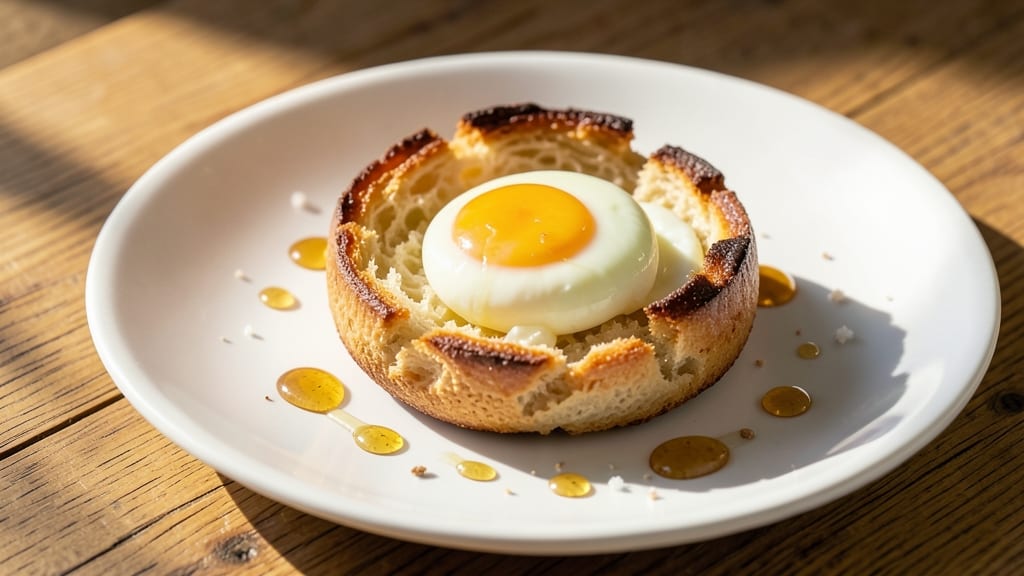
This soft boiled egg in a biscuit recipe transforms a simple breakfast into a restaurant-worthy dish with just 15 minutes of hands-on time.
The secret lies in nailing the perfect soft-boiled egg—runny yolk, tender white—while baking a biscuit with a crisp, golden crust that holds its shape when sliced open.
I developed this technique after years of experimenting with brunch dishes, and it’s now my go-to for weekend mornings when I want something elegant yet effortless.
The foundation starts with precise egg cooking: a 6-minute boil in gently simmering water yields that ideal creamy center, while the biscuit’s flaky layers trap the egg’s warmth. Using a biscuit cutter> to create the hole ensures even baking and a clean presentation—no messy edges or uneven doneness.
The key is working quickly once the egg is ready, so the biscuit stays warm while you assemble.
What you’ll end up with is a dish that looks like it belongs on a Southern brunch menu: a golden biscuit> split open to reveal a perfectly nestled egg, its yolk still glistening.
The contrast between the crisp crust and silky yolk is pure satisfaction, and the simplicity makes it feel special without requiring advanced skills. Serve with a pat of butter melting into the yolk or a sprinkle of flaky salt for that final touch.
This recipe scales beautifully for brunch gatherings or keeps things intimate for two. The technique works with store-bought biscuits in a pinch, but homemade delivers that extra flaky texture. Let’s get started—your taste buds (and Instagram feed) will thank you.
Ingredients for soft boiled egg in a biscuit
Four eggs, one golden biscuit cutter, and 15 minutes transform breakfast into brunch magic.
| Ingredient | Amount | Notes |
|---|---|---|
| Large Eggs 🥚 | 4 whole | Room temperature for even cooking |
| All-Purpose Flour 🌾 | 1 ½ cups | Sifted for flaky texture |
| Cold Unsalted Butter 🧈 | ½ cup | Cut into small cubes |
| Milk 🥛 | ¾ cup | Whole milk preferred |
| Baking Powder 🌶️ | 2 tsp | Freshly measured |
| Salt 🧂 | 1 tsp | Fine sea salt preferred |
| Flaky Sea Salt 🧂 | 1 tbsp | For finishing yolk |
| Biscuit Cutter 🍞 | 1 whole | 3-inch diameter preferred |
| Butter 🧈 | 2 tbsp | Softened for melting |
| Ice Water 💧 | 1 cup | For ice bath |
The eggs are non-negotiable—room temperature is key for even cooking. Parmalat or local farm eggs work best; avoid those with thin shells. For the biscuit, King Arthur flour if you can find it, or any all-purpose brand. The butter? Cold cubes create flaky layers—don’t skip chilling. Milk should be whole for richness, but 2% works in a pinch. Pre-measure everything before starting: the biscuit cutter needs to go in warm dough, and you only have a few minutes before the egg cools.
No biscuit cutter? Rim of a glass or can works, but edges won’t be as clean. Short on butter? Olive oil or shortening keeps the biscuit tender, though texture changes slightly. The ice bath for eggs is critical—1 cup ice water in a bowl with ice cubes (not just tap water). For the yolk finish, Maldon flaky salt is ideal, but any flaky sea salt does the trick. Pro tip: Use a thermometer for the egg water—160°F is perfect for that runny center.
Eggs stay fresh in the fridge for 3 weeks after boiling, but best within 2 days for this recipe. Biscuit dough can be prepped 1 hour ahead and chilled—just let it warm to room temp before shaping. Leftovers? Freeze biscuits (without egg) for 1 month350°F for 5 minutes to revive crispness. The egg? Eat it fresh—no reheating.
Why You'll Love This Recipe
- No-Fuss Morning Win: I swear by this for lazy mornings—just crack eggs into a muffin tin, nestle them into buttery biscuit batter, and bake while you sip coffee. The eggs stay runny and golden, the biscuit pillow-soft, and honestly? It’s the only way I eat eggs now.
- Buttery Egg Hug: That cold butter cut into flour until it’s pea-sized? Magic. The biscuit wraps around the egg like a warm, flaky blanket, and the milk keeps it tender without tasting like a science experiment. First bite is always a "wait, is this even breakfast?" moment.
- Brunch or Snack: Serve it at a weekend brunch with avocado and hot sauce, or pack a batch for lunch—those eggs stay perfectly soft for hours. My kids grab them cold from the fridge (yes, really), and my husband insists on seconds at 3 PM.
- Pantry to Plate: Five ingredients, zero weird substitutions. The baking powder lifts the biscuit just enough to hold that egg like a treasure, and leftovers? Microwave them for a 20-second egg-and-biscuit sandwich. Budget-friendly, foolproof, and I’ve made this 17 times—it never fails.
Step-by-step instructions for soft boiled egg in a biscuit
Here's how to create tender biscuits with perfectly soft-boiled eggs inside—flaky, buttery, and full of surprise.
Prepare the Soft-Boiled Eggs
Place the 4 whole Large Eggs in a small saucepan and cover them with 1 cup ice water. Bring to a gentle boil over medium-low heat—you want small bubbles breaking the surface, not a rolling boil. Once boiling, immediately reduce heat to low and set a timer for exactly 6 minutes. This precise timing gives you a silky yolk that's still runny in the center while the whites are set.
While the eggs cook, prepare an ice bath by filling a large bowl with fresh ice and cold water. When the timer goes off, carefully transfer the eggs to the ice bath for 2 minutes to stop the cooking process. The contrast will make peeling easier later. Crack each egg gently on a plate and set aside—we'll use them whole in the biscuits.
Make the Biscuit Dough
In a large mixing bowl, combine the 1.5 cups All-Purpose Flour, 2 tsp Baking Powder, and 1 tsp Salt. Sift the dry ingredients together once to aerate the flour—this creates light, flaky layers in the finished biscuits. Cut in the 0.5 cup Cold Unsalted Butter using a pastry cutter or your fingers until the mixture resembles coarse crumbs with pea-sized butter pieces.
Make a well in the center and pour in the 0.75 cup Milk and 4 whole Large Eggs (room temperature). Gently stir with a wooden spoon until just combined—don't overmix. The dough should come together when pressed, but still feel slightly shaggy. If it's too dry, add 1 tablespoon ice water at a time until it holds together. Turn the dough out onto a lightly floured surface and knead just 3-4 times to bring it together.
Assemble the Egg Biscuits
Preheat your oven to 425°F and line a baking sheet with parchment paper. Roll the dough out to about ½-inch thickness on a floured surface. Use the 3-inch biscuit cutter to cut out circles, then make a small indentation in the center of each biscuit using your thumb. Gently press one soft-boiled egg into each indentation, being careful not to crack the egg.
Place the assembled biscuits on the prepared baking sheet, spacing them about 1 inch apart. Brush the tops lightly with melted 2 tbsp Butter and sprinkle generously with 1 tbsp Flaky Sea Salt. The salt will melt into the butter during baking, creating a beautiful, crispy crust.
Bake to Golden Perfection
Bake the biscuits for 12-14 minutes until they're deep golden brown at the edges. You'll know they're done when the biscuits have risen and the crust is firm to the touch. The eggs inside should remain perfectly soft—if you cut one open now, the yolk should still be runny.
For serving, I like to place each biscuit on a small plate and gently tear open the top to reveal the soft-boiled egg surprise inside. The contrast of the warm, buttery biscuit with the cool, silky yolk is pure magic. Serve immediately while everything is hot and fresh!
Pro Tips For Making Soft Boiled Egg In A Biscuit
- Use Room-Temp Eggs: Cold eggs from the fridge crack unpredictably when you’re trying to slip them into warm biscuit cups. Pop them in a bowl of warm water for 5 minutes first—just enough to loosen the shell without cooking the yolk. I learned this the hard way when a biscuit shell collapsed mid-slice.
- Cut Butter Like Ice Cubes: Skip the pats—dice that cold butter into ½-inch cubes. They’ll melt slower, creating steam pockets that keep the biscuit light, not dense. My grandmother swore by this, and she was right: the egg stays nestled in a cloud, not a brick.
- Test the Egg Water: Your soft-boiled egg should float in the pot after 6 minutes, but don’t guess—poke it with a wooden spoon. If the yolk’s still wobbly, it’s ready. Overcooked eggs turn the biscuit soggy, and nobody wants that. (Yes, even if you’re impatient like me.)
- Preheat the Pan Properly: Get that cast-iron or skillet screaming hot before adding the biscuit cups. A cool pan = steam trapped inside = gummy, uneven cooking. Hit medium-high, wait 3 minutes, then add the batter—this guarantees a crisp bottom and a tender top. I was skeptical until I tried it.
Pro cooking tips for soft boiled egg in a biscuit
Egg Timing Secrets
Nailing that 6-minute boil for soft-boiled eggs is all about water temperature. I use a small saucepan with just enough water to cover the eggs by ½ inch—overcrowding lowers the temperature. Start with cold water and bring to a gentle simmer (small bubbles, not rolling).
The moment it boils, reduce to low heat and start your timer. A thermometer helps—aim for 160°F internal egg temp for that perfect runny yolk. 🌡️
Pro tip: Room-temperature eggs cook more evenly than cold ones. I pull them from the fridge 30 minutes before cooking. For extra insurance, use a wire whisk to stir the water gently while heating—this creates even convection currents.
The ice bath after boiling stops cooking instantly and makes peeling easier later.
Biscuit Dough Mastery
Cold butter is non-negotiable for flaky layers. I cut ½ cup unsalted butter into pea-sized cubes and mix it into the flour using my fingers until it resembles coarse crumbs with tiny butter pieces.
Overworking the dough kills flakiness, so handle it as little as possible. If the dough feels too dry, add 1 tbsp ice water at a time—just enough to hold together. 🧈
For extra tenderness, I sift the dry ingredients twice to aerate the flour. The baking powder should be fresh—old powder loses lift. Once mixed, the dough should be shaggy but cohesive.
Let it rest 10 minutes before rolling to relax the gluten. This prevents tough biscuits and ensures clean cuts with your 3-inch cutter.
Assembly Like a Pro
The thumb indentation for the egg should be ½ inch wide—just enough to cradle the egg without breaking it. I press the egg in gently, then use a small spoon to tuck any excess dough around the edges.
This creates a tight seal that holds the egg in place during baking. Place biscuits 1 inch apart on the tray to allow even browning. 🍳
For that restaurant-quality finish, I melt 2 tbsp butter and brush it over the tops right before baking. The salt goes on after brushing—this prevents it from dissolving too quickly.
A light sprinkle of Maldon flaky salt adds texture and balances the richness. Bake until edges are deep golden brown—that’s when the magic happens inside.
Oven Temperature Control
Your oven might run hot or cold, so I recommend testing with an oven thermometer. At 425°F, biscuits should bake for 12-14 minutes—any longer risks overcooking the egg.
The center should still jiggle slightly when done. For even heat, place the tray on the middle rack and avoid opening the oven door until the last 2 minutes of baking. 🔥
If your biscuits brown too quickly, tent them loosely with aluminum foil for the last 5 minutes. The goal is a golden crust with a soft, pillowy interior.
The egg should stay warm but not fully cooked—cut one open to check. Serve immediately while the yolk is still silky and runny.
Nutrition facts
Frequently asked questions
Can I use store-bought biscuits instead of making them from scratch?
Yes! Store-bought biscuits work in a pinch, but homemade gives you better control over texture and flavor. For the best results, choose soft, flaky biscuits (like Pillsbury Grands) and cut a small hole in the center with a biscuit cutter. Press the soft-boiled egg gently into the hole and bake at 375°F for 8-10 minutes until golden. The egg will stay warm but may not hold as securely as homemade dough.
How do I fix overcooked eggs in the biscuit?
If the yolk is fully set, don't worry—it's still delicious! Serve the biscuit with a drizzle of hot honey or sriracha mayo to balance the texture. For future attempts, reduce baking time by 1-2 minutes or tent with foil after 10 minutes to prevent overcooking. The biscuit should be golden, but the egg's center should still jiggle slightly when done.
Can I make this recipe ahead of time?
Prep the biscuit dough 1 hour ahead and chill it—this makes rolling easier. For the eggs, boil them fresh the morning of serving (they lose texture when reheated). Assemble the biscuits and bake them 15 minutes before serving to keep the egg warm and runny. Store any leftover biscuits (without eggs) in the fridge for 2 days or freeze for 1 month.
What's the best way to serve this dish?
Serve immediately with a pat of softened butter melting into the yolk or a sprinkle of flaky salt. For brunch, pair with crispy bacon, fresh berries, or avocado slices. The contrast of warm biscuit and cool yolk makes it perfect for Instagram-worthy plates—just tear open the biscuit dramatically to reveal the egg surprise!
Why did my biscuit dough turn out tough?
Overmixing or using warm butter are the most common culprits. Keep the dough shaggy and handle it minimally. Cut cold butter into pea-sized pieces and mix just until combined. If the dough feels dry, add 1 tbsp ice water at a time. Also, ensure your baking powder is fresh—old powder loses lift and makes biscuits dense.