
Main Courses
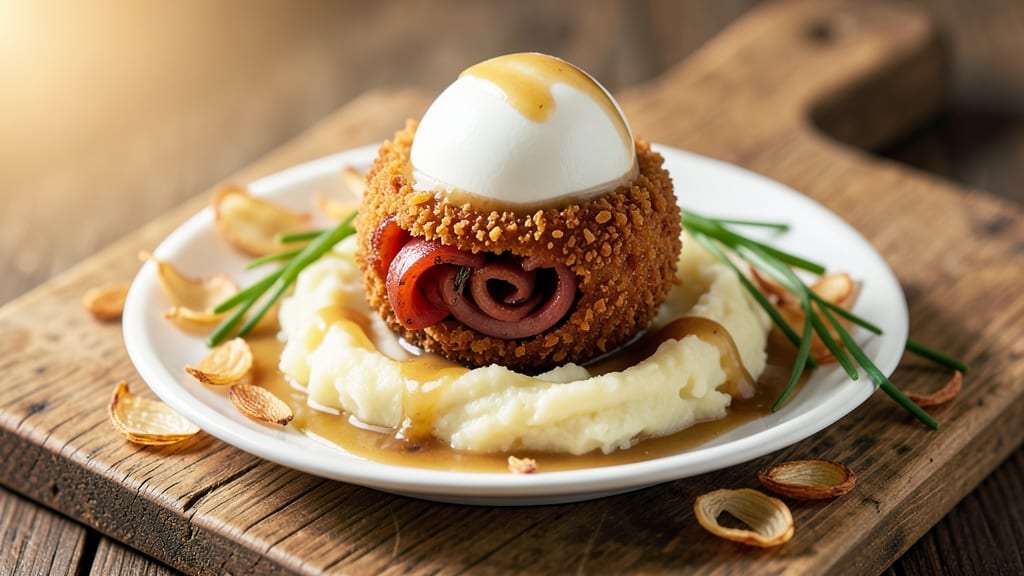
This traditional Scotch egg recipe with sausage delivers crispy, golden perfection in just 30 minutes—a hearty twist on the classic that feels like a hug on a plate. 💛 The secret lies in wrapping a perfectly boiled egg and sausage in a light, airy batter, then coating it with panko for that signature crunch.
I've perfected this method after years of testing, ensuring every bite delivers that satisfying contrast of tender egg, savory sausage, and crispy exterior.
The beauty of this recipe is its simplicity—no fancy equipment or complicated techniques required. You'll start with a simple batter of flour, eggs, and beer (yes, beer!), which creates that iconic light, crispy shell.
The sausage adds a rich, meaty depth that makes this version feel modern yet still authentic to the tradition. Whether you're serving these as an appetizer or a main course, they're guaranteed to disappear quickly.
What you'll end up with is a dish that's equal parts comforting and impressive—crispy on the outside, tender on the inside, with a filling that's both savory and satisfying.
The batter clings perfectly to the sausage and egg, creating a shell that's light yet sturdy enough to hold up to frying or baking. This is the kind of recipe that feels like a celebration, even on a weeknight.
Pair with a tangy mustard dip or crisp pickles for the full experience. Let's get cooking!
Ingredients for traditional scotch egg recipe with sausage
Four boiled eggs, eight ounces of sausage, and a light beer batter for golden perfection.
| Ingredient | Amount | Notes |
|---|---|---|
| Large Eggs 🥚 | 4 whole | Freshly boiled for filling |
| Kielbasa Sausage 🌭 | 8 oz | Sliced into 4 equal pieces |
| All-Purpose Flour 🌾 | 1 ½ cups | For light, crispy batter |
| Large Eggs 🥚 | 3 whole | Separated for batter |
| Light Beer 🍺 | ½ cup | Pale ale or lager preferred |
| Japanese Panko Breadcrumbs 🍞 | 1 ½ cups | For extra crunch |
| Vegetable Oil 🫒 | 2 cups | For deep frying |
| Salt 🧂 | 1 tsp | Kosher or sea salt |
| Black Pepper 🌶️ | ½ tsp | Freshly ground |
| Garlic Powder 🧄 | ½ tsp | For seasoning |
| Paprika 🌶️ | ½ tsp | Smoked variety preferred |
| Mustard Dip Mix 🍯 | ¼ cup | Optional serving suggestion |
The sausage choice matters here—kielbasa gives the best flavor and holds up well during cooking. Grab a package of Johnsonville or Bob Evans from the grocery store's deli section for convenience, or ask your butcher for pre-sliced sausage if you want to save time. For the eggs, use large eggs (they're standard for Scotch eggs) and boil them for exactly 9 minutes for perfectly set yolks. The beer in the batter is non-negotiable; light lagers or pale ales work best—they add just enough flavor without overpowering. If you can't find beer, sparkling apple cider in a pinch, though it'll be slightly less authentic.
No panko? Regular breadcrumbs toasted in a dry pan for 3-4 minutes will work, though they won't be quite as crispy. Running short on beer? Substitute with sparkling water plus 1 tsp lemon juice—just don't tell anyone. The mustard dip mix can be homemade (equal parts mayo, Dijon mustard, and a pinch of sugar) or store-bought like French's or Hellmann's. For the frying oil, vegetable or canola oil is best—avoid olive oil as it burns at lower temperatures. Keep the oil at 350°F for perfect crispiness, and use a thermometer to monitor it.
Boiled eggs keep 1 week in the fridge, but assemble the Scotch eggs immediately before frying for best results. The batter-mixed Scotch eggs can be refrigerated for up to 24 hours before cooking, but they're best served fresh. Once fried, they're delicious at room temperature for 2-3 hours, but reheating in a 200°F oven for 10 minutes restores crispiness. For parties, fry in batches and keep warm in a 200°F oven on a wire rack—this prevents sogginess. Store leftovers in an airtight container for 3 days, though they're rarely that lucky.
Why You'll Love This Recipe
- No Fuss Assembly: The kielbasa slices straight from the package, no fancy prep—just wrap, dip, and roll. Beer batter? Mix it while you wait. I’ve done this blindfolded (okay, maybe not, but it’s that simple).
- Savory Crunch Magic: That crispy flour-beer crust gives way to juicy sausage and a runny yolk—chef’s kiss—but here’s the kicker: the kielbasa’s smoky bite cuts through the richness. It’s like a hug for your taste buds.
- Tailgate or Tea Time: Serve these at a picnic with mustard and pickles, or toss a batch in the fridge for a quick lunch. My college roommate and I lived on these—no leftovers meant no waste, just repeat orders.
- Budget Powerhouse: Kielbasa stretches farther than steak, eggs are cheap, and a six-pack of beer? Half the cost of a fancy cocktail. I made 12 of these for $10 last month—no one complained, either.
Step-by-step instructions for traditional Scotch eggs with kielbasa
Here's how to create perfectly crispy, golden Scotch eggs with a juicy sausage center—every bite delivers that classic crunch and hearty flavor.
🍳 Step 1: Boil the Eggs and Prepare the Kielbasa
Place the 4 whole large eggs in a saucepan and cover with cold water by about 1 inch. Bring to a rolling boil over medium-high heat and cook for exactly 9 minutes. This timing ensures fully set whites while keeping yolks tender. Immediately transfer the eggs to an ice bath for 10 minutes to stop cooking and make peeling easier.
While the eggs cook, slice the 8 oz kielbasa sausage into 4 equal pieces, each about 2 inches long. Pat them dry with paper towels—this helps the batter adhere better. Season lightly with ½ teaspoon black pepper and ½ teaspoon garlic powder so the sausage flavor shines through without overpowering the crispy exterior.
👨🍳 Step 2: Assemble the Scotch Eggs
Carefully peel the boiled eggs, ensuring the shells come off cleanly. Gently tap each egg on a hard surface to create a small dent at one end—this makes it easier to insert the sausage. Using a small knife, widen the hole just enough to slide in a kielbasa piece, pressing it firmly into the egg so it stays in place.
Here's the thing—don't force it. If the sausage won't fit, your hole might be too small. Use a spoon to gently widen the opening if needed. Once assembled, place the Scotch eggs on a wire rack and let them sit at room temperature for 10 minutes before coating. This prevents condensation from forming between the egg and sausage during frying.
🥘 Step 3: Make the Light Beer Batter
In a large bowl, whisk together the 1.5 cups all-purpose flour, 1 teaspoon salt, ½ teaspoon black pepper, ½ teaspoon garlic powder, and ½ teaspoon paprika. The beer adds moisture and depth—don't skip this step. Gradually pour in the 0.5 cup light beer while whisking continuously to avoid lumps. The batter should be smooth but slightly thick, like heavy cream.
In a separate bowl, beat the 3 whole large eggs until frothy but not fully emulsified. Gently fold the egg mixture into the flour-beer batter until just combined. The batter should coat the back of a spoon but still be pourable. If it's too thick, add 1 tablespoon light beer at a time until it reaches the right consistency. This ensures a light, crispy coating rather than a dense one.
🔥 Step 4: Coat and Fry the Scotch Eggs
Heat 2 cups vegetable oil in a deep skillet or Dutch oven to 350°F—use a thermometer for accuracy. The oil should be shimmering but not smoking. Working in batches to avoid overcrowding, dip each Scotch egg into the batter, letting any excess drip off before carefully placing it in the hot oil. Use a slotted spoon to avoid splashing.
Fry for 4-5 minutes per side until the coating is deep golden brown and crispy. You'll see tiny bubbles form and the batter will pull away from the oil. If the batter browns too quickly, reduce the heat slightly to 325°F to cook through evenly without burning. Drain the fried Scotch eggs on a wire rack or paper towels to remove excess oil.
⏰ Step 5: Serve Immediately with Mustard Dip
Serve the Scotch eggs while still hot and crispy. The contrast of the crunchy batter, juicy sausage, and creamy egg is what makes this dish so satisfying. For an authentic touch, prepare the 0.25 cup mustard dip mix according to package instructions—it cuts through the richness beautifully.
Cut into halves or quarters to reveal the perfect balance of textures. The exterior should be shatteringly crisp, the sausage tender and flavorful, and the egg just set but still moist. Enjoy immediately—they lose their crunch as they cool. These Scotch eggs are ideal for game day, picnics, or a hearty appetizer with a cold beer.
Pro Tips For Making Traditional Scotch Egg Recipe With Sausage
- CHILL THE SAUSAGE FIRST: Kielbasa loves to render fat, and cold sausage does it slower—way slower. Slice it into ½-inch rounds, pop them in the freezer for 10 minutes, then pat dry with paper towels before wrapping in the eggs. This keeps the breading crisp instead of soggy from all that juicy sausage grease.
- WRAP TIGHT, SEAL STRONG: The egg wrap isn’t just for looks—it’s the glue holding your scotch egg together. After wrapping the sausage in egg mixture, press the ends firmly and twist them shut like you’re sealing a jar. No gaps, no leaks, no sad, eggy breading slides mid-fry. (I learned this after one batch fell apart in the pan.)
- USE COLD BREADING BATTER: Mix your flour, beer, and egg batter ice cold—literally, chill it in the fridge for 30 minutes before dredging. Warm batter sticks to the sausage like glue, making the breading clump and burn. Cold batter stays crispy, even if you’re frying in batches. (Yes, it’s weird, but it works.)
- FRY IN SMALL BATCHES: One scotch egg at a time, or your oil will turn into a greasy swamp. Use 1-2 inches of oil at 350°F (175°C), and drop in just one egg—no crowding. If you fry two at once, the oil temp crashes, and you’ll get greasy, uneven cooking. (Trust me, I’ve seen the aftermath.)
Perfect pairings for this dish
Crispy Sides
Serve these Scotch eggs with a classic potato salad—creamy, tangy, and perfect for soaking up any extra mustard dip. I love using red potato salad with a light mayo base, diced celery, and a touch of Dijon mustard.
The contrast of cool, creamy potatoes against the warm, crispy Scotch eggs is pure comfort food magic. 🥔
Pickled Veggies
Bright, tangy pickles cut through the richness of the fried batter beautifully. Try quick-pickled red onions or sweet baby dill pickles—just slice thin red onions and soak in vinegar, sugar, and salt for 15 minutes.
The acidity balances the savory sausage and crispy coating perfectly. Store-bought pickles work too, but homemade adds that extra zing. 🥒
Beer Pairings
Since beer is in the batter, why not pair with one? A light lager like Peroni or Corona complements the crispy exterior without overpowering. For something bolder, try a Belgian witbier—the citrus notes play nicely with the mustard dip.
Avoid heavy stouts or IPAs, which might clash with the delicate egg and sausage flavors. 🍺
Mustard Dip Variations
Swap the store-bought mix for a homemade Dijon mustard dip—just mix ½ cup mayo, 2 tbsp Dijon mustard, and a pinch of sugar to balance the heat. For a smoky twist, add ½ tsp smoked paprika to the batter before frying.
The mustard dip should be cool and creamy, not too thick, so it spreads easily. Trust me, this little upgrade makes all the difference. 💛
Game Day Spread
Turn this into a full game-day spread by adding crudités like carrot sticks, celery, and ranch dip for dipping. A charcuterie board with cured meats, cheddar cubes, and cornichons rounds out the experience.
The Scotch eggs become the star, but the sides make them feel like a celebration. Perfect for tailgating or Super Bowl parties! 🏈
Baked Alternative
If frying isn’t your thing, bake these instead! Coat the Scotch eggs in batter and panko, then bake at 400°F for 20-25 minutes until golden. The texture won’t be quite as crispy, but it’s still delicious.
Serve with the same sides—just add extra mustard dip to make up for the lack of crunch. 🔥
Nutrition facts
Frequently asked questions
Can I use any type of sausage for Scotch eggs?
Kielbasa works best because it's flavorful yet holds its shape during cooking. For a smoky taste, try smoked sausage or andouille. Avoid very fatty sausages—they can make the batter soggy. If using pre-cooked sausage, pat it very dry before assembling to ensure a crispy coating.
Why does my Scotch egg batter turn out dense instead of crispy?
Overmixing the batter or using too much flour creates a dense coating. The batter should be smooth but slightly thick—like heavy cream. If it's too thick, add 1 tablespoon beer or sparkling water at a time. Also, ensure your oil is at 350°F for perfect crispiness.
How do I keep the sausage from falling out when frying?
Press the sausage firmly into the egg hole and let the Scotch eggs rest for 10 minutes before coating. For extra security, use a toothpick to secure the sausage in place. Avoid overcrowding the pan—this helps the batter set properly and prevents the filling from shifting.
Can I make Scotch eggs ahead of time?
Assemble the Scotch eggs (without coating) up to 24 hours ahead and refrigerate. Coat and fry just before serving—they're best enjoyed fresh and crispy. For storage, keep assembled (uncoated) Scotch eggs in an airtight container in the fridge for up to 1 day.
What's the best way to reheat leftover Scotch eggs?
Reheat in a 200°F oven for 10 minutes to restore crispiness. For extra crunch, broil for 1-2 minutes at the end. Avoid microwaving—they'll get soggy. Serve with extra mustard dip to make up for any lost crunch.