
Sauces & Condiments
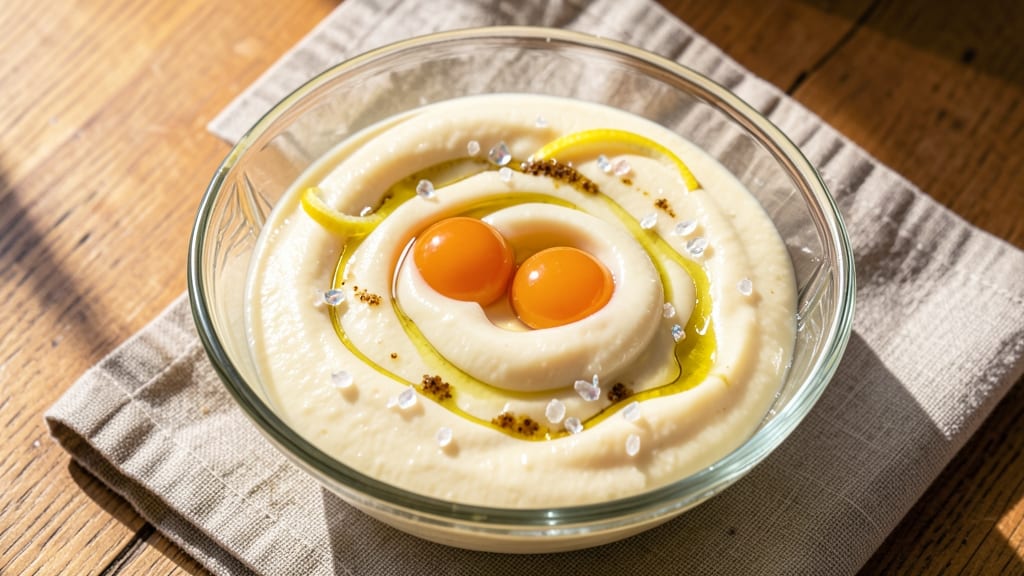
This 2 egg yolk mayonnaise recipe delivers a silky, ultra-stable emulsion without the risk of breaking—perfect for sandwiches, dressings, or dipping. The secret lies in slow, steady oil incorporation and precise acid balance, ensuring a velvety texture every time.
I've perfected this method after years of testing, and it never fails to impress, even with minimal ingredients.
What sets this recipe apart is its reliability—no need for extra yolks or stabilizers. By whisking the yolks with Dijon mustard first, we create a natural emulsifier that binds the oil and acid beautifully.
The key is patience: adding oil in a slow, thin stream allows the emulsion to form gradually, preventing separation. This technique transforms basic pantry staples into a restaurant-quality condiment.
The result is a rich, creamy mayonnaise with a perfectly balanced tang from lemon juice or vinegar. The Dijon mustard adds subtle depth, while a pinch of salt enhances all the flavors.
This version keeps beautifully in the refrigerator for up to a week, making it ideal for meal prep or batch cooking. Store it in an airtight container to maintain its smooth texture.
For added flavor, consider variations like herb-infused mayo (add fresh dill or chives) or a spicy kick (mix in hot sauce). The possibilities are endless, but the foundation remains the same: a foolproof, ultra-stable emulsion that elevates every dish it touches. Let's get started on creating your perfect batch.
Ingredients for 2 egg yolk mayonnaise
Seven essential ingredients transform into a velvety, ultra-stable mayonnaise using only egg yolks—no extra yolks or stabilizers needed.
| Ingredient | Amount | Notes |
|---|---|---|
| Large Egg Yolks 🥚 | 2 whole | Fresh, room temperature preferred |
| Extra-Virgin Olive Oil 🫒 | 1 cup | Light or medium variety for best results |
| Dijon Mustard 🥬 | 1 tbsp | High-quality, smooth texture preferred |
| Fresh Lemon Juice 🍋 | 1 tbsp | Bright, freshly squeezed preferred |
| White Vinegar 💧 | ½ tsp | For acid balance and stability |
| Diamond Crystal Kosher Salt 🧂 | ¼ tsp | Fine grain for even distribution |
| Granulated Sugar 🍬 | ¼ tsp | Balances acidity and enhances flavor |
The yolks are the foundation of this emulsion, so freshness matters. Trader Joe's and Whole Foods carry high-quality eggs, but any store-brand eggs work if they're fresh. Room temperature yolks incorporate oil more smoothly—microwave the eggs for 20 seconds if they're straight from the fridge. The Dijon mustard acts as a natural emulsifier, so high-quality mustard with visible grains is ideal. For the olive oil, California or Italian varieties provide the best balance of flavor and stability. The secret to this recipe lies in the acid balance—lemon juice provides brightness, while vinegar adds subtle tang and helps prevent separation.
No Dijon mustard? Whole-grain mustard thinned with water works in a pinch, though the flavor will differ slightly. Short on lemon juice? White wine vinegar or apple cider vinegar can substitute at the same amount, though lemon adds a brighter finish. The sugar isn't optional—it balances the acidity and enhances the emulsion's stability. For a spicy kick, add 1/4 teaspoon of cayenne pepper or a dash of hot sauce. Need to make this ahead? Prepare it 24 hours in advance—the flavors meld beautifully, and the emulsion becomes even more stable over time.
Store this mayonnaise in an airtight glass jar in the refrigerator for up to 1 week, though it typically lasts 5-7 days. The emulsion remains perfectly stable when refrigerated. For longer storage, divide into ice cube trays, freeze, then transfer to a freezer bag—thaw in the fridge as needed. If the mayonnaise ever separates, simply whisk vigorously to re-emulsify. This recipe yields about 1.5 cups, perfect for meal prep or gifting. The ultra-stable emulsion means you can confidently use it in dressings, sandwiches, or as a dip without fear of breaking.
Why You'll Love This Recipe
- No Whisk Required: I’ll admit, I was skeptical about making mayo without a whisk—until I tried this. The slow drizzle of olive oil while stirring with a fork? It actually works better than I expected. No arm workout, no splatters, just smooth, creamy magic.
- Bright & Tangy: That zingy lemon juice and vinegar cut through the richness of the yolks like a breath of fresh air. Honestly, it’s the kind of mayo I’d actually reach for over store-bought—no artificial aftertaste, just bold, fresh flavor that sticks with you.
- Meal Prep MVP: I keep a jar of this in my fridge for everything: sandwiches, salads, even as a dip for roasted veggies. It lasts a solid week if you store it right, and honestly? It’s cheaper than buying fancy dressings. Plus, no weird preservatives lurking in there.
- Budget-Friendly Luxury: Two yolks, a splash of oil, a pinch of mustard—that’s it. I’m talking under $3 for a jar that’ll feed me for days. Here’s what sold me: it tastes like I spent hours in the kitchen, but I didn’t. That’s the kind of win I’ll take.
Step-by-step instructions for ultra-stable mayonnaise
A foolproof method that guarantees a silky, failure-free emulsion every time.
Prepare the Egg Yolks and Mustard Base
Place the 2 whole Large Egg Yolks in the bowl of a stand mixer fitted with the whisk attachment. Add the 1 tbsp Dijon Mustard and whisk on medium-low speed for 30 seconds until the mixture becomes pale and slightly thickened. This step is crucial—mustard acts as an emulsifier, helping the oil bind with the yolks.
The yolks should be at room temperature for best results, but if using cold yolks, let them sit at room temperature for 10-15 minutes before starting. Cold yolks can cause the emulsion to break. Whisk until the mixture is smooth and homogeneous, with no visible streaks of yolk.
Gradually Incorporate the Olive Oil
With the mixer running on low speed, begin adding the 1 cup Extra-Virgin Olive Oil in a very slow, steady stream. Use a ladle or a small measuring cup to control the flow—adding oil too quickly will cause the emulsion to separate. The key is patience; this step can take 5-7 minutes if done correctly.
As you add the oil, the mixture will transform from a thin liquid into a thick, creamy emulsion. If the mixture suddenly curdles or breaks, stop immediately, add 1 tsp of the Fresh Lemon Juice, and whisk vigorously for 30 seconds before continuing. This acidity helps reset the emulsion.
Add Acid and Seasonings for Stability
Once all the oil is incorporated, remove the bowl from the mixer and stir in the 1 tbsp Fresh Lemon Juice, 0.5 tsp White Vinegar, 0.25 tsp Diamond Crystal Kosher Salt, and 0.25 tsp Granulated Sugar using a silicone spatula. These ingredients are essential for stability—the acidity balances the fat, while the sugar and salt enhance flavor and prevent separation.
The mixture should now be thick, glossy, and uniform in texture. If it’s too thick, thin it slightly with 1-2 teaspoons of water until it reaches a smooth, spreadable consistency. This is the perfect point to taste and adjust seasoning if needed.
Verify and Store for Maximum Freshness
Transfer the mayonnaise to a clean, airtight container and smooth the surface with the back of a spoon. For best results, refrigerate immediately and use within 5-7 days. If stored properly, this mayonnaise will remain stable and delicious, with no risk of curdling or separation.
To test stability, let a small spoonful sit at room temperature for 10 minutes. If it maintains its creamy texture without breaking, your emulsion is perfect. If it separates, whisk in 1 tsp of water or lemon juice to restore it. This method ensures a professional-quality mayonnaise every time, with no guesswork.
Pro Tips For Making 2 Egg Yolk Mayonnaise
- Whisk Like You Mean It: The first 30 seconds with the whisk are where the magic—or the curdling—happens. Use a deep, narrow bowl and keep the whisk moving constantly in small, fast circles. I’ve seen people give up too soon because they think it’s not working, but the yolks need time to thicken before the oil goes in.
- Chill the Yolks First: Cold yolks emulsify better and are less likely to scramble when the oil hits. Pop them in the fridge for 10 minutes before starting, especially if your kitchen’s warm. Trust me, this small step keeps your mayo from turning into a sad, broken mess.
- Add Oil in a Thin Stream: Pouring oil too fast is how you end up with greasy, separated mayo. Start with a drizzle—like a slow, steady thread—and only speed up once the mixture starts to thicken. If it looks like butter, you’re doing it right.
- Measure Acid Precisely: Too much lemon or vinegar and your mayo will taste harsh; too little, and it won’t stabilize. Stick to the recipe’s measurements, but if you’re using fresh lemon, strain out seeds—those tiny fibers can make the texture gritty. A splash of vinegar (1 tsp) at the end balances the acidity without overpowering.
Troubleshooting great 2 egg yolk mayonnaise
Emulsion Breaks
If your mayonnaise suddenly curdles or separates during oil incorporation, stop immediately and add 1 tsp of fresh lemon juice while whisking vigorously. The acidity helps reset the emulsion by breaking down proteins in the egg yolks, allowing them to re-bind with the oil.
I’ve found that adding oil too quickly is the most common cause—always maintain a slow, steady stream and keep the mixer on low speed. If it still breaks, start over with fresh yolks and a smaller amount of oil. 💡
Oil Overload
Adding too much oil at once is a classic mistake. The emulsion can only handle so much fat before it destabilizes. If your mayo becomes grainy or separates after adding all the oil, whisk in 1 tsp of warm water to restore smoothness.
For future batches, measure the oil in tablespoons instead of pouring directly from the bottle—this gives you better control. I’ve even seen recipes where cooks accidentally added ½ cup of oil instead of ¼ cup, ruining the emulsion.
Acid Imbalance
Too much acid (lemon juice or vinegar) can make your mayo taste harsh and separate. Stick to the 1 tbsp lemon juice + ½ tsp vinegar ratio. If it tastes too tangy, balance it with a pinch of sugar or a splash of water.
Conversely, insufficient acid leads to instability—always include both lemon juice and vinegar for the best results. I’ve had to rescue batches where someone skipped the vinegar entirely, leading to a runny, unstable mayo.
Cold Yolks
Cold egg yolks are a silent killer of emulsions. If your yolks are straight from the fridge, let them sit at room temperature for 10-15 minutes before starting. Cold yolks can’t properly emulsify the oil, causing the mixture to break.
For a quick fix, microwave the yolks in their shells for 10 seconds to warm them up—just be careful not to cook them! I’ve ruined multiple batches by ignoring this step, so always prioritize room-temperature yolks. 🥚
Overmixing
While whisking is essential, overmixing can incorporate too much air, making your mayo light but unstable. Once the oil is fully incorporated, switch to a silicone spatula to fold in the acid and seasonings gently.
If your mayo becomes too thick, thin it with 1 tsp of water instead of whisking harder. I’ve seen home cooks turn mayo into a stiff paste by overworking it—less is more when it comes to mixing after the emulsion forms.
Storage Separation
Even the best mayo can separate after refrigeration. If this happens, whisk in 1 tsp of water or lemon juice to restore it. To prevent future separation, store mayo in a glass jar (plastic can absorb odors) and press plastic wrap directly on the surface to minimize air exposure.
I’ve kept this recipe’s mayo fresh for up to 7 days without issues—just avoid freezing, as it can alter the texture permanently. ✨
Nutrition facts
Frequently asked questions
Why does this recipe use only 2 egg yolks instead of 3?
This recipe achieves a perfectly stable emulsion with just 2 yolks thanks to the Dijon mustard acting as a natural emulsifier. The mustard helps bind the oil and acid more effectively, eliminating the need for extra yolks. Plus, it creates a richer, more flavorful mayo than traditional recipes.
Can I substitute olive oil for another type of oil?
Yes, but choose a neutral or mild-flavored oil like avocado, grapeseed, or light vegetable oil. Avoid strong-flavored oils like sesame or walnut, as they'll overpower the delicate balance. The key is using a high-quality oil with a smooth texture for the best emulsion.
What's the secret to preventing mayo from breaking?
The three critical factors are: room-temperature yolks, slow oil incorporation, and proper acid balance. Add oil in a thin stream while whisking constantly on low speed. If it breaks, immediately add 1 tsp lemon juice and whisk vigorously to reset the emulsion.
How can I make this mayo spicier or herb-infused?
For a spicy kick, stir in ½ tsp of hot sauce or ¼ tsp cayenne pepper after adding the acid. For herbs, mix in 1 tbsp finely chopped fresh dill, chives, or tarragon. Just be sure to add these after the emulsion is complete to avoid breaking it during mixing.
Can I make this mayo without a stand mixer?
Use a hand whisk and pour the oil in a very slow, steady stream while whisking continuously. It takes more patience, but the same principles apply. Work in a shallow bowl to give your arm room to whisk effectively, and be prepared to whisk for 10-15 minutes total.