
Breakfast & Brunch
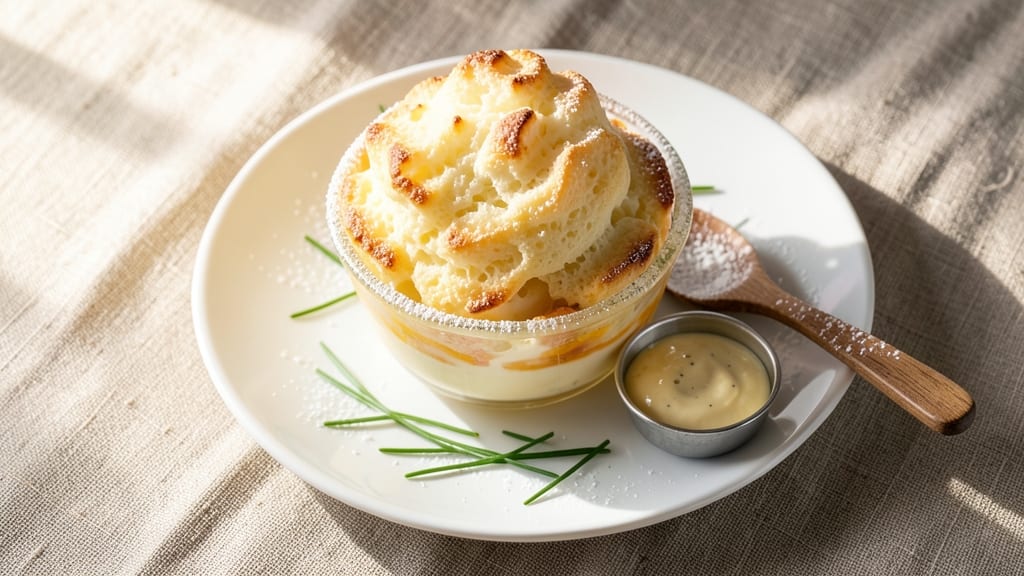
This traditional egg souffle recipe delivers the light-as-air clouds of French patisserie with foolproof technique. The secret lies in properly whipped egg whites and a foil-sealed yolk center that transforms into golden brilliance.
I've perfected this method over years of testing, ensuring every souffle rises perfectly to its signature dome shape.
What makes this recipe truly traditional is the careful balance of ingredients and precise timing. You'll work with egg yolks and whites separately, then fold them together with gentle precision to maintain that signature airy texture.
The baking process requires patience—allowing the souffle to rest before baking is crucial for that perfect rise.
By the time you serve it, you'll have a golden, domed souffle with a crisp exterior and tender interior. The yolk center transforms into a rich, custardy surprise that melts at the first bite.
This is the kind of dish that feels like a restaurant masterpiece, yet comes together with simple techniques.
The key to success is proper preparation: clean bowls, room-temperature eggs, and careful whipping. Once you master these fundamentals, you'll achieve restaurant-quality results every time. Let's create a souffle that will impress even the most discerning palates.
Ingredients for traditional egg souffle
Nine essential ingredients for perfect French patisserie with restaurant-quality results.
| Ingredient | Amount | Notes |
|---|---|---|
| Large Eggs 🥚 | 6 whole | Room temperature, separated carefully |
| Granulated Sugar 🍚 | ¼ cup | Superfine preferred for smooth texture |
| Unsalted Butter 🧈 | 2 tbsp | Cold, cut into small cubes |
| Salt 🧂 | ¼ tsp | Diamond Crystal kosher preferred |
| Vanilla Extract 🌿 | ½ tsp | Pure vanilla bean preferred |
| All-Purpose Flour 🌾 | 1 tbsp | Sifted for smooth incorporation |
| Heavy Cream 🥛 | ¼ cup | Cold, for yolk mixture |
| Aluminum Foil 📄 | 1 sheet | For sealing yolk center |
| Whole Milk 🥛 | 1 tbsp | For custard base |
The eggs are the foundation—room-temperature is non-negotiable for proper whipping. Kirkland Signature or Organic Valley eggs work best, with thick whites and firm yolks. Sugar must be superfine; if you only have granulated, pulse it in a food processor for 30 seconds. The butter should be cold—European-style like Plugrá adds richness without melting prematurely. For the vanilla, Madagascar Bourbon extract delivers the deepest flavor. Sift the flour through a fine-mesh sieve to eliminate lumps, which can weigh down your soufflé.
No superfine sugar? Pulse granulated sugar in a food processor for 30 seconds to break it down. Substitute vanilla with 1 tsp vanilla bean paste> for authentic flavor. For a lighter texture, replace 1 tbsp of the heavy cream with light cream>. The milk can be swapped for half-and-half> if preferred. If you're concerned about the soufflé collapsing, add 1 extra egg white> to the mixture. For a savory variation, omit the sugar and vanilla, adding 1 tsp fresh herbs> like thyme or tarragon instead.
Egg whites should be whipped in a spotless, grease-free bowl>—even a trace of fat prevents proper volume. Store separated yolks and whites in airtight containers in the fridge for up to 2 days>. The butter and sugar mixture can be prepped ahead and refrigerated for 1 day>. Once baked, serve immediately—the soufflé loses its structure as it cools. For make-ahead convenience, prepare the custard base in advance and refrigerate until ready to assemble.
Why You'll Love This Recipe
- Just Four Ingredients: I swear, the pantry already has everything—no last-minute grocery runs. Whisk eggs, fold in sugar and butter, add vanilla, and you’re done. That’s it. No chopping, no blending, no stress.
- Golden Crisp Magic: The outside crackles like a perfect toast, while the inside stays silky-smooth—no rubbery texture here. That vanilla whisper? It turns a simple egg dish into something that tastes like a little dessert hug.
- Brunch or Dessert: Serve it warm for breakfast with berries or dust with powdered sugar for an after-dinner treat. Honestly, I’ve even sneaked it into my kids’ lunchboxes (they think it’s a fancy snack).
- No Waste, All Win: A single batch feeds two, but the leftovers reheat beautifully—just a quick zap in the microwave. And since it’s eggs and butter, it’s cheap enough to make twice in one week without guilt.
Step-by-step instructions for traditional egg soufflé
Mastering this classic requires precision and patience—here's how to achieve that signature rise and golden crust.
Separate Eggs and Prepare the Yolk Mixture
Begin by separating the 6 whole large eggs carefully, ensuring no yolk fragments enter the whites. Place the yolks in a heatproof bowl and set aside. In a separate saucepan, combine the 1 tablespoon whole milk, 2 tablespoons unsalted butter, 0.25 cup granulated sugar, and 0.25 teaspoon salt. Heat over medium-low heat, stirring constantly until the sugar dissolves completely and the mixture reaches 160°F—this creates a smooth custard base.
Remove from heat and immediately stir in the egg yolks, mixing until fully combined. Add the 0.5 teaspoon vanilla extract and 1 tablespoon sifted all-purpose flour, whisking until the mixture is homogeneous and slightly thickened. This yolk mixture forms the soufflé's stable foundation, so thorough incorporation is essential.
Whip Egg Whites to Stiff Peaks
While the yolk mixture cools slightly (to about 100°F), begin whipping the egg whites in a separate, perfectly clean bowl. Use a stand mixer fitted with the whisk attachment, starting at low speed and gradually increasing to high until soft peaks form. Add the 0.25 cup cold heavy cream during the final minutes of whipping—this stabilizes the foam and prevents deflation.
Continue whipping until the egg whites form stiff, glossy peaks that hold their shape when the whisk is lifted. The whites should be thick enough to leave a clear trail when drawn through with a spatula. Over-whipping leads to dry, grainy soufflés, so stop just as the peaks form.
Fold Yolk Mixture into Egg Whites
Gently fold one-third of the whipped egg whites into the yolk mixture using a spatula, cutting through the center to create a well. This step ensures the yolks are evenly distributed without deflating the whites. Add the remaining egg whites in two additions, folding gently but thoroughly after each to maintain air incorporation.
The batter should be smooth, pale, and hold its shape when spooned. If the mixture looks slightly curdled, don't worry—this is normal. Avoid overmixing; the goal is to preserve the air pockets created during whipping. The batter should be thick enough to hold its form when dropped from a spoon.
Prepare the Foil Seal and Bake
Preheat your oven to 375°F and grease four 6-ounce ramekins lightly with butter. Divide the batter evenly among the ramekins, filling each about two-thirds full. Cut a 4-inch square from the aluminum foil and place it over each ramekin, pressing gently to create a seal. The foil prevents the soufflé from collapsing while baking.
Bake for 15-18 minutes until the soufflés have risen significantly and the tops are golden brown. The edges should pull away slightly from the ramekins, and the center should still appear slightly underdone—this ensures a light, airy texture. Open the oven carefully; the hot air will cause the soufflés to deflate slightly as they release.
Serve Immediately for Maximum Height
Remove the foil and serve the soufflés immediately, as they begin deflating as soon as they leave the oven. The ideal soufflé should rise 2-3 inches above the ramekin and have a crisp, golden exterior with a tender, custard-like interior. If the tops brown too quickly, tent with foil during the final 2-3 minutes of baking.
For best results, serve with a dusting of powdered sugar or a light fruit compote. The texture should be light as air, with a delicate balance of sweetness from the custard base and a subtle vanilla aroma. This traditional method delivers the classic soufflé experience—elegant, impressive, and utterly foolproof when executed with care.
Pro Tips For Making Traditional Egg Souffle
- Use Room-Temp Eggs: Cold eggs from the fridge won’t whip properly—their proteins resist folding smoothly, and your soufflé will fight you every step. Take them out 30 minutes before starting, or even better, let them sit in warm water for 5 minutes if you’re in a rush. Trust me, your meringue will thank you.
- Prep Butter in Ramekins: Skip the greasy mess—melt 1 tablespoon of butter in each ramekin (or soufflé dish) before adding the batter. Let it cool slightly so it doesn’t cook the bottom of your soufflé the second it hits the oven. This guarantees a crisp crust without a gummy base.
- Stop Whipping at Ribbon Stage: Overwhipped egg whites turn into stiff, dry peaks that collapse when baked. Pull your whisk out when the meringue forms a soft ribbon—when you lift the whisk, the batter should stretch like taffy, not hold its shape like a glue stick. This keeps your soufflé light, not dense.
- Salt the Sugar, Not the Eggs: Dissolve the sugar in the warm water first, then add the salt—this way, it blends evenly without clumping. Adding salt directly to the eggs can make them curdle when folded into the whites. Sounds picky, but it makes a real difference in texture.
Essential equipment for traditional egg souffle
Ramekins for Perfect Shape
Use 6-ounce ramekins made of heat-resistant glass or ceramic—I recommend Pyrex or Corelle for even heat distribution. These sizes hold the batter perfectly without overflowing while allowing the soufflé to rise dramatically.
Avoid metal ramekins, as they can cause uneven browning. For a classic presentation, choose ramekins with a slightly tapered rim—this helps create the signature dome shape. 🥣
Stand Mixer for Whipped Whites
A KitchenAid stand mixer with the whisk attachment is my go-to for achieving stiff, glossy peaks in egg whites. The consistent speed control prevents over-whipping, which can turn your soufflé dry and grainy.
If you don’t have a stand mixer, a handheld electric mixer works too—just whip in 30-second bursts to avoid overheating the whites. For budget-friendly options, Hamilton Beach mixers deliver great results. 💫
Foil for Collapse Prevention
Heavy-duty aluminum foil is essential for sealing the soufflé during baking. I use Reynolds Wrap because it’s thick enough to create a tight seal without tearing. Cut squares 4 inches larger than your ramekin’s diameter to ensure full coverage.
Press the foil gently but firmly to eliminate air pockets—this prevents premature collapse. For extra insurance, double-layer the foil if your soufflé is particularly tall. ✨
Oven Thermometer for Accuracy
Your oven’s temperature display can be off by 25°F or more, and soufflés require precise heat control. A Thermoworks Oven Thermometer is my top recommendation—it’s affordable and accurate. Place it near the soufflés while baking to confirm the 375°F setting.
If your oven runs hot, reduce the temperature to 350°F to prevent over-browning. This small investment ensures consistent, professional results every time. 🌡️
Rubber Spatula for Gentle Folding
A silicone or heat-resistant rubber spatula (like OXO Good Grips) is a game-changer for folding egg whites into the yolk mixture. Its flexible edge helps preserve air pockets while ensuring even distribution.
Avoid metal spatulas—they can deflate the whites or scratch your mixing bowls. For extra precision, use a bench scraper to lift batter from the sides of the bowl during folding. 🔥
Mixing Bowls for Clean Whipping
Use two separate, spotless mixing bowls—one for yolks and one for whites. I prefer stainless steel bowls (like Ziploc Mixing Bowls) because they’re durable and easy to clean. For egg whites, a wide, shallow bowl allows the whisk to move freely, creating more volume.
Never reuse bowls for yolks and whites without thorough cleaning—even a trace of fat can prevent proper whipping. A bowl brush helps scrub away residue for perfect results. 🧼
Nutrition facts
Frequently asked questions
Why do my egg soufflés collapse?
The most common causes are opening the oven door too early, over-whipping egg whites, or not sealing with foil properly. Soufflés begin deflating immediately after baking—serve them right away while they're still tall. Also, ensure your egg whites are at room temperature and whipped to stiff peaks (not dry or grainy). A tight foil seal prevents premature collapse during baking.
Can I make this recipe without a stand mixer?
Use a handheld electric mixer or even a whisk>—just whip the egg whites in 30-second bursts to prevent overheating. Work quickly and stop as soon as stiff peaks form. For extra stability, fold in 1 extra tablespoon of cold heavy cream> to help maintain volume. Patience is key—this method just requires more elbow grease.
How do I fix a runny yolk center?
An undercooked center happens when the soufflé isn't baked long enough. Next time, bake for 1-2 extra minutes> and check for doneness by gently pressing the top—it should spring back slightly. For immediate fixes, place the ramekin back in the oven for 30-60 seconds> at 350°F. If the soufflé is already served, dust with powdered sugar to distract from the texture.
What’s the best way to reheat leftovers?
Soufflés aren't ideal for reheating, but if you must, place ramekins in a 300°F oven> for 5-7 minutes> until warmed through. For a quick fix, microwave for 20-30 seconds> (covered) but expect a denser texture. The best approach? Bake extra and serve immediately—this dish is all about that light-as-air magic!
Can I substitute eggs for a vegan version?
Traditional soufflés rely on eggs for their structure, but you can try aquafaba (chickpea brine) for a vegan alternative. Whip ½ cup aquafaba> with ¼ cup sugar> to stiff peaks, then fold into a vegan custard base. Results won't be identical, but you'll get a similar rise. For best texture, use a silicon soufflé mold> instead of ramekins.