
Beverages
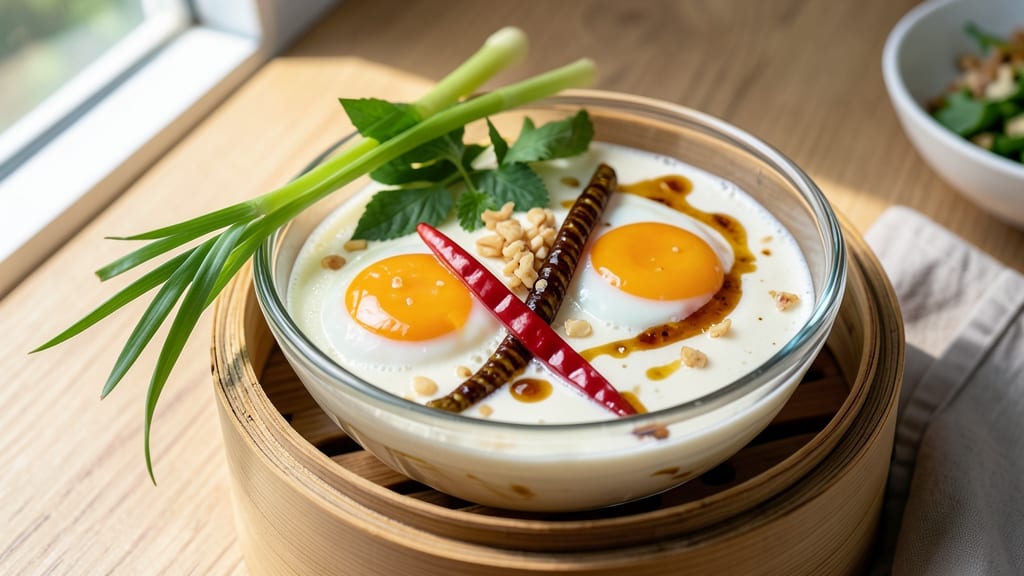
This Thai steamed egg recipe transforms simple eggs into silky, fragrant clouds infused with coconut milk and aromatic lemongrass. The secret lies in a delicate marinade of Thai herbs and spices that elevates ordinary eggs into a restaurant-worthy dish.
I first discovered this technique during a trip to Bangkok, where street vendors served these eggs as a light yet satisfying breakfast option.
What makes this recipe special is the balance of flavors—creamy coconut milk, bright lemongrass, and a touch of chili for depth. The eggs steam gently until they reach a velvety, custard-like texture, perfect for soaking up every drop of the fragrant marinade.
Unlike scrambled or fried eggs, these steamed beauties maintain their shape while absorbing the rich, aromatic flavors.
The process is simpler than it sounds: marinate the eggs in a fragrant coconut-herb mixture, then steam them gently until just set. The result is a dish that’s both elegant and comforting—ideal for brunch or as a light lunch.
Serve with steamed jasmine rice and fresh herbs to complete the Thai-inspired meal.
This recipe delivers restaurant-quality results with minimal effort, making it perfect for both weeknight dinners and special occasions. The key is patience—allowing the eggs to steam slowly ensures they turn out tender and perfectly infused with flavor. Let's get started!
Ingredients for thai steamed egg
Simple eggs meet Thai flavors in this fragrant steamed dish, perfect for brunch or light meals.
| Ingredient | Amount | Notes |
|---|---|---|
| Large Eggs 🥚 | 6 whole | Freshly cracked for best texture |
| Coconut Milk 🥥 | 1 cup | Full-fat for creaminess |
| Fresh Lemongrass 🌿 | ½ cup | Tender stems only, finely chopped |
| Fresh Galangal 🌿 | ¼ cup | Peeled, finely minced |
| Fresh Thai Chili 🌶️ | 2 whole | Seeds removed for mild heat |
| Garlic Cloves 🧄 | 3 cloves | Minced for aromatic depth |
| Fish Sauce 🍶 | 1 tbsp | Vegetarian alternative preferred |
| Lime Juice 🍋 | 1 tbsp | Freshly squeezed |
| Sugar 🍚 | 1 tbsp | White or brown preferred |
| Salt 🧂 | ½ tsp | Kosher or sea salt |
| Jasmine Rice 🍚 | 1 ½ cups | Uncooked, for serving |
| Fresh Cilantro 🌿 | ¼ cup | Chopped, for garnish |
| Vegetable Oil 🫒 | 1 tbsp | For greasing steamer |
The coconut milk is the heart of this recipe—full-fat canned brands like Thai Kitchen work best for that rich, creamy texture. Fresh lemongrass and galangal are non-negotiable for authentic flavor, but if you can't find galangal, ginger at half the amount is a decent swap. I always grab these at Asian markets—they'll have the freshest stems and better prices than regular grocery stores. For the fish sauce, vegetarian versions like Red Boat are widely available now and just as flavorful. The Thai chilies? Bird's eye chilies if you can find them, but any fresh chili works—just adjust the seeds for heat preference.
No fresh lemongrass? Lemongrass paste from a tube is a lifesaver—just use half the amount. Galangal missing entirely? Turmeric plus ginger mimics some of its earthy notes. The fish sauce can be skipped if you're strictly vegetarian, but soy sauce or tamari adds a similar umami punch. For the sugar, white or brown both work, but if you're using coconut sugar, reduce by 10% since it's less refined. The eggs should be at room temperature when you crack them—just take them out of the fridge 30 minutes before starting. This makes a noticeable difference in texture.
This dish reheats beautifully—steam again for 3-4 minutes if you're serving leftovers. The rice keeps for 4 days in the fridge, and the eggs stay fresh for 2 days if stored in an airtight container. I like to prep everything the night before: cook the rice, chop all the herbs, and measure out the marinade. Then it's just a matter of steaming in the morning. The eggs are best served immediately after steaming, but if you must wait, cover them with plastic wrap to keep them moist.
Why You'll Love This Recipe
- Steam in Minutes: I’m talking 15 minutes from start to finish—just crack the eggs into a bowl, mix in coconut milk and the bruised galangal, then let the steamer do the work. No flipping, no frying, no stress.
- Creamy Heat Balance: That first bite of tender egg with coconut milk’s richness and a whisper of Thai chili? It’s the kind of harmony that makes you reach for seconds. The lemongrass adds this bright, citrusy lift that cuts through the richness—like a little sunshine in every mouthful.
- Brunch or Lunch Hero: Serve it with jasmine rice and a quick cucumber salad for a full meal, or slice it into a sandwich with some fresh herbs. Honestly, I’ve even thrown it into a bento box for work—still tastes amazing hours later.
- Budget-Friendly Luxury: Eggs and coconut milk stretch far, and lemongrass/galangal last weeks in the freezer. I’ll be real: it’s the kind of dish where you feel fancy without spending a fortune. Plus, leftovers reheat like a dream.
Step-by-step instructions for Thai steamed eggs
Transform simple eggs into silky, fragrant clouds with this authentic Thai technique.
Prepare the Aromatic Coconut Base
In a small saucepan, combine the 1 cup coconut milk, 1 tablespoon sugar, ½ teaspoon salt, 1 tablespoon fish sauce, and 1 tablespoon lime juice. Warm over medium heat until the mixture reaches 160°F—just below a simmer. The coconut should smell rich and slightly sweet, with no visible bubbles forming.
While the coconut mixture heats, finely mince the 3 cloves garlic, 0.5 cup lemongrass, 0.25 cup galangal, and 2 whole Thai chilies (seeds removed). Add these aromatics to the warm coconut milk and let them steep for 5 minutes on low heat. This infusion creates the signature fragrant depth of authentic Thai steamed eggs.
Whisk Eggs with the Coconut Mixture
In a separate bowl, crack the 6 whole large eggs and whisk vigorously until no streaks remain. The eggs should be completely smooth and pale yellow. Gradually pour the warm coconut mixture into the eggs while whisking continuously. This slow incorporation prevents curdling and ensures an even, creamy texture.
Return the egg-coconut mixture to the saucepan and stir gently over low heat for 3-4 minutes. You're looking for a thick, custard-like consistency—the mixture should coat the back of a spoon but still move smoothly. Remove from heat immediately to prevent overcooking, which would make the eggs rubbery.
Steam the Eggs to Silky Perfection
Lightly grease a heatproof steaming dish or ramekin with 1 tablespoon vegetable oil. Pour the egg mixture into the dish, spreading it evenly to create a ¼-inch thick layer. Place the dish in a steamer basket over 1 inch of boiling water—the water should not touch the bottom of the dish.
Cover with a tight lid and steam over medium-high heat for 12-15 minutes. The eggs are perfectly done when they've set completely but still have a slightly jiggly center—like a silky custard. Check for doneness by inserting a toothpick: it should come out clean with no raw egg clinging to it.
Garnish and Serve with Jasmine Rice
Remove the steamed eggs from the steamer and let them cool at room temperature for 10 minutes. This resting period allows the texture to firm up slightly while maintaining that signature silky mouthfeel. Cut into diamond shapes using a sharp knife and arrange on a platter.
Garnish each piece with chopped fresh cilantro and serve immediately with 1.5 cups cooked jasmine rice. The eggs should be fragrant with lemongrass and galangal, slightly sweet from the coconut, and perfectly balanced by the fish sauce's umami depth. Each bite should melt in your mouth with a delicate, cloud-like texture.
Pro Tips For Making Thai Steamed Egg
- STEAM IT FAST: The eggs need just 8–10 minutes of gentle steam—any longer and they turn rubbery. Use a tight lid and keep the heat low so the water doesn’t boil dry mid-cook.
- SLICE GALANGAL THIN: Galangal’s tough fibers need to soften, so cut it into paper-thin slivers (about 1/8-inch thick). Skip the grating—it’ll turn to mush and make the broth gritty.
- DON’T SKIP THE COCONUT MILK REDUCTION: Simmer the coconut milk with aromatics until it’s syrupy (about 5 minutes)—this thickens the sauce and prevents a watery, sad result. I learned this the hard way after serving a soup that tasted like diluted milk.
- USE WHOLE LEMONGRASS STALKS: Bruise the lemongrass with the flat side of your knife before adding it to the broth—this releases the oils without turning the water bitter. Toss the stalk after cooking; it’s inedible but worth the flavor.
Wine and beer pairings for this thai steamed egg
Thai-Inspired White Wine
For this fragrant dish, I reach for a dry Riesling from Thailand—like the Oakley Riesling—which mirrors the coconut and lemongrass notes beautifully. The wine's crisp acidity cuts through the richness while complementing the subtle heat from the Thai chilies.
Serve it slightly chilled (45-50°F) to enhance its refreshing qualities. 🍷
Light Lager Pairing
A Thai Singha beer (or any crisp lager like Peroni) balances the dish's creamy texture and aromatic flavors without overpowering them. The effervescence cleanses your palate between bites of the silky eggs.
For a local option, try Cambodia Angkor Beer—its light body won’t compete with the delicate coconut milk. 🍺
Herbal Tea Harmony
Skip alcohol entirely with jasmine green tea—its floral notes echo the lemongrass and galangal in the eggs. Brew it lightly (2 minutes) to avoid bitterness, then serve warm or iced.
Alternatively, Thai iced tea (made with Cha Yen tea bags) adds a sweet, spiced contrast to the savory eggs. ✨
Coconut Milk Cocktail
For a festive touch, mix ½ cup coconut milk, 1 oz lime juice, and ½ oz honey into a Thai Basil Smash (muddle basil + mint). Top with soda water and serve over ice. The coconut-coconut pairing feels intentional and celebratory. 🥥
Spiced Rum Option
If you prefer spirits, a Thai-style rum like RumChata (infused with coconut and vanilla) works wonderfully. Sip it neat or mix with a splash of lime juice to mirror the dish’s bright, tropical flavors. The warmth of the rum contrasts nicely with the eggs’ cool, creamy texture. 🔥
Nutrition facts
Frequently asked questions
Can I make this recipe without lemongrass or galangal?
Yes, but the flavor will be less authentic. For lemongrass, use ½ teaspoon lemongrass paste (or ¼ teaspoon ground lemongrass powder). For galangal, combine ¼ teaspoon turmeric + ¼ teaspoon ginger. The dish will still be delicious—just more subtly aromatic.
How do I know when the steamed eggs are fully cooked?
They're done when they've set completely but still have a slightly jiggly center—like silky custard. Insert a toothpick: it should come out clean with no raw egg. Oversteaming (more than 15 minutes) makes them rubbery.
Can I substitute fish sauce in this vegetarian recipe?
Use 1 tablespoon soy sauce or tamari instead. For extra umami, add ½ teaspoon mushroom powder. The flavor will be slightly different but still delicious. The key is balancing saltiness with the coconut's sweetness.
Why did my eggs turn out dry and rubbery?
This usually happens from oversteaming or using too much heat. Keep the water at a gentle boil and steam for no more than 15 minutes. Also ensure your eggs were whisked thoroughly with the coconut mixture—uneven distribution can cause dry spots.
How far ahead can I prepare the marinade?
You can make the coconut marinade up to 2 days ahead and store it in the fridge. Reheat gently before whisking with the eggs. The aromatics (lemongrass, galangal) will mellow slightly but still infuse beautifully. Just bring it to 160°F before mixing with eggs.