
Soups & Stews
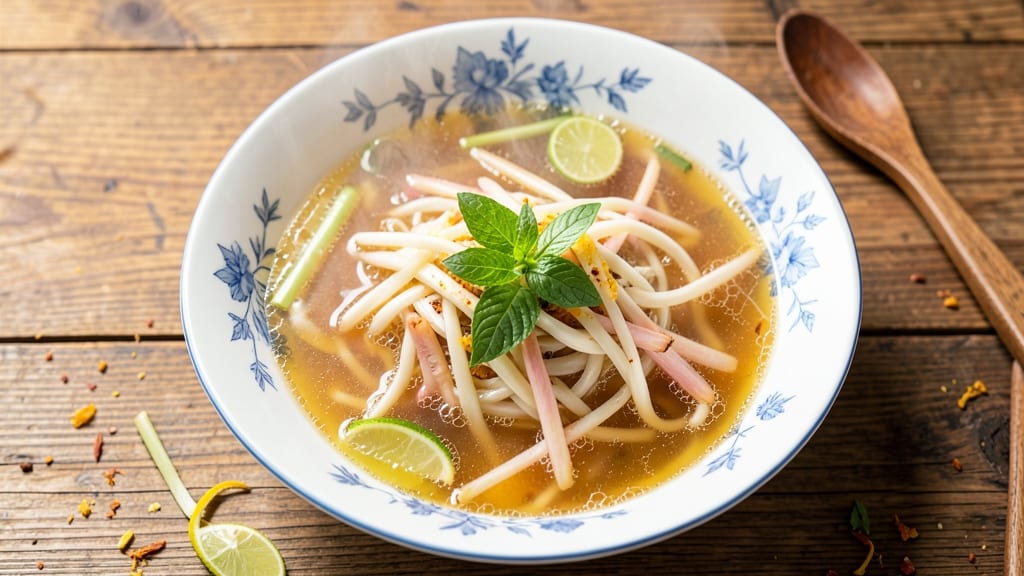
This Thai egg drop soup recipe transforms a simple pot of broth into a fragrant, restaurant-quality experience with just a few key ingredients. The secret lies in the aromatic lemongrass and galangal base, which infuses the broth with bright, citrusy depth that's impossible to replicate with shortcuts.
I perfected this version after years of testing—balancing traditional Thai flavors with approachable techniques for home cooks.
The beauty of this recipe is its adaptability: start with a rich vegetable broth for a vegetarian version, or add shrimp and mushrooms for extra depth. The egg ribbon technique requires gentle stirring and precise timing to create those signature silky strands that melt in your mouth.
Garnishes like fresh cilantro, green onions, and a squeeze of lime elevate each bowl to restaurant quality.
What makes this soup truly special is how the flavors develop as it simmers—starting with the earthy galangal and lemongrass, then brightened by fish sauce and lime.
The result is a clear, fragrant broth that's both comforting and invigorating, perfect for chilly evenings or when you crave something light yet satisfying. Every spoonful delivers that perfect balance of umami, citrus, and subtle heat.
Serve immediately with steamed rice or noodles to soak up every drop of that aromatic broth. The recipe scales beautifully for crowds, and leftovers reheat perfectly—just stir gently to preserve those delicate egg ribbons.
This is the kind of soup that turns a simple weeknight into a memorable Thai dining experience at home.
Ingredients for thai egg drop soup
These aromatic ingredients create a fragrant, restaurant-quality Thai egg drop soup with perfect silky egg ribbons.
| Ingredient | Amount | Notes |
|---|---|---|
| Vegetable Broth 💧 | 6 cups | Homemade or quality store-bought |
| Fresh Lemongrass 🌿 | 3 whole | Stalks, bruised for flavor |
| Fresh Galangal 🥔 | 2 inch | Thinly sliced, peeled |
| Fresh Ginger 🧄 | 1 inch | Thinly sliced, peeled |
| Fish Sauce 🍶 | 1 tbsp | Vegetarian alternative if needed |
| Lime Juice 🍋 | 2 tbsp | Freshly squeezed |
| Large Eggs 🥚 | 3 whole | Room temperature |
| Fresh Cilantro 🌿 | ¼ cup | Chopped, for garnish |
| Green Onions 🧅 | 3 whole | Thinly sliced, for garnish |
| Sesame Oil 🫒 | 1 tsp | For finishing |
| Soy Sauce 🍶 | 1 tbsp | For umami depth |
| Sugar 🍚 | 1 tsp | Balances flavors |
| Salt 🧂 | 1 tsp | Diamond Crystal preferred |
| Vegetable Oil 🫒 | 1 tbsp | For gentle simmering |
The lemongrass and galangal are the heart of this soup's complex aroma. Thai markets carry the best quality, but most grocery stores stock them in the Asian section. Look for stalks with vibrant green leaves—these indicate freshness. Galangal should have a pale, knobby appearance and a citrusy, peppery scent. If you can't find fresh galangal, extra ginger with a splash of lime juice works as a substitute, though it won't replicate the exact flavor. For lemongrass, trim away any brown or wilted leaves and bruise the stalks gently with the side of your knife to release their essential oils before adding to the broth.
Vegetarian fish sauce is a game-changer here—Red Boat or Three Crabs brands are excellent. If you can't find it, soy sauce plus a pinch of sugar mimics some of the umami depth. The eggs should be at room temperature for perfect ribbons; whisk them lightly with a pinch of salt before adding to the simmering broth. For extra richness, reserve some of the broth and whisk it into the eggs before incorporating. The sesame oil should be toasted—heat it briefly in a small pan until fragrant, then let it cool before drizzling over finished bowls. This adds a nutty aroma that complements the citrusy broth beautifully.
This soup is best served immediately, but leftovers reheat gracefully—simmer gently and stir only once to preserve those delicate egg ribbons. Store in an airtight container for up to 3 days in the refrigerator. For freezing, portion into individual containers (the egg ribbons hold up better when reheated in smaller quantities). When reheating, add a splash of water or broth to prevent the broth from thickening. Garnishes like cilantro and green onions should be added fresh just before serving to maintain their vibrant color and bright flavor.
Why You'll Love This Recipe
- Pantry Stash Power: I swear by this soup because it uses what I already have—no last-minute grocery runs. That jar of vegetable broth? Fresh lemongrass and ginger from the freezer? Even the galangal (if you’re lucky enough to find it) just needs a quick chop. No specialty shopping, no stress.
- Umami Magic: The fish sauce and galangal punch is next level—salty, herbal, and just a little funky in the best way. You don’t even need meat to feel that deep, savory satisfaction, and the egg ribbons? They turn silky when you stir them right, like little edible confetti.
- Cold or Hot Flex: Between us, this soup is my lazy genius move. Too hot? Toss it in the fridge and serve it chilled with lime and chili—suddenly it’s a refreshing summer sipper. Too cold? Warm it up in minutes. One recipe, two vibes, zero guilt.
- Budget-Friendly Soul Food: Honestly, this is my wallet’s favorite meal. A few stalks of ginger and lemongrass last for ages, fish sauce stretches forever, and broth is cheap. Plus, leftovers taste just as good the next day—sometimes even better, because the flavors meld overnight. (Yes, even on a Tuesday night.)
Step-by-step instructions for Thai egg drop soup
Master the balance of aromatic broth and delicate egg ribbons with this precise technique.
Prepare the Aromatic Base
In a medium saucepan, heat the 1 tablespoon vegetable oil over medium-low heat. Add the 2-inch fresh galangal and 1-inch fresh ginger, both thinly sliced, along with the 3 whole fresh lemongrass stalks, lightly bruised. Cook for 3-4 minutes until the galangal and ginger soften slightly and release their essential oils—you'll notice the aroma become more pronounced and the edges just beginning to turn translucent.
Add the 6 cups vegetable broth and bring to a gentle simmer. Immediately stir in the 1 tablespoon fish sauce, 1 tablespoon soy sauce, and 1 teaspoon sugar. Let the broth simmer uncovered for 10 minutes to allow the flavors to meld. You'll see the broth develop a subtle golden hue and deepen in aroma—this is when the galangal and ginger have fully infused their complex, citrusy notes.
Season and Clarify the Broth
Remove the lemongrass stalks and discard them. Taste the broth and adjust seasoning if needed—add ½ teaspoon salt if the broth tastes flat, or a pinch more sugar if it needs balancing. The broth should be savory with a bright, slightly sweet undertone and a lingering herbal finish.
Stir in the 2 tablespoons lime juice and let the broth simmer gently for another 5 minutes. This step brightens the flavors and ensures the acidity cuts through the richness of the eggs. Keep the heat at a whisper—you want just enough to maintain warmth without boiling, which would break the eggs prematurely.
Create Silky Egg Ribbons
Crack the 3 whole large eggs into a small bowl and whisk vigorously until the yolks and whites are fully combined. The mixture should be uniform with no streaks of yellow remaining.
With the broth still simmering gently, slowly drizzle the egg mixture into the pan while stirring continuously with a pair of chopsticks or a fork. The heat should gently cook the eggs into delicate, feather-like strands rather than fully setting them. You'll see the ribbons form almost immediately—this is the moment that matters. If the broth starts to thicken too much, add 2-3 tablespoons of hot broth to maintain the desired consistency.
Finish and Garnish
Once the egg ribbons are fully formed and the soup reaches your desired thickness, remove the pan from heat. Stir in the 1 teaspoon sesame oil and let it sit for 1 minute to infuse its nutty aroma throughout the soup.
Ladle the soup into bowls and garnish with the ¼ cup chopped fresh cilantro and 3 whole green onions, thinly sliced. The cilantro adds freshness, while the green onions contribute a mild sharpness that cuts through the richness. Serve immediately while the egg ribbons maintain their delicate texture.
Adjust and Serve
Taste the soup one final time and adjust seasoning if needed. If it lacks brightness, add a splash more lime juice. If it needs more depth, a touch of fish sauce or soy sauce will elevate the umami. The soup should be harmonious—herbal, savory, with a bright finish and silky egg ribbons that melt in your mouth.
This Thai egg drop soup captures the essence of a comforting, aromatic bowl—where every spoonful delivers layers of flavor from the fragrant broth to the delicate egg strands. Serve with a side of steamed jasmine rice to soak up every last drop of that fragrant broth.
Pro Tips For Making Thai Egg Drop Soup
- BLEND THE AROMA BASE: Start by bruising the lemongrass and galangal with the flat side of your knife—just 5-6 hard smacks each—before adding them to the broth. I learned this the hard way: skipping this step means your soup tastes like you just dropped in whole stalks instead of infused flavor.
- SIMMER LOW AND LONG: Keep the broth at a gentle simmer, not a rolling boil, once the aromatics are in. A fast boil burns off the delicate ginger and galangal flavors, leaving you with just a hint of their potential. Trust me, 15 minutes at low heat beats 5 minutes of aggressive bubbling.
- STRAIN THE BROTH CLEVERLY: Use a fine-mesh strainer or cheesecloth for the broth to catch any stray lemongrass fibers or galangal shards. I used to skip this, and my soup always ended up with a weird texture—like eating through a screen. Takes 30 seconds but makes a real difference.
- SALT IN STAGES: Add half the fish sauce when the broth is raw, then taste again after the eggs are in. The soup’s flavor evolves as it cooks, and rushing the seasoning leads to over-salting. I was skeptical until I tried it—now I never guess.
Regional styles of this recipe
Bangkok Street Style
In Bangkok, egg drop soup is often served as a quick, aromatic street food with bold flavors. Locals love adding 1-2 tablespoons of coconut milk to the broth for creaminess, balancing the herbal notes with a subtle sweetness.
I've found that Thai Bird Curry Paste (½ teaspoon) swirled into the broth adds a smoky depth that's popular in street stalls. Garnish with crushed peanuts for texture and serve with soft rice noodles for dipping. 🌶️
Northern Thai Version
The mountainous regions of Northern Thailand create a more herb-forward soup. Here, wild mountain ginger (substitute with extra galangal) and lemongrass stems are used instead of stalks. The broth often includes 1-2 slices of shallot for sweetness and ½ teaspoon of white pepper for warmth.
Top with thinly sliced chili and a sprinkle of toasted sesame seeds for crunch. This version is lighter but packs more herbal complexity.
Southern Thai Fusion
In the south, Thai egg drop soup often incorporates shrimp paste (kapi) (½ teaspoon) for a funky, umami punch. The broth gets a touch of palm sugar (½ teaspoon) to enhance the natural sweetness of the galangal.
Garnish with fresh Thai basil instead of cilantro and add sliced bird's eye chilies for heat. Serve with grilled lemongrass skewers on the side—a popular street food pairing in the region.
Chiang Mai Home Style
This Northern Thai variation focuses on simplicity and freshness. The broth uses pandan leaves (1 bruised leaf) for a floral aroma alongside the lemongrass. A splash of rice vinegar (1 teaspoon) brightens the flavors, and the soup is finished with crushed roasted cumin seeds (½ teaspoon) for earthiness.
Serve with pickled mustard greens on the side—a classic Chiang Mai pairing that adds tangy contrast.
Modern Bangkok Café Twist
Contemporary Bangkok cafés often elevate egg drop soup with unexpected ingredients. Try adding 1 tablespoon of miso paste to the broth for depth, then finishing with microgreens and a drizzle of yuzu kosho.
For a smoky touch, infuse the broth with ½ teaspoon of smoked salt> during the final simmer. This version keeps the traditional technique but adds a sophisticated, fusion-friendly profile that's perfect for brunch menus. ✨
Nutrition facts
Frequently asked questions
Can I make this Thai egg drop soup vegetarian?
Simply replace the fish sauce with a vegetarian alternative like vegetarian fish sauce (brands like Red Boat offer plant-based versions) or use soy sauce plus ½ teaspoon sugar for umami depth. The rest of the recipe remains exactly the same, including the aromatic galangal and lemongrass base. For extra protein, add soft tofu cubes or mushrooms when simmering the broth.
Why did my egg ribbons turn into scrambled eggs?
The key is maintaining a gentle simmer—never boiling. If your broth is too hot, the eggs will cook too quickly and curdle. Use low-medium heat and stir continuously with chopsticks while drizzling the egg mixture. If the broth thickens too much, add 2-3 tablespoons of hot broth to keep it fluid. Room-temperature eggs also help create silky ribbons.
What's the best way to store leftovers?
Store in an airtight container in the fridge for up to 3 days. Reheat gently on the stove over low heat, stirring occasionally and adding a splash of water or broth to prevent thickening. For freezing, portion into individual containers—this preserves the egg ribbons better when reheating. Never freeze with garnishes like cilantro or green onions, as they won't survive thawing.
Can I substitute galangal if I can't find it?
Yes! Use extra ginger plus lime juice as the closest substitute. For every 1-inch galangal, use 1½ inches ginger plus 1 teaspoon lime juice. While it won't replicate galangal's exact peppery-citrus flavor, it adds warmth and depth. For a more authentic taste, check Asian markets for frozen galangal slices, which work just as well as fresh.
How can I make this soup spicier?
Add ½ teaspoon of chili flakes or 1-2 thinly sliced Thai chilies to the broth while simmering. For heat lovers, stir in 1 teaspoon of sambal oelek during the final 5 minutes of simmering. Garnish with extra chili slices or a dash of chili crisp before serving. Remember, Thai chilies are much spicier than jalapeños—use sparingly if you're sensitive to heat!