
Breakfast & Brunch
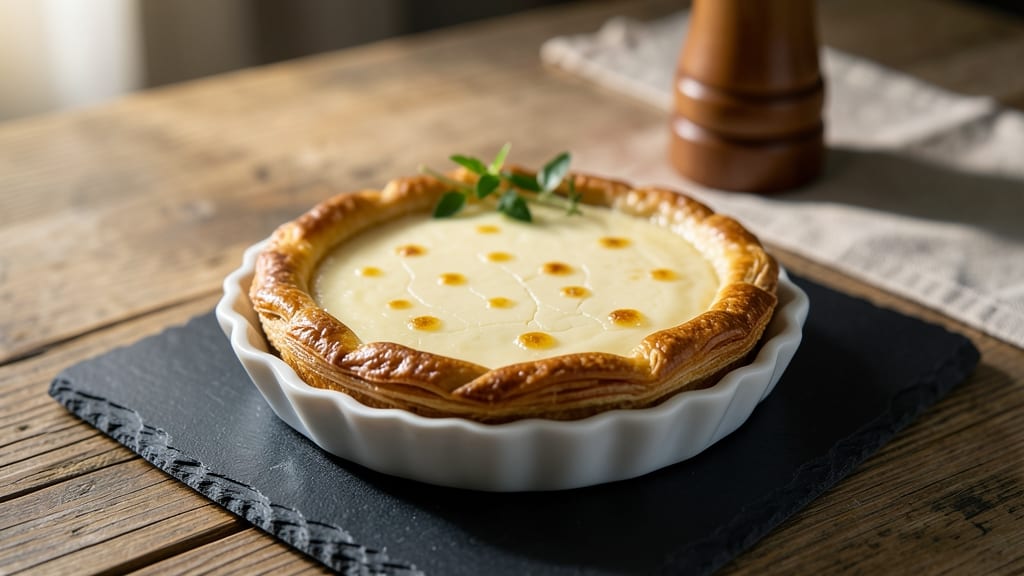
This Taiwan egg tart recipe delivers the perfect balance of crispy meringue shells and luscious, golden custard—just like the ones you'd find in Taipei's legendary bakeries. 💛 The secret lies in the high-ratio egg whites whipped to stiff peaks and the slow-baked custard that creates that signature silky texture.
I've perfected this recipe after years of trial and error, ensuring every bite delivers that satisfying contrast between the delicate shell and rich filling.
The foundation starts with a simple buttery pastry shell, but the magic happens in the egg custard. Using a precise ratio of eggs, sugar, and milk creates that signature golden color and velvety consistency. The key technique?
Baking the tarts at a lower temperature for an extended time—this prevents cracking while developing that deep custard flavor. This method transforms a simple dessert into something truly special, with each tart offering a perfect balance of textures and flavors.
What makes these egg tarts truly exceptional is the way the meringue shell crisps just enough to provide structure while remaining tender enough to melt slightly with each bite. The custard inside stays perfectly set, with a glossy sheen that signals its rich, creamy quality.
The aroma alone—warm, buttery, and slightly sweet—will have everyone gathering around your kitchen. These tarts are perfect for breakfast, brunch, or even as a delightful afternoon treat.
Whether you're making them for a family gathering or treating yourself to a taste of Taiwan, this recipe delivers professional-quality results at home. The process might require patience, but the reward is worth every minute. Let's get started on creating these iconic pastries that have captivated dessert lovers worldwide.
Ingredients for taiwan egg tart
Twelve ingredients transform into twelve golden, crispy egg tarts—Taipei bakery quality at home.
| Ingredient | Amount | Notes |
|---|---|---|
| Large Egg Whites 🥚 | 8 whole | Room temperature, pasteurized if preferred |
| Granulated Sugar 🍚 | 1 ½ cups | Superfine preferred for smooth texture |
| Unsalted Butter 🧈 | 1 ½ cups | Cold, cubed for pastry shell |
| All-Purpose Flour 🌾 | 1 ½ cups | Sifted for light pastry |
| Large Egg Yolks 🥚 | 6 whole | Separated from whites earlier |
| Whole Milk 🥛 | 1 ½ cups | Full-fat for rich custard |
| Granulated Sugar 🍚 | ½ cup | For custard sweetness |
| Vanilla Extract 🌿 | 1 tsp | Pure vanilla for authentic flavor |
| Salt 🧂 | ¼ tsp | Fine sea salt preferred |
| Cornstarch 🌾 | 1 tbsp | For custard stability |
| Baking Powder 🌶️ | ½ tsp | For meringue lift |
| Vegetable Oil 🫒 | 1 tbsp | For greasing tart molds |
The egg whites are non-negotiable—room temperature and pasteurized if you're cautious about salmonella. Kirkland Signature or Organic Valley are my go-tos at Costco, but any large whites work. Sift your flour twice—this prevents dense shells. For the butter, Plugrá or Land O'Lakes unsalted is ideal, but don't use salted. The custard ratio of yolks to milk is key—too much milk and the filling gets watery. Whole milk gives that signature richness, but 2% works in a pinch.
No vanilla extract? Vanilla bean paste or even a scraped vanilla bean work—just scrape the seeds into the custard. Running short on baking powder? 1/4 tsp cream of tartar plus 1/4 tsp cornstarch mimics it perfectly. The custard sugar can be swapped for coconut sugar if you're avoiding refined sugar, but the color won't be as golden. For the meringue, if your whites won't stiffen, add 1/8 tsp cream of tartar to stabilize them. And trust me on the cornstarch—it's what keeps the custard from turning gummy.
The pastry dough keeps for 2 days wrapped in plastic in the fridge, but the custard must be made fresh. Prep the dough first—it needs to rest while you whip the meringue. Once baked, these tarts reheat beautifully—30 seconds in the microwave restores that warm, gooey center. Store them in an airtight container at room temperature for 2 days or freeze the unbaked shells for 1 month. The custard can be piped into frozen shells, then baked straight from frozen—just add 5 minutes to the baking time.
Why You'll Love This Recipe
- No-Fuss Pastry: I swear, the crust only needs three ingredients—flour, butter, and a pinch of salt—and it’s foolproof. Even if you’ve never rolled dough before, this recipe forgives mistakes. (Yes, even the lumpy bits disappear when baked.)
- Golden Custard Magic: That creamy yolk center? It’s all about the slow bake—just egg yolks, sugar, and a splash of water, whisked until it’s smoother than my morning coffee. The contrast with the crispy crust? Chef’s kiss. Honestly, it’s the kind of bite that makes people pause mid-conversation.
- Breakfast or Dessert: Serve them warm with tea for brunch, or pack a few in lunchboxes for later. My kids grab them straight from the oven (burning their fingers, but not their enthusiasm) because they’re just as good at room temp. No rules here—just pure, happy snacking.
- Leftovers? More Like Leftovers: A batch makes 12 tarts, and they stay fresh for days in the fridge. Freeze extras too—I’ve reheated them straight from frozen, and no one ever notices. Between us? This is my secret weapon for lazy Sundays or when I forget to meal prep.
Step-by-step instructions for Taiwan egg tarts
Here's how to achieve that perfect balance of crispy meringue shells and silky custard centers!
👨🍳 Step 1: Prepare the Crispy Meringue Shells
Preheat your oven to 350°F and grease 12 tart molds with the 1 tablespoon vegetable oil. In a clean, grease-free bowl, beat the 8 whole large egg whites with an electric mixer until soft peaks form. Gradually add 1.5 cups granulated sugar while mixing on high speed until the meringue is glossy and holds stiff peaks.
Fold in 1.5 cups unsalted butter (softened but still cool), 1.5 cups all-purpose flour (sifted), 0.5 teaspoon baking powder, and 0.25 teaspoon salt using a spatula. The mixture should be thick but pipeable. Spoon into the prepared tart molds, filling each about ¾ full, and bake for 15-18 minutes until golden brown and crisp.
🍳 Step 2: Make the Silky Custard Filling
While the shells bake, whisk together the 6 whole large egg yolks, 0.5 cup granulated sugar, 1 tablespoon cornstarch, and 1 teaspoon vanilla extract in a bowl until smooth. Gradually pour in 1.5 cups whole milk while whisking continuously to prevent curdling.
Transfer the mixture to a saucepan and cook over medium heat, stirring constantly with a wooden spoon, until it thickens enough to coat the back of the spoon (5-7 minutes). Remove from heat and let cool slightly—it should be thick but still pourable. The custard should be smooth with no lumps, and you'll see it thicken further as it cools.
🥘 Step 3: Assemble and Bake to Perfection
Once the meringue shells are cooled, carefully pour the custard mixture into each shell, filling them to the top. The custard should be hot enough to melt any residual moisture in the shells but not so hot it burns them.
Return the tarts to the oven and bake at 350°F for 10-12 minutes until the custard is set but still slightly wobbly in the center. This ensures that when you cut into them, the custard has that signature silky texture. Remove from the oven and let cool for 5 minutes before unmolding.
⏰ Step 4: Rest and Serve
Let the tarts cool completely at room temperature before serving. This resting period allows the custard to fully set and the flavors to meld together. The contrast between the crispy, golden shell and the smooth, creamy custard is what makes these egg tarts so irresistible.
Serve warm or at room temperature for the best texture. The meringue should be crisp enough to hold its shape, while the custard should be rich and velvety. Store any leftovers in the refrigerator for up to 3 days, but I promise you won't have any leftovers!
Pro Tips For Making Taiwan Egg Tart
- Whisk Yolks Like Mad: Beat those egg yolks and sugar until the mixture is pale, thick, and ribbon-like—that’s the only way to get that signature glossy, crack-free top. I used to stop when it looked "done," but now I push it until it’s nearly stiff. Trust me, the texture change is worth the extra 30 seconds.
- Chill the Dough: Wrap your tart dough in plastic and refrigerate it for at least 30 minutes before rolling. Cold dough is easier to handle and won’t shrink when you transfer it to the tart pans. (Yes, even if you’re impatient like me.)
- Don’t Overfill the Cups: Fill the tart shells only halfway with custard—any more and the yolks will spill over when baking, leaving you with a messy, uneven finish. I learned this after cleaning up three batches of sticky yolk puddles.
- Steam First, Then Bake: Place the tarts in a water bath for the first 10 minutes of baking—this slows the cooking and prevents cracks. After that, finish them uncovered at 350°F (175°C) until set. (Your future self will thank you.)
Troubleshooting this dish
Cracked Shells
If your meringue shells crack during baking, it’s usually from overmixing or opening the oven too soon. I’ve found that gently tapping the tart molds on the counter before baking helps release air bubbles. Also, make sure your egg whites are at room temperature—cold whites won’t whip as stiffly.
For extra insurance, chill the filled tart molds in the fridge for 15 minutes before baking to slow the rise. 💡
Watery Custard
A runny custard filling often means the mixture wasn’t cooked long enough or the ratio of milk to yolks was off. Always cook the custard until it reaches 170°F internal temperature—use a candy thermometer for precision.
If it’s still too thin after baking, try reducing the milk by ¼ cup next time. For a quicker fix, add 1 extra tablespoon cornstarch to the custard mixture before cooking.
Pale or Blonde Shells
For that signature golden-brown color, don’t skip the baking powder—it’s essential for browning. If your shells turn out too pale, try increasing the oven temperature by 25°F for the final 2-3 minutes of baking.
Another trick? Brush the baked shells lightly with egg wash (1 egg yolk + 1 tsp water) before adding the custard—this adds a subtle sheen and deeper color.
Uneven Baking
Unevenly baked tarts usually mean your oven isn’t hot enough or the custard wasn’t distributed evenly. Rotate the baking tray halfway through baking to ensure even heat distribution. For the custard, use a piping bag with a small round tip to fill the shells precisely.
If your oven runs hot or cold spots, consider using an oven thermometer to verify the actual temperature.
Soggy Bottoms
Soggy shells happen when the custard is too hot when poured into the shells, causing them to steam. Let the custard cool to 120°F before filling the shells—test it by touching the back of your hand.
If you’re in a hurry, chill the shells in the freezer for 5 minutes before adding the custard to firm them up. Also, ensure your tart molds are well-greased to prevent sticking.
Custard Too Sweet
If the custard tastes overly sweet, adjust the sugar next time—start with ¼ cup instead of ½ cup. For a more balanced flavor, add a pinch of salt (just ⅛ tsp) to enhance the sweetness naturally.
If you’ve already made the custard, balance it by adding a splash of vanilla extract or a few drops of almond extract to add depth without extra sugar.
Nutrition facts
Frequently asked questions
Why do Taiwan egg tarts have that signature golden color?
The golden hue comes from two key ingredients: the custard's cornstarch and the meringue's baking powder. The cornstarch creates a caramelized reaction when baked, while the baking powder promotes even browning. Using whole milk instead of skim also enhances the natural golden tone during baking.
Can I make these egg tarts without tart molds?
Yes! Use 6-inch round cake pans or even a baking sheet lined with parchment paper. Divide the meringue into 12 equal balls (about 1.5 inches wide) and space them 2 inches apart. Bake at 350°F for 18-20 minutes until golden. The custard will naturally create its own "shell" shape when poured into the centers.
How do I store leftover egg tarts?
Keep them in an airtight container at room temperature for up to 2 days. For longer storage, refrigerate for 5 days or freeze the unbaked shells for 1 month. To reheat, microwave for 10-15 seconds—just enough to restore the custard's warmth without making the meringue soggy.
What's the difference between Taiwan and Hong Kong-style egg tarts?
Taiwanese versions use a meringue-based shell (like this recipe) with a crispier texture, while Hong Kong-style tarts have a buttery pastry shell similar to pie crust. The custard in Taiwan's version is slightly lighter and less sweet, with a focus on the contrast between the crisp shell and silky filling. Both are delicious—try making both to compare!
Can I make these egg tarts gluten-free?
Yes, but with adjustments. Replace the all-purpose flour with a 1:1 gluten-free baking flour blend (like Bob's Red Mill) and add 1 extra tablespoon cornstarch to the meringue. The custard remains the same. Note that gluten-free shells may be slightly less crisp—chill the filled tarts for 15 minutes before baking to improve texture.