
Breakfast & Brunch
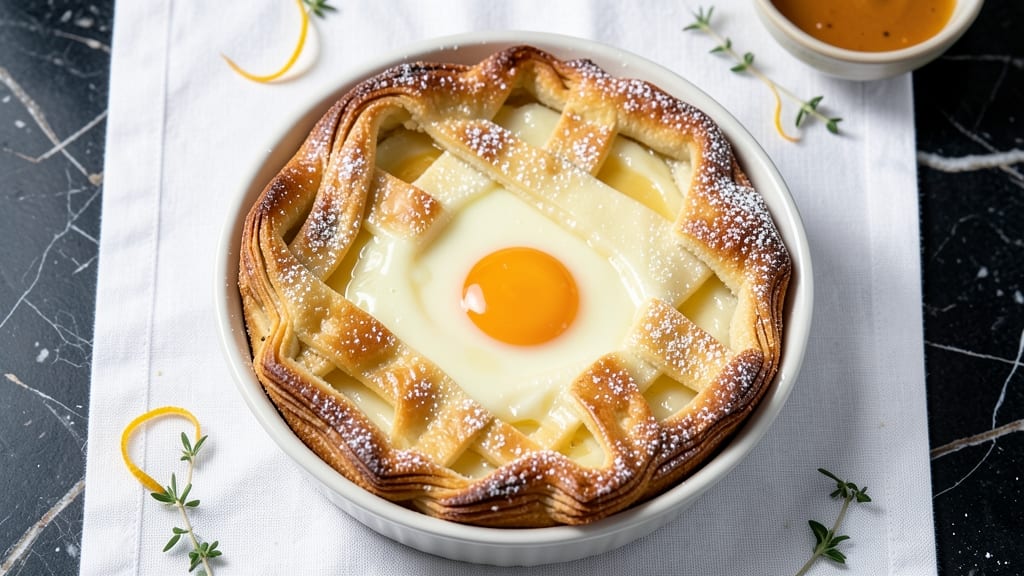
This 85-degree egg tart recipe delivers the perfect balance of crisp, flaky pastry and silky custard that's just set—not runny, not dry. The secret lies in precise oven temperature control and a custard mixture that achieves that signature wobble when sliced. After years of perfecting the technique, I've finally cracked the code for restaurant-quality egg tarts at home.
The foundation starts with a buttery, flaky pastry shell that bakes to golden perfection, while the custard filling—made with eggs, sugar, and milk—cooks at exactly 85°C (185°F) for that signature texture.
Blind-baking the crust ensures it stays crisp, and the custard's gentle heat creates a velvety center that's creamy yet firm enough to hold its shape. Every bite reveals layers of contrast: crisp edges, tender pastry, and that irresistibly smooth custard.
What makes this recipe truly special is the technique: the custard is baked just until it reaches the perfect internal temperature, creating that signature "wobble" when cut.
The result is a custard that's silky-smooth yet holds its shape, encased in a buttery, flaky pastry that's crisp enough to stand up to the filling. This is the kind of egg tart that makes you forget about store-bought versions forever.
Serve these egg tarts warm with a dusting of powdered sugar or a drizzle of chocolate for a touch of indulgence. They're perfect for breakfast, afternoon tea, or dessert—any time you want a treat that feels both elegant and comforting. Let's get started on mastering this classic recipe.
Ingredients for 85 degrees egg tart
Six ingredients for a flaky crust and four for that signature custard—game-changer combo.
| Ingredient | Amount | Notes |
|---|---|---|
| All-Purpose Flour 🌾 | 2 ½ cups | Sifted for flaky texture |
| Cold Unsalted Butter 🧈 | 1 cup | Cubed, not melted |
| Granulated Sugar 🍚 | ¼ cup | Superfine preferred |
| Large Eggs 🥚 | 6 whole | Room temperature |
| Whole Milk 🥛 | 1 ½ cups | Full-fat for richness |
| Vanilla Extract 🌿 | 1 tsp | Pure, high-quality |
| Salt 🧂 | ½ tsp | Fine sea salt |
| Powdered Sugar 🍚 | ¼ cup | For dusting |
| Dark Chocolate Chips 🍫 | ½ cup | 70% cocoa or higher |
| Baking Powder 🌾 | ½ tsp | For lift in crust |
| Ice Water 💧 | ¼ cup | Chilled for pastry |
The butter is non-negotiable here—European-style if you can find it, but any good-quality unsalted works. Keep it cold when cutting into the flour; that's what gives those flaky layers. I grab mine from Whole Foods or the store's bakery section, where it's usually pre-cubed and ready to go. For the eggs, room temperature is key—they should slide right out of the shell. The milk? Whole milk only—it makes all the difference in richness. If you're in a pinch, half-and-half works too, but the texture won't be quite as silky.
No vanilla extract? Vanilla bean paste is a great swap—just use half the amount. The powdered sugar for dusting? Confectioners' sugar from the store works fine, but if you've got a food processor, you can make your own from granulated sugar. For the chocolate drizzle, 70% cocoa or higher gives that deep, rich flavor. If you're feeling fancy, melt the chocolate with a splash of cream for a glossier finish. And trust me on the room-temperature eggs—they mix so much smoother, and the custard turns out perfectly set every time.
The butter and flour mixture can be prepped 1 day ahead and chilled until ready to use. The custard filling keeps for 24 hours in the fridge, but assemble the tarts right before baking for the best results. Once baked, they're best served warm—the custard is silky and just set, not runny. Store leftovers in an airtight container for 3 days, but honestly? They're so good you'll eat them all.
Why You'll Love This Recipe
- No-Fuss Dough: I swear by that cold butter cut into flour—no food processor, no fuss. Just your fingers and 10 minutes of gentle kneading, and you’ve got a crust that’s flaky enough to make you proud.
- Golden Custard Magic: That sugar-milk-egg mix? It’s the secret—thick, silky, and just sweet enough to balance the buttery crust. Bake it to 85°C (185°F) and you get that perfect set: jiggly center, crisp edges.
- Breakfast or Snack: Honestly, I eat these cold for breakfast, warm as a dessert, or packed in my lunchbox. The crust holds up for days, and the custard stays rich no matter when you slice in.
- Pantry Staple Power: Five ingredients, all things I already have. No specialty items, no last-minute grocery runs. And leftovers? They last five days in the fridge—no one in my house resists seconds.
Step-by-step instructions for perfect 85-Degree egg tarts
Here's how to create that iconic flaky crust and silky custard filling every time.
Make the Flaky Pastry Dough
In a large mixing bowl, combine the 2.5 cups all-purpose flour, 0.5 teaspoon salt, and 0.5 teaspoon baking powder. Whisk lightly to distribute evenly—this ensures your crust won't be dense. Cut in the 1 cup cold unsalted butter using a pastry cutter or your fingers until the mixture resembles coarse crumbs with pea-sized butter pieces. This cold butter creates the flaky layers that make these tarts legendary.
Add the 0.25 cup granulated sugar and mix until just combined. Then pour in the 0.25 cup ice water gradually while stirring with a fork. The dough should come together when pressed—if it's too dry, add 1 teaspoon more ice water. Shape into a disk, wrap in plastic, and chill for at least 1 hour. This resting period relaxes the gluten for maximum flakiness.
Prepare the Custard Filling
In a medium saucepan, whisk together the 6 whole large eggs, 1.5 cups whole milk, 1 teaspoon vanilla extract, and 0.25 cup powdered sugar until smooth. Place the pan over medium-low heat and stir constantly with a wooden spoon or silicone spatula. You want to heat the mixture to 85°C (185°F)—this is crucial for that perfect custard texture without scrambling the eggs.
Use a candy thermometer to monitor the temperature. Once it reaches 85°C (185°F), remove from heat immediately. The mixture should thicken slightly but still coat the back of a spoon. Let it cool to room temperature while you prepare the tart shells. This precise temperature creates that signature silky, jiggly center that makes these tarts so irresistible.
Assemble and Bake the Tarts
Preheat your oven to 350°F (175°C). Roll out the chilled dough between two sheets of parchment paper to about 1/8-inch thickness. Cut 6-inch circles using a round cutter or glass, then press each into a greased mini tart pan or muffin tin, creating slightly fluted edges. The dough should come up the sides about 1/2 inch high. Chill the assembled tarts for 15 minutes while you preheat the oven.
Bake the crusts for 12-15 minutes until they're light golden brown at the edges. Immediately after removing from the oven, carefully pour the cooled custard filling into each shell, filling them about 3/4 full. The custard should be hot enough to melt any remaining butter in the crust but not so hot it cooks the eggs further. Return to the oven and bake for another 15-18 minutes until the custard is set but still slightly wobbly in the center.
Add Chocolate Topping and Finish
While the tarts are still warm, sprinkle 0.5 cup dark chocolate chips evenly over each custard filling. The residual heat will make them melt and create that beautiful marbled effect. For extra shine, dust with a little extra powdered sugar right after removing from the oven. Let the tarts cool completely before serving—this allows the chocolate to set properly and the custard to firm up just enough to hold its shape when sliced.
Serve warm or at room temperature. The contrast between the crisp, buttery crust and the velvety custard with melted chocolate is pure magic. These tarts are best enjoyed within 2-3 days, though the crust stays fresh for up to 5 days if stored properly in an airtight container.
Pro Tips For Making 85 Degrees Egg Tart
- Chill the Dough Properly: After mixing your butter and flour for the crust, wrap it tightly in plastic and refrigerate for at least 30 minutes—no, not just 10. I learned this the hard way when my first batch spread like melted ice cream. The butter needs to stay firm enough to hold its shape when rolled, or you’ll end up with a sad, greasy puddle instead of crisp layers.
- Use Room-Temp Eggs: Take your eggs out of the fridge 30 minutes before cracking them into the custard mixture. Cold eggs make the filling separate like a lazy stream, while room-temp ones blend smoothly into that signature glossy, creamy texture. Trust me, your egg tart’s consistency will thank you—no lumpy surprises here.
- Prevent Overbrowning: Once the crust is blind-baked, cover the tart pans with aluminum foil before they hit 350°F (175°C). I used to ignore this, and my crusts would turn into charcoal while the custard stayed undercooked. The foil keeps the edges golden without burning—just remove it when the oven’s preheated, and bake uncovered for the final 5 minutes.
- Skip the Extra Sugar: The custard in 85° egg tarts is sweet enough—don’t double the sugar unless you’re baking for a toddler. Too much turns the filling into syrup, and the crust gets lost in the sweetness. Stick to the recipe’s amount, and let the eggs and milk shine. (Yes, even if you’re impatient like me.)
Regional styles of 85 degrees egg tart
Singapore's Iconic Style
In Singapore, egg tarts are a beloved street food staple, often sold by vendors like Liao Fan Hong Kong Soya Sauce Chicken Rice & Noodle or Good World Food Emporium. The signature version features a smooth, slightly crisp crust with a custard that's just set—not runny.
The secret? A longer baking time at 350°F (175°C) to develop a deeper golden color, and a custard that's baked until it reaches 85°C (185°F) internally for that signature wobble. 🍫
Singaporean egg tarts often include a touch of salted egg yolk in the custard for a marbled effect, adding a savory contrast to the sweet filling. The crust is typically slightly thicker than other regional styles, providing extra structure to hold the custard.
For an authentic touch, brush the baked crusts with a little egg wash before baking for that signature sheen.
Malaysian Pandan Twist
Malaysian egg tarts incorporate pandan leaves into both the crust and custard, giving them a fragrant, green hue and a subtle floral note.
The crust is often enriched with pandan extract (about 1 teaspoon mixed into the dough), while the custard gets a splash of pandan-infused milk (steep 2-3 pandan leaves in 1 cup warm milk for 10 minutes).
This variation is popular in places like Kuala Lumpur and Penang, where egg tarts are a common dessert.
For a homemade version, blend 1 cup milk with 1 teaspoon pandan extract (or 1 crushed pandan leaf) and strain before using in the custard.
The result is a vibrant, aromatic tart that’s perfect for tea time. Pair it with a cup of Malaysian teh tarik for the full experience. 🌿
Hong Kong's Classic Approach
Hong Kong's egg tarts are legendary for their buttery, flaky crusts and ultra-smooth custard, often sold by bakeries like Tai Cheong Bakery or L.M. Bakery.
The key difference here is the crust's texture—it’s thin and delicate, almost like a shortcrust pastry, with a custard that’s baked to a silky, jiggly consistency. Hong Kong-style tarts are typically smaller (about 3-inch diameter) and baked in muffin tins for a compact, handheld size.
To achieve this, roll out the dough to 1/16-inch thickness and bake the crusts until they’re pale gold (not browned). The custard is poured in while still warm and baked until just set.
For an authentic touch, dust with powdered sugar right after baking to mimic the look of Hong Kong street vendors. These tarts are best served warm with a cup of Hong Kong-style milk tea. ✨
Taiwanese Sweet Variations
In Taiwan, egg tarts often include red bean paste or matcha powder for a unique twist. The crust remains buttery and flaky, but the custard is infused with flavors like matcha (1 teaspoon powdered matcha per custard batch) or swirled with sweet red bean paste before baking.
These variations are popular in Taipei and Taichung, where egg tarts are enjoyed as both breakfast and dessert.
For a matcha version, whisk 1 teaspoon matcha powder into the custard mixture along with the eggs and milk. For red bean, spread a thin layer of sweet red bean paste (about 1 tablespoon per tart) into the crust before adding the custard.
Bake as usual, and the result is a vibrant, flavorful tart that’s perfect for brunch. 🌸
Nutrition facts
Frequently asked questions
Why does the custard need to reach exactly 85°C (185°F)?
That precise temperature ensures the custard develops that signature silky yet firm texture—neither runny nor scrambled. At 85°C (185°F), the eggs coagulate just enough to create that irresistible wobble when sliced, while maintaining a velvety mouthfeel. Any hotter, and it risks curdling; cooler, and the center stays too soft. A candy thermometer is your best friend here!
Can I make the egg tart crust ahead of time?
The dough can be wrapped and refrigerated for up to 2 days, or even frozen for 1 month. For the crust shells, bake them blind (without filling) and store in an airtight container at room temperature for 3 days. Just reheat in the oven for 5 minutes at 350°F (175°C) before adding the custard to keep them crisp. This is a huge time-saver!
What if my custard turns out too runny or too firm?
Runny custard? You likely didn't heat it to 85°C (185°F) long enough or used too much milk. For next time, stir constantly and use a thermometer. Too firm? You may have overcooked it—reduce baking time by 2-3 minutes next time. Pro tip: The custard should jiggle slightly when the pan moves, like Jell-O but warmer.
Can I substitute the chocolate chips with something else?
Yes! Try white chocolate chips for a sweeter contrast, matcha powder (sprinkle over top before baking), or even crushed nuts like pistachios or almonds for crunch. For a savory twist, sprinkle with flaky sea salt right after baking. The key is adding it while the custard is still warm so it melts or adheres properly.
How do I fix a soggy crust?
Soggy crusts usually happen when the custard is too hot or the crust isn't fully baked. Next time, blind-bake the crusts for 15 minutes before adding filling, and let the custard cool completely before pouring. For a quick fix, slice the tart, remove the custard, and rebake the crust alone for 5 minutes at 350°F (175°C) to crisp it up before reassembling.