
Breakfast & Brunch
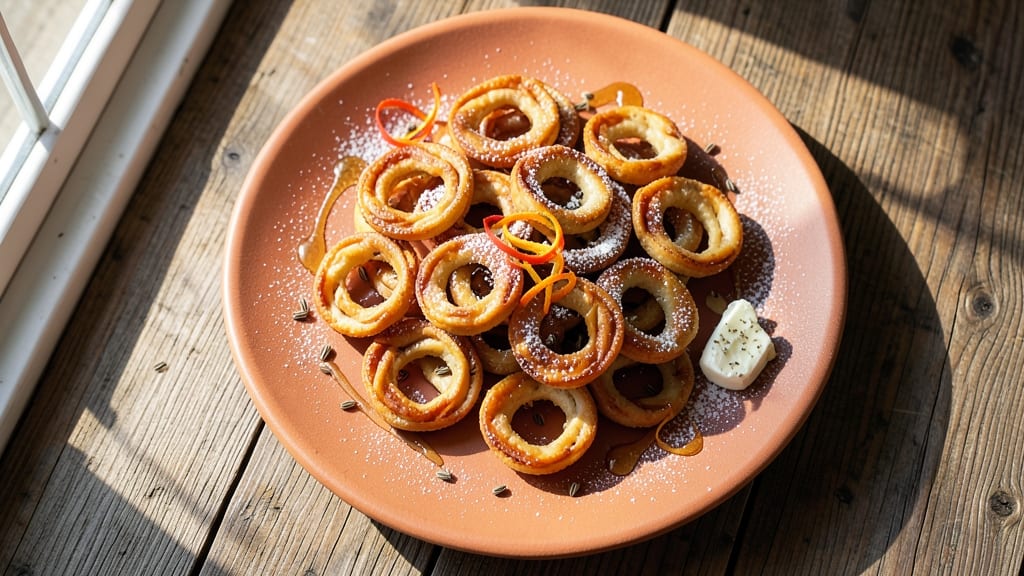
This sweet egg taralli recipe delivers the perfect balance of crunchy texture and aromatic anise flavor, a beloved Italian tradition that's surprisingly simple to make at home. The dough comes together with just a few ingredients—flour, eggs, anise seeds, and sugar—then gets rolled, shaped, and baked until golden and crisp.
I first discovered these delicate bites during a trip to Puglia, where they're served with coffee or wine as an afternoon treat.
The magic happens in the shaping and baking process, where the dough transforms into those iconic twisted shapes. Anise seeds infuse the dough with a subtle licorice-like warmth, while the sugar adds just enough sweetness to complement the crunch.
What you'll end up with is a batch of crispy, golden taralli that stay fresh for days when stored properly—ideal for gifting or snacking straight from the oven.
This recipe captures the authentic Italian technique while making it accessible for home bakers. The dough requires only a short proofing time, and the baking process is straightforward at 350°F for about 15-20 minutes.
Whether you're making them for a holiday spread or a simple afternoon snack, these taralli bring a taste of Italy to your kitchen with minimal effort.
For extra flavor, try dusting them with powdered sugar or cinnamon after baking. The possibilities for variations are endless, but the classic anise-infused version remains the most beloved. Let's get started on creating these crispy, aromatic bites that taste like a trip to Italy.
Ingredients for sweet egg taralli
Nine simple ingredients create these iconic Italian bites with perfect crunch and aromatic warmth.
| Ingredient | Amount | Notes |
|---|---|---|
| All-Purpose Flour 🌾 | 4 cups | Sifted for lighter texture |
| Large Eggs 🥚 | 2 whole | Room temperature for even mixing |
| Granulated Sugar 🍚 | ½ cup | Adjust for sweetness preference |
| Anise Seeds 🌿 | 2 tbsp | Whole seeds for authentic flavor |
| Unsalted Butter 🧈 | ½ cup | Cold, cubed for easy mixing |
| Powdered Sugar 🍚 | ¼ cup | For dusting finished taralli |
| Orange Zest 🍊 | 1 tbsp | Brightens the anise flavor |
| Vanilla Extract 🍯 | 1 tsp | Pure vanilla for depth |
| Salt 🧂 | ½ tsp | Fine sea salt for balance |
| Water 💧 | ½ cup | Room temperature for mixing |
| Cornmeal 🌾 | ½ cup | For rolling and dusting |
The flour is the foundation—King Arthur or Caputo Tipo 00 work best for that delicate texture, but all-purpose flour in a pinch. Anise seeds are key: buy whole seeds from a specialty store like Penzeys for the most authentic flavor. The butter should be cold and cubed—this keeps the dough from getting too soft. I always double-check my anise seeds smell fresh; stale seeds lose their punch. For the orange zest, use a fine grater to avoid bitterness—Navel oranges work best. The vanilla extract should be pure, not imitation, for that rich depth of flavor.
No anise seeds? One teaspoon of anise extract works in a bind, though it won't be as authentic. Skip the orange zest? Add an extra teaspoon of vanilla for warmth. The powdered sugar can be swapped for confectioners' sugar if that's what you have. For the butter, vegetable shortening is a neutral substitute if you're avoiding dairy. The water must be room temperature—cold water can make the dough tough. If your dough feels too sticky, add a tablespoon more flour at a time until it's pliable but not dry. The cornmeal is non-negotiable for rolling—it prevents sticking and adds a subtle crunch.
Store the baked taralli in an airtight container at room temperature for up to 2 weeks, though they'll lose crispness after 5 days. For longer storage, freeze them for 3 months—just thaw at room temperature before serving. I always make a double batch: one for gifting and one for snacking. The taralli reheat beautifully in a 350°F oven for 5 minutes to restore crispness. For extra flair, dust with powdered sugar or cinnamon right after baking—trust me, it's worth it.
Why You'll Love This Recipe
- Pantry Staples Only: I swear by this recipe because it uses flour, sugar, and eggs—stuff I always have on hand. No specialty ingredients, no last-minute grocery runs. Just mix, roll, and bake.
- Crunch-Sweet Magic: That anise seed kick? It’s like a licorice hug in every bite—warm, fragrant, and just sweet enough to balance the crispy edges. The butter makes it rich without being heavy.
- Holiday or Snack Attack: These vanish at parties (trust me, I’ve hosted) but also work as a quick breakfast with coffee or a dessert when you’re craving something simple. Freeze extras for instant treats.
- Zero-Waste Bites: A single batch stretches for days—perfect for movie nights or when you’re too tired to cook. They taste fresh even after a week, and you can toss them in a bag for on-the-go energy.
Step-by-step instructions for sweet egg taralli
Here's how to craft these delicate, crunchy Italian bites with perfect texture every time.
Create the Dough Foundation
In a large mixing bowl, combine the 4 cups All-Purpose Flour, 0.5 cup Granulated Sugar, 2 tbsp Anise Seeds, 0.5 tsp Salt, and 1 tbsp Orange Zest. Whisk these dry ingredients together until the anise seeds are evenly distributed and the mixture is fully aerated. This step ensures the anise flavor permeates every bite.
In a separate bowl, beat the 2 whole Large Eggs at room temperature until just combined, then mix in the 0.5 cup Unsalted Butter cut into small cubes. Add the 1 tsp Vanilla Extract and 0.5 cup Water to create a smooth, creamy base. The butter should be cold enough to maintain structure but soft enough to incorporate fully.
Gradually add the dry ingredients to the wet mixture, mixing with a wooden spoon or dough whisk until a shaggy dough forms. Avoid overmixing at this stage—you want to preserve the delicate crumb structure that creates those signature air pockets in taralli. The dough should be soft but manageable, similar to playdough consistency.
Knead and Rest the Dough
Turn the dough onto a lightly floured surface and knead gently for about 5-7 minutes until smooth and elastic. You're not looking for windowpane toughness here—just enough development to create a cohesive dough. The anise seeds will give it a slightly grainy texture, so don't worry if it doesn't look perfectly smooth.
Shape the dough into a round disk and wrap tightly in plastic wrap. Let it rest at room temperature for 30 minutes or refrigerate for 1 hour if you prefer. This resting period allows the gluten to relax, making the dough easier to work with and preventing it from shrinking during shaping. The longer rest also deepens the anise flavor infusion.
Shape and Prepare for Baking
After resting, divide the dough into 4 equal portions (about 1 cup each) and roll each portion into a ¼-inch thick rope, about 12 inches long. This is where precision matters—too thick and they'll be dense; too thin and they'll burn before crisping. I like to use a rolling pin with guides to maintain consistent thickness.
Loop each rope into a ring shape, twisting the ends gently to seal. Place the rings on a baking sheet lined with parchment paper, spacing them about 2 inches apart. Dust each ring generously with 0.5 cup Cornmeal, turning them to coat all sides. The cornmeal prevents sticking and adds that signature crunchy exterior texture.
Bake to Golden Perfection
Preheat your oven to 350°F and bake the taralli for 15-18 minutes, rotating the baking sheet halfway through, until they're deep golden brown and completely dry to the touch. The edges should be crisp while maintaining a slightly chewy center. They'll continue to crisp up as they cool, so don't overbake.
Remove from the oven and let cool completely on the baking sheet for 10 minutes before transferring to a wire rack. While still warm, dust generously with the 0.25 cup Powdered Sugar for that classic sweet finish. The sugar will melt slightly from the residual heat, creating those signature crystalline accents that make taralli so irresistible.
Store for Maximum Freshness
Once completely cooled, store the taralli in an airtight container at room temperature for up to 2 weeks. They'll maintain their crispness remarkably well when properly stored. For even longer shelf life, freeze them for up to 3 months—just thaw at room temperature before serving. The longer they sit, the more intense the anise flavor becomes, making these taralli perfect for gifting or keeping on hand for spontaneous snacking.
Pro Tips For Making Sweet Egg Taralli
- CHILL THE DOUGH: I learned this the hard way—skipping the 30-minute fridge rest makes the dough sticky and impossible to shape. Even if you’re eager, give it time to firm up slightly before rolling.
- TOAST THE ANISE: Crush whole anise seeds in a dry skillet for 30 seconds until fragrant—this releases their flavor and prevents bitterness. Skip this, and your taralli will taste like you used whole spices instead of ground.
- ROLL THIN, CUT SMALL: Use a rolling pin to flatten the dough to about ¼-inch thickness, then cut into 1-inch strips. Thicker pieces won’t crisp properly, and wider cuts fall apart when frying.
- FRY IN BATCHES: Work in groups of 4–5 taralli at a time in 350°F oil—crowding drops the temperature and makes them greasy. A wire rack keeps them crisp while cooling, not soggy from steam.
Wine and beer pairings for this recipe
Sweet White Wine Pairings
A crisp Vermentino from Sardinia is my go-to pairing—its bright acidity and citrus notes complement the anise's licorice warmth beautifully. I love a 2022 Vermentino di Sardegna with its almond finish, which mirrors the taralli's subtle sweetness.
For something lighter, try a Pinot Grigio from Alto Adige, where the mineral notes balance the sugar's richness. Both wines enhance the taralli's delicate crunch without overpowering their delicate flavor profile. 🍷
Dessert Wine Options
If you're serving these as an after-dinner treat, a Moscato d'Asti from Piedmont delivers perfect harmony—its effervescence and peach notes play against the taralli's anise and sugar. I recommend a 2023 Moscato d'Asti with just 5% alcohol, sweet enough to match the taralli's sweetness while keeping the palate fresh.
For a more robust pairing, try a Brachetto d'Acqui, a lightly sparkling red with berry undertones that cut through the sugar's intensity.
Italian Beer Pairings
A Peroni Gran Riserva is my top beer recommendation—its crisp, clean malt profile lets the taralli's anise and orange zest shine. The 6.5% ABV version offers enough body to complement the sweetness without overwhelming it.
For a lighter option, try a Birra del Borgo Nastro Azzurro, a hazy IPA with citrus notes that enhance the orange zest in the taralli. Both beers provide enough carbonation to cleanse the palate between bites. 🍺
Coffee Contrast
Taralli originated as a coffee companion in Southern Italy, and this remains my favorite pairing. A strong espresso with a 1:2 coffee-to-water ratio creates the perfect contrast—the bitterness of the coffee balances the sweetness, while the anise in the taralli adds a subtle herbal note.
For a modern twist, try a cold brew concentrate with ½ cup milk, which smooths out the taralli's crunch while keeping the flavors distinct. This is how I experienced them in Puglia, and it's become my go-to ritual.
Aperitif Cocktail Pairing
For an aperitif twist, mix a Negroni Sbagliato with 1 oz gin, ½ oz Campari, ½ oz sweet vermouth, and 2 oz prosecco. The bitterness of Campari and the effervescence cut through the taralli's sweetness while the prosecco's bubbles enhance their crunch.
Serve with ice and garnish with an orange twist to echo the zest in the recipe. This pairing transforms taralli into an elegant starter that feels like a taste of Italy's coastal regions. 🍹
Nutrition facts
Frequently asked questions
Can I make sweet egg taralli without anise seeds?
Yes, but the flavor will be different! For a similar aromatic profile, substitute with 1 teaspoon anise extract or 1 teaspoon fennel seeds (toasted first for warmth). If you prefer a sweeter alternative, try ½ teaspoon cinnamon or ½ teaspoon cardamom—both add warmth that complements the sugar beautifully.
Why did my taralli turn out dense instead of crispy?
This usually happens when the dough is too thick or overworked. Keep the rolled ropes at ¼-inch thickness and avoid kneading longer than 5-7 minutes. Also, ensure your oven is fully preheated to 350°F—a cooler oven leads to dense, gummy results. Bake until golden brown and dry to the touch!
How can I store taralli to keep them crispy?
Store them in an airtight container at room temperature for up to 2 weeks. For extra crispness, place a silica gel packet in the container to absorb moisture. To revive stale taralli, warm them in a 350°F oven for 5 minutes—they'll crisp right up! Freezing works too for up to 3 months.
Can I make taralli without eggs?
Eggs add structure and richness, but you can substitute with ¼ cup aquafaba (chickpea brine) or ¼ cup unsweetened applesauce for a vegan version. The dough will be slightly softer, so reduce water by 1 tablespoon if needed. For best texture, proof the dough longer (2 hours in the fridge) to compensate for the missing fat.
What shapes can I make besides rings?
Traditional taralli are rings, but get creative! Try twisting the dough into braids, spirals, or even small balls (they'll flatten slightly). For a rustic look, roll them into ¼-inch thick ropes and cut into 1-inch pieces. Just ensure they're about the same thickness (¼-inch) for even baking.