
Breakfast & Brunch
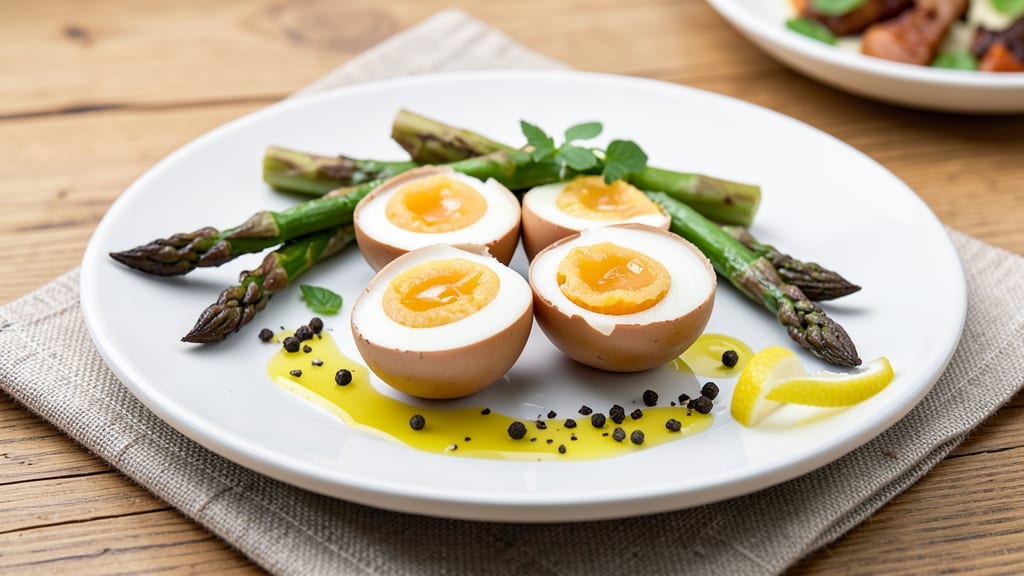
This asparagus and hard-boiled egg recipe transforms simple ingredients into an elegant, protein-packed dish that’s perfect for brunch or a light lunch. The crisp-tender asparagus pairs beautifully with silky, perfectly boiled eggs, creating a balance of textures that’s both satisfying and visually appealing.
What makes this recipe special is how effortlessly it comes together—just a few minutes of prep, followed by roasting, and you’ll have a dish that feels restaurant-quality without the fuss.
The secret to success lies in the hard-boiled eggs—fresh, properly cooked, and sliced into halves or quarters for easy handling. Roasting the asparagus with a touch of olive oil, salt, and pepper brings out its natural sweetness, while the eggs add a creamy, rich contrast.
This dish is not only vegetarian but also packed with nutrients, making it a great option for a balanced meal. The best part? It’s ready in under 30 minutes, with minimal cleanup.
When plated, the vibrant green asparagus and creamy egg halves create a striking presentation that’s as pleasing to the eye as it is to the palate. Serve with a drizzle of lemon vinaigrette or a sprinkle of toasted nuts for added crunch and flavor.
This recipe is versatile enough for weeknight dinners or weekend brunches, and it’s sure to impress anyone who tries it.
Whether you’re meal prepping for the week or hosting a small gathering, this dish delivers on both flavor and simplicity. The combination of asparagus and hard-boiled eggs is a match made in culinary heaven—crisp, creamy, and perfectly balanced.
Let’s get started on creating this delightful, protein-rich meal that’s sure to become a favorite.
Ingredients for asparagus hard boiled egg
Fresh asparagus and perfectly silky eggs create an elegant vegetarian dish perfect for brunch or light lunches.
| Ingredient | Amount | Notes |
|---|---|---|
| Fresh Asparagus Spears 🌱 | 1 lb | Medium thickness, trimmed ends |
| Large Eggs 🥚 | 8 whole | Fresh, room temperature |
| Extra-Virgin Olive Oil 🫒 | ¼ cup | Light fruity variety preferred |
| Diamond Crystal Kosher Salt 🧂 | 1 tsp | For seasoning asparagus |
| Freshly Ground Black Pepper 🌶️ | ½ tsp | Coarsely ground |
| Lemon Juice 🍋 | 1 tbsp | Freshly squeezed |
| Freshly Shredded Parmesan Cheese 🧀 | ¼ cup | Finely grated from block |
| Garlic Cloves 🧄 | 2 cloves | Minced for roasting |
| Toasted Pine Nuts 🥜 | ¼ cup | For garnish (optional) |
| Ice Cubes ❄️ | 4 cups | For egg water bath |
| White Vinegar 💧 | 1 tbsp | For egg water bath |
| Fresh Thyme Leaves 🌿 | ¼ tsp | Chopped, for garnish |
The asparagus should be bright green and firm—avoid woody stalks at the base. Whole Foods or local farmers' markets often carry the freshest spears, especially in spring. Trim the tough ends by snapping them naturally (they'll break at the right spot). For the eggs, use farm-fresh eggs if possible—they yield creamier yolks. The key to perfect hard-boiling lies in starting with room-temperature eggs and using a large pot (at least 8 cups capacity) to accommodate the ice bath. The white vinegar in the water bath prevents cracking and keeps yolks vibrant.
No fresh thyme? Dried thyme at one-third the amount works in a pinch, but fresh adds a brighter flavor. Running short on pine nuts? Toasted walnuts or slivered almonds make excellent substitutes—they just have a different texture. For the olive oil, avoid heavily perfumed varieties like infused oils, which can overpower the delicate asparagus flavor. The Parmesan should be freshly grated from a block (pre-grated contains anti-caking agents that make it grainy). If you're prepping ahead, store the hard-boiled eggs in the fridge for up to 5 days, but peel them just before serving to maintain texture.
Hard-boiled eggs keep best when peeled and submerged in cold water in an airtight container. Roasted asparagus can be refrigerated for 3 days but loses its crispness after 2 days—best served fresh. For meal prep, roast extra asparagus and store separately; assemble with eggs when ready to eat. The pine nuts or nuts should be toasted just until fragrant (about 3-4 minutes in a dry pan) and stored in an airtight container for up to 2 weeks at room temperature. Always let roasted asparagus cool completely before refrigerating to prevent condensation.
Why You'll Love This Recipe
- No-Fuss Prep: I swear by this combo because it’s literally three steps: trim the asparagus (no fancy peeling), boil the eggs (set a timer, done), then toss everything in a hot pan with oil and salt. My lazy Sundays thank me every time.
- Crispy-Creamy Magic: That first bite—where the asparagus snaps just right and the egg yolk oozes like a secret—is why I keep making this. The olive oil caramelizes the asparagus edges while keeping the eggs silky, and the pepper? It’s the little kick that makes it ridiculously good.
- Meal Prep MVP: Between us, this is my go-to for lunches all week. I’ll roast a big batch of asparagus and hard-boil a dozen eggs, then mix and match for salads, wraps, or just eating straight from the fridge. (Yes, even on a Tuesday night.)
- Budget Meets Fancy: Fresh asparagus and eggs feel like a splurge, but they’re actually cheap when you buy in season. A single pan, five minutes of active time, and you’ve got a dish that tastes like you spent an hour in a fancy kitchen. My wallet and taste buds win.
Step-by-step instructions for perfectly cooked asparagus and hard-boiled eggs
Master these techniques for vibrant asparagus and silky eggs that balance texture and flavor.
Roast the Asparagus for Crisp-Tender Perfection
Preheat your oven to 400°F and line a baking sheet with parchment paper. Trim the tough ends from the 1 lb fresh asparagus spears by bending them until they snap naturally. This ensures clean breaks where the texture changes.
Toss the trimmed spears with 0.25 cup extra-virgin olive oil, 1 tsp diamond crystal kosher salt, and 0.5 tsp freshly ground black pepper until evenly coated. Arrange them in a single layer on the baking sheet, leaving space between each spear for even browning. Roast for 12-15 minutes until the edges are deep green and slightly charred while maintaining a crisp-tender bite.
Prepare the Perfect Hard-Boiled Egg Water Bath
While the asparagus roasts, place 4 cups ice cubes and 1 tbsp white vinegar in a large bowl to create an ice bath. This chilling step is crucial for stopping the cooking process immediately and preventing overcooked yolks.
Bring a saucepan of water to a rolling boil, then carefully lower the 8 whole large eggs into the water using a slotted spoon. The water should return to a full boil immediately. Once boiling, remove the pan from heat, cover with a lid, and let the eggs sit for 10 minutes. This timing yields perfectly set whites with creamy, vibrant yolks.
Shock and Peel the Eggs for Silky Texture
After the 10-minute cooking time, transfer the eggs immediately to the ice bath for 5 minutes. This rapid cooling makes peeling effortless and preserves the yolk's rich texture. Once cooled, gently tap each egg on a hard surface, then roll it between your palms to crack the shell all over before peeling under running water.
For the best results, peel the eggs just before serving. The shells should slide off easily, leaving you with eggs that are perfectly set throughout. If any eggs prove difficult to peel, return them to the ice bath for another minute to firm up the whites further.
Assemble with Flavorful Garnishes
In a small skillet, toast the 2 cloves minced garlic cloves in 1 tbsp extra-virgin olive oil over medium-low heat for 1 minute until fragrant but not browned. Remove from heat and stir in 1 tbsp lemon juice and 0.25 tsp chopped fresh thyme leaves.
Divide the roasted asparagus and peeled eggs among serving plates. Drizzle each portion with the garlic-thyme oil, then sprinkle generously with 0.25 cup freshly shredded parmesan cheese and 0.25 cup toasted pine nuts for a nutty crunch. The combination of crisp asparagus, creamy eggs, and aromatic garnishes creates a harmonious balance of textures and flavors.
Pro Tips For Making Asparagus Hard Boiled Egg
- Trim the Tough Ends: Snip off the woody bottoms of the asparagus spears—about an inch from the base—before cooking. I used to skip this and ended up with chewy, unappetizing bites, even after roasting. Fresh asparagus has a tough core that never softens, no matter how long you cook it.
- Boil Eggs in Cold Water: Place eggs in a pot of cold water, then bring to a boil. I learned this the hard way—starting with hot water cracks shells and makes peeling a nightmare. Let the water heat gradually, and you’ll save yourself a messy cleanup later.
- Roast Asparagus Until Charred: Toss the asparagus in olive oil, salt, and pepper, then roast at 425°F (220°C) until the tips blacken—about 12-15 minutes. That char adds depth of flavor, and the spears stay crisp-tender instead of turning soggy. (Yes, even if you’re impatient like me, resist the urge to check too soon.)
- Shock Eggs Immediately: Once boiled, plunge the eggs into ice water for at least 5 minutes. This stops the cooking process and makes peeling effortless. I used to skip this step and ended up with eggs that were hard to peel and slightly rubbery inside—now I never do.
Troubleshooting this recipe
Eggs Too Soft?
If your hard-boiled eggs turn out with runny yolks or undercooked whites, the issue is likely timing or starting temperature. Always use room-temperature eggs—cold eggs from the fridge take longer to cook evenly.
For foolproof results, start with 10 minutes for large eggs, then add 1 extra minute if your high altitude exceeds 3,000 feet. I’ve found that using a digital kitchen timer eliminates guesswork. 🌡️
For extra insurance, add ½ tsp baking soda to the boiling water—it raises the pH slightly, helping whites set faster. If you’re still struggling, try the stovetop method: Simmer eggs at 160°F (not boiling) for 12 minutes—gentler heat prevents overcooking while ensuring perfect doneness.
Asparagus Too Tough?
Overly fibrous asparagus usually means overcooking or underseasoning. First, check your oven temp—400°F is ideal, but some ovens run hot. If your spears are still tough after 12-15 minutes, reduce heat to 375°F and roast 5 more minutes.
For extra tenderness, blanch the asparagus first: Boil for 2 minutes, then shock in ice water before roasting. This jumpstarts the cooking process. 💧
Seasoning matters too! Don’t skimp on the olive oil—it helps crisp the edges. If your asparagus tastes bland, add ½ tsp garlic powder or a pinch of red pepper flakes to the oil before tossing. For older asparagus (woody stalks), trim 1 extra inch off the base before roasting.
Peeling Problems?
Eggs that refuse to peel usually have uneven cooking or old shells. The fix? Older eggs peel easier—use eggs that are 7-10 days old (the air pocket inside grows, separating the shell).
For stubborn shells, tap gently with a spoon before peeling under warm running water—the steam helps loosen the membrane. If all else fails, microwave the egg in its shell for 10 seconds to soften the shell slightly. 🥚
Pro tip: Peel eggs right after shocking—waiting too long makes the membrane stick. If you’re prepping ahead, store peeled eggs in ice water in the fridge until ready to use. For extra-smooth peeling, add 1 tbsp vinegar to the boiling water—it prevents cracking and makes shells slide off effortlessly.
Uneven Roasting?
If your asparagus ends up unevenly cooked (some burnt, some underdone), the issue is likely crowding or poor airflow. Arrange spears in a single layer with ½ inch between each for even heat circulation.
For thick asparagus (over ½ inch diameter), cut spears lengthwise before roasting. I swear by rotating the pan halfway through cooking—just flip the baking sheet 180 degrees for uniform browning. 🔥
Another trick: Use two baking sheets if your oven is crowded. If your oven has hot spots, place a silicon baking mat under the parchment paper—it reflects heat more evenly. For extra crispiness, broil for 1-2 minutes at the end (watch closely to avoid burning!).
Nutrition facts
Frequently asked questions
Can I make this recipe ahead of time?
Roast the asparagus and hard-boil the eggs up to 2 days ahead. Store peeled eggs in an airtight container submerged in ice water in the fridge, and keep roasted asparagus wrapped in foil. Reheat asparagus in a 350°F oven for 5-7 minutes before serving. The eggs stay fresh peeled for 5 days if kept chilled.
What if I don't have pine nuts?
No problem! Swap pine nuts for toasted walnuts, slivered almonds, or even crumbled feta cheese for a salty contrast. For a seed option, try pumpkin seeds or sunflower seeds toasted in olive oil. The key is adding a textural element—just adjust the amount to taste.
How do I know when asparagus is perfectly cooked?
Look for bright green edges with slight char and a crisp-tender bite in the center. The spears should yield slightly when pressed but still hold their shape. For visual confirmation, check the thickest part—it should be tender but not mushy. Overcooked asparagus turns dark green and limp.
Can I use frozen asparagus in this recipe?
While fresh asparagus gives the best texture, you can use frozen asparagus in a pinch. Thaw it completely first, then pat very dry with paper towels to prevent steaming. Roast at 425°F for 10-12 minutes since frozen veggies need higher heat. The result won't be as crisp, but it'll still be flavorful. For best results, use fresh asparagus when possible.
What's the best way to serve this dish?
This recipe shines as a light brunch dish or elegant lunch. Plate the roasted asparagus and egg halves on a bed of mixed greens with a lemon vinaigrette, or serve over toasted baguette slices for a French-inspired twist. For extra flair, garnish with edible flowers or microgreens. It's also perfect for meal prep—pack components separately and assemble when ready to eat.