
Breakfast & Brunch
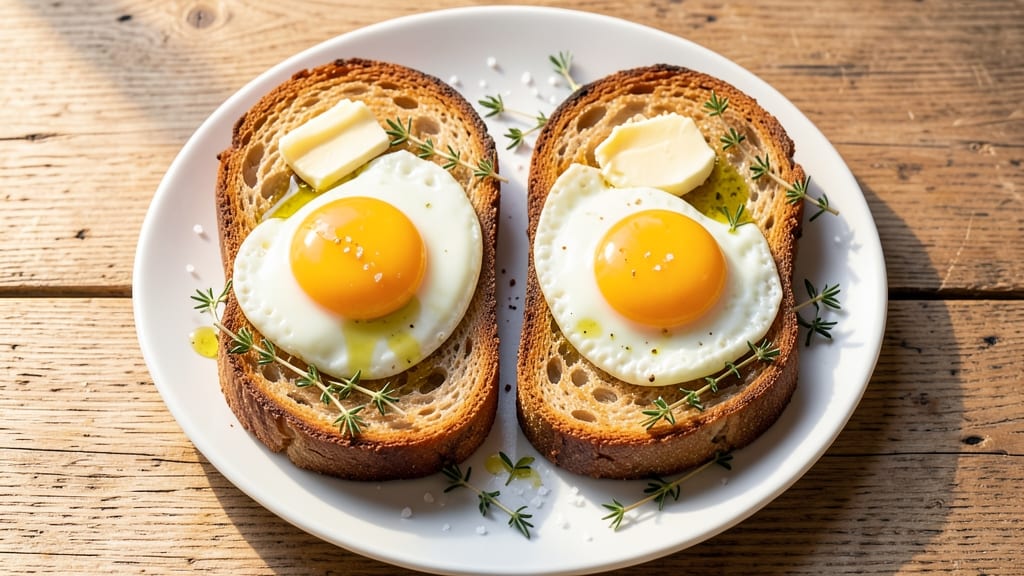
This sunny side up egg toast recipe delivers the perfect balance of crispy, buttery bread and velvety runny yolks that make every bite worth savoring. The secret lies in high-heat toasting and gentle egg cooking—no flipping required.
I've perfected this method after years of breakfast experiments, and it never fails to impress, even on the busiest mornings.
The beauty of this dish is its simplicity: just four core ingredients—quality bread, fresh eggs, butter, and salt—come together in minutes. The bread gets toasted to a golden, crispy finish while the eggs cook low and slow, creating that signature runny yolk that pools beautifully.
This isn't just breakfast; it's a comforting, satisfying meal that works for lunch too.
What you'll end up with is a plate of crispy, buttery bread bites topped with perfectly cooked sunny side up eggs—golden edges framing that glorious runny center.
The contrast between the crunchy toast and tender egg is what makes this dish irresistible. It's restaurant-quality at home, with minimal effort and maximum flavor.
For extra indulgence, try adding a sprinkle of flaky sea salt, fresh herbs, or a slice of avocado. The possibilities are endless, but the base recipe remains foolproof. Let's get cooking!
Ingredients for sunny side up egg toast
Four core ingredients transform into restaurant-quality sunny side up egg toast.
| Ingredient | Amount | Notes |
|---|---|---|
| Sourdough Bread 🍞 | 4 slices | Thick-cut, crusty preferred |
| Large Eggs 🥚 | 2 whole | Fresh, room temperature |
| Unsalted Butter 🧈 | 2 tbsp | Cold, cubed for even toasting |
| Kosher Salt 🧂 | ½ tsp | Fine grain preferred |
| Fresh Thyme Leaves 🌿 | 2 tsp | Optional garnish |
| Extra-Virgin Olive Oil 🫒 | 1 tsp | For egg cooking |
| Flaky Sea Salt 🧂 | 1 pinch | For finishing |
The sourdough makes all the difference here—look for a thick-cut loaf with a crisp crust, like Brioche or a good artisanal sourdough from the bakery section. If you can't find thick slices, lightly toast regular bread first to build structure. The eggs? Freshness matters—whites should be firm when shaken. For extra indulgence, grab a small bag of fresh thyme at the grocery store's produce section; it adds a bright finish. Butter should be cold when you start—cut it into small cubes so it melts evenly during toasting.
No sourdough? Brioche or a sturdy white bread works just as well. Short on thyme? Fresh parsley or chives are great substitutes. The olive oil is non-negotiable for the eggs—it prevents sticking and adds subtle richness. If you're in a rush, skip the fresh herbs and just use the flaky sea salt. For the butter, if you've got ghee or vegan butter, those work too—just watch the smoke point. And if you're out of kosher salt, fine sea salt at half the amount will do.
Store your butter in the fridge until ready to use—it should be cold when you start. Fresh herbs keep best wrapped in damp paper towels in a sealed container for up to 5 days. The bread stays fresh for 3-4 days if wrapped tightly. Eggs should be used within 1 week of purchase for best results. This recipe reheats beautifully—just pop slices under the broiler for 30 seconds to crisp up the toast again.
Why You'll Love This Recipe
- Five-Minute Assembly: I swear, this is the kind of breakfast where you can still be half-asleep and pull it off. Toast the sourdough, melt butter in the same pan, crack eggs—no measuring, no fuss. The only real skill is not burning the thyme, and honestly? Even that’s hard to mess up.
- Buttery Crispy Magic: That first bite of sourdough—still warm, crisped just right—with the egg’s runny yolk pooling over it? It’s the kind of contrast that makes you pause mid-bite. The thyme adds this bright, herby freshness that cuts through the richness, like a little green hug on your tongue.
- Weeknight Workhorse: Between us, this is my go-to when I’ve got nothing planned but also don’t want to think. Pack it for lunch—cold eggs get better, the bread stays sturdy—and it’s still impressive enough to serve when unexpected company drops by. (Yes, even on a Tuesday night.)
- Zero-Waste Pantry Staple: You’re already buying eggs and bread, so this costs next to nothing. Use up stale sourdough that’s drying out, or save a few eggs from going bad. The butter and salt are basics, and thyme lasts forever if you dry it. It’s the kind of recipe that makes grocery lists shorter, not longer.
Step-by-step instructions for sunny side up egg toast
Here's how to create perfectly crispy sourdough bites with velvety runny yolks every time.
Toast the Sourdough to Crispy Perfection
Preheat your oven to 400°F and line a baking sheet with parchment paper. Arrange the 4 slices of sourdough bread on the sheet, cut-side down if they have a crust. This ensures even browning and maximum crispiness.
Bake for 8-10 minutes until the edges are deep golden brown and the bread feels firm to the touch. Watch closely after 6 minutes—thick-cut sourdough can burn quickly. For extra crispiness, I like to flip the slices halfway through baking, though this is optional. Let them cool for 2 minutes before proceeding—this prevents the butter from melting too quickly when you add it.
Prepare the Eggs for Cooking
While the bread toasts, crack the 2 whole large eggs into a small bowl. Add the 0.5 teaspoon kosher salt and 1 teaspoon extra-virgin olive oil, then whisk gently until just combined. Room-temperature eggs cook more evenly, so if they're straight from the fridge, let them sit for 10 minutes before using.
Heat a nonstick skillet over medium-low heat—this gentle heat is crucial for achieving that perfect runny yolk. Add the 2 tablespoons cold cubed butter and let it melt completely, swirling occasionally. The butter should foam but not brown. If it starts to turn golden, reduce the heat slightly. You want the butter to create a silky, flavorful base without overcooking.
Cook the Eggs to Runny Yolk Perfection
Once the butter is melted and bubbling gently, carefully pour the egg mixture into the skillet. Let the eggs sit undisturbed for 2-3 minutes until the whites are set but still slightly translucent around the edges. This is where patience pays off—resist the urge to stir or flip. You're aiming for a soft, custardy center that holds its shape when you pick up the toast.
When the whites are mostly set but the yolks remain completely liquid, use a spatula to gently lift the egg from the skillet. Place it on a plate and immediately transfer to a wire rack to drain any excess butter. The egg should hold its shape when lifted—if it collapses, the heat was too high or the cooking time too long.
Assemble the Toast with Perfect Balance
Place one toasted sourdough slice on each plate. Top each with a sunny-side-up egg, letting any excess butter from the skillet drip over the top for extra richness. Sprinkle with a few fresh thyme leaves and a generous pinch of the flaky sea salt just before serving. The salt enhances the buttery flavor while the thyme adds a bright, herbal note that cuts through the richness.
Serve immediately while the bread is still crisp and the yolk remains runny. The contrast between the crunchy toast, creamy egg, and salty garnish creates a perfect bite. If you prefer, you can also drizzle a little extra olive oil over the top for added depth of flavor. Each piece should deliver that satisfying combination of textures and flavors in every bite.
Pro Tips For Making Sunny Side Up Egg Toast
- TOAST FIRST, THEN COOK: Sourdough needs that crispy edge before the egg goes on—otherwise, you’re just making soggy bread pudding. Pop it in the toaster for 2-3 minutes until golden, then slide it onto a warm plate. The butter will melt faster, and the egg won’t turn into a sad, wet mess.
- SALT THE BUTTER: Unsalted butter is a blank canvas, and this dish needs flavor. Mix in about ¼ teaspoon of kosher salt per tablespoon of butter while it’s melting—it dissolves better than sprinkling later. Trust me, your taste buds will notice the difference.
- LOW AND SLOW FOR EGGS: After cracking the egg, resist the urge to blast it with high heat. Medium-low is your friend here—it lets the whites set gently without scrambling. I learned this the hard way when my eggs turned into a sad, rubbery pancake.
- THYME AT THE END: Fresh thyme leaves should go on after the egg is cooked, not before. Toss a few leaves into the melted butter first, but sprinkle the rest on top of the egg right when it’s done—this keeps their bright aroma intact instead of letting them wilt into oblivion.
Troubleshooting your sunny side up egg toast
Eggs Too Dry?
If your sunny side up eggs turn out dry or overcooked, you likely used heat that was too high. The ideal temperature is medium-low heat, not medium or high. I’ve found that a nonstick skillet (like Calphalon or All-Clad) helps maintain even heat distribution.
Also, make sure your eggs are at room temperature—cold eggs take longer to cook and can dry out faster. If you’ve already cracked them, let them sit for 10 minutes before cooking. 🔥
Toast Not Crispy?
For perfectly crispy toast, preheat your oven to 400°F and bake the bread for 8-10 minutes on a parchment-lined baking sheet. If your bread comes out soft, it’s likely underbaked or not thick enough. I recommend using sourdough or brioche for the best texture.
For extra crispiness, flip the slices halfway through baking. If you’re short on time, a toaster oven works too—just set it to high heat and toast for 3-4 minutes per side. ⏱️
Butter Burning?
Butter burns easily, especially when heated too quickly. Always use cold, cubed butter and melt it over low heat until it’s fully liquid but not browned. If your butter starts to turn golden, immediately reduce the heat or remove the pan from the stove.
For a foolproof method, I like to melt the butter in the skillet first, then add the eggs—this prevents splattering and ensures even cooking. If you’re in a hurry, ghee has a higher smoke point and works well too. 🧈
Yolk Breaking?
A runny yolk that breaks too easily usually means the egg was overcooked or the heat was uneven. To fix this, cook the eggs over medium-low heat and remove them from the skillet as soon as the whites are set but the yolks are still completely liquid.
If you’re using a nonstick skillet, it’s easier to slide the egg onto a plate without disturbing it. For extra stability, let the egg cool for 1-2 minutes on a wire rack before serving. This gives the proteins time to firm up slightly. 🥚
Bread Too Soft?
If your toasted bread isn’t holding its shape, it might not have been baked long enough or the slices weren’t thick enough. For best results, use thick-cut sourdough or brioche and bake until the edges are deep golden brown.
If you’re using regular bread, toast it in the oven for an extra 1-2 minutes to ensure crispiness. For a quick fix, broil the toasted slices for 30 seconds before serving to restore crunch. 🍞
Nutrition facts
Frequently asked questions
Can I use any type of bread for this recipe?
For best results, use thick-cut sourdough or brioche—these hold up well to toasting and provide that satisfying crunch. Regular bread works too, but it may not stay crisp as long. If you're short on time, a toaster oven set to high heat for 3-4 minutes per side can give you similar results.
How do I keep the yolk perfectly runny?
The secret is medium-low heat and patience! Cook the eggs until the whites are just set but the yolks remain completely liquid. A nonstick skillet helps prevent sticking, and letting the eggs sit undisturbed for 2-3 minutes ensures that perfect custardy center. If your yolks break easily, they may have been overcooked—try reducing the heat slightly next time.
Can I make this ahead of time?
While the toast is best served fresh and crispy, you can prep the eggs ahead: Cook them sunny side up and store in an airtight container for up to 2 hours. Reheat gently in a skillet for 10-15 seconds to restore warmth. For the toast, toast it just before serving to maintain that perfect crunch.
What are some great toppings to add?
Fresh thyme or chives add brightness, while avocado slices or crispy bacon bits (if you're not vegetarian) elevate the dish. For extra richness, drizzle with hot sauce or everything bagel seasoning. Even a sprinkle of grated parmesan works beautifully with the buttery eggs.
Why does my butter burn so easily?
Butter has a low smoke point, so always melt it over low heat until fully liquid but not browned. For a foolproof method, melt the butter first, then add the eggs. If you're in a hurry, ghee is a great substitute—it has a higher smoke point and adds a nutty flavor. Never let the butter foam or bubble aggressively.