
Breakfast & Brunch
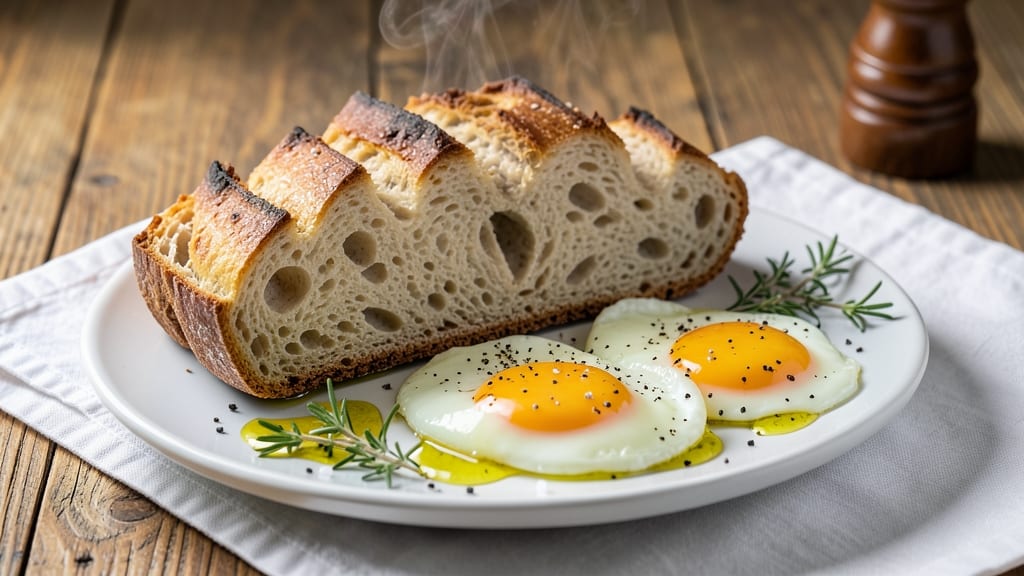
This sourdough bread and eggs recipe transforms your morning into a gourmet experience with crispy crust and runny yolk perfection. The secret lies in toasting thick sourdough slices until golden and crackling, then topping them with perfectly fried eggs that stay gloriously gooey inside.
I developed this after years of experimenting with breakfast textures—this combination is what finally nailed it.
The magic happens in the technique: high-heat toasting for that crispy crust while keeping the bread's interior tender, then cooking eggs in butter until the whites set but yolks remain liquid gold.
The sourdough's tangy depth complements the eggs' richness, creating a balance that feels both rustic and refined. No fancy equipment needed—just a skillet and patience for the perfect sear.
What you'll end up with is a dish that looks as impressive as it tastes: golden-brown sourdough slices topped with eggs that glisten like jewels, their yolks ready to burst with every bite.
The contrast of textures—crispy bread against creamy eggs—makes this breakfast feel like a special occasion. This is the kind of meal that makes you look forward to mornings.
Perfect for weekend brunches or lazy weekdays when you want something satisfying without spending hours in the kitchen. The recipe scales easily too—whether you're feeding one or a crowd. Let's get started on creating your perfect breakfast masterpiece.
Ingredients for sourdough bread and egg
Eight essential ingredients transform simple breakfast into crispy, golden sourdough perfection topped with velvety eggs.
| Ingredient | Amount | Notes |
|---|---|---|
| Sourdough Bread Loaf 🍞 | 1 whole | Stale or day-old preferred for crispiness |
| Large Eggs 🥚 | 4 whole | Fresh, room temperature for perfect yolks |
| Unsalted Butter 🧈 | 4 tbsp | European-style for higher melt point |
| Diamond Crystal Kosher Salt 🧂 | ½ tsp | For seasoning eggs and bread |
| Freshly Ground Black Pepper 🌶️ | ¼ tsp | Cracked peppercorns preferred |
| Extra-Virgin Olive Oil 🫒 | 1 tbsp | For bread toasting if needed |
| Fresh Chives 🌿 | 2 tbsp | Chopped, for garnish |
| High-Quality Mayonnaise 🥫 | 2 tbsp | Optional, for extra richness |
| Heavy Whipping Cream 🥛 | 2 tbsp | Optional, for extra decadence |
The sourdough is non-negotiable—look for a dense, tangy loaf from a local bakery or your favorite grocery store's artisanal section. Whole Foods or Trader Joe's often carry excellent options, but a day-old loaf from your kitchen works best. The butter matters too: European-style (like Plugrá) has a higher smoke point and richer flavor. If you're using fresh bread, toast it lightly before topping to prevent sogginess. For the eggs, freshness is key—room temperature eggs fry more evenly, and their yolks stay gloriously runny when cooked low and slow.
No fresh chives? Green onions or parsley work in a pinch, though chives add that delicate oniony brightness. Running short on butter? Olive oil or ghee can substitute, but butter's richness is ideal. Want to make this extra decadent? Add a dollop of high-quality mayo or a drizzle of heavy cream—it takes this dish from breakfast to brunch-worthy. For the salt, Diamond Crystal dissolves more easily than Morton's, so if that's what you've got, just use a pinch more. And if you're feeling fancy, toasted breadcrumbs on top add a delightful crunch that pairs perfectly with the creamy eggs.
Store your sourdough in a paper bag at room temperature to keep it fresh longer—this prevents sogginess and maintains that perfect crispy texture. Eggs should stay in their carton in the fridge until use, but take them out 10 minutes before cooking for even cooking. Leftovers? Keep the eggs and bread separate—store the bread in a sealed container and the eggs in their original carton. This combo reheats beautifully: toast fresh slices, warm the eggs gently in a skillet, and garnish with fresh herbs. The flavors actually improve the next day as the sourdough's tang develops and the eggs' richness deepens.
Why You'll Love This Recipe
- No-Fuss Breakfast: I swear, this takes less effort than deciding what to wear. Toast that sourdough until it’s golden and crispy, crack eggs right into the buttered pan—no flipping, no stress. The butter pools into little golden lakes while the eggs cook, and honestly? That’s half the fun.
- Crispy-Creamy Magic: That first bite—crunchy toast soaking up runny yolk, a whisper of pepper cutting through the richness—it’s the kind of combo that makes you pause mid-morning. The sourdough’s tang plays off the buttery eggs like a perfect duet, and the salt? Just enough to make it sing.
- Weeknight Hero: Between us, this is my go-to when I’ve got zero energy but still need protein. Make it for brunch, slap it on a lunchbox, or serve it with a side salad for dinner—it’s the same effort, different vibes. Even my picky teenager doesn’t complain (small victories).
Step-by-step instructions for crispy sourdough and perfect eggs
Here's how to transform humble ingredients into a showstopping breakfast with golden crust and velvety yolks.
🔥 Step 1: Prep the Sourdough for Maximum Crispiness
Start with a stale or day-old sourdough loaf—this ensures maximum crispiness when toasted. Preheat your oven to 375°F and line a baking sheet with parchment paper. Using a serrated knife, slice the loaf into ½-inch thick slices, cutting all the way through. Arrange the slices on the baking sheet, spacing them about ½ inch apart for even browning.
Drizzle the slices lightly with 1 tablespoon extra-virgin olive oil and sprinkle evenly with ½ teaspoon Diamond Crystal kosher salt. For extra richness, brush the top of each slice with 2 tablespoons high-quality mayonnaise—this creates a luscious, buttery crust that's impossible to resist. Bake for 10-12 minutes until the edges are deep golden brown and the crust is crisp to the touch. Watch closely after 8 minutes—ovens vary, and you want that perfect balance between crispy and still-slightly-soft interior.
🍳 Step 2: Fry the Eggs to Runny Perfection
While the bread toasts, let the 4 whole large eggs come to room temperature—this ensures even cooking and silky yolks. Fill a deep skillet with 2 inches of water and bring to a gentle simmer over medium-low heat. Reduce heat just until tiny bubbles form at the bottom—no rolling boil, or the eggs will cook too quickly. Crack each egg into a small bowl first (this prevents shell fragments from falling into the water).
Carefully slide one egg at a time into the water. The goal is 6-7 minutes of cooking time for runny yolks—this is where the magic happens. You'll know it's ready when the whites are just set (no longer translucent) but the yolk remains liquid and wobbly when gently jiggled. Use a slotted spoon to transfer each egg to a paper towel-lined plate to drain excess water. Season immediately with a pinch of freshly ground black pepper—this enhances the egg's natural richness.
🥘 Step 3: Assemble for Ultimate Decadence
Here's where the real transformation occurs. Place two crispy sourdough slices on each plate, slightly overlapping for stability. Nestle a perfectly fried egg into the center of each pile, letting that golden yolk peek out temptingly. Drizzle generously with 2 tablespoons heavy whipping cream—this adds a luxurious silkiness that ties everything together. The cream should pool slightly around the egg, ready to mingle with the first forkful.
Finish with 2 tablespoons chopped fresh chives, sprinkled evenly over each serving. The bright, oniony notes cut through the richness of the eggs and butter, balancing the dish beautifully. Serve immediately while the bread remains crisp and the yolks are still glossy and molten. The contrast of temperatures and textures—crispy bread, creamy eggs, silky cream—makes every bite unforgettable.
⏰ Step 4: Optional Upgrade for Next-Level Flavor
For an extra layer of decadence, melt 2 tablespoons unsalted butter in a small saucepan over low heat until it turns a deep golden brown—this is your browned butter. Immediately pour this fragrant, nutty butter over the assembled plates just before serving. The aroma alone will have everyone reaching for seconds. The butter should pool around the egg and bread, creating a luxurious, caramelized finish that elevates this dish from breakfast to brunch-worthy indulgence.
This step is purely optional but transforms an already impressive dish into something truly extraordinary. If you skip it, the dish remains delicious—just slightly less showstopping. But if you're serving guests or treating yourself to something special, this 5-minute upgrade is worth every second of effort.
Pro Tips For Making Sourdough Bread And Egg
- TOAST UNTIL CRISP: Use a cast-iron skillet or heavy pan—it heats evenly and gets that bread golden in 3-4 minutes per side, not soggy in 2. I learned this the hard way when my first batch turned into a sad, mushy mess.
- SALT THE BREAD FIRST: Sprinkle Diamond Crystal kosher salt directly on the toasted sourdough before adding butter—it melts into the crust instead of clumping on top. (Yes, even if you’re impatient like me, wait 30 seconds for it to stick.)
- BUTTER IN SMALL PATCHES: Don’t drown the bread—melt 1 tablespoon of butter per slice and spread it in thin, uneven dollops. This keeps the egg from swimming in grease later and lets the crust stay crisp.
- CRACK EGGS INTO COLD BREAD: Let the toast cool just enough to handle, then crack eggs directly onto the warm surface. The residual heat gently cooks the edges while keeping the yolk runny—no flipping required. (Your future self will thank you.)
Essential equipment for this recipe
Skillet Essentials
You only need two key pieces for perfect results: a 10-inch cast-iron skillet (like Lodge) for toasting sourdough and a deep stainless steel saucepan (such as All-Clad) for poaching eggs.
Cast iron retains heat beautifully, creating that deep golden crust on the bread. The stainless steel saucepan ensures even heat distribution for silky yolks—no plastic or nonstick needed here. 🔥
Butter Selection Matters
Skip the generic tub butter—European-style unsalted butter (like Plugrá or Kerrygold) has a higher fat content and richer flavor. It browns beautifully for that nutty, caramelized aroma when making the optional upgrade.
For everyday use, cultured butter (like Land O'Lakes) works too, but avoid margarine—it lacks the fat needed for crispy bread and velvety eggs. Store butter in the fridge until ready to use.
Oven Prep Tips
A baking stone or perforated baking sheet ensures even heat circulation for crispy sourdough slices. If using a sheet pan, choose half-sheet size (18x13 inches) for optimal airflow. Preheat your oven for at least 15 minutes before baking—this ensures consistent 375°F temperature.
For extra crispiness, place the baking sheet on the middle rack where heat is most direct. ⏱️
Egg Cooking Gear
Invest in a fine-mesh strainer (like OXO Good Grips) to strain eggs into the water—this prevents shell fragments and makes the process cleaner. A slotted spoon (preferably stainless steel) helps transfer eggs without breaking them.
For the optional browned butter, a small stainless steel saucepan (like Circulon) works best—it heats evenly and prevents scorching. Keep a thermometer handy to monitor water temperature at 160°F for perfect poached eggs.
Garnish Tools
Fresh chives deserve a sharp knife—use a Japanese-style chef's knife (like Shun) for clean cuts. For toasted breadcrumbs, pulse stale sourdough in a food processor (like Ninja) until fine.
A microplane (for nutmeg or ginger) adds extra flavor if you're feeling adventurous. Keep a small bowl nearby to hold chopped herbs while plating—this prevents overcrowding and keeps them fresh. ✨
Nutrition facts
Frequently asked questions
Can I use fresh sourdough bread instead of stale?
Fresh sourdough works but requires extra prep to prevent sogginess. Toast it lightly in a dry skillet over medium-high heat for 1-2 minutes per side before adding eggs. This creates a barrier that keeps the bread crispy longer. For best results, use day-old bread—it's the perfect balance of texture and flavor.
How do I fix eggs that cook too fast in water?
Lower the heat immediately if you see rapid bubbling. For perfect runny yolks, maintain water at 160°F (gentle simmer, not boil). Use a thermometer if possible, or reduce heat until only tiny bubbles form at the bottom. Cook time should be 6-7 minutes—whites set first, yolks stay liquid.
What's the secret to keeping the bread crispy?
The key is high heat and proper prep. Bake at 375°F until edges are deep golden brown (10-12 minutes). For extra crunch, brush with melted butter before baking. Serve immediately—crispiness fades after 5 minutes. Store leftovers in an airtight container but reheat fresh.
Can I make this without a cast-iron skillet?
Yes! Use a stainless steel or nonstick skillet for eggs (avoid aluminum—it reacts with acid). For bread, a baking sheet works fine. The cast iron just gives that signature crispy crust faster. If your oven runs hot, reduce to 350°F to prevent burning.
How do I make this vegetarian-friendly?
Swap eggs for tofu scramble (firm tofu crumbled with turmeric, salt, and nutritional yeast) or chickpea flour omelets. Keep the sourdough and butter base—they're already plant-based! For richness, add vegan mayo or cashew cream instead of heavy cream. The texture contrast still works beautifully.