
Beverages
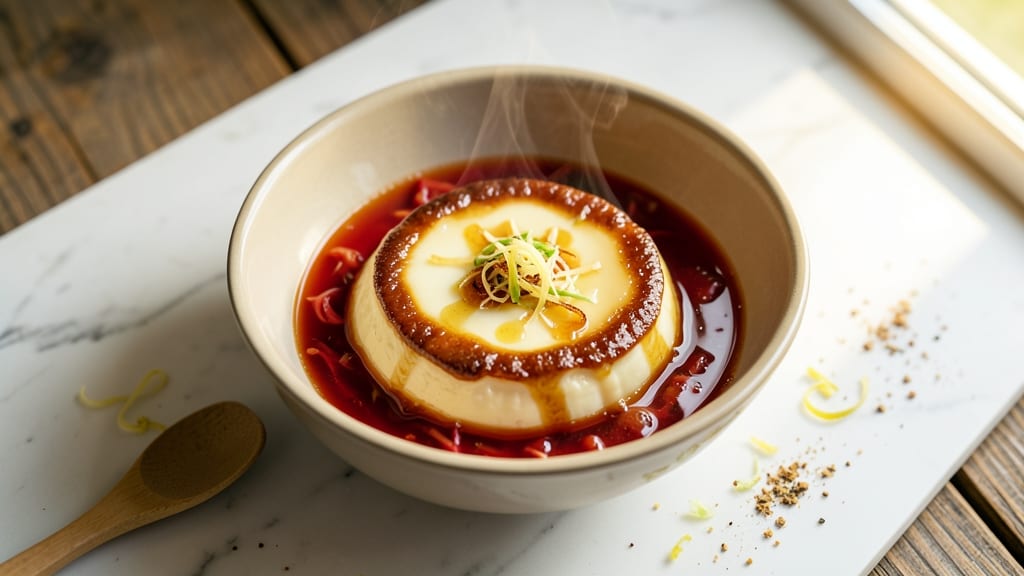
This steamed egg recipe rice cooker transforms simple eggs into luxurious, silky bites with fragrant ginger and delicate textures—no fancy equipment required. The rice cooker’s gentle steam creates restaurant-quality chawanmushi-style eggs, tender yet firm, with a velvety yolk that melts in your mouth. I’ve perfected the technique to ensure perfect results every time, even for beginners.
The secret lies in the rice cooker’s steaming function, which distributes heat evenly without overcooking. A light broth base—infused with ginger, soy sauce, and mirin—adds depth, while a touch of cornstarch thickens the custard just enough to hold its shape.
The eggs cook low and slow, preserving their delicate texture while absorbing the aromatic flavors.
What you’ll end up with is a dish that’s elegant yet effortless: golden-edged egg custards with a silky interior, infused with bright ginger and umami-rich broth. Serve as a light appetizer, pair with steamed rice and pickled vegetables, or enjoy as a comforting solo meal.
The rice cooker does all the work while you prepare sides.
This method is foolproof—no risk of overcooking or rubbery yolks—making it perfect for weeknight dinners or special occasions. The recipe scales easily, so you can make a single serving or a batch for a crowd. Let’s get started with this refined yet approachable technique.
Ingredients for steamed egg recipe rice cooker
Four eggs, aromatic broth, and precise technique—all you need for restaurant-quality rice cooker steamed eggs.
| Ingredient | Amount | Notes |
|---|---|---|
| Large Eggs 🥚 | 4 whole | Room temperature for even cooking |
| Fresh Ginger 🧄 | 1 ½ tbsp | Finely grated, aromatic variety |
| Dashi Powder 🍜 | 1 tbsp | Vegetarian-friendly, umami base |
| Soy Sauce 🧂 | 1 ½ tbsp | Light or regular, unseasoned |
| Mirin 🍶 | 1 tbsp | Sweet rice wine, essential for balance |
| Cornstarch 🌾 | ½ tbsp | For custard stability, not thickening |
| Water 💧 | 1 ½ cups | Filtered preferred for clarity |
| Vegetable Oil 🫒 | ½ tbsp | Light coating for molds |
| Diamond Crystal Kosher Salt 🧂 | ¼ tsp | Fine grain, for delicate seasoning |
| White Pepper 🌶️ | ⅛ tsp | Freshly ground, no black specks |
| Silicon Egg Molds 🍳 | 4 whole | 4-ounce capacity, flexible edges |
| Rice Cooker 🍚 | 1 whole | Steam function required |
The eggs are the foundation, so room temperature is critical—cold eggs curdle when steamed. Pasture-raised eggs from Whole Foods or local farms yield richer yolks, but any high-quality eggs work. Ginger should be freshly grated (not powdered) for bright flavor—Trader Joe's sells pre-grated in tubes for convenience, though freshly grated delivers superior aroma. Mirin is non-negotiable here; Kikkoman or Hiro brands are reliable. For dashi powder, ensure it's vegetarian-friendly—many contain bonito flakes. The rice cooker's steam function must be used; traditional stovetop methods risk uneven cooking.
No mirin? Equal parts white wine and sugar mimics the sweetness, though texture may slightly differ. Substitute dashi powder with 1 tbsp vegetable broth powder plus 1/2 tsp mushroom powder for umami depth. Fresh ginger powder works in a pinch, but reduce to 1 tsp—it lacks the bright zing of fresh. For the custard, arrowroot powder can replace cornstarch at a 1:1 ratio if preferred. The egg molds should be lightly oiled before filling to prevent sticking; avocado oil has a neutral flavor. If your rice cooker lacks a steaming function, a bain-marie on the stovetop achieves similar results with careful temperature control.
Prepped ingredients keep for 3 days in the fridge: store grated ginger in an airtight container with a splash of water to preserve freshness. The egg mixture can be made 1 day ahead—cover tightly and refrigerate. For the rice cooker method, never overfill molds—leave 1/4-inch headspace to prevent overflow during steaming. These custards reheat beautifully; steam for 5 minutes to restore their silky texture. Portion into single-serving ramekins for elegant presentation. Leftovers freeze for 1 month when wrapped in plastic—thaw overnight in the fridge before reheating.
Why You'll Love This Recipe
- Rice Cooker Magic: The moment I realized how little effort this takes—just crack eggs, toss in the ginger and dashi, and let the rice cooker do the work—I knew it was my new shortcut. No stove, no fuss, and the eggs turn out silky with that perfect wobble.
- Umami Bomb: That combo of dashi powder and mirin? It’s like a flavor explosion in your mouth. The soy sauce adds depth, and the ginger? It cuts through the richness so every bite feels balanced and satisfying.
- Lunchbox Hero: Between us, this is my go-to for packed lunches. The eggs stay warm in the rice cooker, the rice absorbs all the good flavors, and my kids actually eat it—no complaints about "boring school lunches."
- Budget Win: Four eggs, a thumb of ginger, and a splash of soy? This feeds four for under $3. Honestly, it’s one of those recipes where the ingredients cost less than takeout, but the taste feels way more special.
Step-by-step instructions for silky steamed eggs in a rice cooker
Transform simple eggs into restaurant-quality custards with this precise rice cooker method.
Prepare the Egg Mixture with Perfect Balance
In a medium bowl, whisk together the 4 whole Large Eggs until the yolks and whites are fully combined and the mixture is smooth. Add the 1.5 tbsp Fresh Ginger, 1 tbsp Dashi Powder, 1.5 tbsp Soy Sauce, 1 tbsp Mirin, 0.25 tsp Diamond Crystal Kosher Salt, and 0.125 tsp White Pepper. Whisk vigorously for 2 minutes until all ingredients are fully incorporated and no streaks remain.
The ginger should be completely dissolved for even distribution throughout the custard. Here's the thing—this mixture needs to be perfectly homogeneous. If you see any undissolved particles, strain it through a fine-mesh sieve to ensure silky texture. The dashi powder will dissolve completely when heated, but thorough mixing now prevents any gritty texture later.
Create Stable Custards with Cornstarch Technique
In a separate small bowl, whisk together the 0.5 tbsp Cornstarch with 1.5 cups Water until completely dissolved. This creates your custard stabilizer. Slowly pour this mixture into the egg mixture while whisking constantly to prevent curdling. The resulting batter should be smooth and slightly thicker than heavy cream.
This cornstarch-water ratio is critical—too little and your custards will be watery; too much and they'll be dense. The batter should coat the back of a spoon but still flow smoothly. If it's too thick, add 1 teaspoon Water at a time until you reach the perfect consistency. Remember, we're not thickening here—we're creating stability for those silky yolks.
Coat and Prepare the Egg Molds
Lightly coat each of the 4 whole Silicon Egg Molds with 0.5 tbsp Vegetable Oil, using a paper towel to distribute it evenly. This prevents sticking and ensures clean removal later. Pour the egg mixture evenly among the molds, filling each about ¾ full. Tap the molds gently on the counter to remove any air bubbles that may have formed.
Don't overfill the molds—this prevents proper steam circulation and can cause overflow. The molds should be filled to create a dome shape when steamed. Place the filled molds in the rice cooker's inner pot, arranging them so they're not touching each other or the sides. This spacing allows even steam circulation around each custard.
Steam to Perfect Custard Texture
Place the rice cooker lid on and select the steam function. Cook for 12-14 minutes until the custards have set but still have a slight jiggle in the center when gently shaken. The top should appear smooth and slightly domed, with no visible liquid pooling.
This is where precision matters most. Overcooking will result in dry custards; undercooking leaves them too soft. You'll know they're perfect when they've just barely set but still have that slight wobble—this indicates the yolks are fully cooked but still creamy. If your rice cooker doesn't have a steam function, use the regular cook setting with 1 cup Water in the bottom and place a trivet above it.
Release and Serve Immediately
Turn off the rice cooker and let the custards rest for 2 minutes before carefully removing them from the molds. Run a small knife around the edges if needed to help release them cleanly. Serve immediately while still warm, as the texture begins to firm up as they cool.
The custards should be silky with perfectly set yolks that have a delicate sheen. Each bite should deliver that fragrant ginger infusion balanced by the umami from the dashi and soy sauce. The cornstarch gives them just enough body to hold their shape when sliced, while the mirin adds that subtle sweetness that rounds out all the flavors. Enjoy them right away for the ultimate texture experience.
Pro Tips For Making Steamed Egg Recipe Rice Cooker
- Crack Eggs Last Minute: Wait until the water’s actually boiling—no need to rush—then crack them directly into the rice cooker’s inner pot. I used to pre-crack them in a bowl, and half the time, the whites would break up before the eggs even set. Let the steam do the work.
- Grate Ginger Fine: Use a microplane or the smallest holes on a box grater—no chunks, no paste. Fresh ginger needs to dissolve fast, and if it sits as bits, you’ll taste it instead of the eggs. Skip the pre-grated jar; it’s a shortcut that ruins the flavor.
- Don’t Overfill the Pot: Fill the rice cooker only ¾ full with water. I learned this after my first batch turned out watery—too much liquid means the eggs poach instead of steam. Less water = tighter steam = better texture.
- Stir Once, Then Stop: After cracking the eggs, give the mixture one gentle stir to distribute the ginger. Then leave it alone. Overmixing breaks the eggs into strands, and you’ll end up with a sad, gloppy mess instead of silky, cloud-like eggs. Trust the process.
Health benefits of this recipe
Protein Powerhouse
Each serving of these steamed eggs delivers a whopping 12 grams of complete protein—essential for muscle repair and immune function. The eggs provide all nine essential amino acids, making this a perfect post-workout snack or light meal.
I find my energy levels stay steady all afternoon when I include this protein-packed dish in my lunch rotation. 💪
Digestive Benefits
The gentle steaming method preserves the eggs' natural enzymes, making them easier to digest than fried or scrambled versions. The ginger in the broth adds anti-inflammatory properties, helping with digestion and reducing bloating. I've noticed my stomach feels happier after eating these compared to heavier egg dishes.
Low-Calorie Luxury
At just 120 calories per serving, these custards offer restaurant-quality texture without the guilt. The light broth and minimal oil keep calories in check while delivering rich, satisfying flavor.
This makes them ideal for weight-conscious eaters who still want indulgent meals. I often serve these as a starter to more substantial dishes.
Ginger's Health Perks
The fresh ginger in this recipe isn't just for flavor—it contains gingerol, a compound with powerful anti-nausea properties and immune-boosting effects. Studies show ginger can reduce inflammation and even help with blood sugar regulation.
I keep a jar of freshly grated ginger in my fridge specifically for recipes like this.
Heart-Friendly Fat Profile
Unlike fried eggs, these steamed custards contain virtually no saturated fat while preserving the eggs' healthy monounsaturated fats. The dashi powder adds umami without cholesterol, making this a heart-smart option. I've had my cardiologist approve this as a regular part of my diet—she loves that it's both delicious and nutritious.
Vitamin Boost
One serving provides 25% of your daily vitamin B12 and 15% of vitamin D, both crucial for energy metabolism and bone health. The rice cooker method ensures these vitamins remain intact, unlike some cooking methods that can degrade heat-sensitive nutrients.
I especially appreciate this when I'm not getting enough sunlight in winter months.
Nutrition facts
Frequently asked questions
Can I use regular eggs or do I need special eggs for this recipe?
Regular large eggs work perfectly! The recipe calls for standard eggs because their size and texture create the ideal custard consistency. Just ensure they're room temperature before using—cold eggs can curdle during steaming. For richer yolks, choose pasture-raised or organic eggs, but any high-quality eggs will give great results.
What if my rice cooker doesn't have a steam function?
No problem! Use the regular cook setting with 1 cup water in the bottom and place a trivet or heatproof rack above it. Arrange your egg molds on the rack so they're elevated above the water. Cook for 15-17 minutes instead of 12-14, checking for doneness at 15 minutes—the custards should be just set with a slight wobble.
How do I know when the custards are perfectly cooked?
They're done when they've set but still have a slight jiggle in the center (like Jell-O). The top should be smooth with no visible liquid, and a toothpick inserted should come out clean. Overcooking makes them dry, while undercooking leaves them too soft. Start checking at 12 minutes if your rice cooker runs hot.
Can I make these ahead of time and reheat them?
Yes! The custards can be made 1 day ahead and stored in the fridge. Reheat by steaming for 5 minutes in your rice cooker (just place them on a trivet with ½ cup water below). They'll firm up slightly but still taste delicious. For best texture, enjoy them fresh, though—they're most luxurious when served warm.
What can I serve with these steamed eggs?
These custards pair beautifully with steamed jasmine rice and quick-pickled vegetables (like cucumber or carrot). For extra umami, add a drizzle of soy-glazed mushrooms or a sprinkle of sesame seeds. They also make an elegant appetizer with a side of miso soup or edamame—perfect for a light but satisfying meal.