
Beverages
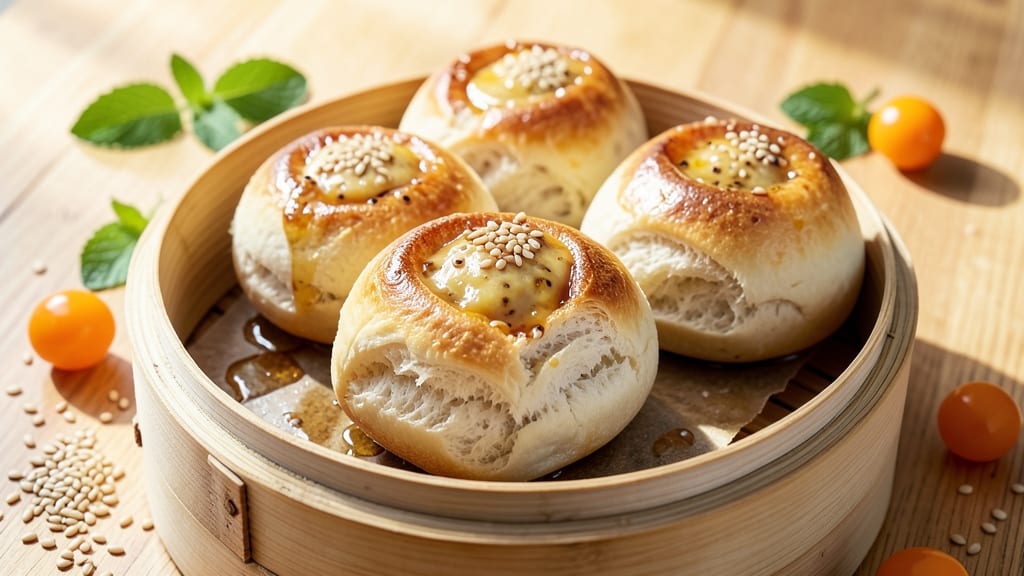
This steamed egg custard bun recipe delivers the perfect balance of flaky mantou wrappers and silky egg custard filling that melts in your mouth. The secret lies in a precise technique that transforms simple ingredients into a delicate, cloud-like texture that's become a staple in Hong Kong and Taiwanese bakeries.
What makes this recipe special is the harmony between the soft, pillowy custard and the delicate, slightly crisp edges of the steamed bun.
Creating these buns requires patience and attention to detail, starting with a well-made mantou dough that's neither too stiff nor too sticky. The egg custard filling is where the magic happens—cooked just until it reaches that signature tender yet slightly jiggly consistency.
Achieving this texture is all about temperature control and gentle stirring, ensuring the custard remains smooth and velvety without breaking.
Once assembled and steamed, you'll be rewarded with buns that have a delicate, almost translucent appearance with a soft, melt-in-your-mouth interior. The custard filling should be perfectly set but still slightly wobbly, creating that luxurious mouthfeel that makes these buns so irresistible.
This recipe delivers restaurant-quality results with a homemade touch that's worth every minute of effort.
The beauty of this recipe is its versatility—you can enjoy them fresh out of the steamer or at room temperature, making them perfect for breakfast, afternoon tea, or even as a light dessert.
For those looking to experiment, variations like matcha-infused custard or red bean filling add exciting twists while maintaining the signature texture. Let's get started on creating these delicate, dreamy buns.
Ingredients for steamed egg custard bun
Pantry staples transform into delicate buns with silky custard and flaky mantou wrappers.
| Ingredient | Amount | Notes |
|---|---|---|
| Large Eggs 🥚 | 8 whole | Room temperature for best blending |
| Granulated Sugar 🍚 | ½ cup | Superfine preferred for smooth texture |
| All-Purpose Flour 🌾 | 2 cups | Sifted for light mantou dough |
| Instant Yeast 🍞 | 0.01 oz | 1 packet (2¼ tsp) |
| Unsalted Butter 🧈 | ½ cup | Cold, cubed for dough |
| Milk 🥛 | ½ cup | Warm for yeast activation |
| Salt 🧂 | ½ tsp | Diamond Crystal preferred |
| Water 💧 | ½ cup | Room temperature |
| Vegetable Oil 🫒 | 1 tbsp | For greasing steamer |
| Cornstarch 🌾 | 1 tbsp | For dusting buns |
| Sesame Seeds 🌰 | 1 tbsp | Toasted for garnish |
The eggs are the foundation—fresh, large eggs with vibrant yolks yield the silkiest custard. Kroger or local farms often carry the best quality, and room temperature eggs blend more smoothly. For the mantou dough, King Arthur flour is ideal due to its high protein content, but any all-purpose flour works. The butter should be cold and cubed—this creates those signature flaky layers. If your butter is soft, chill it for 20 minutes before mixing. The yeast is non-negotiable for proper rise; Saf-Instant is my go-to for reliability.
No sesame seeds? Poppy seeds or black sesame paste works beautifully for garnish. Running short on butter? Coconut oil or lard substitute in equal amounts, though texture may vary slightly. The custard filling can be prepped ahead—store it in the fridge for up to 2 days before assembly. For the dough, if you're short on time, you can use bread flour for a slightly chewier texture, but it may require a bit more water. The custard should be cooked to 160°F—a thermometer is your best friend here to avoid overcooking.
Freshly made custard buns keep best at room temperature for 24 hours, but they're best enjoyed within 6 hours of steaming. For longer storage, wrap them in plastic wrap and freeze for up to 3 months. To reheat, steam for 5-7 minutes—this restores that delicate, almost translucent appearance. The mantou dough can be prepped a day ahead and refrigerated, saving you time on baking day. Always dust with cornstarch before steaming to prevent sticking.
Why You'll Love This Recipe
- Steam Magic Simplicity: I swear by this recipe because it’s three bowls and a steamer—no fancy equipment, no stress. The yeast and butter do all the heavy lifting while you mix eggs, sugar, and flour in under 10 minutes. Honestly, the hardest part is waiting for the steamer to whistle.
- Creamy Crisp Contrast: That golden crust with a jiggly, custardy center? It’s the real deal. The eggs and sugar create a silky filling, while the flour-butter dough gives it that irresistible snap. One bite and you’ll understand why I keep a batch in the fridge.
- Breakfast or Dessert: Serve them warm with milk for a breakfast that feels like a treat, or dust with cinnamon sugar for a snack that disappears faster than my willpower. Between us, I’ve even packed them for lunch—no judgment.
- Budget-Friendly Staples: Five ingredients, all pantry basics. Eggs and flour stretch further than takeout, and the leftovers? They reheat beautifully in the steamer or microwave. My wallet and I both approve—especially when I make a double batch.
Step-by-step instructions for steamed egg custard buns
Master the delicate balance of flaky mantou wrappers and silky egg custard filling with these precise techniques.
Prepare the Mantou Dough for Wrappers
In a stand mixer fitted with the dough hook, combine the 2 cups all-purpose flour, 0.5 cup unsalted butter (cold and cubed), 0.01 oz instant yeast, 0.5 tsp salt, and 0.5 cup warm milk. Mix on low speed for 2 minutes until the butter is fully incorporated and the dough begins to form. The dough should be slightly shaggy but cohesive.
Switch to medium speed and knead for 5-7 minutes until smooth and elastic. The dough should pull away cleanly from the sides of the bowl and form a windowpane when stretched. If it's too sticky, add 1 tablespoon cold water at a time until it reaches the proper consistency. Cover with a damp towel and let rest at room temperature for 30 minutes to relax the gluten and improve extensibility.
Create the Egg Custard Filling
In a separate bowl, whisk together the 8 whole large eggs until frothy. Gradually add the 0.5 cup granulated sugar while continuing to whisk until fully dissolved and the mixture is pale and slightly thickened. The sugar should dissolve completely—this prevents graininess in the final custard. Strain the mixture through a fine-mesh sieve to remove any potential egg whites or lumps for an ultra-smooth texture.
In a non-reactive saucepan, combine the strained egg mixture with 0.5 cup water and place over medium-low heat. Stir constantly with a silicone spatula, scraping the bottom of the pan to prevent sticking. Cook until the mixture reaches 170°F on an instant-read thermometer and thickens to a pudding-like consistency—about 8-10 minutes. Remove from heat immediately and transfer to a bowl. Cover with plastic wrap (pressed directly onto the surface to prevent skin formation) and let cool to room temperature.
Assemble and Steam the Buns
Divide the rested mantou dough into 4 equal portions (about 6 ounces each) and roll each into a 12-inch circle on a lightly floured surface. Keep the remaining dough covered to prevent drying. Preheat your steamer with 1 tablespoon vegetable oil spread evenly on the bottom—this prevents sticking and creates a flaky texture. Bring water to a rolling boil before adding the buns.
Place 1 cup of cooled egg custard in the center of each dough circle. Fold the dough over the custard, pinching the edges firmly to seal completely. Roll the sealed edge with a rolling pin to create a ½-inch thick wrapper. Gently place each assembled bun in the steamer basket, leaving 1 inch between buns to allow steam circulation. Cover and steam over medium-high heat for 12-15 minutes until the mantou wrappers are golden brown and the custard is set but still slightly jiggly in the center.
Finish and Serve
Remove the steamed buns from the basket and transfer to a wire rack. While still warm, dust generously with 1 tablespoon cornstarch to create a delicate, powdery finish. Sprinkle with 1 tablespoon toasted sesame seeds immediately after dusting for added texture and aroma. Let cool for 5 minutes before serving to allow the custard to set slightly while maintaining its silky texture.
The perfect steamed egg custard bun should have a flaky, layered mantou wrapper that gives way to a creamy, slightly wobbly custard with a subtle sheen. Serve warm for the ideal contrast between the crisp exterior and velvety interior. For best results, consume within 2 hours of steaming when the texture is at its peak.
Pro Tips For Making Steamed Egg Custard Bun
- Whisk Eggs Like Mad: Beat those eggs until they’re thick, pale, and ribbon-like—no streaks allowed. I used to stop when they looked "done," but the custard stayed watery until I learned to push it to the point where the batter holds a peak for 10 seconds. (Yes, your arm will protest.)
- Sugar First, Then Yeast: Dissolve the sugar in warm water before adding yeast—this keeps the yeast happy and active. I learned this after my first batch failed to rise properly; the yeast was sluggish because the sugar was clumping in cold water.
- Steam Over Water, Not Boiling: Use a steamer basket with a tight lid, and keep the water at a gentle simmer—not rolling boil. I burned the bottom of my first batch by cranking the heat too high; now I check the water every 5 minutes and add ice cubes if it gets too aggressive.
- Chill the Dough Overnight: Let the dough rest in the fridge for at least 8 hours—this develops flavor and makes shaping easier. I was skeptical until I tried it; the custard filling stays smoother, and the buns hold their shape better when steamed. (Pro tip: Divide into balls before refrigerating.)
Essential equipment for steamed egg custard bun
Steamer Essentials
Your steamer is the heart of this recipe, so invest in a high-quality bamboo steamer with a tight-fitting lid and removable tiers. I recommend the Norpro 14-inch bamboo steamer—it distributes steam evenly and prevents soggy bottoms.
For electric options, the Cuisinart Steam Machine gives consistent results without monitoring water levels. Always preheat your steamer with 1 tablespoon vegetable oil spread on the bottom to create a flaky, non-stick surface. 🔥
Mixer and Dough Tools
A stand mixer with dough hook attachment is non-negotiable for achieving that silky mantou dough. The KitchenAid Artisan Series handles the job beautifully, but a hand mixer works in a pinch if you're short on space.
For shaping, use a rolling pin (I prefer OXO Good Grips) and a bench scraper to divide dough cleanly. A digital kitchen scale ensures precise dough portions—aim for 6 ounces per bun for perfect balance.
Thermometer Precision
An instant-read thermometer is your secret weapon for custard perfection. I swear by the Thermoworks ThermoPop—it’s fast and accurate. The custard needs to reach 170°F for that signature wobbly-yet-set texture.
Without a thermometer, you risk overcooking (grainy custard) or undercooking (runny filling). For the steamer, a meat thermometer helps monitor water temperature—keep it at a rolling boil for even steaming.
Cooling and Storage
After steaming, transfer buns to a wire cooling rack to prevent condensation. For storage, use airtight containers with parchment paper between layers to maintain freshness. A vacuum sealer extends shelf life to 3 days in the fridge or 3 months in the freezer.
When reheating, steam for 5-7 minutes—microwaving destroys the delicate texture. I keep a small bamboo steamer just for reheating single buns. ✨
Garnish and Finishing
Toasted sesame seeds and cornstarch are your finishing touches. Use a small skillet to toast seeds until fragrant—about 1-2 minutes on medium heat. For dusting, sift cornstarch through a fine-mesh sieve to avoid clumps.
A pastry brush helps apply oil evenly to the steamer basket. These details elevate your buns from homemade to bakery-quality. 💫
Nutrition facts
Frequently asked questions
Why does my egg custard filling turn grainy?
Graininess happens when the sugar doesn't dissolve completely or the custard cooks too long. Always whisk the eggs and sugar until fully dissolved, then strain the mixture through a fine-mesh sieve. Cook to exactly 170°F—no higher—to maintain that silky texture.
Can I make these buns without a stand mixer?
You can mix the mantou dough by hand using a wooden spoon or dough scraper. Knead for 10-15 minutes until smooth and elastic. The key is patience—keep the dough on a lightly floured surface and fold it over itself to develop the gluten properly.
How do I fix undercooked custard in the center?
If the custard is still runny after steaming, place the buns back in the steamer (covered) for 2-3 more minutes. For future attempts, ensure your custard reaches 170°F—this guarantees the perfect set without overcooking. A thermometer is your best friend here!
What's the difference between steamed and baked egg custard buns?
Steamed buns have a delicate, almost translucent wrapper with a soft, melt-in-your-mouth texture, while baked versions develop a slightly crisp exterior. The custard in steamed buns stays creamier and jiggly, whereas baked custard tends to set firmer. For best results, stick with steaming—it preserves that signature restaurant-quality texture.
Can I add matcha or other flavors to the custard?
Yes! For matcha custard, whisk in 1-2 teaspoons of high-quality matcha powder with the eggs and sugar. For red bean filling, replace ½ cup of the custard with cooked adzuki beans. Just