
Beverages
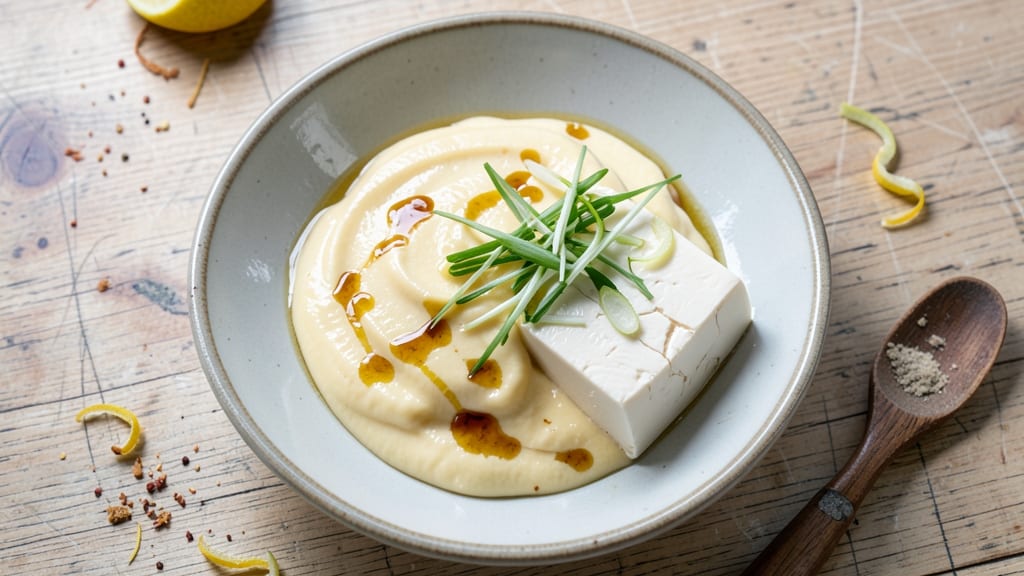
This steam egg tofu Chinese recipe transforms simple ingredients into delicate, silken ribbons that melt in your mouth, bathed in fragrant ginger broth. The secret lies in whisking eggs with water until they reach a delicate, almost custard-like consistency—no lumps, just pure, cloud-like texture.
This dish is a staple in Chinese cuisine, often served as a light yet satisfying appetizer or side, perfect for balancing richer dishes.
The magic happens during steaming, where the egg mixture gently sets into tender, translucent sheets. We'll guide you through the precise technique to achieve that signature silky texture, along with the aromatic ginger broth that elevates the dish from simple to extraordinary.
Unlike firm tofu, this version is all about delicate, almost jelly-like ribbons that dissolve with the first bite, making it a showstopper for any meal.
Once steamed to perfection, we'll show you how to plate it authentically—either as delicate ribbons floating in the ginger broth or as a light, airy tofu that can be paired with traditional sides like pickled vegetables, chili oil, or a drizzle of soy sauce.
The result is a dish that's both visually stunning and incredibly versatile, equally at home as a standalone appetizer or part of a larger Chinese feast.
This recipe delivers restaurant-quality results with minimal effort, making it perfect for both beginners and experienced cooks. The process is straightforward, but the attention to detail—especially in the whisking and steaming—ensures you'll achieve that coveted silken texture every time. Let's create something truly special.
Ingredients for steam egg tofu chinese
Twelve eggs and a handful of pantry staples transform into delicate Chinese silken tofu ribbons.
| Ingredient | Amount | Notes |
|---|---|---|
| Large Eggs 🥚 | 12 whole | Room temperature for best whisking |
| Water 💧 | 2 cups | Room temperature preferred |
| Fresh Ginger 🌿 | 2 tbsp | Finely grated, aromatic variety |
| Light Soy Sauce 🍶 | ½ cup | High-quality, preferably Japanese |
| Sesame Oil 🫒 | 1 tbsp | Toasted, for aroma |
| Green Onions 🧅 | 4 whole | Thinly sliced, for garnish |
| White Rice Vinegar 🍶 | 1 tbsp | For subtle tang |
| Sugar 🍚 | 1 tbsp | White granulated |
| Salt 🧂 | ½ tsp | Fine sea salt |
| Vegetable Oil 🫒 | 1 tbsp | For greasing steamer |
| Chili Oil 🌶️ | 1 tbsp | Optional, for serving |
| Pickled Vegetables 🥬 | ½ cup | Optional, for serving |
The eggs are the star here—fresh, room-temperature eggs whisk to the smoothest texture. Trader Joe's or local Asian markets often carry the best quality in bulk, but any fresh eggs work if they're not too cold. The ginger should be bright and aromatic, not woody or dried out—look for firm, unblemished rhizomes. Fresh ginger keeps for 3 weeks in the fridge, so buy a big piece if you'll use it often. For the soy sauce, Kikkoman or Lee Kum Kee are reliable choices, but any light soy will do in a pinch.
No fresh ginger? Powdered ginger at half the amount works, though it lacks depth. Short on sesame oil? Toasted sesame seeds at 1 tsp per tbsp mimic the aroma. The rice vinegar adds brightness—substitute with apple cider vinegar if needed, but reduce to 1 tsp. For the steaming, grease your bamboo steamer well with vegetable oil to prevent sticking. If you don't have a bamboo steamer, a fine-mesh metal strainer over a pot of boiling water works perfectly. The key is gentle heat—don't rush the steaming process or the tofu will toughen.
Freshly made egg tofu keeps for 2 days in the fridge, but it's best enjoyed immediately for that delicate texture. Store it submerged in the ginger broth to maintain moisture. For leftovers, reheat gently in a steamer or microwave with a damp paper towel. The broth can be made ahead and reheated separately—it actually tastes better the next day as the flavors meld. If you're serving this as part of a larger meal, prepare the chili oil and pickled vegetables just before plating to keep everything vibrant.
Why You'll Love This Recipe
- No-Chop Needed: I swear by this one—just crack eggs, stir in ginger and soy sauce, and steam. No dicing, no mincing, no mess. That’s right, the ginger stays in thick slices, and the tofu forms naturally. Honestly, it’s the kind of recipe that makes me feel like a lazy genius.
- Umami Bomb: The combo of light soy sauce and sesame oil? Chef’s kiss. That first bite—salty, slightly sweet, with a whisper of ginger heat—hits different. It’s not just "good," it’s the kind of flavor that makes you pause mid-bite and think, "Why haven’t I done this sooner?"
- Lunchbox Hero: Between us, this is my go-to for meal prep. Steam a big batch, slice it up, and pack it in containers with rice or veggies. It stays fresh for days, reheats in seconds, and my kids actually finish what’s in their lunchboxes. (Yes, even on a Tuesday.)
- Pantry Magic: Four ingredients, zero waste. Eggs are cheap, ginger lasts forever, and soy sauce? Always in my cabinet. If you’ve got those basics, you’ve got a meal. Not the prettiest, but the taste makes up for it—plus, it’s the kind of dish that turns a $5 dinner into something that feels special.
Step-by-step instructions for silky egg tofu with ginger broth
Master this delicate technique for restaurant-quality egg tofu with fragrant ginger broth.
Prepare the Egg Mixture for Perfect Texture
In a large bowl, whisk together the 12 whole Large Eggs until the yolks and whites are completely combined and the mixture is pale yellow. I like to use a whisk for this step—it creates more air incorporation than a fork. Add the 2 cups Water gradually while continuing to whisk gently to prevent scrambling.
Next, incorporate the 2 tbsp Fresh Ginger (finely grated), 0.5 cup Light Soy Sauce, 1 tbsp Sugar, and 0.5 tsp Salt. Mix until everything is fully dissolved and the mixture is perfectly smooth. The consistency should be like a thin custard—thick enough to coat the back of a spoon but still pourable. This balance is crucial for achieving those signature silky ribbons when steamed.
Set Up the Steamer for Even Cooking
Grease a heatproof bowl or ramekin generously with 1 tbsp Vegetable Oil—this prevents the egg mixture from sticking. Pour the egg mixture into the prepared bowl, smoothing the surface with a spoon. Place the bowl in a steamer basket that fits snugly over a pot of simmering water.
Bring 2 cups Water to a gentle simmer in the pot below. The key here is to maintain medium-low heat—you want steady, even steam without boiling. I've found that using a bamboo steamer or a well-fitted metal steamer basket works best. Cover the steamer with a tight lid to trap the heat and steam.
Steam Until Fully Set and Silky
Steam the egg mixture for 12-15 minutes until the top is completely set and the center has a slight wobble when gently shaken. You'll know it's ready when the surface looks smooth and firm, but the center still has a delicate, custard-like texture. The entire process should feel like you're creating a delicate cloud—any longer and it risks becoming too firm.
During this time, prepare the ginger broth by combining 1 tbsp Sesame Oil, 1 tbsp White Rice Vinegar, and 1 tbsp Chili Oil in a small bowl. Thinly slice the 4 whole Green Onions and set aside for garnish. The pickled vegetables can be prepared separately if desired, but they're best added just before serving to maintain their crunch.
Chill and Slice for Silky Ribbons
Remove the steamed egg tofu from the heat and let it cool at room temperature for 5 minutes. Then, transfer it to the refrigerator and chill for at least 1 hour—this step is non-negotiable for achieving the perfect texture. The cold temperature firms up the egg tofu, making it easier to slice into those delicate ribbons.
Once chilled, carefully invert the bowl onto a cutting board and gently remove the bowl. Using a sharp knife, slice the egg tofu into ¼-inch thick ribbons, working quickly to maintain the silky texture. The ribbons should glide apart effortlessly—if they resist, the egg tofu wasn't chilled long enough. Arrange the ribbons on a plate and drizzle with the prepared ginger broth mixture.
Assemble and Serve with Garnishes
To serve, place the silky egg tofu ribbons on a platter and drizzle generously with the ginger broth mixture. Garnish with the thinly sliced green onions and, if using, the 0.5 cup Pickled Vegetables arranged artistically around the dish. The contrast of textures—silky egg tofu, crunchy pickled vegetables, and delicate green onions—makes this dish truly special.
Serve immediately while the egg tofu is still cool but not cold. Each bite should deliver a perfect balance of silky texture, savory soy flavor, and the bright, aromatic notes of ginger and sesame. This dish is best enjoyed fresh, so don't let it sit too long before serving.
Pro Tips For Making Steam Egg Tofu Chinese
- CRACK EGGS INTO COLD WATER: The eggs won’t spread like pancakes if you drop them into water already at room temperature. I used to add them to boiling water and ended up with scrambled bits instead of silky tofu—cold water keeps the whites intact for that classic quivering texture.
- STEAM ON HIGH HEAT FIRST: Get the pot screaming hot before adding the egg mixture. That initial burst of steam sets the structure faster and prevents the tofu from turning into a sad, watery blob. After 2 minutes, drop to medium—this is where the magic happens.
- GRATE GINGER FINE (NO NEED TO PEEL): Skip the peeling and just grate the whole knob—skin and all—with the fine side of the grater. It adds subtle texture and flavor without extra prep. I learned this from my aunt who’d scold me for wasting time peeling ginger for a dish this simple.
- USE LESS SOY SAUCE: Start with half the amount called for and taste as you go. Light soy sauce is salty, and the tofu absorbs it differently than stir-fries. You can always add more, but fixing oversalted egg tofu is a headache. Trust your palate early.
Wine and beer pairings for steam egg tofu chinese
Light Chinese Whites
Egg tofu pairs beautifully with crisp, dry Chinese whites that complement its delicate texture without overpowering. I love Dragon Pearl Dry Riesling from China—its bright acidity and subtle floral notes mirror the dish's fresh ginger flavor.
Another excellent choice is Huadiao from Fujian province, a refreshing white with citrus and green apple undertones that cut through the richness of the soy sauce. 🍷
Rice Wine Pairings
For a more traditional Chinese pairing, serve with Shaoxing wine—either as a sipping wine or in a light rice wine sauce drizzled over the egg tofu. The nutty, slightly sweet profile of Lao Jiao brand complements the dish's umami depth.
If you prefer something lighter, a Chinese dry Riesling like Great Wall works wonderfully with the ginger's zesty kick.
Light Beers for Contrast
For beer lovers, opt for a light lager like Tsingtao or Snow Beer—their crisp, clean profiles won't compete with the dish's delicate flavors. If you want something more interesting, try a Chinese wheat beer like Snow Pearl—its subtle citrus notes play nicely with the ginger and soy.
Avoid heavy, hoppy beers that would overpower the silky texture. 🍺
Non-Alcoholic Options
For a refreshing non-alcoholic pairing, serve with jasmine tea—its floral aroma enhances the dish's delicate flavors. Alternatively, a ginger lemonade made with fresh ginger (like the one in your recipe) creates a perfect balance.
The effervescence of sparkling water with a squeeze of lime also works beautifully as a palate cleanser.
Dessert Wine Finisher
If you're serving egg tofu as part of a larger meal, finish with a Chinese dessert wine like Moutai-infused Shaoxing or Jasmine Pearl Lychee Wine. The sweet, fruity notes provide a satisfying contrast to the savory dish.
For something lighter, a Muscat from Xinjiang offers floral and honeyed flavors that complement the meal's overall brightness.
Nutrition facts
Frequently asked questions
Why does my egg tofu turn out rubbery instead of silky?
The most common cause is over-steaming or insufficient chilling. Steam for exactly 12-15 minutes at medium-low heat—any longer makes it tough. Always chill for at least 1 hour before slicing, as cold temperature firms the texture for those signature ribbons. Pro tip: Check doneness by gently shaking the bowl—it should have a slight wobble at the center.
Can I make egg tofu without a bamboo steamer?
Use a fine-mesh metal strainer or colander that fits snugly over a pot of simmering water. Grease your container well with vegetable oil to prevent sticking. The key is maintaining gentle, even steam—avoid boiling water, which creates uneven cooking. A metal steamer basket works almost as well as bamboo.
How do I adjust the recipe for fewer servings?
This recipe scales perfectly. For 2 servings, use 6 eggs and 1 cup water, halving all other ingredients. Maintain the same ratio of water to eggs (1:2) and steaming time (12-15 minutes). The texture remains silky as long as you follow the chilling step. For 6 servings, double the recipe.
What's the best way to store leftover egg tofu?
Store in an airtight container submerged in the ginger broth to prevent drying. Keeps for 2 days in the fridge. To reheat, steam for 3-5 minutes or microwave with a damp paper towel (cover with a lid). For best texture, enjoy within 24 hours—it loses its delicate quality over time. Freezing isn't recommended as it alters the silky texture.
Can I use powdered ginger instead of fresh?
Yes, but reduce to 1 tbsp powdered ginger (half the amount). Fresh ginger adds depth and aroma that powder can't fully replicate. For the best flavor, use 1 tbsp fresh ginger juice if you're short on time—simply grate and squeeze out the liquid. The dish will still taste great, though slightly less vibrant.