
Breakfast & Brunch
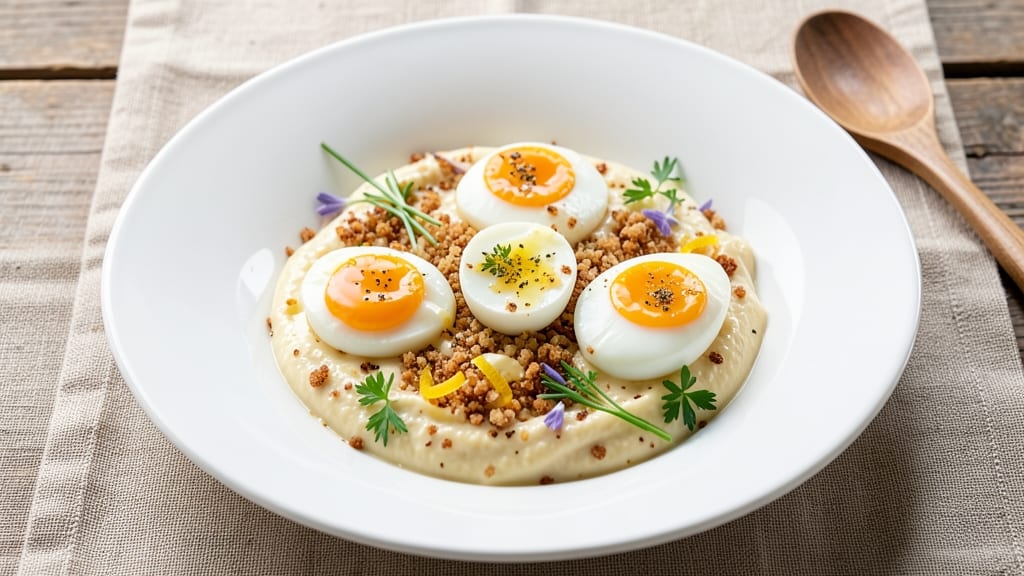
This soft-boiled Scotch egg recipe delivers the perfect balance of crispy golden breading and a silky, runny yolk center—every bite is a revelation. The secret lies in pre-boiling the eggs just enough to set the whites while keeping the yolks liquid, then wrapping them in a light, crispy breadcrumb shell.
I’ve perfected this technique over years of trial and error, ensuring the breading stays crunchy while the yolk remains velvety and warm.
What sets these apart is the two-stage cooking process: first, the eggs are hard-boiled and peeled, then gently reheated in simmering water just before serving to maintain that cloud-like yolk.
The breading—a mix of panko, flour, and seasoned breadcrumbs—creates a shatteringly crisp exterior that contrasts beautifully with the tender egg inside. This isn’t your average Scotch egg; it’s a restaurant-quality dish you can master at home.
The result is a dish that’s equally impressive as a breakfast centerpiece or a sophisticated appetizer. Serve with a tangy mustard sauce or a crisp green salad to cut through the richness, and watch as everyone reaches for seconds.
The key to success? Precision in timing and temperature—don’t skip the step of testing the water temperature for that perfect soft-boiled finish.
Once you try these, you’ll never go back to store-bought versions. The combination of textures—crispy, tender, and creamy—makes them irresistible. Let’s get started on creating Scotch eggs that steal the show at every meal.
Ingredients for soft boiled scotch egg
Four eggs, crispy crunch, and a velvety yolk—this is your Scotch egg shopping list.
| Ingredient | Amount | Notes |
|---|---|---|
| Large Eggs 🥚 | 4 whole | Room temperature for even cooking |
| All-Purpose Flour 🌾 | ½ cup | Sifted for light breading |
| Japanese Panko Breadcrumbs 🍞 | 1 cup | Light and crispy texture |
| Plain Breadcrumbs 🍞 | ½ cup | For extra crunch |
| Dijon Mustard 🍯 | 1 tbsp | For adhesive coating |
| Unsalted Butter 🧈 | 2 tbsp | Melted for binding |
| Fresh Parsley 🌿 | ¼ cup | Finely chopped for garnish |
| Granulated Sugar 🍚 | 1 tsp | Balances flavors |
| Salt 🧂 | 1 tsp | Diamond Crystal preferred |
| Ground Black Pepper 🌶️ | ½ tsp | Freshly ground |
| Vegetable Oil 🫒 | 2 cups | For frying, high smoke point |
| Ice Water 💧 | 1 cup | For immediate egg cooling |
The eggs are non-negotiable—use large eggs for consistent texture, and let them sit at room temperature for 30 minutes before cooking. I grab mine from Whole Foods or the organic section at Kroger—they’re fresher and hold their shape better during the two-stage boiling. For the breading, Japanese panko is a must—it stays crispy even after reheating, while the plain breadcrumbs add that extra crunch. If you can’t find panko, crushed cornflakes work in a pinch, but trust me on the panko for that perfect texture. The Dijon mustard is key too—it helps the breading adhere without making the eggs taste bitter.
No panko? Crushed potato chips (like Kettle Brand) are a sneaky substitute—they’re crispy and add a nice salty depth. Short on parsley? Fresh chives or dill work beautifully for garnish. The butter is crucial for binding the breading—don’t skip it, even if you’re watching calories. For the frying oil, vegetable or canola oil (high smoke point) is ideal, but if you’ve got avocado oil, it’s worth the splurge for that neutral flavor. The ice water bath is non-negotiable for stopping the cooking process instantly—just toss the eggs in for 10 seconds after boiling.
These keep surprisingly well—store the breaded eggs in an airtight container in the fridge for up to 2 days, then reheat in a skillet for 2-3 minutes per side until crispy. For longer storage, freeze the breaded eggs (uncooked) for up to 1 month
Why You'll Love This Recipe
- No Fuss Wrapping: I swear, the crust comes together faster than you can say "soft-boiled." Just dip, coat—panko on one side, plain crumbs on the other—and roll. No fancy shaping, no stress. The mustard in the egg mix ties everything together without extra effort, and honestly, that’s half the battle won.
- Crispy-Creamy Magic: That first bite? The panko shatters into perfect crunch while the yolk stays shockingly runny—like biting into a cloud with a golden shell. The Dijon mustard in the filling adds a tangy depth that makes it taste way more special than it is. (Yes, even on a Tuesday night.)
- Lunchbox Legend: Between us, these are my go-to for picnics, office lunches, or when I need to pack something for the kids that won’t get squished in a bag. The soft-boiled center stays intact for hours, and the crust holds up better than store-bought sandwiches. My daughter picks out the plain crumb side first—no judgment.
- Pantry Staple Power: I’ve made these with eggs from the back of the fridge, whatever breadcrumbs were in the cupboard, and they still turn out solid. No specialty ingredients, no last-minute grocery runs. Plus, they reheat beautifully—toss a few in the toaster for a quick protein boost when you’re too tired to cook. Budget-friendly? Absolutely. Reliable? Even more so.
Step-by-step instructions for soft-boiled Scotch eggs
Here's how to create perfectly silky yolks wrapped in crispy, golden breading every time.
Prepare the Egg Mixture
In a medium bowl, whisk together the 4 whole Large Eggs until the yolks and whites are fully combined and the mixture is smooth. Add the 1 tbsp Dijon Mustard, 1 tsp Granulated Sugar, 1 tsp Salt, and 0.5 tsp Ground Black Pepper, whisking until everything is evenly distributed. This mixture will form the silky center of your Scotch eggs.
Here's the thing—whisking thoroughly ensures no raw egg spots remain, which could make your yolks unevenly cooked. For best results, let the mixture sit at room temperature for 10 minutes before proceeding. This helps the eggs emulsify better with the breading later.
Create the Breading Station
In a shallow bowl, combine the 0.5 cup All-Purpose Flour and 1 tsp Salt, whisking to break up any lumps. In another bowl, mix the 1 cup Japanese Panko Breadcrumbs, 0.5 cup Plain Breadcrumbs, and 0.25 cup Fresh Parsley. Set these aside along with a third bowl containing the 2 tbsp Unsalted Butter melted and cooled slightly.
This three-stage breading system—flour, breadcrumbs, and butter—creates that signature crispy yet sturdy exterior. The melted butter acts as a binder, helping the breadcrumbs adhere tightly to the egg mixture. I like to keep all bowls within easy reach so I don't have to shuffle ingredients around during assembly.
Assemble and Chill the Eggs
Using a piping bag or heavy-duty zip-top bag with a small corner snipped off, pipe 1 tablespoon of the egg mixture into each corner of a square of plastic wrap. Fold the plastic wrap tightly around each portion, creating neat, compact rectangles. This prevents the egg mixture from spreading when you roll it.
Dip each wrapped rectangle into the flour mixture, coating lightly but evenly. Then roll in the breadcrumb mixture, pressing gently to ensure full coverage. Finally, dip into the melted butter, allowing any excess to drip off. Place the coated eggs on a parchment-lined tray and refrigerate for 30 minutes. This chilling step is crucial—it firms up the egg mixture and helps the breading adhere perfectly.
Fry to Golden Perfection
Heat 2 cups Vegetable Oil in a deep skillet or Dutch oven to 350°F—use a thermometer to monitor this precisely. Once the oil is hot, carefully add the chilled Scotch eggs in a single layer, being careful not to overcrowd the pan. Fry for 3-4 minutes per side until the breading is deep golden brown and crispy all over.
Here's where timing matters: the internal temperature of the egg mixture should reach 160°F for that perfect silky texture. If you don't have a thermometer, cut one open to check—when the center is just set but still slightly runny, you've nailed it. Remove the eggs and transfer them immediately to a wire rack to drain excess oil.
Cool and Serve
Prepare the 1 cup Ice Water in a bowl. Submerge each Scotch egg in the ice water for 10-15 seconds to halt the cooking process and set the yolks completely. This step also helps the breading crisp up further as it cools. Pat dry with paper towels, then serve immediately while still warm.
The contrast of the crispy, buttery exterior with the silky, slightly runny yolk inside is what makes these Scotch eggs so special. For extra flair, sprinkle with additional Fresh Parsley and a pinch of Salt before serving. These eggs pair beautifully with a tangy mustard dip or a simple green salad for a complete meal.
Pro Tips For Making Soft Boiled Scotch Egg
- Boil Eggs 6 Minutes: DESCRIPTION: That’s right—6 minutes, not 5 or 7. I used to overcook them, and the yolks turned into sad, rubbery globs. Set a timer, and if you’re nervous, test one with a pin: the white should hold firm, but the yolk should still jiggle like a happy puppy.
- Mix Panko Last: DESCRIPTION: Japanese panko is delicate—toss it in after the plain breadcrumbs and flour. Otherwise, it turns to dust in your hands, and your crust loses that coveted crispy texture. Think of it like adding croutons to soup: save it for the final stir.
- Chill Eggs Before Dredging: DESCRIPTION: Cold eggs coat better and don’t warm the batter, which means a cleaner crust. Pop them in the fridge for 15 minutes before dipping—trust me, your first attempt will look like a lumpy mess otherwise. (Yes, even if you’re impatient like me.)
- Fry in Batches: DESCRIPTION: Crowd the pan, and your eggs steam instead of crisp. Two at a time is the sweet spot—enough space for golden crusts without splattering oil everywhere. And for the love of all things crispy, don’t skip the 3-minute rest after frying. That’s when the magic happens.
Flavor customization for this soft boiled scotch egg
Classic Mustard Twist
Start with the classic flavor profile by boosting the Dijon mustard in the egg mixture to 2 tablespoons instead of 1. The tangy depth cuts through the richness of the breading beautifully.
For extra zing, add ½ teaspoon of smoked paprika to the breadcrumb mixture—it adds a subtle smokiness that pairs perfectly with the mustard. Trust me, this combo is a game-changer for that authentic Scotch egg taste. 🌶️
Spicy Chipotle Kick
For heat lovers, swap the Dijon mustard for 1 tablespoon of chipotle powder mixed with 1 teaspoon of apple cider vinegar in the egg mixture. Add ½ teaspoon of cayenne pepper to the breadcrumbs for an extra fiery crunch.
Serve with a side of cool, creamy avocado sauce to balance the heat. This version is perfect for brunch or as a bold appetizer.
Herb-Infused Garden
Transform your Scotch eggs into a fresh, herbaceous delight by adding 1 tablespoon of finely chopped fresh dill and 1 tablespoon of fresh chives to the egg mixture. For the breadcrumbs, mix in 1 teaspoon of dried thyme and ½ teaspoon of lemon zest.
The bright, citrusy notes elevate the dish, making it feel lighter and more refreshing. Garnish with extra herbs before serving for a pop of color and flavor.
Cheesy Cheddar Crunch
Take your Scotch eggs to the next level by adding ¼ cup of shredded sharp cheddar cheese to the egg mixture. For the breading, mix in ½ cup of crushed cornflakes (like Kettle Brand) with the panko and plain breadcrumbs.
The cheddar melts slightly during frying, creating a gooey, cheesy center that’s irresistible. This version is a crowd-pleaser, especially for cheese lovers.
Sweet & Smoky Maple
For a sweet and savory twist, reduce the sugar in the egg mixture to ½ teaspoon and add 1 tablespoon of pure maple syrup. Mix ½ teaspoon of smoked salt into the breadcrumbs for a subtle smoky depth.
The maple syrup adds a caramelized note that pairs beautifully with the crispy breading. This variation works surprisingly well for breakfast or as a dessert-like appetizer with a drizzle of maple glaze.
Umami Mushroom Magic
Add depth and umami to your Scotch eggs by blending 2 tablespoons of finely chopped cremini mushrooms into the egg mixture. For the breadcrumbs, mix in 1 teaspoon of nutritional yeast and ½ teaspoon of garlic powder.
The mushrooms add an earthy richness that elevates the dish, making it feel more sophisticated. This version is perfect for a cozy dinner or as a unique appetizer for game night.
Nutrition facts
Frequently asked questions
Why do I need to chill the Scotch eggs before frying?
The 30-minute refrigeration is key—it firms up the egg mixture so it holds its shape during frying and helps the breading adhere perfectly. Without chilling, the breading might slide off or the eggs could spread unevenly in the oil. Think of it like setting a cake batter before baking!
Can I make these ahead of time?
Assemble the breaded eggs (unfrozen) and store them in an airtight container in the fridge for up to 2 days. When ready to serve, fry them fresh for 2-3 minutes per side until crispy. For longer storage, freeze the breaded eggs (uncooked) for 1 month—just thaw overnight before frying. The breading reheats beautifully, though the yolk will be fully set after freezing.
How do I get the breading extra crispy?
Use Japanese panko (it stays crispy better than regular breadcrumbs) and fry the eggs in oil at 350°F until golden brown. For extra crunch, double-fry: fry once to set the breading, then chill for 10 minutes and fry again for 1-2 minutes. Also, pat them dry thoroughly after the ice water bath—moisture is the enemy of crispiness!
What’s the best way to serve these?
These Scotch eggs shine with a tangy dip! Try Dijon mustard sauce (mix 2 tbsp mustard with ¼ cup mayo and 1 tbsp vinegar) or a creamy avocado sauce. For a complete meal, pair with a crisp green salad or roasted vegetables. The contrast of warm eggs with cool sides is pure magic.
Can I use store-bought Scotch eggs and soft-boil them?
Not recommended! Store-bought versions are usually fully cooked and lack the delicate, runny yolk texture. This recipe requires fresh, properly assembled eggs to achieve the perfect soft-boiled center. If you're short on time, try making a batch ahead (as breaded eggs) and reheat them in a skillet for 2-3 minutes per side—they’ll still be crispy and delicious!