
Breakfast & Brunch
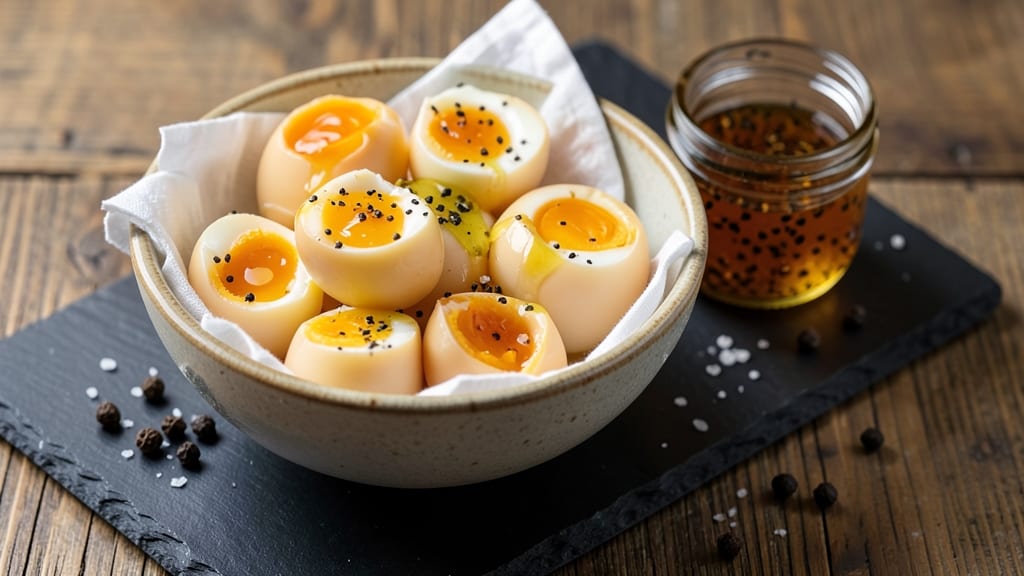
The soaked egg recipe transforms ordinary eggs into a luxurious dish with a silky, custard-like yolk and a firm, creamy texture—all thanks to a simple marinade.
This technique, inspired by traditional Asian methods like pidan and tsukemono tamago, delivers restaurant-quality results at home with just a few ingredients and patience. The key lies in soaking the eggs in a flavorful vinegar or soy-based solution, which gently cooks the albumen while preserving the yolk’s delicate structure.
What sets this recipe apart is the crispy tortilla cups that encase the eggs, adding a satisfying crunch and visual appeal. The marinade—typically a blend of vinegar, water, salt, and spices—infuses the eggs with subtle tang and depth, while the tortillas provide a sturdy, flavorful vessel.
This dish is not only impressive but also versatile, working as a standalone appetizer, part of a brunch spread, or even a protein-packed snack.
By the time you’re done, you’ll have eggs with a velvety, almost liquid yolk that melts in your mouth and a firm, creamy white that holds its shape.
The tortilla cups add a textural contrast that makes every bite exciting, while the marinade’s flavors—whether tangy, savory, or slightly sweet—elevate the dish beyond ordinary scrambled or boiled eggs. Perfect for feeding a crowd or treating yourself to something special, this recipe is a game-changer for breakfast or brunch.
The best part? This method is foolproof and adaptable. You can customize the marinade with herbs, spices, or even a touch of miso for extra umami, and the tortilla cups can be swapped for rice paper or even crispy wonton wrappers.
Whether you’re exploring global flavors or simply looking for a creative way to elevate a simple ingredient, this recipe delivers.
Ingredients for soaked egg
Four eggs, one marinade, and tortillas transform ordinary eggs into luxurious, crispy-cased delicacies.
| Ingredient | Amount | Notes |
|---|---|---|
| Large Eggs 🥚 | 4 whole | Room temperature for even cooking |
| White Vinegar 💧 | 2 cups | Distilled white preferred |
| Water 💧 | 1 cup | Distilled for clarity |
| Diamond Crystal Kosher Salt 🧂 | 2 tbsp | Fine grain preferred |
| Granulated Sugar 🍚 | 1 tbsp | White or raw preferred |
| Black Peppercorns 🌶️ | 10 whole | Freshly cracked preferred |
| Corn Tortillas 🌽 | 8 whole | Small, 3-inch diameter |
| Neutral Vegetable Oil 🫒 | ½ cup | High smoke point preferred |
| Fresh Cilantro Leaves 🌿 | ¼ cup | Chopped for garnish |
| Lime Wedges 🍋 | 2 whole | For serving |
| Sesame Seeds 🌾 | 1 tbsp | Toasted for garnish |
| Soy Sauce 🍶 | 1 tbsp | For marinade variation |
| Miso Paste 🍜 | 1 tbsp | White miso preferred |
The eggs are the foundation, so prioritize farm-fresh, organic eggs from the grocer's deli section—they yield the richest yolks and firmest whites. For the marinade, distilled white vinegar ensures clarity without cloudiness, while Diamond Crystal kosher salt dissolves completely for even infusion. Trader Joe's and Whole Foods carry high-quality vinegar in bulk, and their tortillas are ideal for crisping. The peppercorns should be freshly cracked—pre-ground loses potency quickly. If you're customizing the marinade, white miso from Marukome adds umami depth without overpowering the delicate egg texture.
No white vinegar? Apple cider vinegar works in a pinch, though it may impart slight fruitiness. Short on tortillas? Rice paper wrappers or wonton skins crisp beautifully—just fry them longer. The soy sauce and miso are optional but elevate the marinade; if omitting, increase the salt by 0.5 tbsp to compensate. For the oil, avocado oil has the highest smoke point and neutral flavor, but vegetable oil is a budget-friendly alternative. The cilantro and sesame seeds are purely decorative but add freshness—skip them if you prefer minimal garnish.
Store the marinade in an airtight container for up to 1 week in the fridge, though it's best used fresh. Soaked eggs keep for 5-7 days submerged in the marinade, but the tortilla cups should be fried fresh for optimal crispness. For meal prep, fry the tortilla cups ahead and store them in a single layer on a wire rack to maintain crispness. The eggs can be soaked up to 24 hours before serving, though 12 hours yields the perfect balance of firmness and tenderness. Serve immediately after frying for the best texture contrast.
Why You'll Love This Recipe
- I’ll be real: this recipe costs next to nothing. Eggs, vinegar, salt, sugar—you’re using things you already have. And if you soak a batch ahead? You’ve got a backup for breakfast, snacks, or even a quick garnish for salads. Zero waste, all win.
- Five-Minute Magic: I swear, this takes less time than boiling water for pasta. Just crack eggs into vinegar water, wait—that’s it. No peeling, no fuss, and the result is eggs that slide out like they’re already cooked to perfection.
- Sweet-Savory Surprise: Honestly, the sugar and salt in the soaking liquid do something wild—the whites stay tender but develop this just-right crispness, while the yolks remain rich and buttery. It’s like a secret weapon for any egg dish.
- Picnic or Potluck Hero: Between us, these eggs are ridiculously portable. Pack a few in a container, toss in some bread or crackers, and you’ve got a meal that’s as easy to eat as it is to make. No reheating needed—just grab and go.
Step-by-step instructions for silky yolk Magic in crispy tortilla cups
Transform ordinary eggs into restaurant-quality delights with this precise soaking technique.
Prepare the Soaking Solution
In a non-reactive container, combine the 2 cups white vinegar, 1 cup water, 2 tablespoons Diamond Crystal kosher salt, and 1 tablespoon granulated sugar. Stir until the salt and sugar dissolve completely. Add the 10 whole black peppercorns and let them infuse for 5 minutes—this imparts subtle seasoning without overpowering the delicate yolk.
Here's the thing—vinegar concentration matters. Using distilled white vinegar ensures clarity in the final presentation. The sugar acts as a gentle preservative while balancing the acidity. Let the solution sit at room temperature until you're ready to soak the eggs, allowing all components to fully integrate.
Soak Eggs for Perfect Texture
Gently place the 4 whole large eggs into the prepared solution. They should be completely submerged—use a small plate to weigh them down if needed. Cover the container and refrigerate for exactly 12 hours. This precise timing transforms the eggs: the whites firm up while the yolks remain silky and vibrant.
Don't rush this step. The acidity breaks down proteins in the whites, creating that signature firm yet tender texture we want. After 12 hours, remove the eggs and rinse them thoroughly under cold water. The vinegar smell should dissipate completely—if it lingers, soak them an additional 30 minutes in fresh cold water.
Prepare the Tortilla Cups
Heat 0.5 cup neutral vegetable oil in a skillet over medium heat until shimmering but not smoking. Working in batches, place the 8 whole corn tortillas in the oil and fry for 30-45 seconds per side until golden brown and crisp. Drain on paper towels and let cool completely—this prevents them from becoming soggy when filled.
The key to crispy tortilla cups lies in even cooking. Press down gently with a spatula during the first 10 seconds of frying—this prevents curling and ensures even contact with the oil. Once cooled, you can either keep them whole or cut them in half lengthwise for easier serving. The crispy texture will contrast beautifully with the silky yolks.
Assemble and Garnish
Make a small incision in each egg's rounded end and carefully peel away the top half of the shell, leaving the bottom intact. Gently slide the egg out while keeping the yolk intact. Place each egg into a tortilla cup, pressing lightly to secure. For extra flavor, mix 1 tablespoon soy sauce with 1 tablespoon miso paste and drizzle around the base of each cup.
Garnish immediately with 0.25 cup chopped fresh cilantro leaves and 1 tablespoon toasted sesame seeds. Serve with the 2 whole lime wedges on the side—this bright citrus cuts through the richness of the yolks. The presentation should be clean and elegant, with the crispy tortilla cups framing the vibrant yolks perfectly.
Pro Tips For Making Soaked Egg
- USE ROOM-TEMPERATURE EGGS: I learned this the hard way—cold eggs from the fridge crack unpredictably when dropped into the vinegar bath. Let them sit out for at least 30 minutes first, and they’ll slide in smoothly without surprise splatters.
- MEASURE VINEGAR AND WATER EXACTLY: The classic ratio is 1:1, but if you’re using Diamond Crystal kosher salt (which is finer than table salt), lean slightly heavier on the vinegar—about 2 tablespoons extra per cup of water. Too much salt makes the brine cloudy and dulls the final texture.
- SKIP THE BOILING WATER: I used to dump eggs straight into simmering water, but that risks uneven cooking. Instead, start the water at a full boil, then lower the eggs in gently with a slotted spoon—this keeps the temperature stable and prevents the whites from turning rubbery.
- SWEETEN THE BRINE LAST: Add the sugar after the eggs are submerged and the water’s back to a gentle simmer. This keeps the sugar from caramelizing prematurely (which makes the water sticky and hard to strain later) while still letting it infuse the eggs evenly.
Best sauces and condiments for these flavors
Classic Vinegar Marinade
The base marinade of 2 cups white vinegar, 1 cup water, 2 tbsp Diamond Crystal kosher salt, and 1 tbsp sugar creates the perfect balance of tang and subtle sweetness. The vinegar gently cooks the egg whites while preserving the yolk's silky texture.
I like to add 10 cracked black peppercorns for a subtle aromatic touch—it's a simple but effective way to elevate the flavor without overpowering the delicate egg. 💧
Umami Miso Drizzle
For an extra layer of depth, mix 1 tbsp white miso paste with 1 tbsp soy sauce and drizzle it around the base of each tortilla cup before adding the egg. The miso adds a rich, savory umami that complements the silky yolk beautifully.
This variation is inspired by Japanese tsukemono techniques, where fermented flavors enhance the dish's complexity. Use Marukome brand miso for the best quality—it's smooth and never bitter. 🍜
Spicy Chili-Lime Sauce
For a bold twist, blend 2 tbsp lime juice, 1 tbsp honey, 1 tsp chili powder, and ½ tsp smoked paprika into a dipping sauce. The bright acidity of the lime cuts through the richness of the yolks, while the chili powder adds a satisfying kick.
This sauce pairs perfectly with the crispy tortilla cups and works especially well for brunch or as a snack. Serve it on the side for dipping or drizzle it lightly over the assembled eggs. 🌶️
Sweet and Tangy Soy Glaze
Combine 2 tbsp soy sauce, 1 tbsp honey, and 1 tsp rice vinegar to create a glossy glaze that adds a sweet-savory contrast. Brush this mixture lightly over the tortilla cups before assembling the eggs for a caramelized finish.
The glaze not only enhances the flavor but also gives the dish a professional, restaurant-quality appearance. This variation is perfect for those who enjoy a touch of sweetness with their savory bites. 🍯
Herb-Infused Oil Dip
Heat ¼ cup neutral oil with 1 tbsp chopped garlic, 1 tbsp fresh cilantro, and a pinch of red pepper flakes until fragrant. Let it cool slightly before serving as a dip for the tortilla cups.
The aromatic garlic and cilantro add freshness, while the red pepper flakes introduce a mild heat that balances the richness of the eggs. This dip is especially refreshing and works well with the crispy texture of the tortilla cups. 🌿
Nutrition facts
Frequently asked questions
Why do the eggs need to soak for 12 hours?
The 12-hour soak is critical for achieving the perfect texture—vinegar gently breaks down the egg whites' proteins, creating a firm yet tender bite while keeping the yolk silky. This process mimics traditional methods like Chinese pidan or Japanese tsukemono tamago, where patience transforms ordinary eggs into luxurious bites. Rushing this step risks a rubbery texture.
Can I use brown eggs instead of white?
Brown eggs work perfectly—they'll have the same silky yolk and firm white after soaking. The color difference is purely cosmetic and doesn't affect flavor or texture. Just ensure they're fresh for the best results. For presentation, white eggs look slightly more elegant in the tortilla cups.
What if my tortilla cups aren't crispy?
Crispiness comes from proper oil temperature and frying time. Heat the oil to 350°F (medium-high) and fry for 30-45 seconds per side, pressing down gently with a spatula for the first 10 seconds. If they're still soft, increase heat slightly or fry longer—but watch closely to avoid burning. Store fried tortillas in a single layer on a wire rack to maintain crispness.
How long can I store the soaked eggs before using?
Soaked eggs stay fresh for 5-7 days submerged in the marinade, but the tortilla cups should be fried fresh for best texture. For meal prep, fry the tortillas ahead and store them separately (they crisp up again when reheated in a 350°F oven for 5 minutes). The eggs can be peeled and refrigerated for 3 days before assembling.
What's the best way to peel the eggs after soaking?
Start by making a small incision at the egg's rounded end, then gently peel away the top half of the shell while keeping the bottom intact. Slide the egg out carefully—it should come out whole with the yolk intact. For easier peeling, soak the eggs in cold water for 1 minute after rinsing off the vinegar. This helps separate the membrane from the shell.