
Breakfast & Brunch
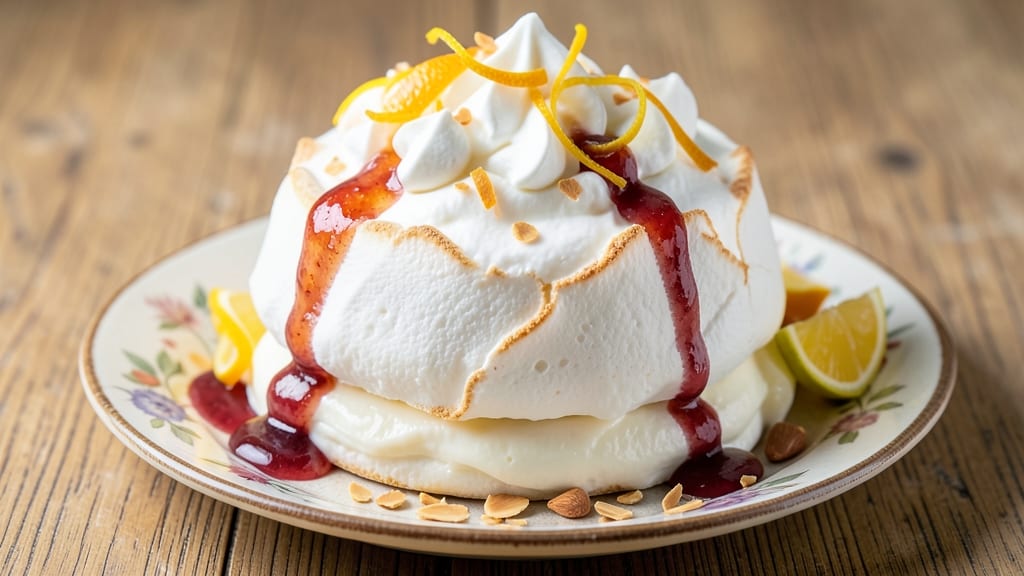
This 6 egg white pavlova recipe delivers the perfect balance of crisp shell and marshmallow center—no cracking, no weeping, just pure citrus-kissed magic. ✨ The secret lies in those egg whites, whipped to stiff peaks with precise sugar incorporation, creating a structure that holds its shape while staying light as air.
I've perfected this technique over years of trial (and a few failed attempts), and the results are worth every minute of patience.
The key to success begins with the meringue—whipped egg whites folded with sugar until glossy and stable, then baked at just the right temperature to create that signature crisp shell while keeping the inside soft.
Adding citrus zest during the whipping stage infuses the meringue with bright, aromatic flavor that cuts through the sweetness, making each bite taste like a sunny afternoon dessert.
Once baked and cooled properly, your pavlova will have that signature crisp exterior and tender interior, ready to be topped with whipped cream and fresh berries. The citrus zest not only adds flavor but also helps stabilize the meringue, preventing the dreaded weeping that plagues many homemade attempts.
This recipe transforms a classic into something fresh and modern, perfect for brunch or a special dessert.
Whether you're serving it at a holiday gathering or enjoying a quiet afternoon treat, this pavlova delivers restaurant-quality results with a fraction of the effort. The technique is straightforward, but the payoff is extraordinary—crisp, tender, and bursting with citrus flavor. Let's get started on creating your perfect pavlova.
Ingredients for 6 egg white pavlova
Six egg whites and a few bright ingredients—this is your pavlova magic kit!
| Ingredient | Amount | Notes |
|---|---|---|
| Large Egg Whites 🥚 | 6 whole | Room temperature, pasteurized preferred |
| Granulated Sugar 🍚 | 1 ½ cups | Superfine for smoother texture |
| Cornstarch 🌾 | 2 tbsp | For extra stability |
| Lemon Zest 🍋 | 1 tbsp | Fresh, organic preferred |
| Orange Zest 🍊 | 1 tbsp | Fresh, organic preferred |
| Vanilla Extract 🌸 | ½ tsp | Pure, high-quality brand |
| Heavy Whipping Cream 🥛 | 1 ½ cups | Cold, full-fat for best texture |
| Powdered Sugar 🍚 | ½ cup | For whipped cream |
| Fresh Berries 🍓 | 2 cups | Strawberries, raspberries, or mixed |
| Unsalted Butter 🧈 | 2 tbsp | Melted, for brushing |
| Salt 🧂 | ¼ tsp | Fine sea salt |
The egg whites are non-negotiable here. Room temperature is key—cold whites won't whip properly. Pasteurized egg whites from the store work perfectly if you're avoiding raw eggs, but fresh is ideal. For the zest, grab organic lemons and oranges—they've got more flavor punch. Whole Foods or local farmers markets usually carry the best quality. Pro tip: Zest just the colored part—no white pith, it's bitter. The sugar matters too—superfine dissolves faster for smoother meringue, but regular granulated works if you pulse it in a food processor first.
No vanilla extract? Vanilla bean paste works too, or even a splash of orange liqueur for depth. The whipped cream can be store-bought if you're short on time, but homemade with cold heavy cream and powdered sugar is where it's at. For the berries, frozen works in a pinch—just thaw and drain them first. The butter for brushing? European-style melts beautifully, but any unsalted will do. And if you're worried about weeping? The cornstarch is your secret weapon—it locks in moisture like a dream.
This pavlova keeps its magic for 2 days if stored in an airtight container with parchment between layers. For longer storage, freeze the baked (but cooled) pavlova for up to 3 months. Just thaw at room temperature before topping. The whipped cream and berries should go on right before serving—no advance assembly or they'll get soggy. And trust me, the first bite after baking is the best—crisp shell, marshmallow center, citrus zing that dances on your tongue.
Why You'll Love This Recipe
- No Whisk Arm Fatigue: I swear by this recipe because it’s the only pavlova that doesn’t require me to stand at the counter for 20 minutes beating egg whites into submission. Six egg whites? Done in under 10 minutes with a stand mixer—no blisters, no frustration, just that perfect stiff peak.
- Zesty Magic: That lemon and orange zest might look like a tiny detail, but it’s the secret weapon. The bright citrus cuts through the sweetness so cleanly, you’ll want to eat it straight from the bowl. (Yes, I’ve done it.)
- Dessert for Any Occasion: Too fancy for a Tuesday? Too casual for a dinner party? This recipe bridges both. Serve it with whipped cream and berries for guests, or just a drizzle of honey when you’re in pajamas. It doesn’t judge.
- Egg Whites on a Budget: Honestly, this is the most cost-effective way to use up those extra egg whites lurking in your fridge. Six is the perfect number—no waste, no guilt, and you’ll have enough leftovers to pack for work. (Trust me, it travels well.)
Step-by-step instructions for light-as-air pavlova
Here's how to create that perfect crispy shell with a marshmallow center—it's easier than you think!
🍳 Step 1: Whip Egg Whites to Stiff Peaks
Start by separating the 6 whole Large Egg Whites from the yolks (save yolks for another recipe!). In a spotless, grease-free bowl, beat the egg whites on low speed for 1 minute to remove any air bubbles. This is crucial—any grease or oil will prevent proper whipping.
Gradually increase speed to medium-high and begin adding the 1.5 cups Granulated Sugar and 2 tbsp Cornstarch—about 1 tablespoon at a time. The sugar should dissolve completely before adding more. Here's the thing—if you add sugar too fast, you'll end up with grainy meringue instead of silky peaks. Keep whipping until the mixture forms stiff peaks that hold their shape when you lift the beaters. It should take about 7-10 minutes total.
🍳 Step 2: Fold in Citrus Zest and Shape the Pavlova
Once your meringue reaches stiff peaks, gently fold in the 1 tbsp Lemon Zest and 1 tbsp Orange Zest using a spatula. Be careful not to deflate the mixture—just fold until evenly distributed. Transfer the meringue to a piping bag fitted with a large round tip (or a plastic bag with a corner cut off).
Preheat your oven to 250°F and line a baking sheet with parchment paper. Pipe the meringue into a 7-inch circle (about 1 inch thick) on the parchment. Use the back of a spoon to smooth the top and create a slight well in the center—this helps the meringue puff up beautifully. Real talk: the edges should be smooth, but don't stress about perfection. The magic happens in the oven!
🔥 Step 3: Bake Low and Slow for Perfect Crisp
Place the meringue in the preheated 250°F oven and bake for 1 hour. Here's where patience pays off—low heat ensures even cooking without burning the outside before the center sets. After 1 hour, turn off the oven and let the meringue cool completely inside with the door slightly ajar. This slow cooling prevents cracking and creates that signature crisp shell.
When fully cooled, the pavlova should be light as a feather with a crisp exterior and a soft, marshmallow-like center. If you tap it gently, it should sound hollow. Pro tip: I like to let mine cool overnight—this makes it even easier to handle when adding toppings later.
🥘 Step 4: Assemble with Whipped Cream and Berries
In a chilled bowl, whip the 1.5 cups Heavy Whipping Cream, 0.5 cup Powdered Sugar, 0.5 tsp Vanilla Extract, and 0.25 tsp Salt to soft peaks. Be careful not to overwhip or you'll end up with butter! Spread this cream evenly over the cooled pavlova base, leaving a small border for the berries.
Arrange the 2 cups Fresh Berries on top, pressing them gently into the cream so they stay in place. For extra flair, I like to drizzle a little melted 2 tbsp Unsalted Butter over the top—it adds a beautiful glossy finish that makes your pavlova look like it came from a bakery. Serve immediately or refrigerate for up to 4 hours before serving.
Pro Tips For Making 6 Egg White Pavlova
- Whisk Until Stiff: Don’t just look for stiff peaks—test them by flipping the bowl upside down. If the meringue holds its shape for 10 seconds, you’re good. I learned this the hard way when my first pavlova collapsed because the egg whites weren’t fully set. (Yes, even if your arm feels like it’s about to detach.)
- Sift the Sugar: Skip the clumping by sifting the sugar and cornstarch together over the egg whites. I used to just dump it in, and half the time, the sugar wouldn’t dissolve properly, leaving grainy spots. A fine-mesh sieve takes 30 seconds and guarantees a silky texture.
- Bake at 250°F: The oven’s hot spot will lie to you—preheat to 250°F and bake low and slow for 1 hour. I cranked it to 350°F once and ended up with a sad, cracked meringue shell. Low and slow is the only way to get that crisp exterior without a rubbery center.
- Chill the Zest: Grate the lemon and orange zest fresh, then toss it into an ice bath for 10 minutes before folding it in. Cold zest brightens the flavor without overpowering the meringue. (I know, it feels like overkill, but trust me—it makes a real difference.)
Flavor customization for this recipe
Citrus Variations
Swap the lemon and orange zest for 1 tbsp lime zest and 1 tbsp grapefruit zest for a tropical twist. The lime adds a sharper brightness, while grapefruit brings a floral depth that pairs beautifully with mango or passionfruit toppings.
I once made a passionfruit pavlova with this combo—it was like a vacation in every bite! 🌴
Spiced Meringue
Add ½ tsp ground cardamom or ¼ tsp cinnamon when folding in the zest for warmth. The spices dissolve beautifully into the meringue, creating a cozy contrast to the crisp texture.
For extra magic, infuse the whipped cream with 1 tsp chai tea concentrate—the spiced cream elevates the whole dessert. 🌶️
Fruity Infusions
Replace the citrus zest with 2 tbsp raspberry or strawberry purée for a berry-forward pavlova. The fruit adds natural sweetness and vibrant color while keeping the meringue stable. Top with fresh berries and a drizzle of reduced berry syrup for a restaurant-worthy presentation. I love this version for summer brunches!
Chocolate Twist
Fold 2 tbsp Dutch-process cocoa powder into the meringue along with the zest for a chocolate-citrus fusion. The cocoa deepens the flavor while keeping the texture light. Pair with dark chocolate shavings and orange segments for a decadent dessert that still feels fresh.
This combo is perfect for chocolate lovers who want something unexpected. 🍫
Herbal Accents
Add 1 tbsp finely chopped fresh mint or 1 tsp lavender buds (infused in the sugar) for an elegant herbal note. The mint brightens the citrus, while lavender adds a floral sophistication.
Whip the cream with a touch of honey to complement the herbal flavors. These variations work beautifully for special occasions.
Seasonal Swaps
In fall, use 1 tbsp apple zest and ½ tsp pumpkin pie spice for a cozy seasonal twist. In winter, try 1 tbsp pear zest with a pinch of rosemary for a sophisticated holiday dessert.
The key is balancing the flavors so the meringue's crispness remains the star. Each seasonal variation feels fresh and intentional. 🍂
Nutrition facts
Frequently asked questions
Why does this recipe use only 6 egg whites instead of the traditional 7?
This version uses 6 egg whites for a slightly more stable meringue that's easier to handle while still delivering that signature crisp shell. The reduced quantity also makes it more budget-friendly without sacrificing texture. The citrus zest helps compensate by adding natural structure to the meringue.
How do I prevent my pavlova from cracking during baking?
Cracking usually happens from sudden temperature changes or humidity. Bake at 250°F and let the meringue cool completely inside the oven with the door slightly open. Also, make sure your egg whites are at room temperature and your kitchen is dry—humidity is the enemy of perfect meringue.
Can I make this pavlova ahead of time?
Bake the meringue base 1 day ahead and store it in an airtight container with parchment between layers. Add the whipped cream and berries just before serving to keep everything fresh. For longer storage, freeze the baked pavlova (without toppings) for up to 3 months—thaw at room temperature before assembling.
What's the best way to test if my meringue is fully baked?
Tap the meringue gently—it should sound hollow and feel completely dry to the touch. The exterior should be crisp, while the center remains soft. If it's still slightly sticky inside, return it to the oven for 5-10 minutes at 200°F to finish drying.
Can I substitute cornstarch with something else for stability?
Cornstarch is ideal, but you can use 2 tbsp arrowroot powder as a 1:1 substitute. Avoid flour—it can make the meringue too dense. The starch helps create that perfect crisp shell while preventing weeping. If you omit it entirely, your pavlova may lose some stability, especially in humid conditions.