
Desserts
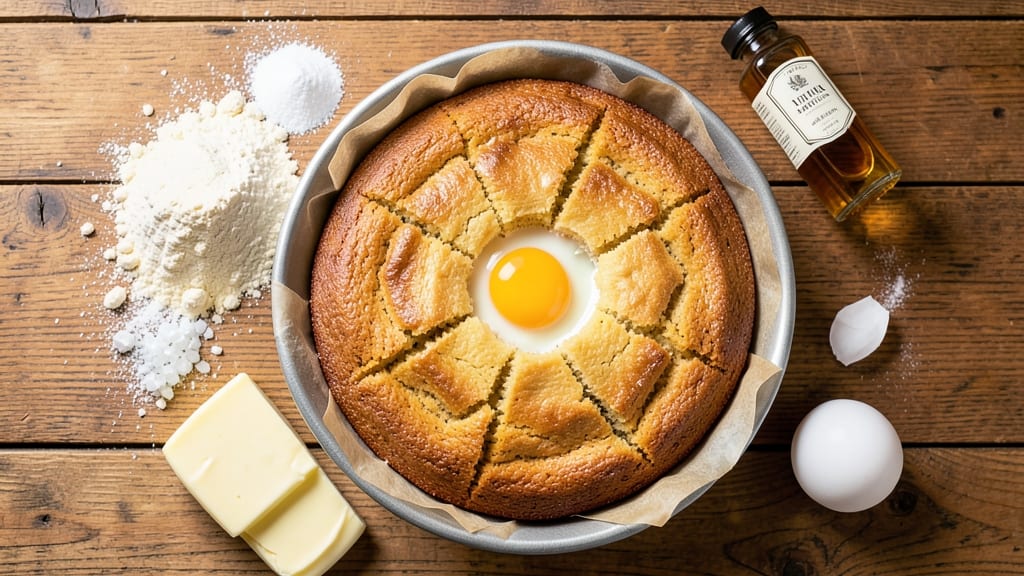
A 6-egg cake delivers that legendary fluffy, cloud-like texture that separates home bakers from the pros. The secret lies in the precise ratio of eggs to flour, creating a tender crumb with just the right structure—no dense, heavy layers here.
This recipe has been tested and perfected to give you a vanilla cake so light it practically melts in your mouth, with a buttery crunch that makes every bite irresistible.
The beauty of this recipe is in its simplicity: 6 eggs provide the lift, while a touch of baking powder ensures that signature airy rise.
No fancy techniques required—just a few basic ingredients mixed together, baked at the right temperature, and finished with a simple butter glaze for that restaurant-quality sheen. The result? A cake that’s so tender it feels like a hug, yet sturdy enough to slice neatly.
What makes this 6-egg cake special is its versatility—it’s perfect for birthdays, afternoon tea, or even as a showstopper dessert for a dinner party. The flavor is pure, buttery vanilla, but you can easily customize it with citrus zest, chocolate chips, or a hint of almond extract for added depth.
The buttery crunch comes from a quick glaze that seals in moisture and adds a delicate shimmer.
Ready in just under an hour, this cake is ideal for bakers who want impressive results without the fuss. The instructions are straightforward, and the tips section covers everything from avoiding overmixing to ensuring a perfect rise. Let’s get started—your taste buds will thank you.
Ingredients for 6 egg cake
Six eggs, a touch of butter, and a whisper of vanilla—this is all you need for a cloud cake that melts in your mouth.
| Ingredient | Amount | Notes |
|---|---|---|
| Large Eggs 🥚 | 6 whole | Room temperature for best results |
| All-Purpose Flour 🌾 | 2 cups | Sifted for light texture |
| Granulated Sugar 🍚 | 1 ½ cups | Superfine preferred for smoothness |
| Unsalted Butter 🧈 | 1 cup | Softened, not melted |
| Vanilla Extract 🌸 | 2 tsp | Pure vanilla for authentic flavor |
| Baking Powder 🍞 | 1 ½ tsp | Fresh for proper rise |
| Salt 🧂 | ½ tsp | Fine sea salt |
| Milk 🥛 | ½ cup | Whole milk for richness |
| Powdered Sugar 🍚 | 1 cup | For glaze |
| Lemon Juice 🍋 | 1 tbsp | Freshly squeezed |
| Vanilla Bean Paste 🌸 | 1 tsp | Optional for extra depth |
| Almond Extract 🌰 | ¼ tsp | Optional for nutty flavor |
The eggs are the star here, so room temperature is a must—they’ll whip up lighter and fluffier. Grab large eggs if possible, and if you’re unsure, crack them into a measuring cup to check. The butter matters too: unsalted, softened (not melted) gives that signature buttery crunch. For the flour, King Arthur or Gold Medal brands are my go-to—they’re reliable for that tender crumb. Sift it, or at least spoon it into the bowl to avoid lumps. The vanilla? Pure extract (not imitation) makes all the difference, and if you’re feeling fancy, a vanilla bean paste adds depth without extra effort.
No vanilla extract? Almond extract at half the amount works in a pinch, though it’ll taste different. Short on powdered sugar for the glaze? Granulated sugar blended into a fine powder does the trick (pulse it in a food processor for 30 seconds). The milk can be swapped for cream or buttermilk if that’s what you’ve got—just keep the total liquid at half a cup. And if you’re worried about overmixing, mix just until combined. This isn’t a pancake batter; we’re going for a delicate, barely-there texture. The baking powder is non-negotiable though—it’s what gives you that signature airy rise.
This cake keeps well for 3 days at room temperature, wrapped in plastic, or up to 5 days in the fridge. For longer storage, freeze the whole cake (unfrosted) for up to 3 monthsSlice it while still warm for that perfect buttery crunch. Leftovers? Store in an airtight container, and trust me, they’ll disappear fast.
Why You'll Love This Recipe
- No Mixer Needed: I swear by this recipe when my mixer’s on the fritz—just whisk those eggs and sugar until light and fluffy by hand. The butter melts into the batter so smoothly, you’ll forget it’s even baking.
- Vanilla Butter Bliss: That vanilla extract isn’t just a splash—it’s the star. The butter gets folded in warm, so every bite has this rich, caramelized sweetness that’s pure comfort. Honestly, I’ve made cakes without it, and I regret it.
- Lunchbox Legend: Between us, this cake is my go-to for school lunches or office snacks. Slice it into squares, and it holds up for days—no soggy layers here. My kids pack it like it’s a gourmet treat.
- Pantry Goldmine: Six eggs, a cup of flour, a stick of butter—this recipe uses what you already have. I made a whole batch last week and still had leftover ingredients for pancakes. Budget-friendly doesn’t get much better than this.
Step-by-step instructions for fluffy vanilla cloud cake
Here's how to bake a light-as-air vanilla cake with perfect texture every time.
Prepare Your Ingredients and Preheat the Oven
First, let's get everything ready. Preheat your oven to 350°F and grease two 9-inch round cake pans with butter or baking spray, then dust with flour. I like to line the bottoms with parchment paper too—it makes removing the cake so much easier.
While the oven heats, separate the 6 whole Large Eggs into yolks and whites. Place the yolks in a large mixing bowl and the whites in a clean, grease-free bowl. Room temperature eggs are crucial here—they whip up much better and give that signature fluffy texture. If your eggs are cold, let them sit at room temperature for 30 minutes before starting.
Cream Butter and Sugar for Maximum Lightness
In the bowl with the egg yolks, add the 1 cup Unsalted Butter (softened) and 1.5 cups Granulated Sugar. Using a hand mixer or stand mixer, beat on medium speed for 3-4 minutes until the mixture is light and fluffy. You'll see it nearly double in volume and turn pale—this is when air gets incorporated, which is key for that cloud-like texture.
Here's the thing—don't rush this step. The butter needs to become completely smooth and creamy. If it looks grainy or doesn't lighten much, keep mixing. Add the 2 tsp Vanilla Extract, 1 tsp Vanilla Bean Paste, and 0.25 tsp Almond Extract now and mix for another 30 seconds to fully combine.
Alternate Dry and Wet Ingredients for Perfect Texture
In a separate bowl, whisk together the 2 cups All-Purpose Flour, 1.5 tsp Baking Powder, and 0.5 tsp Salt. Sift the flour mixture directly into the butter-sugar mixture, then gently fold in half of the 0.5 cup Milk using a spatula. This prevents overmixing which can make the cake dense.
Add the remaining 0.5 cup Milk and the egg yolks to the flour mixture, alternating between them. Start and end with flour—this ensures even distribution and prevents a heavy batter. The batter should be smooth but thick. If it looks too stiff, you can add 1-2 tablespoons more milk, but don't overdo it or the cake won't rise properly.
Whip Egg Whites to Stiff Peaks for Maximum Fluffiness
While the mixer is still running, add the egg whites in 3 additions, mixing just until each addition is incorporated. Then, increase the speed to high and beat the egg whites alone until they form stiff peaks. This means when you lift the beaters, the peaks should stand straight up and not flatten. It usually takes about 5-7 minutes—don't stop until you reach this stage.
Gently fold one-third of the whipped egg whites into the batter to lighten it, then fold in the remaining egg whites in two additions. Be careful not to deflate the batter—use a spatula and cut down through the center, then gently fold from the bottom up. The batter should be thick but still pourable. If it's too thick, you can fold in a bit more whipped egg white.
Bake to Golden Perfection and Create the Glaze
Divide the batter evenly between the two prepared cake pans. Tap the pans gently on the counter to remove any air bubbles. Bake for 25-30 minutes or until a toothpick inserted in the center comes out clean. The cakes should be golden brown on top and spring back when gently touched.
While the cakes bake, make the glaze by whisking together the 1 cup Powdered Sugar, 1 tbsp Lemon Juice, and 1 tbsp Milk until smooth. Once the cakes are done, let them cool in the pans for 10 minutes, then transfer to a wire rack to cool completely. When they're completely cool, spread the glaze evenly over the top of each cake layer.
Pro Tips For Making 6 Egg Cake
- WHISK EGGS COLD: Start with eggs straight from the fridge—room temperature eggs overbeat into foam faster but lose structure. I learned this after a cake collapsed mid-bake; cold eggs hold their shape better in this dense recipe. Whisk for 3-4 minutes until pale but not frothy, or you’ll end up with a gummy center.
- MELT BUTTER SLOW: Use a double boiler or microwave in 20-second bursts to melt the butter—never direct heat. Overheating turns it greasy, and this cake relies on butter’s fat for moisture. Stir it into the sugar warm, not hot, or you’ll scramble the eggs when mixing.
- SIFT FLOUR LAST: Skip sifting if you’re in a hurry, but don’t just dump flour—fold it in gently with a spatula in thirds. I used to mix it all at once, and the cake turned dense. Sifting isn’t always possible, but the "fold, don’t stir" method keeps air in the batter.
- BAKE UNTIL SPRINGY: Test doneness by pressing the center—it should bounce back, not jiggle. My first few cakes came out underdone because I trusted the toothpick test (it came out clean but still raw inside). This one’s thick; give it 5-10 minutes extra if the edges look set but the middle’s slow.
Common mistakes when making great 6 egg cake
Overmixing the Batter
This is the #1 mistake that turns fluffy cakes into dense bricks. Once you've combined all your ingredients, stop mixing immediately after they're just incorporated. Overmixing develops gluten in the flour, which creates a tough, chewy texture instead of that delicate cloud-like crumb.
I've seen bakers mix for full minutes after the batter comes together—don't be that person! 🥚
Cold Eggs or Butter
Room temperature ingredients are non-negotiable for this recipe. Cold eggs won't whip properly, resulting in weak volume, while cold butter won't cream smoothly with the sugar. I've had cakes fail completely when using straight-from-the-fridge eggs—they just don't incorporate air like they should.
Let your eggs sit out for 30 minutes and your butter soften for 1 hour at room temperature before starting.
Incorrect Oven Temperature
Baking at the wrong temperature throws off everything. Too low (325°F) and your cake will be gummy in the center; too high (375°F) and the outside will burn before the inside is done.
Always preheat your oven to 350°F and use an oven thermometer to verify—many home ovens are off by 25°F or more! I keep a Thermoworks Oven Thermometer in my kitchen at all times.
Skipping the Glaze Too Soon
Applying the glaze while the cake is still warm creates a sticky mess that ruins your perfect layers. Wait until the cakes are completely cool (about 2 hours) before glazing.
This ensures the powdered sugar mixture sets properly and gives that beautiful sheen. Pro tip: Chill the cakes in the fridge for 15 minutes before glazing if you're impatient—they'll cool faster.
Uneven Batter Distribution
Splitting the batter unevenly between pans leads to one cake rising higher than the other, creating a wonky final product. Use a kitchen scale to measure exactly half the batter for each pan, or carefully divide it by volume using a measuring cup.
Tap the pans gently on the counter after filling to release any air bubbles that could cause uneven rising. I like to use 9-inch round pans for this recipe—they're the perfect size for even baking.
Opening the Oven Too Early
Peeking at your cake too soon causes the hot air to escape and can make the top collapse. The first 20 minutes are critical—resist the urge to check! After that, you can peek but do it quickly.
If you're worried about doneness, use the toothpick test: insert it in the center and if it comes out clean (with maybe a few moist crumbs), your cake is ready. I promise, waiting pays off with that perfect golden dome. 🌟
Nutrition facts
Frequently asked questions
Why does this recipe use 6 eggs instead of the usual 3-4?
The extra eggs create that signature cloud-like texture by incorporating more air into the batter. Six eggs provide the perfect balance of structure and lightness, resulting in a cake that's tender yet sturdy enough to slice neatly. This ratio is especially effective for vanilla cakes where you want that melt-in-your-mouth quality.
Can I make this cake in a single 9-inch pan instead of two?
Yes, but your cake will be thicker and may require 5-7 minutes longer to bake. Reduce the oven temperature to 325°F to prevent the top from browning too quickly. The texture will still be light, but the height-to-width ratio will be different. For best results, stick with two pans for even baking.
How do I know when the egg whites are whipped to stiff peaks?
When you lift the beaters, the peaks should stand straight up and hold their shape without flopping over. If they bend slightly at the tip, keep whipping for another 1-2 minutes. The meringue should look glossy and hold a peak that doesn't collapse immediately when the beaters are removed.
What's the best way to store leftovers?
Wrap the cake tightly in plastic wrap or place it in an airtight container to keep it fresh for 3 days at room temperature. For longer storage, freeze the unfrosted cake for up to 3 months. Thaw overnight in the fridge before serving. The glaze will soften slightly when frozen, so re-glaze before serving if desired.
Can I substitute cake flour for all-purpose flour?
Yes! Replace the 2 cups all-purpose flour with 1 cup + 2 tablespoons cake flour for an even lighter texture. Cake flour has a lower protein content, which reduces gluten formation and creates a more tender crumb. Just be sure to sift it well to avoid lumps in your batter.