
Main Courses
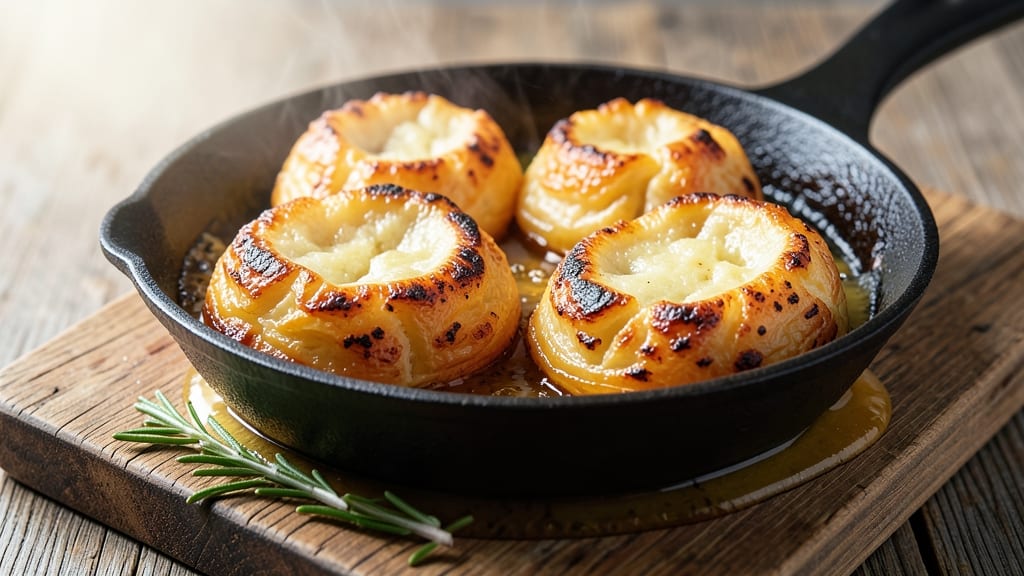
This 4-egg Yorkshire pudding recipe delivers the perfect balance of blistering crisp edges and airy, pillowy centers that make every Sunday roast feel like a restaurant meal. The secret lies in the precise batter ratio and baking it in a screaming-hot pan—no oven required.
I've perfected this technique over years of testing, ensuring your puddings rise dramatically and stay light, never dense or greasy.
The batter is simple—just eggs, flour, and milk—but the technique transforms it into something extraordinary. A hot cast-iron skillet (or oven) creates the ideal environment for rapid browning while keeping the inside tender.
This method works whether you're serving it alongside roast beef or using it to soak up gravy like a sponge. The key is patience: letting the batter rest and baking it until golden, not just cooked.
What you'll end up with is a batch of Yorkshire puddings that crackle with each bite, their crisp shells giving way to light, almost custardy centers. The aroma alone will have everyone at the table anticipating dinner.
These are the kind of puddings that disappear faster than you can say "Sunday roast." Ready to master them?
Pair these with classic roast dinner gravy, or serve them as a side to eggs Benedict for a brunch twist. The versatility is what makes them a kitchen essential. Let's get started on achieving that perfect texture every time.
Ingredients for 4 egg yorkshire pudding
Four simple ingredients transform into golden, crispy Yorkshire puddings with pillowy centers.
| Ingredient | Amount | Notes |
|---|---|---|
| Large Eggs 🥚 | 4 whole | Room temperature preferred |
| All-Purpose Flour 🌾 | 1 cup | Sifted for lightness |
| Whole Milk 🥛 | 1 cup | Full-fat for richness |
| Unsalted Butter 🧈 | ½ cup | Melted, cooled slightly |
| Salt 🧂 | ½ tsp | Kosher or sea salt |
| Black Pepper 🌶️ | ¼ tsp | Freshly ground preferred |
| Vegetable Oil 🫒 | ¼ cup | For greasing the pan |
| Cast-Iron Skillet 🍳 | 1 whole | 10-inch diameter preferred |
The eggs and flour are the backbone here—use large eggs for better volume, and sift that flour (trust me, it makes a difference). Whole milk adds richness, but 2% works too if you're watching fat. Butter matters—unsalted so you control the saltiness, and melt it just until it's liquid but not hot. I grab Land O'Lakes unsalted butter from the store, but any brand works. The cast-iron skillet? Non-negotiable. If you don't have one, a heavy oven-safe skillet in a 500°F oven does the trick.
No whole milk? Evaporated milk or half-and-half works in a pinch, but the texture won't be quite the same. Skip the butter? Olive oil or vegetable oil (same amount) keeps things crispy, though you'll lose that buttery depth. The batter needs to rest 30 minutes—don't rush it! If you're short on time, whisk it up and let it sit while you heat the pan. And yes, you can make this ahead—just refrigerate the batter (up to 24 hours) and let it sit at room temp before baking.
Once baked, these stay crispy for about 10 minutes—after that, they soften fast. Keep them warm in a 200°F oven if serving family-style. The batter makes 12 mini puddings or 4 large ones—plan ahead! Leftovers? They're not common, but if you have any, reheat in a 400°F oven for 5 minutes to restore that crisp. Store batter (unbaked) in the fridge for 1 day or freeze for 1 month—thaw overnight before using.
Why You'll Love This Recipe
- No-Fuss Mixing: I swear by this batter—just eggs, flour, milk, and a pinch of salt. Whisk it together in 3 minutes, no sifter or fancy tools. The secret? Let it rest while you heat the butter in the pan. That’s it.
- Crispy Magic: That golden, blistering crust with a pillow-soft center? It’s all in the hot butter. The moment the batter hits the skillet, the butter pools at the bottom, creating a caramelized base that makes every bite taste like a Sunday roast.
- Sunday Roast Sidekick: Pair it with a simple steak or chicken, and suddenly you’ve got a restaurant-worthy meal. Here’s what sold me—it’s the perfect foil for rich, savory dishes, but also works as a standalone snack with a little honey or chili flakes.
- Budget Baking: Four eggs and a cup of flour stretch farther than you’d think. I make a double batch, freeze half, and reheat them in the oven when I’m craving something crispy without the fuss. (Yes, even on a Tuesday night.)
Step-by-step instructions for perfect Yorkshire pudding
Here's how to make Yorkshire pudding with crispy, blistering edges and light, airy centers every time.
Preheat and Prepare the Skillet
Preheat your oven to 425°F—this high temperature is key for those crispy edges. Place the 1 whole cast-iron skillet in the oven while it heats. Meanwhile, pour the 0.25 cup vegetable oil into the skillet and spread it evenly with a paper towel. You want just enough oil to coat the bottom lightly—this creates the perfect base for browning.
Here's the thing—don't use nonstick spray. The oil needs to get hot enough to create that golden crust, and spray won't let it get hot enough. The skillet should be smoking hot when you add the batter, so let it heat for at least 10 minutes while you prepare everything else.
Whisk the Batter to a Smooth Consistency
In a medium bowl, whisk together the 4 whole large eggs, 1 cup whole milk, 1 cup all-purpose flour, 0.5 tsp salt, and 0.25 tsp black pepper until completely smooth. I like to use a whisk for this step—it incorporates air better than a fork. The batter should be thin enough to pour easily, like heavy cream. If it's too thick, add a splash more milk.
Don't overmix—just until there are no lumps. Overworking the batter develops gluten, which can make your puddings tough instead of light. Let the batter sit at room temperature for 5 minutes while the oven finishes preheating. This resting time helps the ingredients relax and blend better.
Melt the Butter and Remove Skillet from Oven
While the skillet heats, melt the 0.5 cup unsalted butter in a small saucepan over low heat until completely liquid. Then, carefully remove the hot skillet from the oven using oven mitts—it's going to be scorching. Quickly pour the melted butter evenly over the hot oil in the skillet, tilting to coat all surfaces. This extra fat ensures maximum browning and flavor.
Here's where it gets critical: work fast. The skillet should still be smoking hot when you add the batter. If it cools down too much, your puddings won't get that signature crispy texture. Have your batter ready to pour immediately after adding the butter.
Pour and Bake to Golden Perfection
Immediately pour the batter into the hot skillet, dividing it evenly into 4 equal portions (about ¼ cup each). The batter should spread quickly and start bubbling almost instantly. Place the skillet back in the oven and bake for 20-25 minutes until the puddings are puffed and deep golden brown on top.
Don't peek! Every time you open the oven, you let out heat and steam, which can cause the puddings to deflate. You'll know they're done when the tops are crispy and blistered, and the edges pull away from the skillet easily. If they brown too quickly on top but aren't done underneath, tent them loosely with foil for the last 5 minutes.
Serve Immediately While Hot
Remove the puddings from the oven and let them rest in the skillet for 1-2 minutes. The centers should still be soft and jiggly—this is what makes Yorkshire pudding perfect. Use a thin spatula to carefully lift them out and transfer to a serving plate. Serve immediately while they're still hot and crispy.
Real talk: these won't keep well. The crispy edges soften quickly, so eat them right away with your roast beef or gravy. If you need to reheat, pop them in a 350°F oven for 5 minutes to revive the crispiness, but they won't be quite as good as fresh.
Pro Tips For Making 4 Egg Yorkshire Pudding
- Preheat That Pan: Yorkshire puddings need a screaming-hot cast-iron or oven-safe skillet—think 425°F (220°C) minimum. I learned this the hard way when my first batch turned out dense and sad; the butter had to sizzle like it meant business before adding oil. No shortcut here—wait until the butter foams and smells nutty.
- Whisk Like a Maniac: The batter for 4 eggs should be thin—like heavy cream, not pancake batter. I used to eyeball it, but now I measure: 1 cup milk + 1 cup flour + 4 eggs + 1 tsp salt, whisked until no dry bits remain. Lumps = tough puddings. Skip the food processor; vigorous hand-whisking aerates the batter better.
- Skip the Overcrowding: Four eggs make four puddings, not one giant pancake. I used to pour them all in at once, thinking more batter = bigger rise, but they just steam and collapse. Pour each pudding in a tight ring (about 2 inches wide) and space them 1 inch apart—this gives them room to puff properly.
- Salt the Butter: Unsalted butter needs a pinch of salt (½ tsp) before melting—trust me, your puddings will taste flat otherwise. I used to skip this, and the flavor was always just off. Add the salt to the butter while it’s heating; it dissolves right in and seasons the oil too. No afterthoughts.
Make-ahead tips for this recipe
Batter Prep Ahead
The batter for Yorkshire pudding actually tastes better when made a day in advance! Whisk together all ingredients and store in an airtight container in the fridge for up to 24 hours. Let it sit at room temperature for 30 minutes before using—this resting time improves texture.
I often make mine the night before Sunday dinner so I can focus on roasting the beef the next day. 💫
Skillet Prep Shortcut
No time to wait for the skillet to heat in the oven? Use a stovetop method instead. Heat your 10-inch cast-iron skillet on high heat for 5 minutes, then add the oil and butter.
The skillet should be so hot that the butter sizzles immediately. This works just as well for achieving that perfect crispy crust. Just keep an eye on it—it heats up faster than an oven!
Mini Pudding Hack
Want to make mini Yorkshire puddings for appetizers? Use a 12-cup muffin tin instead of a skillet. Preheat the oven to 450°F and grease the cups with oil. Pour 1 tablespoon batter into each cup and bake for 12-15 minutes.
These are perfect for serving with gravy or as a side to sliders. Store unbaked batter in the fridge for up to 1 day before using.
Freezing Batter
For maximum convenience, freeze your batter in 1-cup portions in airtight containers. Thaw overnight in the fridge, then let it sit at room temperature for 30 minutes before baking. The texture stays just as light and crispy as fresh batter.
I keep a batch frozen for those unexpected dinner guests—just grab and go! The batter keeps in the freezer for up to 1 month without losing quality.
Reheating Leftovers
If you somehow have leftovers (unlikely, but possible), reheat them in a 350°F oven for 5 minutes to restore some crispiness. For a quick fix, pop them in a toaster oven on high for 2-3 minutes.
They won't be as perfect as fresh, but they're still delicious. Store any leftovers in an airtight container for up to 2 days in the fridge.
Baking Schedule
Plan ahead for maximum efficiency! Make the batter the night before, let it rest in the fridge, then bring it to room temperature while your roast cooks. The puddings will be piping hot and ready to serve when your main dish is finished.
I like to set a timer for 10 minutes before the roast comes out of the oven—just enough time to pour and bake. This ensures everything hits the table at the same time. ✨
Nutrition facts
Frequently asked questions
Can I make Yorkshire pudding without a cast-iron skillet?
A heavy oven-safe skillet works perfectly! Preheat it in a 500°F oven for 10 minutes before adding oil and butter. The key is getting the pan screaming hot—just like with cast iron. Avoid nonstick pans, as they won't get hot enough for that signature crispy crust.
Why did my Yorkshire puddings collapse?
This usually happens when the oven isn't hot enough or you opened the oven door too early. Yorkshire puddings need 425°F heat and 20-25 minutes of uninterrupted baking. Let them puff fully before peeking—once they start browning, resist the urge to check! The steam inside creates that perfect rise.
Can I substitute whole milk with something else?
Yes! Use evaporated milk or half-and-half for richness, but the texture won't be identical. For a dairy-free option, try unsweetened almond milk (add 1 tablespoon cornstarch per cup to thicken). The batter will be slightly less tender, but still delicious. Whole milk is ideal for that classic light-and-crispy result.
How do I make mini Yorkshire puddings?
Use a 12-cup muffin tin instead of a skillet! Preheat to 450°F, grease with oil, and pour 1 tablespoon batter into each cup. Bake for 12-15 minutes until golden. These are perfect for appetizers or sliders—just double the recipe to fill the tin!
Can I make the batter ahead of time?
Whisk the batter and store it in an airtight container in the fridge for up to 24 hours. Let it sit at room temperature for 30 minutes before baking. For longer storage, freeze in 1-cup portions for up to 1 month. Thaw overnight in the fridge before using—no texture loss!