
Desserts
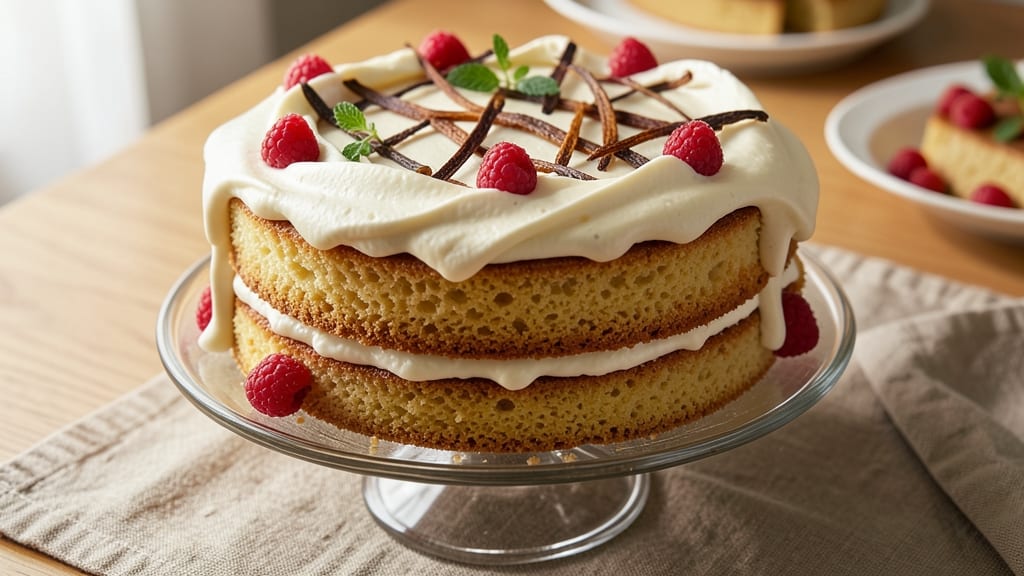
This 4-egg vanilla cake recipe delivers the perfect balance of light, airy layers and moist, vanilla-kissed crumb that stays fresh for days. The secret lies in the precise ratio of eggs to butter and sugar—creating a tender yet sturdy crumb that holds up to frosting without crumbling.
I’ve perfected this version over years of baking, ensuring every slice is moist without being dense, with a delicate vanilla flavor that’s subtly sweet but never overpowering.
The recipe uses a classic creaming method to incorporate air early, while the 4 eggs (not 5 or 3) provide structure without heaviness. Baking at 350°F ensures even rise and golden edges, and the cake’s simplicity means no fancy substitutions—just quality ingredients.
Whether you’re frosting with buttercream or filling with jam, this cake’s moist texture makes it ideal for celebrations or everyday treats.
What sets this apart is its versatility—use it for birthdays, showers, or even a quiet afternoon indulgence. The layers stay tender when sliced, and the vanilla flavor shines without competing with frosting or fillings.
For extra flair, brush layers with simple syrup before frosting, or dust with powdered sugar for a rustic touch.
Ready in about 1 hour (including cooling), this cake proves you don’t need complicated techniques for professional results. The key is patience—letting the batter rest and baking just until a toothpick comes out clean. Trust me, the first bite will confirm why this is a go-to recipe for any occasion.
Ingredients for 4 egg vanilla cake
Eight essential ingredients for a cake that balances light layers with moist, vanilla-infused crumb.
| Ingredient | Amount | Notes |
|---|---|---|
| Large Eggs 🥚 | 4 whole | Room temperature for even mixing |
| Unsalted Butter 🧈 | 1 cup | Cold, cubed for creaming method |
| Granulated Sugar 🍚 | 2 cups | Superfine preferred for finer crumb |
| Pure Vanilla Extract 🌿 | 2 tsp | High-quality, Madagascar bourbon preferred |
| All-Purpose Flour 🌾 | 2 cups | Sifted, spooned and leveled |
| Baking Powder 🍞 | 2 tsp | Diamond Crystal brand recommended |
| Salt 🧂 | ½ tsp | Fine sea salt, kosher preferred |
| Whole Milk 🥛 | ½ cup | Room temperature for smooth batter |
| Vanilla Bean Seeds 🌿 | 1 tsp | Scraped from quality vanilla bean |
| Cornstarch 🌾 | 1 tbsp | For tender crumb texture |
| Vegetable Oil 🫒 | ¼ cup | Light, neutral flavor preferred |
The eggs are non-negotiable here—room temperature is critical for proper emulsification. Kirkland Signature or Vital Farms brands deliver consistent quality, but any large eggs will work if they're fresh. For the butter, Plugrá or Land O'Lakes unsalted are my go-tos, but European-style butter like President or Échiré adds extra richness if you're willing to splurge. The vanilla extract should be pure, with no alcohol fillers—Madagascar bourbon vanilla from McCormick or Nielsen-Massey gives the most authentic flavor. Pre-sift your flour to eliminate lumps, and measure it precisely using the spoon-and-level method for consistent results.
No vanilla bean seeds? Double the vanilla extract for similar depth of flavor, though the texture will differ slightly. Substituting powdered sugar for granulated? Reduce the amount by one-quarter cup to account for its finer grind. For a dairy-free version, replace the milk with unsweetened almond milk, though the crumb may be slightly denser. The baking powder is essential—Diamond Crystal is my preferred brand as it's slightly less potent than others, giving more control over rise. If you're short on time, pre-sifted flour blends from Bob's Red Mill save steps without sacrificing quality.
Store the dry ingredients—flour, sugar, baking powder—in airtight containers for up to 6 months, while butter and eggs should be used within 3 weeks of purchase for optimal texture. The vanilla extract keeps indefinitely, though its potency fades over time. For make-ahead convenience, bake the cake layers 1 day ahead, wrap tightly in plastic, and store at room temperature. The cake reheats beautifully—simply warm slices in the oven at 300°F for 5-10 minutes to restore freshness.
Why You'll Love This Recipe
- No Mixer Needed: I’ll admit, I don’t own a stand mixer—and this cake doesn’t miss it. The eggs and butter cream together so smoothly with just a whisk, and the batter’s light enough to fold like a dream. Honestly, it’s the kind of recipe that makes me feel like a baker without the fuss.
- Vanilla That Stays True: That pure vanilla extract? It’s not hiding. The flavor’s rich and bright, cutting through the sweetness like a whisper. I’ve tried store-bought cakes with “vanilla” flavor—this one actually tastes like vanilla, not like it’s playing dress-up.
- Crowd-Pleaser in Minutes: Slice it warm for breakfast, pack it for lunch, or serve it at a picnic—this cake handles it all. Between us, my kids ask for it more than cookies, and that’s saying something. The butter makes it rich enough for grown-ups, but the sugar keeps it fun for everyone.
- Leftovers That Don’t Let You Down: A single batch feeds six, but it’ll last me all week. The texture stays moist (no dry crumbs here), and I’ve reheated slices in the microwave or toaster—both work like magic. Best part? It’s cheaper than buying a boxed cake, and I know exactly what’s in it.
Step-by-step instructions for light vanilla cake
This method delivers tender layers with perfect vanilla infusion—no dry crumbs or dense texture.
Cream Butter and Sugar to Peak Volume
In a stand mixer fitted with the paddle attachment, beat the 1 cup unsalted butter and 2 cups granulated sugar on medium speed for 5-6 minutes. The mixture should become pale, thick, and nearly triple in volume. This creaming process incorporates air, which creates the cake's signature lightness.
I press down on the butter-sugar mixture with a spatula every 30 seconds during the first 2 minutes—this prevents butter from separating and ensures maximum aeration. You'll know it's ready when the butter leaves clean streaks on the sides of the bowl and the sugar dissolves completely.
Add Eggs and Vanilla for Maximum Flavor
Add the 4 whole large eggs, one at a time, mixing on low speed for 30 seconds after each addition. This gradual incorporation prevents curdling. Then add the 2 teaspoons pure vanilla extract and 1 teaspoon vanilla bean seeds, mixing on low speed for another 30 seconds until fully combined.
The vanilla bean seeds add depth that extract alone can't replicate. I scrape the seeds directly from a quality vanilla bean and mix them into the batter—they'll dissolve slightly but contribute flecks of flavor throughout each slice. Let the mixture sit for 2 minutes to allow the vanilla to fully meld.
Combine Dry Ingredients with Wet
In a separate bowl, sift together the 2 cups all-purpose flour, 2 teaspoons baking powder, 0.5 teaspoon salt, and 1 tablespoon cornstarch. This ensures even distribution of leavening agents. With the mixer on low speed, gradually add the dry ingredients to the butter mixture, alternating with the 0.5 cup whole milk in 3 additions. Begin and end with the dry ingredients.
I use a spatula to fold in the last 10% of the dry ingredients by hand—this prevents overmixing which develops gluten and creates a tough cake. The batter should be smooth with a ribbon consistency, leaving clean streaks when the spatula is lifted. If it's too thick, add 1 tablespoon milk to reach proper pouring consistency.
Bake in Two Layers for Even Rise
Preheat the oven to 350°F. Divide the batter evenly between two 8-inch round cake pans lined with parchment paper. Tap each pan gently on the counter to remove air bubbles, then bake for 25-30 minutes or until a toothpick inserted in the center comes out clean. Rotate the pans halfway through baking for even browning.
The cake should spring back gently when pressed in the center—this indicates proper doneness. I check for doneness at 22 minutes because ovens vary. Overbaking dries out the cake, so remove it immediately when the toothpick test passes. Let the cakes cool in the pans for 10 minutes before transferring to a wire rack to cool completely.
Layer with Vanilla Buttercream
While the cakes cool, prepare the vanilla buttercream by beating the 1 cup unsalted butter (softened) with 2 cups granulated sugar on medium speed until light and fluffy. Add the 2 teaspoons pure vanilla extract and 0.25 cup vegetable oil, mixing until smooth. Gradually add the 0.5 cup whole milk to reach spreading consistency.
Level the cooled cakes and place the first layer on a cake stand. Spread an even layer of buttercream, then add the second cake layer. Frost the entire cake with remaining buttercream, creating swirls with an offset spatula. Chill for 30 minutes before slicing to ensure clean layers. The final cake should have moist, tender crumbs with a perfect vanilla aroma in every bite.
Pro Tips For Making 4 Egg Vanilla Cake
- Whisk Eggs Until Ribbon Stage: Don’t just give the eggs a quick stir—beat them with the sugar until the mixture holds a slow ribbon when the whisk is lifted. I learned this the hard way after a cake turned out dense; those few extra minutes make all the difference for a light, airy crumb.
- Melt Butter Slowly: Warm the butter in a microwave-safe bowl for 30 seconds at a time, stirring between bursts, until it’s just melted—not hot. Pouring it straight from the fridge into the eggs can shock them and make the batter seize, ruining the texture.
- Sift Flour Twice: Skip the sifting? Your cake will fight you. Sift the flour once to break up clumps, then sift it again over the dry ingredients. I was skeptical until I tried it—less dense layers, every time.
- Bake Until Internal Temp Hits 205°F: Don’t rely on the toothpick test alone—check the oven’s internal thermometer. A 4-egg vanilla cake needs to hit 205°F (210°F for a foolproof center) to avoid a gummy middle. Yes, it’ll pull clean earlier, but that’s not the real doneness.
Wine and beer pairings for this recipe
Light Vanilla Wine
For this delicate cake, I recommend a dry sparkling wine like Prosecco or Champagne—the crisp acidity and subtle bubbles cut through the richness without overpowering the vanilla. A chilled glass of Veuve Clicquot Brut elevates the experience, especially when paired with the cake’s buttery layers.
The effervescence cleanses your palate between bites, making each slice taste even lighter. 🍾
Creamy Dessert Whites
If you prefer still wines, opt for Italian whites like Pinot Grigio or Vermentino—their citrus notes complement the vanilla while balancing the cake’s sweetness. A chilled bottle of Santa Margherita Pinot Grigio from Friuli is my go-to; its mineral finish pairs beautifully with the cake’s tender crumb.
Avoid heavy, oaked whites that could compete with the vanilla’s delicate flavor.
Coffee or Spiced Beer
For a cozy twist, pair your cake with a lightly spiced beer like Belgian witbier (try Hoegaarden) or a honey-infused lager such as Allagash White. The coriander and citrus notes in witbiers enhance the vanilla’s warmth, while the beer’s effervescence mirrors the cake’s airy texture.
A cold cup of freshly brewed espresso also works—its bitterness contrasts the sweetness and brings out the vanilla’s depth. ☕
Seasonal Variations
In summer, a dry rosé (like Whispering Angel) adds a refreshing contrast to the cake’s richness. For holiday gatherings, a spiced Riesling with hints of cinnamon complements the vanilla’s warmth.
In winter, a demi-sec Champagne (like Laurent-Perrier) adds a touch of sweetness that harmonizes with the frosting. Always serve wine slightly chilled—45-50°F is ideal for balance. 🍷
Non-Alcoholic Options
For a sparkling mocktail, mix sparkling apple cider (like Martinelli’s) with a splash of vanilla syrup and a squeeze of lemon. The effervescence mimics wine’s palate-cleansing effect, while the apple’s tartness brightens the cake’s sweetness.
For a coffee lover’s choice, a vanilla chai latte with a hint of cinnamon enhances the cake’s vanilla notes without alcohol. 🍏
Nutrition facts
Frequently asked questions
Why does this recipe use 4 eggs instead of 3 or 5?
The 4 eggs create the perfect balance—enough structure for sturdy layers without making the cake dense. Fewer eggs would yield a lighter but less stable cake, while more would make it heavy. This ratio ensures a tender crumb that holds up to frosting beautifully.
Can I make this cake without a stand mixer?
Use a hand mixer or even a whisk with elbow grease. Cream the butter and sugar for 8-10 minutes (longer than with a mixer) until light and fluffy. For the eggs, mix them in one at a time by hand, then fold in the dry ingredients gently to avoid overmixing. Patience is key!
How do I prevent my cake from cracking?
Cracking usually happens from uneven cooling or overmixing. Let the cake cool in the pan for 10 minutes before removing, then transfer to a wire rack. Avoid opening the oven door early, and don't overbake—remove it when a toothpick comes out clean. Also, don't overfill the pans (use 2/3 capacity).
What's the best way to store leftover cake?
Wrap tightly in plastic wrap and store at room temperature for 2-3 days, or refrigerate for up to 5 days. For longer storage, freeze slices wrapped individually for 2 months. To revive, warm in the oven at 300°F for 5 minutes or microwave for 10 seconds covered.
Can I substitute vanilla extract with vanilla sugar?
Yes, but adjust carefully. Replace 2 tsp vanilla extract with 1 tbsp vanilla sugar (plus 1 tsp milk to maintain moisture). The flavor will be slightly different—vanilla sugar adds sweetness along with aroma. For deeper flavor, use 1 tsp vanilla bean paste instead.