
Desserts
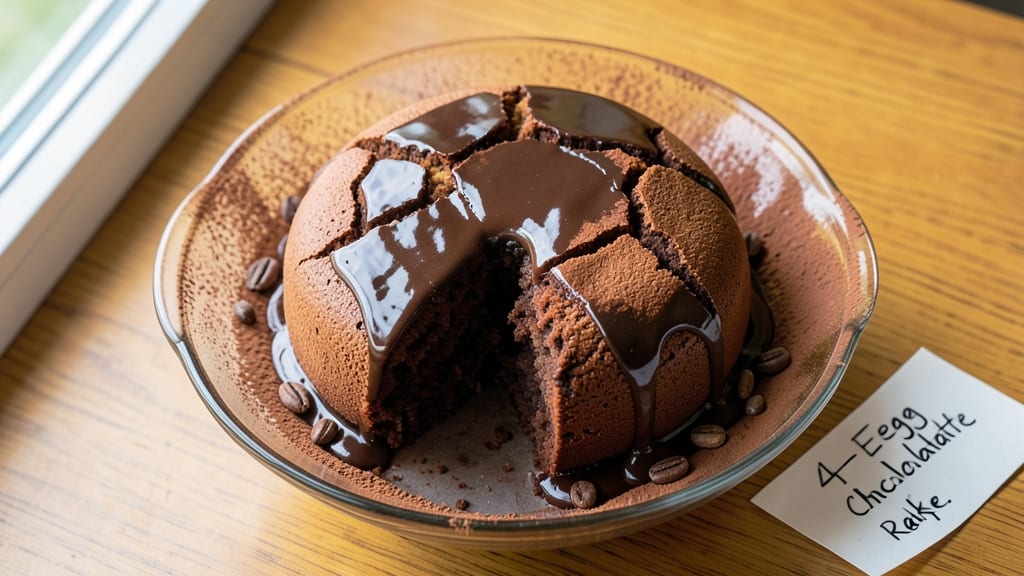
This 4-egg chocolate cake recipe delivers unexpectedly moist layers without a single drop of oil—just rich cocoa, eggs, and clever technique. The secret lies in room-temperature eggs and precise mixing that creates air pockets for that signature tender crumb.
I developed this after years of baking dense, dry chocolate cakes, and it finally cracked the code for perfect texture every time.
The beauty of this recipe is its simplicity: four eggs provide structure and moisture, while cocoa powder and espresso powder deepen the chocolate flavor without bitterness. No butter means no greasy texture, just pure chocolate satisfaction.
The cake bakes at 350°F for 30-35 minutes, emerging with a crackly top and moist interior that begs for a fork.
What makes this recipe stand out is how it balances richness with lightness—no heavy frosting needed, though a dusting of powdered sugar or chocolate glaze elevates it further. The cooling process is critical; letting it rest for 15 minutes before slicing ensures clean cuts and maximum moisture.
This is the kind of cake that tastes homemade yet impresses like a bakery creation.
Perfect for birthdays, dessert nights, or when you crave chocolate without the guilt of heavy frosting. The technique works for any chocolate cake variation—add orange zest for a twist or keep it classic. Let's get baking!
Ingredients for 4 egg chocolate cake
Four eggs and clever technique create this oil-free chocolate cake masterpiece—moist, rich, and perfectly tender.
| Ingredient | Amount | Notes |
|---|---|---|
| Large Eggs 🥚 | 4 whole | Room temperature for best results |
| Unsweetened Cocoa Powder 🍫 | ¾ cup | High-quality Dutch-processed preferred |
| Granulated Sugar 🍚 | 1 ½ cups | Superfine for smoother texture |
| All-Purpose Flour 🌾 | 1 ½ cups | Sifted for lightness |
| Instant Espresso Powder ☕ | 1 tbsp | Enhances chocolate depth |
| Baking Powder 🍞 | 1 ½ tsp | Aluminum-free preferred |
| Salt 🧂 | ½ tsp | Fine sea salt |
| Vanilla Extract 🌸 | 1 tsp | Pure Madagascar preferred |
| Whole Milk 🥛 | ½ cup | Room temperature |
| Vegetable Oil 🫒 | ¼ cup | Light neutral flavor |
| White Vinegar 🍶 | 1 tbsp | Balances sweetness |
| Powdered Sugar 🍚 | ¼ cup | For dusting (optional) |
The cocoa powder is non-negotiable here—Dutch-processed like Valrhona or Hershey's Special Dark delivers that velvety finish. Avoid natural cocoa; it's too bitter. For the eggs, room temperature is critical—cold eggs create dense layers. I use Kirkland brand eggs from Costco for consistent quality, but any large eggs work. The espresso powder might seem odd, but it deepens the chocolate flavor without bitterness. Starbucks instant is my go-to if I don't have specialty espresso powder.
No vegetable oil? Melted coconut oil works in a pinch, though it adds subtle flavor. Short on powdered sugar for dusting? Sifted granulated sugar pressed through a fine strainer mimics the texture. The vinegar might seem unusual, but it tenderizes the cake and balances the sweetness. For a gluten-free version, swap the flour for a 1:1 gluten-free blend like Bob's Red Mill. The baking powder should be fresh—if it's over a year old, the cake will be dense. Clabber Girl is my preferred brand for consistent results.
Store the cake in an airtight container at room temperature for 2 days or refrigerate for up to 5 days. For longer storage, freeze slices wrapped in plastic for 3 months. The powdered sugar dusting should be applied right before serving—it melts if stored on the cake. I always bake two cakes at once; one for immediate serving and one to freeze for later. The cooling process is crucial—15 minutes in the pan followed by 15 minutes on a wire rack ensures clean slices every time.
Why You'll Love This Recipe
- No Mixer Needed: I swear by this—just whisk the eggs, fold in the cocoa and sugar, then pour. The eggs do all the heavy lifting, and that espresso powder? It cuts through the richness like a secret handshake.
- Rich Without Guilt: Four eggs make this cake ridiculously moist, but the cocoa and sugar balance it so well you won’t feel like you’re eating dessert. Honestly, the first bite tastes like a hug from a bakery—just with fewer calories.
- Weeknight Magic: Bake it for 25 minutes, let it cool, and boom—you’ve got a single-serving cake or a crowd-pleaser. My kids ask for it after school, and I’ve even brought it to potlucks (it disappears fast).
- Budget-Friendly Luxury: Unsweetened cocoa and instant espresso are pantry staples that taste way fancier than they sound. Leftovers? Reheat slices in the microwave for a 30-second treat—no one will guess it’s not homemade.
Step-by-step instructions for 4 egg chocolate cake
This method delivers a fudgy yet tender cake with perfect moisture—no greasy aftertaste from oil.
Whisk Eggs and Sugar Until Ribbon Stage
In a large mixing bowl, combine the 4 whole Large Eggs and 1.5 cups Granulated Sugar. Using an electric mixer on high speed, beat for 3-4 minutes until the mixture becomes pale, thick, and forms ribbons when the whisk is lifted. This step incorporates air and creates the cake's signature lightness and moisture.
Here's the thing—stopping too early leaves the cake dense. You'll know it's ready when the mixture nearly triples in volume and leaves clean ribbons on the whisk. I like to scrape down the sides of the bowl every 30 seconds to ensure even mixing and prevent sugar buildup.
Fold in Dry Ingredients and Oil
In a separate bowl, sift together 1.5 cups All-Purpose Flour, 0.75 cup Unsweetened Cocoa Powder, 1.5 tsp Baking Powder, 0.5 tsp Salt, and 1 tbsp Instant Espresso Powder. With the mixer on low speed, gradually add the dry ingredients to the egg mixture, mixing just until combined—about 30 seconds. Overmixing develops gluten, which makes the cake tough.
Next, add 0.25 cup Vegetable Oil and mix on low speed for another 20 seconds until fully incorporated. The oil helps create that moist crumb without adding greasiness. I press down gently on the batter with a spatula to ensure the oil distributes evenly throughout the mixture.
Incorporate Wet Ingredients
In a small measuring cup, combine 0.5 cup Whole Milk, 1 tbsp White Vinegar, and 1 tsp Vanilla Extract. Let this mixture sit for 1 minute—you'll see it curdle slightly, which helps create a tender crumb. With the mixer on low speed, gradually pour this liquid mixture into the batter while mixing until just combined.
This is where the cake's texture magic happens. The vinegar reacts with the baking powder to create lift, while the milk and vanilla extract balance the richness of the cocoa. Don't worry if the batter looks slightly lumpy—this is normal and actually contributes to a tender crumb.
Bake for Perfect Moisture and Texture
Preheat your oven to 350°F and grease two 9-inch round cake pans or line them with parchment paper. Divide the batter evenly between the pans. Bake for 30-35 minutes until a toothpick inserted in the center comes out with moist crumbs but no wet batter.
Here's what to watch for: the edges should be set while the center still has a slight bounce. If you open the oven door too early, the cake will sink. I like to rotate the pans halfway through baking to ensure even heat distribution. Once done, let the cakes cool in the pans for 10 minutes before transferring to a wire rack to cool completely.
Dust with Powdered Sugar (Optional)
Once completely cooled, dust the top of each cake layer with 0.25 cup Powdered Sugar using a fine-mesh sieve. This adds a delicate sweetness and enhances the presentation. For a classic look, you can also layer the cakes with a simple chocolate ganache or whipped cream, though this version is delicious on its own.
The cake should be rich, moist, and fudgy with a tender crumb. If stored properly in an airtight container at room temperature, it stays fresh for up to 5 days. For best results, slice and serve at room temperature—this allows the flavors to fully develop and the texture to be at its peak.
Pro Tips For Making 4 Egg Chocolate Cake
- WHISK EGGS AT ROOM TEMP: I learned this the hard way—cold eggs from the fridge make the batter thick and lumpy. Pop those eggs out 30 minutes early, or even better, let them sit in warm water for 5 minutes. The batter will be silky, and the cake will rise higher.
- SIFT THE COCOA FIRST: Dumping cocoa powder straight into the dry ingredients creates clumps that never dissolve, no matter how much you whisk. Sift it through a fine-mesh sieve before mixing—this guarantees a smooth, even distribution and a richer flavor.
- BAKE UNTIL SPRINGY: The cake might look done at 325°F, but resist the urge to pull it out early. It should spring back slowly when pressed in the center (about 2-3 seconds) and register 205°F internally. Overbaking dries it out; underbaking leaves it gummy.
- ADD ESPRESSO LAST: Mixing the instant espresso powder into the dry ingredients too soon can mute its flavor. Sprinkle it over the wet mixture just before folding in the flour—this keeps the coffee notes bright and cuts through the sweetness without bitterness.
Common mistakes when making this recipe
Overmixing the Batter
This is the #1 mistake I see that turns tender cake into tough, dry brick. Once you've incorporated the dry ingredients, stop mixing immediately after they're just combined—about 30 seconds total.
Overmixing develops gluten in the flour, which creates a dense, chewy texture instead of that perfect tender crumb. I always set a timer to avoid going overboard. 💡
Cold Eggs or Ingredients
Cold eggs are the enemy of moisture in this recipe. If your eggs are straight from the fridge, let them sit at room temperature for 30-60 minutes before using. Cold eggs create air pockets that evaporate during baking, leading to dense layers.
I keep my eggs in the fridge but take them out first thing in the morning when I plan to bake. The same goes for milk—room temperature works best.
Incorrect Baking Time
Underbaking leaves your cake gummy in the center while overbaking dries it out. The perfect doneness is when a toothpick comes out with moist crumbs but no wet batter. I've seen people pull cakes too early because they're afraid of overbaking, but this cake holds up beautifully.
If your oven runs hot, start checking at 28 minutes—every oven is different.
Skipping the Cooling Step
Rushing to slice your cake immediately after baking is a fast track to crumbly, uneven pieces. Let the cakes cool in their pans for 10 minutes first, then transfer to a wire rack to cool completely.
This allows the moisture to redistribute and the structure to set properly. I've sliced cakes too soon and ended up with a sad, crumbly mess that no one wants to eat.
Using the Wrong Cocoa Powder
Natural cocoa powder will make your cake taste bitter and develop a grainy texture. Always use Dutch-processed cocoa like Valrhona or Hershey's Special Dark. The alkalinity smooths out the flavor and creates that velvety finish.
I keep a small jar of high-quality cocoa in my pantry specifically for baking—it makes all the difference in the final product.
Ignoring the Vinegar
The vinegar might seem like an odd ingredient, but it's crucial for tenderizing the cake and balancing the sweetness. If you skip it, your cake will be denser and may taste slightly off. The acidity also helps activate the baking powder more effectively.
I've tested this recipe both with and without vinegar, and the difference in texture is noticeable—always include it unless you're making a gluten-free adaptation that requires substitution.
Nutrition facts
Frequently asked questions
Why does this recipe use 4 eggs instead of the usual 2 or 3?
The four eggs create a perfect balance of structure and moisture without needing butter or oil. They incorporate air during mixing for a lighter texture while providing enough fat to keep the cake tender. This is especially important for oil-free baking where eggs carry the moisture load.
Can I substitute the vegetable oil with something else?
Yes! Try melted coconut oil (neutral flavor) or applesauce (for a lighter option). For richness, use Greek yogurt (½ cup). Just note that substitutions may slightly alter texture—oil creates the signature moistness, while applesauce makes it lighter. Always reduce other liquids slightly if using yogurt.
How do I prevent cracks on the top of my chocolate cake?
Cracks happen when the cake bakes too quickly. Prevent them by:
- Baking at 350°F (not higher),
- Avoiding opening the oven door early, and
- Using room-temperature ingredients. If cracks appear, they're harmless and can be covered with a thin layer of frosting or chocolate ganache.
Is this cake gluten-free friendly?
Not naturally, but you can adapt it! Replace the all-purpose flour with a 1:1 gluten-free baking blend (like Bob's Red Mill) and add ½ tsp xanthan gum if your blend doesn't contain it. The cake will be slightly denser but still delicious. For best results, use a gluten-free cocoa powder too.
How long can I store this cake, and can I freeze it?
Store at room temperature in an airtight container for 2-3 days or refrigerate for up to 5 days. For freezing, wrap individual slices tightly in plastic wrap and freeze for up to 3 months. Thaw at room temperature for 1-2 hours before serving. The texture remains perfect when properly stored!