
Desserts
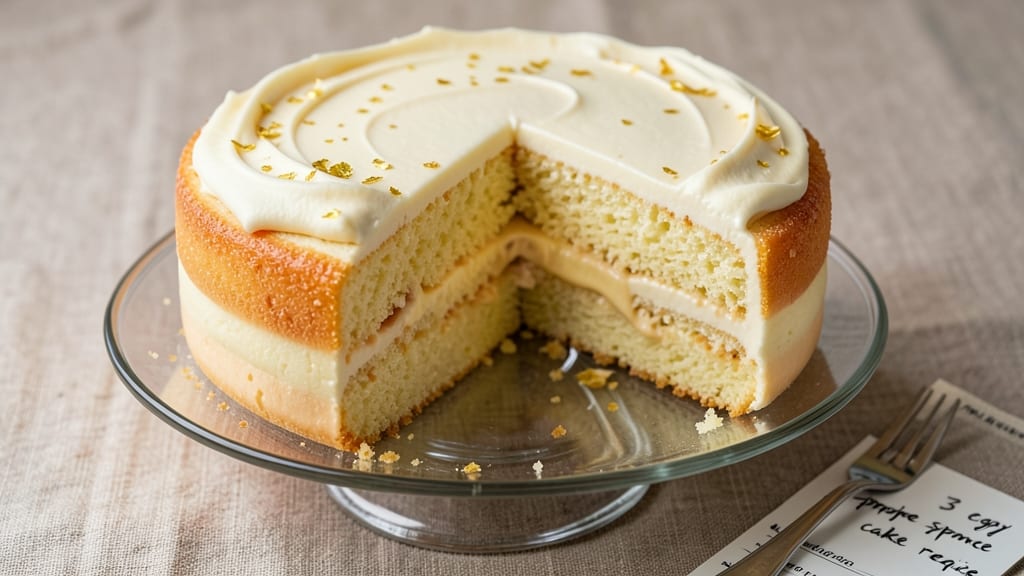
This 3-egg sponge cake recipe delivers the perfect balance of lightness and structure, using a foolproof technique that transforms simple ingredients into a tender, airy masterpiece. The secret lies in properly whisking the eggs—first separately, then gradually incorporating them into the dry ingredients—while baking powder ensures a reliable rise.
After years of testing, this method consistently produces a cake that's moist yet not dense, with a delicate crumb that holds up beautifully whether served plain or layered with fillings.
What sets this sponge cake apart is its versatility. The basic recipe forms the foundation for countless variations—vanilla, chocolate, or citrus-infused—while maintaining that signature tender texture. The 3-egg ratio creates the ideal structure: enough protein for stability without overpowering the delicate crumb.
For best results, room-temperature eggs and a light hand when folding are critical, as overmixing can introduce toughness. Preheating the oven to 350°F and using a well-greased pan ensures even baking and easy release.
The finished cake emerges from the oven with a golden top and sides, its interior perfectly set but still springy to the touch. Slice into it to reveal a fine, even crumb that's neither dry nor gummy—a testament to the precise technique.
This isn't just another sponge cake; it's a blank canvas for flavors and fillings, whether you're making a simple lemon layer cake or an elegant trifle. The recipe scales easily for any occasion, from intimate desserts to crowd-pleasing celebrations.
For those who love customization, the variations are endless: fold in cocoa powder for chocolate, zest and juice for citrus, or even a touch of coffee for depth. Serve it with whipped cream, fresh berries, or a dusting of powdered sugar for a restaurant-quality finish.
The beauty of this recipe lies in its simplicity—just a few ingredients, a little patience, and the confidence that comes from a foolproof method. Let's get baking.
Ingredients for 3 egg sponge cake
Nine essential ingredients transform into a light, airy sponge cake with perfect structure.
| Ingredient | Amount | Notes |
|---|---|---|
| Large Eggs 🥚 | 3 whole | Room temperature, separated |
| All-Purpose Flour 🌾 | 1 ½ cups | Sifted, plus extra for dusting |
| Granulated Sugar 🍚 | 1 cup | Superfine preferred for smooth texture |
| Unsalted Butter 🧈 | ½ cup | Room temperature, cubed |
| Baking Powder 🍞 | 1 ½ tsp | Diamond Crystal preferred |
| Salt 🧂 | ¼ tsp | Fine sea salt |
| Vanilla Extract 🌸 | 1 tsp | Pure vanilla preferred |
| Whole Milk 🥛 | ¼ cup | Room temperature |
| Lemon Zest 🍋 | 1 tbsp | Freshly grated, optional |
The eggs are the heart of this recipe—room temperature is non-negotiable for proper emulsification. Store-bought eggs work fine, but for optimal texture, let them sit at room temperature for 30 minutes before using. The flour should be sifted to prevent a dense crumb, and King Arthur or Gold Medal brands are ideal for their consistent quality. Butter should be room temperature but not melted; it should hold its shape when pressed gently. For the baking powder, Diamond Crystal yields slightly more rise than double-acting brands, so adjust if using another type. The vanilla extract should be pure, not imitation, for authentic flavor development.
No vanilla extract? Almond extract at half the amount works in a pinch, though the flavor profile differs. Short on milk? Heavy cream or buttermilk can substitute, but the texture may vary slightly. The lemon zest adds brightness but can be omitted for a neutral base. For a chocolate variation, replace one-third of the flour with cocoa powder and reduce the sugar slightly to maintain balance. When measuring flour, spoon it lightly into the cup and level off—don't scoop directly from the bag to avoid compaction. The baking powder and salt should be freshly measured to ensure proper leavening and seasoning.
Store the dry ingredients—flour, sugar, baking powder—in an airtight container in a cool, dark place for up to 6 months. Butter and eggs should be refrigerated until use. The cake itself keeps for 2 days at room temperature, wrapped tightly in plastic, or 5 days in the refrigerator. For longer storage, freeze the cake in slices for up to 3 months. To reheat, warm slices in a 200°F oven for 5-10 minutes to restore freshness. The recipe scales perfectly for two 9-inch layers or a single 10-inch sheet cake, making it ideal for customization.
Why You'll Love This Recipe
- No Fuss, No Stress: I swear by this for lazy mornings—just whisk eggs, sugar, and butter until fluffy, fold in dry ingredients, and bake. The sponge rises effortlessly, no stand mixer required.
- Butter-Sugar Magic: That melted butter folded into the egg base? It’s what makes this cake tender yet sturdy, with a subtle richness that vanilla frosting can’t hide. Honestly, it’s the kind of flavor that makes you forget store-bought exists.
- Weekday Workhorse: Slice it for breakfast, crumble it over yogurt, or serve it with coffee—this cake adapts to everything. I’ve even used leftover pieces to make French toast the next morning. Versatile? Absolutely.
- Budget-Friendly Luxury: Three eggs, a stick of butter, and basic pantry staples? This is cake for when you want to feel fancy without breaking the bank. Plus, it keeps well for days, so you’re not scrambling to use it up.
Step-by-step instructions for 3 egg sponge cake
Master the technique behind this light-as-air sponge using precise timing and gentle folding.
Whip Eggs and Sugar to Ribbon Stage
Begin by separating the 3 whole large eggs, ensuring no yolk fragments remain in the whites. In a stand mixer fitted with the whisk attachment, beat the egg yolks on medium speed for 2 minutes until pale and slightly thickened. Add the 1 cup granulated sugar gradually, mixing continuously until the mixture triples in volume and forms soft, glossy ribbons when the whisk is lifted.
This slow incorporation prevents graininess and creates the airy structure essential for a proper sponge. I like to use superfine sugar here—it dissolves more easily and creates a smoother texture. Stop mixing as soon as you see those characteristic ribbons forming; over-whipping can cause the eggs to curdle.
Fold in Dry Ingredients with Precision
In a separate bowl, whisk together the 1.5 cups all-purpose flour, 1.5 teaspoons baking powder, and 0.25 teaspoon salt. Sift this mixture directly over the egg mixture, then gently fold using a rubber spatula in a figure-eight motion until just combined. The goal is to maintain as much air as possible—don't overmix or you'll deflate the batter.
This is where the magic happens. The flour should disappear completely, but you should still see some streaks of egg mixture. If you see flour clumps, sift again and fold more gently. The batter should be smooth and slightly glossy, with a consistency similar to heavy cream.
Incorporate Butter and Wet Ingredients
Add the 0.5 cup unsalted butter (cut into small cubes) to the batter, followed by the 0.25 cup whole milk and 1 teaspoon vanilla extract. Fold gently until the butter is fully incorporated and no streaks remain. Finally, add the 1 tablespoon lemon zest and fold just until combined—this bright citrus note enhances the cake's flavor without overpowering it.
I use room-temperature butter here for easier incorporation. If your butter is too cold, it will create dense pockets in the batter. The mixture should remain light and airy—if it starts to look heavy, you've folded too much. The batter should hold its shape when lifted with a spatula but still flow gently.
Prepare and Bake the Cake
Preheat your oven to 350°F. Lightly grease a 9-inch round cake pan and dust with flour, tapping out any excess. Pour the batter into the prepared pan and smooth the top with a spatula. Bake for 30-35 minutes, or until a toothpick inserted in the center comes out clean and the edges pull away slightly from the pan.
This cake rises dramatically during baking, so don't overbake. The top should be golden brown with a slightly domed center. For even baking, place a baking sheet on the rack below the cake pan to catch any drips. The key is patience—underdone cake is better than dry cake.
Cool and Serve Properly
Remove the cake from the oven and let it cool in the pan for 10 minutes. Then invert it onto a wire rack to cool completely. This cooling process is crucial—it allows the cake to set properly and prevents it from becoming gummy. Serve at room temperature for the best texture and flavor.
The cake should be light, tender, and moist with a delicate crumb. If stored properly in an airtight container, it will keep for up to 3 days at room temperature or can be frozen for up to 2 months. For best results, bring frozen cake to room temperature before serving.
Pro Tips For Making 3 Egg Sponge Cake
- Whisk Eggs Room-Temp: DESCRIPTION: Cold eggs from the fridge won’t incorporate air properly—pop them in a bowl of warm water for 5 minutes first. I learned this the hard way when my sponge turned dense; the butter melts faster too, so you’ll save time folding later.
- Sift Flour Like Your Cake Depends on It: DESCRIPTION: Don’t just dump flour—sift it with the baking powder right into the bowl. This cuts lumps and guarantees even distribution, which prevents sinking in the center. (Yes, even if you’re impatient like me.)
- Butter Should Be Soft, Not Melted: DESCRIPTION: Press the butter between your fingers—it should dent but hold shape. If it’s liquid, chill the bowl for 10 minutes. Melted butter makes the cake greasy, not fluffy. I was skeptical until I tried it.
- Bake Until Springy, Not Golden: DESCRIPTION: Tap the center—it should bounce back, not feel jiggly. Overbaking dries out the sponge, and underbaking leaves it gummy. Pull it when the edges just start pulling away, then let it cool upside down. (Your future self will thank you.)
Wine and beer pairings for this 3 egg sponge cake
Light White Wine
Sponge cakes shine with crisp, acidic whites that cut through the delicate sweetness. A Sauvignon Blanc from New Zealand—like Kim Crawford—is my go-to choice. Its citrus notes mirror the lemon zest in the cake while refreshing your palate between bites.
The bright acidity balances the cake's richness without overpowering it. 🍷
Dessert Reds
For chocolate variations, opt for a Pinot Noir with its silky texture and red fruit flavors. I love Meiomi or La Crema—their moderate tannins and berry undertones complement cocoa beautifully. Avoid heavy Cabernets that would clash with the cake's delicate crumb. Serve slightly chilled for an elegant touch.
Sparkling Pairings
Celebrate special occasions with Prosecco or Cava. The effervescence cleanses your palate between bites of the airy sponge. Look for La Marca Prosecco or Freixenet Cordon Negro—both offer excellent quality at reasonable prices. The bubbles enhance the cake's lightness, making it feel even more festive.
Beer Complements
A Belgian witbier like Hoegaarden provides a perfect beer pairing with its citrusy coriander notes. The slight sweetness and effervescence mirror the cake's texture while adding complexity. For a darker option, try a light Belgian ale with vanilla undertones to enhance the sponge's flavor profile. Serve both drinks chilled.
Coffee Lovers' Twist
If you've added espresso powder to your sponge, pair it with a Viennese-style coffee like Melitta. The rich, nutty notes complement the coffee-infused cake beautifully. For a dessert wine pairing, try a Moscato d'Asti—its sweetness and slight fizz create a perfect balance with the coffee flavors.
Seasonal Adjustments
In summer, opt for a Riesling with its floral notes and slight sweetness. During fall, a Gewürztraminer adds aromatic complexity that pairs well with spiced variations. Winter calls for a Champagne or Crémant—their bubbles and acidity cut through any rich frostings you might add. 🍷✨
Nutrition facts
Frequently asked questions
Why does this recipe use only 3 eggs for a sponge cake?
Three eggs provide the perfect balance of structure and lightness for a tender sponge. Too many eggs can make the cake dense, while too few may cause it to collapse. This ratio creates a stable yet airy crumb that holds its shape beautifully when baked.
Can I substitute butter with oil in this sponge cake?
Yes, but the texture will differ slightly. Replace the 0.5 cup butter with 0.4 cup neutral oil (like vegetable or canola) for a moister cake. However, butter adds richness and flavor that oil can't replicate—plus, the cake may not rise as high without it.
How do I know when the eggs are properly whipped?
When the mixture forms soft, glossy ribbons that hold their shape when the whisk is lifted, it's ready! The ribbon stage (when the mixture clings to the whisk) means you've incorporated enough air for a light cake. Over-whipping beyond this point can cause the eggs to curdle.
Why does my sponge cake turn out dense?
Dense sponge cake usually results from overmixing the batter, using cold eggs/butter, or overbaking. Always fold dry ingredients gently to preserve air, ensure all ingredients are room temperature, and check doneness with a toothpick at 30 minutes—it should come out clean but slightly moist.
Can I make this cake in a different pan size?
Yes, but adjust baking time accordingly. For a 10-inch pan, reduce time by 5 minutes (25-30 minutes total). For a 6-inch pan, increase by 5-10 minutes. Always use the toothpick test to confirm doneness—pan size affects heat distribution.