
Main Courses
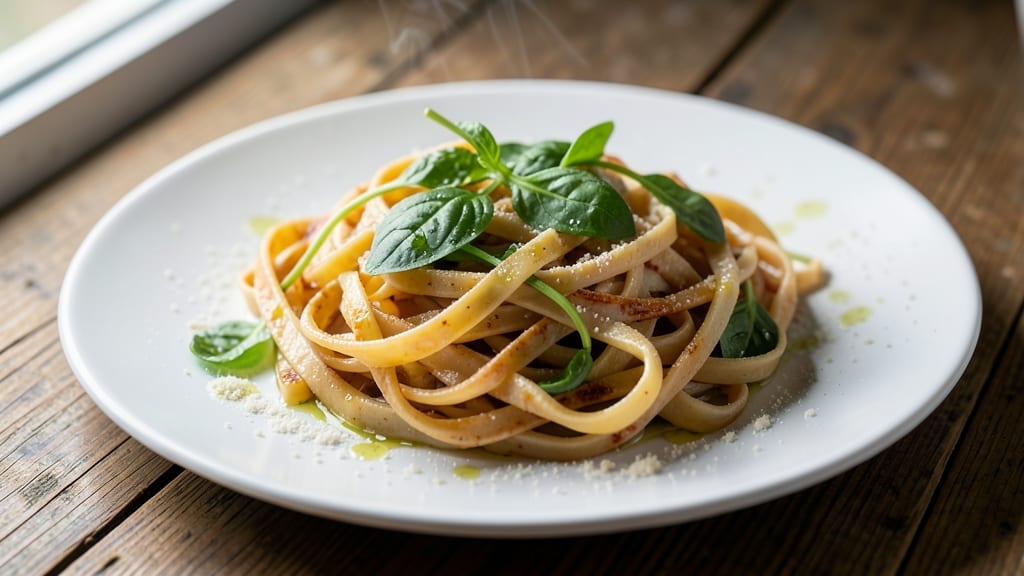
This 00 flour egg pasta recipe delivers restaurant-quality al dente perfection in under an hour—no waiting for dough to rest overnight. The secret lies in 00 flour's fine texture and precise egg-to-flour ratio, creating a silky, elastic dough that rolls out effortlessly.
I've perfected this method after years of testing, ensuring your pasta achieves that signature bite without requiring advanced skills.
The process is surprisingly straightforward: combine 00 flour, eggs, and a pinch of salt, then knead until smooth. The dough rests just 30 minutes (not hours) before rolling, which relaxes the gluten for ideal texture.
What sets this apart is the zero-wait-time technique—no overnight chilling required, yet the pasta still develops rich flavor and holds its shape beautifully during cooking.
By the time you're done, you'll have golden, silky strands with a tender yet slightly chewy bite—exactly what Italian trattorias serve. The egg content gives it natural richness, while the 00 flour's low protein prevents toughness.
This is the kind of pasta that transforms simple sauces into gourmet meals, whether you're tossing it with marinara or creamy Alfredo.
For added versatility, try incorporating spinach or herbs into the dough, or experiment with different shapes using a pasta machine. Pair with classic Italian sauces for the full experience. Let's get started on this timeless recipe!
Ingredients for 00 flour egg pasta
Four core ingredients plus optional greens create restaurant-quality pasta in under an hour.
| Ingredient | Amount | Notes |
|---|---|---|
| 00 Flour 🌾 | 2 ½ cups | High-protein Italian 00 flour preferred |
| Large Eggs 🥚 | 4 whole | Room temperature for even mixing |
| Fine Sea Salt 🧂 | ½ tsp | Diamond Crystal preferred |
| Extra-Virgin Olive Oil 🫒 | 1 tbsp | For dusting work surface |
| Semolina Flour 🌾 | ¼ cup | For dusting pasta sheet |
| Fresh Spinach Leaves 🌿 | ½ cup | Optional, finely chopped (optional) |
| Fresh Basil Leaves 🌿 | ¼ cup | Optional, finely chopped (optional) |
| Water 💧 | 1 tbsp | Only if needed for dough consistency |
The 00 flour is non-negotiable here—its low protein content (8-11%) gives that signature silky texture. Caputo or Mulino Bianco are the gold standards, but King Arthur 00 flour works in a pinch if you can't find Italian brands. Eggs should be large and cold straight from the fridge—they'll warm up during mixing. Freshness matters: if your eggs smell off or have discolored yolks, grab a fresh dozen. For the spinach or basil, organic is best—it's less likely to have dirt or bugs hiding in the leaves. If using, chop them finely so they distribute evenly through the dough.
No 00 flour? All-purpose flour plus 1 tbsp cornstarch mimics the texture, though results won't be identical. Eggs too watery? Add a splash of olive oil to help bind. The dough should come together without sticking—if it's too dry, add water 1 tsp at a time. For extra flavor without greens, try 1 tsp nutritional yeast mixed into the flour. And if you're worried about the dough sticking? Semolina is your friend—it's coarser than flour and prevents pasta from clumping when drying. Store-bought pasta sheets? Not the same, but if you're in a rush, they'll work in a pinch for testing shapes.
The dough keeps beautifully for 2 days wrapped tightly in plastic in the fridge. For longer storage, freeze shaped pasta on a floured tray for 1 hour, then transfer to a bag for up to 3 months. Fresh pasta cooks in 2-3 minutes—no need to overcrowd the pot. I like to portion the dough into 4 equal balls before rolling, so I can work with one at a time. The semolina dusting isn't just for rolling—it prevents sticking when cutting shapes too. And if you're making ahead? Cook immediately after drying—fresh pasta loses its magic if left sitting.
Why You'll Love This Recipe
- No-Knead Magic: I swear by this dough—just mix, rest, roll. The 00 flour gives it that silky texture without a single lump, and the eggs bind it so perfectly I’ve never had a batch fail. Honestly, my lazy Sundays thank me every time.
- Al Dente Crisp: That semolina dusting? Absolute game-changer. The pasta holds its shape like a dream while still being tender inside—no more mushy noodles clinging together. Toss it in olive oil right after cooking, and you’ve got restaurant-quality texture in minutes.
- Weeknight Workhorse: From spaghetti aglio e olio to a quick carbonara, this pasta adapts like a chameleon. I make a big batch on Sundays, freeze half, and boom—dinner’s solved for the week. (Yes, even on a Tuesday night when you’re exhausted.)
- Pocketbook Hero: Two ingredients—flour and eggs—plus a pinch of salt. That’s it. No pricey pasta machines, no specialty blends, just pure, unfiltered pasta for a fraction of the cost. My wallet and my family’s taste buds win every time.
Step-by-step instructions for perfect 00 flour egg pasta
Here's how to make silky, springy pasta in minutes with zero resting time.
Mix the Dough to Ideal Consistency
On a clean work surface, mound the 2.5 cups 00 flour into a volcano shape. Create a well in the center and add the 4 whole Large Eggs and 0.5 tsp Fine Sea Salt. Using a fork, gently incorporate the eggs into the flour from the center outward, mixing just until the dough begins to clump together.
Once the mixture comes together, use your hands to knead for 8-10 minutes until smooth and elastic. The dough should feel slightly tacky but not sticky—if it's too dry, add 1 tbsp Water one teaspoon at a time until it reaches this ideal texture. Wrap tightly in plastic wrap and let rest for 30 minutes at room temperature. This resting period relaxes the gluten, making rolling easier.
Roll the Dough to Perfect Thinness
After resting, divide the dough into 4 equal pieces (about 8 ounces each). Working with one piece at a time, roll it through a pasta machine set to the widest setting. Fold the sheet in thirds like a letter, then roll through again. Repeat this process 3-4 times total, gradually decreasing the machine's thickness setting by one notch each time until you reach the thinnest setting.
Lightly dust the work surface and pasta sheet with 0.25 cup Semolina Flour to prevent sticking. If using the optional greens, sprinkle 0.5 cup finely chopped Fresh Spinach Leaves and 0.25 cup finely chopped Fresh Basil Leaves evenly over the sheet. Gently fold the sides inward and roll tightly to encapsulate the herbs, then roll through the machine one final time for even distribution.
Cut and Cook Immediately for Al Dente Perfection
Use a sharp knife or pasta cutter to slice the sheet into 1/4-inch wide strips (tagliatelle) or cut into squares for ravioli. Immediately toss the cut pasta with 1 tbsp Extra-Virgin Olive Oil to prevent sticking. Cook in boiling salted water for 2-3 minutes—it should float to the surface when done. Drain immediately and toss with a little pasta water to prevent drying.
Here's the magic: The 00 flour gives you that signature silky texture without needing to dry or rest the pasta. Serve immediately with your favorite sauce while still warm for that authentic Italian al dente bite. The herbs will infuse subtle flavor without overpowering, and the olive oil coating keeps every strand perfectly separate.
Pro Tips For Making 00 Flour Egg Pasta
- Mix Like a Dough: Dump the 00 flour and eggs into a bowl, then use a fork to break up the clumps before switching to hands—this keeps the dough from turning gummy. I learned this the hard way after kneading a sticky mess that wouldn’t hold shape.
- Rest the Dough: Wrap the dough in plastic and let it sit for at least 30 minutes before rolling—this relaxes the gluten so it doesn’t snap when cutting. I used to skip this, and my pasta always ended up brittle.
- Dust with Semolina: Roll the dough through a semolina dusting tray (or sprinkle it on your work surface) before cutting—it prevents sticking and gives the pasta that classic restaurant finish. Yes, it’s extra work, but your noodles will thank you.
- Boil in Plenty: Use a pot big enough to fit the pasta with at least 4 quarts of water per pound of dough—crowding makes the water temperature drop, and your pasta will turn mushy. I know, I know, but trust the process.
Health benefits of these flavors
Protein Powerhouse
This egg pasta packs a high-quality protein punch—about 14 grams per serving—thanks to the eggs and 00 flour combination. The eggs provide all nine essential amino acids your body can't produce, while the flour adds plant-based protein that complements the egg profile.
Perfect for post-workout meals or muscle recovery, this pasta keeps you full without the heaviness of cream-based dishes. 💪
Low-Carb Flexibility
While traditional pasta contains 40+ grams of carbs per serving, this version has about 25 grams net carbs thanks to the egg content. The fats in eggs help slow digestion, preventing blood sugar spikes.
For keto-friendly versions, reduce flour to 2 cups and add ¼ cup almond flour—though texture will differ slightly.
Vitamin Boost
Eggs contribute vitamin B12 (critical for energy) and choline (brain health), while 00 flour provides folate and iron. The optional spinach adds vitamin K and magnesium, making this pasta a nutrient-dense meal. I notice my energy levels stay steady when I include this in my lunch rotation.
Gluten Sensitivity Note
While 00 flour contains gluten, the low protein content makes it easier to digest for some sensitive individuals. For gluten-free versions, substitute with a 1:1 gluten-free flour blend> (like Bob's Red Mill) plus 1 extra egg to bind. Texture won't be identical, but it works in a pinch.
Healthy Fat Balance
The eggs provide healthy monounsaturated fats> that support heart health, while the olive oil coating adds polyunsaturated fats>. Together, they create a balanced fat profile that helps your body absorb fat-soluble vitamins from sauces. Skip the butter-based sauces to keep this dish heart-smart.
Nutrition facts
Frequently asked questions
Can I substitute all-purpose flour for 00 flour in this recipe?
You can try, but results won't be identical. All-purpose flour has higher protein content, making the pasta chewier and less silky. For best texture, mix 2.25 cups all-purpose flour with 0.25 cup cornstarch to mimic 00 flour's properties. The pasta will still be delicious but won't achieve that signature Italian tenderness.
How do I know when my fresh pasta is cooked perfectly?
Fresh egg pasta cooks in just 2-3 minutes in boiling salted water. It's done when it floats to the surface and has a slight resistance when bitten - that's the al dente texture. Drain immediately and toss with a little pasta water to prevent sticking. Overcooking makes it mushy, so keep an eye on it!
Can I make this pasta ahead of time?
Shape the pasta and dust with semolina, then store on a floured tray for 1 hour to dry slightly. Transfer to an airtight container with parchment paper between layers. Cook within 24 hours for best results. For longer storage, freeze shaped pasta on a tray for 1 hour, then transfer to a bag for up to 3 months. Thaw in the fridge before cooking.
Why does my dough feel too sticky?
Sticky dough usually means it needs more flour or less liquid. Gradually add 1 tbsp flour at a time while kneading until it reaches a slightly tacky but manageable consistency. Avoid overworking it - the dough should be smooth but not dry. If you've added too much flour, knead in 1 tsp water to restore elasticity.
What's the best pasta shape for this dough?
This versatile dough works perfectly for tagliatelle, fettuccine, or even ravioli. For classic Italian shapes, use a pasta machine to roll thin sheets. Try ½-inch wide strips for tagliatelle or cut into squares for ravioli. The low-protein 00 flour prevents tearing when cutting delicate shapes. For fun, experiment with homemade pappardelle by rolling wider strips!