
Breakfast & Brunch
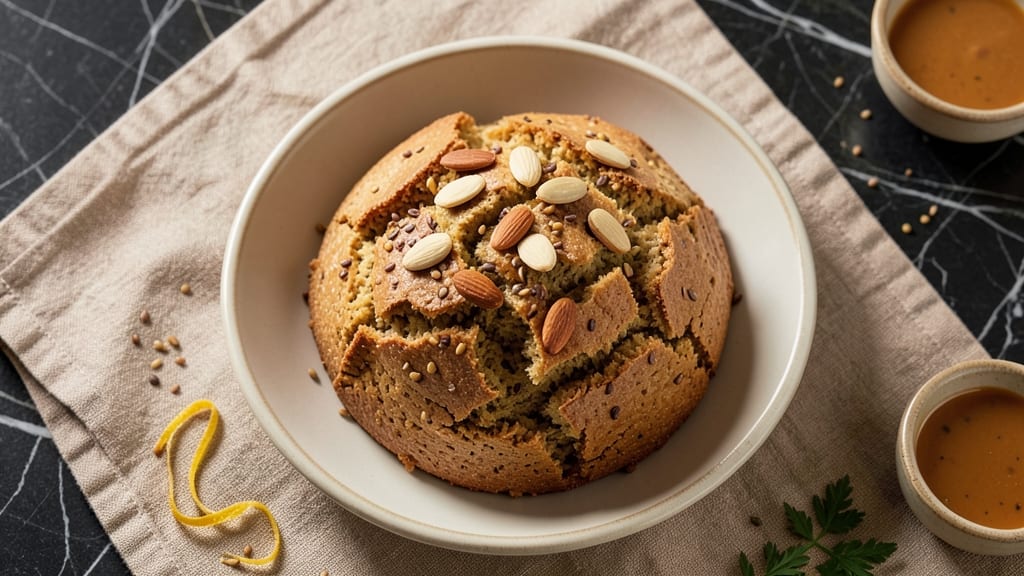
This wheat-free dairy-free egg-free bread recipe delivers a surprisingly hearty loaf that rivals traditional bread—no compromises, just nutty depth and satisfying texture. The secret lies in blending gluten-free flours with flaxseed "eggs" for binding, creating a crumb that's tender yet sturdy enough to toast or slice.
I developed this after years of testing vegan breads that either crumbled or tasted bland, and this version finally hits the mark.
The foundation uses a mix of almond flour and gluten-free all-purpose blend for structure, while flaxseed meal and aquafaba (chickpea brine) replace eggs entirely. No special equipment is needed—just a standard loaf pan and patience for the proofing stage, which develops that perfect open crumb.
The nutty flavor comes from toasted almond flour and a touch of maple syrup for subtle sweetness without overpowering.
What you'll end up with is a golden-brown loaf with a crisp crust and moist interior that holds its shape beautifully. It's sturdy enough for sandwiches but tender enough to eat fresh from the oven, with a flavor profile that's rich and satisfying.
The best part? It keeps well for up to 5 days wrapped in the fridge or freezes perfectly for later.
This bread works as a base for your favorite sandwiches, toasted with avocado, or served alongside soups and stews. The recipe scales easily, so you can make two loaves at once if you're feeding a crowd. Let's get baking—your gluten-free, dairy-free, egg-free bread awaits!
Ingredients for wheat free dairy free egg free bread
Nutty almond flour meets sturdy gluten-free blends—just 13 ingredients for a loaf that rivals traditional bread.
| Ingredient | Amount | Notes |
|---|---|---|
| Almond Flour 🌰 | 2 cups | Toasted for enhanced nutty flavor |
| Gluten-Free All-Purpose Flour Blend 🌾 | 1 ½ cups | Bob's Red Mill 1:1 blend preferred |
| Flaxseed Meal 🌱 | ½ cup | Ground flaxseeds, not whole seeds |
| Aquafaba 🥫 | ½ cup | Chickpea brine, not water |
| Maple Syrup 🍁 | ¼ cup | Pure, grade B preferred |
| Ground Flaxseeds 🌱 | 3 tbsp | For flaxseed 'eggs' (mix with 9 tbsp water) |
| Baking Powder 🍞 | 1 ½ tsp | Aluminum-free preferred |
| Salt 🧂 | 1 ½ tsp | Diamond Crystal kosher salt |
| Apple Cider Vinegar 🍎 | 1 tbsp | For activation |
| Olive Oil 🫒 | ¼ cup | Extra-virgin for richness |
| Water 💧 | ¾ cup | Room temperature |
| Active Dry Yeast 🍄 | 1 ½ tsp | Or 0.5 tsp instant yeast |
| Psyllium Husk Powder 🌿 | 1 tbsp | For binding and texture |
The almond flour is non-negotiable here—Trader Joe's or Bob's Red Mill have the best quality. Toast it first in a dry pan for 5 minutes to deepen that nutty flavor (just until it smells amazing). The gluten-free flour blend makes all the difference—Bob's Red Mill 1:1 is my go-to, but King Arthur works too. Psyllium husk powder might be new to you, but it's what gives this bread that satisfying chew. Frontier Co-op sells it in bulk if you're not near a health food store. For the yeast, make sure it's fresh—drop a packet in warm water and wait 5 minutes; if it doesn't foam, toss it.
No aquafaba? 1 tbsp cornstarch mixed with 0.5 cup water works in a pinch, though the texture won't be identical. Swapping maple syrup? Agave nectar at the same amount keeps it neutral. The flaxseed meal and ground flaxseeds are different—don't mix them up! For the yeast, if you're in a rush, instant yeast at half the amount activates faster. The psyllium husk needs to be powdered—if you grab whole husks, grind them in a coffee grinder. And yes, you can use regular apple cider vinegar, but raw, unfiltered has more flavor punch.
This bread peaks at 2 days out of the oven—slice it then and freeze portions for up to 3 months. Wrap tightly in foil first, then plastic wrap to lock in moisture. Toasting? Medium heat for 3-4 minutes gets that perfect golden crust without burning. The loaf pan matters—use a 9x5-inch for a classic sandwich loaf shape. Leftovers? Toss in the toaster or air fryer for crispy toast—it reheats beautifully.
Why You'll Love This Recipe
- No-Fuss Mixing: I swear by this—just toss the almond flour, GF blend, and flaxseed meal into a bowl, then stir in aquafaba and maple syrup. No stand mixer, no kneading, no stress. My hands are clean in 5 minutes, and the batter’s ready to bake.
- Nutty-Sweet Crunch: That almond flour gives it a subtle richness, while the maple syrup keeps it from tasting like cardboard. Toast it, and you get this perfect crunch—like a cross between a biscuit and a cookie, but with zero guilt.
- Lunchbox Hero: Between us, this bread is my go-to for sandwiches, toast, or even croutons. Pack it with hummus and veggies for a school lunch, or use it to soak up soups—it holds up better than most GF breads I’ve tried. (Yes, even on a Tuesday night.)
- Budget-Friendly Staple: A batch costs me less than $5 and lasts a week. The flaxseed meal adds fiber, the aquafaba replaces eggs without breaking the bank, and I never waste leftovers—it freezes like a dream. My wallet and my freezer both thank me.
Step-by-step instructions for wheat-free dairy-free egg-free bread
Here's how to create a hearty gluten-free loaf with nutty depth and perfect texture.
Activate the Yeast and Prepare Flaxseed Eggs
In a small bowl, combine the 1.5 teaspoons active dry yeast with 0.75 cup room temperature water and 1 tablespoon apple cider vinegar. Let this mixture sit for 5-10 minutes until it becomes frothy—this confirms the yeast is alive and ready to work. While waiting, mix 3 tablespoons ground flaxseeds with 9 tablespoons additional water in a separate bowl. Let this sit for 5 minutes to form flaxseed "eggs," which will replace traditional eggs in this recipe.
I like to use a whisk for the yeast mixture to ensure it's fully dissolved. The frothiness tells me the yeast is active and will create the lightness we need in this bread. The flaxseed mixture should thicken slightly, resembling raw egg whites. If it doesn't thicken, add another tablespoon of water and wait another minute.
Mix Dry Ingredients Thoroughly
In a large mixing bowl, combine 2 cups toasted almond flour, 1.5 cups gluten-free all-purpose flour blend, 0.5 cup flaxseed meal, 1.5 teaspoons baking powder, 1.5 teaspoons salt, and 1 tablespoon psyllium husk powder. Whisk these ingredients together until evenly distributed—this ensures consistent texture throughout the bread. The psyllium husk powder is especially important here as it helps bind the ingredients without gluten.
I press down on the mixture with a rubber spatula to break up any lumps, making sure everything is fully incorporated. The almond flour will give that nutty depth we're after, while the psyllium husk helps create that satisfying chewiness in each bite. This step takes about 2 minutes of focused mixing to get everything right.
Combine Wet Ingredients and Form the Dough
Add the yeast mixture, flaxseed eggs, 0.5 cup aquafaba, 0.25 cup maple syrup, and 0.25 cup olive oil to the dry ingredients. Mix everything together using a sturdy spoon or your hands until a shaggy dough forms. The aquafaba (chickpea brine) acts as an egg substitute here, adding moisture and structure. If the dough feels too sticky, add 1 tablespoon more gluten-free flour blend at a time until it becomes manageable but still cohesive.
This is where it gets a bit messy—don't be afraid to get your hands in there. The dough should be soft but not wet, and it should hold together when pressed. If it crumbles too easily, add another tablespoon of flour. The goal is to create a dough that's easy to handle but still has enough moisture to create a tender crumb.
Knead and Rest the Dough
Turn the dough onto a lightly floured surface and knead gently for 3-5 minutes until smooth and elastic. Since we're working with gluten-free flours, we don't need to develop gluten like we would with wheat flour, so a gentle kneading is all that's required. Shape the dough into a round loaf and place it in a lightly greased 9x5-inch loaf pan. Cover the pan with a damp towel and let the dough rise in a warm place for 1-1.5 hours, or until it has nearly doubled in size.
I place my loaf pan in a warm oven with the light on to create a consistent rising environment. The dough should puff up noticeably but not overflow the pan. If it rises too quickly and threatens to spill over, gently press it down and allow it more time to rise slowly. This resting period is crucial for developing the bread's texture and flavor.
Bake to Golden Perfection
Preheat your oven to 375°F. Once the dough has risen, bake the loaf for 45-50 minutes until the top is golden brown and the internal temperature reaches 205°F when measured with an instant-read thermometer. The bread should sound hollow when tapped on the bottom. If the top browns too quickly, tent it with aluminum foil to prevent over-browning while it continues to bake through.
Here's the thing—this bread benefits from a slightly crisp exterior and a soft, moist interior. The nutty aroma should fill your kitchen as it bakes, and you'll know it's done when it pulls away cleanly from the sides of the pan. Let it cool in the pan for 10 minutes before transferring to a wire rack to cool completely. This cooling period allows the bread to set properly, making it easier to slice.
Pro Tips For Making Wheat Free Dairy Free Egg Free Bread
- WHISK AQUAFABA FIRST: The fluffier your aquafaba, the lighter your bread—beat it with a hand mixer for a solid 3-4 minutes until it forms stiff peaks, like whipped cream. I used to skip this and ended up with dense, gummy loaves that tasted more like cake than bread.
- MEASURE FLAXSEED MEAL BY WEIGHT: Scooping flaxseed meal straight from the bag packs in extra volume, and this recipe is fussy about hydration. Use a kitchen scale for precision—1 tablespoon of flaxseed meal weighs about 7 grams, not 10. Trust me, your crumb structure will thank you.
- STEAM THE PAN: Before pouring your batter, spray the loaf pan with oil and then add a splash of hot water—just enough to coat the bottom. When you bake, the steam helps the crust brown faster and keeps the edges from cracking. (Yes, even if your recipe doesn’t mention it.)
- LET IT REST—NO EXCUSES: Pull the bread from the oven and let it cool in the pan for 10 minutes, then transfer to a wire rack for another 15. Cutting it too soon turns the crumb into a sticky mess, and the gluten-free blend needs time to set properly. I know, I know—you want to eat it now. Wait.
Regional styles of this dish
Italian-Inspired Gluten-Free
Inspired by traditional Italian breads like focaccia, this version swaps wheat for a blend of almond flour and gluten-free flour. Add 1 teaspoon dried rosemary and 2 tablespoons olive oil to the dough for an authentic Mediterranean touch.
Brush the baked loaf with extra olive oil and sprinkle with flaky sea salt before serving. The result is a fragrant, slightly crisp loaf perfect for dipping in olive oil or pairing with tomato bruschetta. 🌿
Mexican-Style Cornbread
Transform this bread into a cornbread-style loaf by replacing 1 cup almond flour with 1 cup fine cornmeal and adding ½ teaspoon cinnamon and ¼ teaspoon cayenne pepper. Use ½ cup coconut milk instead of aquafaba for a richer texture.
Top with chopped cilantro and crumbled cotija cheese substitute (like nutritional yeast) for a zesty Mexican-inspired twist. Serve warm with chili or as a side for tacos. 🌶️
Japanese-Inspired Melon Pan
For a sweet, dessert-style bread, reduce the maple syrup to ¼ cup and add ½ cup finely chopped dates and 1 teaspoon vanilla extract. Shape the dough into a loaf pan with a melon pan mold pressed into the top (use a small bowl covered in foil).
Brush with egg-free vanilla glaze (mix 2 tablespoons powdered sugar with 1 tablespoon aquafaba). Bake at 350°F for 40-45 minutes until golden. The result is a sweet, nutty bread perfect for breakfast or dessert. 🍯
German-Style Rye-Inspired
Create a heartier, rye-like flavor by replacing ½ cup almond flour with ½ cup ground rye flour blend (ensure it's gluten-free) and adding 1 teaspoon caraway seeds to the dough. Use apple cider vinegar for extra tang.
Brush the baked loaf with molasses glaze (mix 1 tablespoon molasses with 1 tablespoon aquafaba) for a sweet-savory finish. This loaf is ideal for sandwiches or served with smoked sausage and mustard. 🥨
French Baguette-Style
Shape the dough into a 9-inch oval loaf pan and slash the top with a sharp knife before baking for a rustic French baguette effect. Use ½ cup aquafaba and reduce the maple syrup to 2 tablespoons for a lighter texture.
Bake at 400°F for 35-40 minutes until deeply golden. Serve warm with herb butter (mix 2 tablespoons vegan butter with 1 tablespoon chopped parsley) for dipping. Perfect for charcuterie boards or as a side for soups. 🥖
Middle Eastern Za'atar Bread
Add 1 tablespoon za'atar seasoning to the dough and brush the baked loaf with a mix of 2 tablespoons olive oil and 1 teaspoon lemon juice. Sprinkle with extra za'atar before serving.
This aromatic bread pairs beautifully with hummus, baba ganoush, or as a wrap for falafel. The nutty almond flour enhances the earthy za'atar flavors, creating a rich, savory loaf. 🌿
Nutrition facts
Frequently asked questions
Can I substitute aquafaba with something else?
Yes! If you don't have aquafaba (chickpea brine), try 1 tbsp cornstarch mixed with 0.5 cup water or 0.5 cup unsweetened applesauce for moisture and binding. For best results, use aquafaba—it mimics egg whites perfectly and adds lightness to the crumb. The texture won't be identical, but it'll still work in a pinch.
Why does my dough feel too sticky?
Gluten-free doughs often feel stickier than wheat-based ones because they lack natural gluten elasticity. Add 1 tbsp gluten-free flour blend at a time until the dough becomes manageable but still holds together. Avoid over-handling—just enough to form a cohesive loaf. The dough should cling slightly but not be wet or crumbly.
How do I know when the bread is fully baked?
The bread is done when the internal temperature reaches 205°F (use an instant-read thermometer) and the top is golden brown. Tap the bottom—it should sound hollow. If the crust browns too quickly, tent with foil. Let it cool in the pan for 10 minutes before removing to prevent crumbling.
Can I make this bread without psyllium husk?
Psyllium husk is key for binding and texture, but you can try 1 extra tbsp ground flaxseeds or 1 tbsp chia seeds soaked in 3 tbsp water as a substitute. The bread may be slightly denser, but it'll still hold together. For best results, use psyllium—it mimics gluten's structure perfectly.
How long does this bread last, and can I freeze it?
Store wrapped in the fridge for up to 5 days or freeze for 3 months for maximum freshness. Wrap tightly in foil first, then plastic wrap to lock in moisture. Toast frozen slices directly from the freezer for crispy results. The flavor actually improves after 2 days—slice and freeze portions for convenience.