
Main Courses
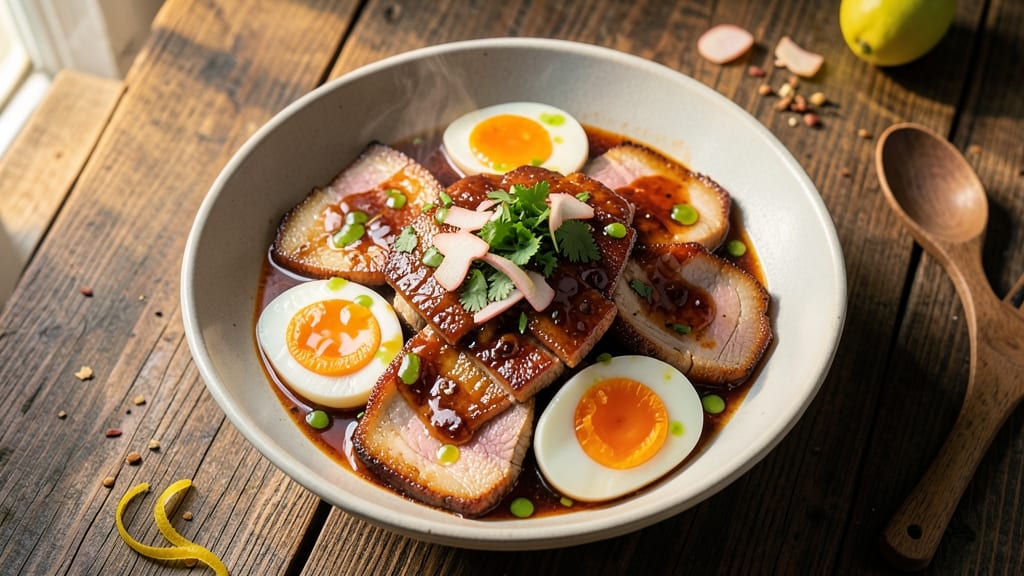
This Vietnamese pork belly and egg recipe delivers the perfect balance of crispy skin and silky yolk harmony—just like my first taste of it at a Hanoi street stall.
The secret lies in slow-braising the pork belly until it's tender yet firm, then finishing it with a quick sear for that coveted crackling crust. I've perfected this technique over years of cooking for crowds, ensuring every bite delivers that satisfying contrast of textures and flavors.
What makes this dish truly special is the marinade—a blend of fish sauce, sugar, and aromatics—that caramelizes beautifully during cooking, creating a sticky, savory glaze. The eggs, poached in the same rich broth, absorb those deep umami notes while maintaining their velvety centers.
This isn't just a recipe; it's an experience that transforms simple ingredients into something extraordinary.
By the time you serve this dish, you'll have crispy pork belly with crackling edges and tender meat inside, paired with perfectly poached eggs that cut through the richness. The aroma alone—smoky, sweet, and slightly tangy—will have everyone gathered around your table.
This is comfort food at its finest, with the kind of depth that comes from slow cooking and careful technique.
Serve it with steamed jasmine rice to soak up every last bit of that delicious pork belly broth, and don't forget fresh herbs and pickled vegetables for brightness. The contrast of textures and flavors makes this dish unforgettable—just like the first time I tasted it in Vietnam. Let's get cooking!
Ingredients for vietnamese pork belly and egg
Find these ingredients at your local Asian market or well-stocked grocery store for that authentic flavor.
| Ingredient | Amount | Notes |
|---|---|---|
| Pork Belly 🥓 | 1 ½ lb | Skin-on, thick-cut preferred |
| Fish Sauce 🍶 | ½ cup | Red Boat brand preferred |
| Brown Sugar 🍚 | ¼ cup | Packed, light brown preferred |
| Garlic Cloves 🧄 | 6 cloves | Minced, fresh preferred |
| Fresh Ginger 🌿 | 2 tbsp | Grated, peeled |
| Lime Juice 🍋 | ¼ cup | Freshly squeezed |
| Large Eggs 🥚 | 4 whole | Room temperature preferred |
| Vegetable Oil 🫒 | ½ cup | For searing |
| Jasmine Rice 🌾 | 1 ½ cups | Uncooked, long-grain |
| Water 💧 | 3 cups | For rice and poaching |
| Fresh Cilantro 🌿 | ¼ cup | Chopped, for garnish |
| Thai Chili Peppers 🌶️ | 2 whole | Sliced, optional for heat |
| Salt 🧂 | 1 ½ tsp | Kosher or sea salt |
| Black Pepper 🌶️ | ½ tsp | Freshly ground |
The pork belly is the star here, so don't skimp. Look for thick-cut pieces with a good layer of fat—Asian markets usually have the best selection, but Costco or Whole Foods often carry good quality too. The skin should be thick and unbroken for that perfect crisp. If you can't find thick-cut, ask the butcher to trim it for you. For the fish sauce, Red Boat is my go-to—it's clean, potent, and consistent. If you're using a different brand, start with half the amount and taste as you go. The sugar should be light brown, not dark, for a better caramel balance. Fresh ginger and garlic are non-negotiable here—they make all the difference in that aromatic marinade.
No fish sauce? Soy sauce plus a splash of Worcestershire gets you close, but it won't be identical. Running short on brown sugar? White sugar plus a pinch of molasses works in a pinch. The eggs should be room temperature for perfect poaching—just take them out of the fridge 30 minutes before cooking. Want more heat? Add those Thai chilies, but remove the seeds for less spice. The lime juice is key for brightness—Mexican limes are perfect if you can find them, but regular key limes work too. The cilantro is purely for garnish, so dried won't cut it here. If you're prepping ahead, marinate the pork belly overnight for maximum flavor infusion.
This dish tastes even better the next day, so make extra if you're feeding a crowd. Store the cooked pork belly in its own container with the broth—it keeps for 3-4 days in the fridge. The eggs should be poached fresh, but you can prep the marinade and rice ahead of time. For the rice, use a 1:1.5 ratio of rice to water—jasmine rice absorbs liquid differently than basmati. The leftovers reheat beautifully—just warm the pork belly and broth together, then poach fresh eggs in the reheated liquid. The crispy skin won't be as perfect after reheating, but the flavor will still be incredible.
Why You'll Love This Recipe
- One-Pan Magic: I swear by this—just pork belly, ginger, and garlic sizzling in the same pan while the eggs poach in the steam. No chopping, no fuss, and the cleanup is half the time of my usual stir-fry mess.
- Umami Bomb: That fish sauce and brown sugar combo? It’s the secret weapon. The pork belly gets this sticky, caramelized crust while the eggs soak up just enough of the salty-sweet glaze—every bite is a flavor explosion, no subtlety needed.
- Leftover Goldmine: Between us, this dish begs for seconds. The pork belly stays tender for days, and the eggs reheat perfectly in a pan or even straight from the fridge. Pack it for lunch or freeze portions—it’s my go-to for lazy mornings.
- Budget-Friendly Feast: Pork belly might sound fancy, but a slab goes a long way. Stretch it over rice, noodles, or even toast for breakfast, and you’ve got a meal that feels restaurant-worthy without the price tag. Honestly, I make this when I’m broke and still feel like I’m treating myself.
Step-by-step instructions for Vietnamese pork belly and egg
Here's how to create the perfect balance of crispy pork belly and silky egg yolks with bold Vietnamese flavors.
Prepare the Pork Belly for Crispy Perfection
Start by scoring the pork belly skin in a diamond pattern with a sharp knife, being careful not to cut into the fat. This creates crispy pockets while keeping the meat tender. Pat the pork belly dry with paper towels—this step is crucial for maximum crispiness. In a small bowl, mix together the 0.5 cup fish sauce, 0.25 cup brown sugar, 6 cloves minced garlic, and 2 tbsp grated ginger. Rub this marinade all over the pork belly, pressing it into the meat and skin. Let it sit at room temperature for 30 minutes while you prepare the rest.
Here's the thing—don't skip the marinating time. The fish sauce and sugar will penetrate the meat, creating that signature umami-sweet balance. I like to turn the pork belly a few times during this period to ensure even coating. While it marinates, you can prep your eggs and rice—everything will be ready when you're finished.
Cook the Jasmine Rice
Rinse the 1.5 cups jasmine rice thoroughly under cold water until the water runs clear. This removes excess starch that can make the rice gummy. In a pot, combine the rinsed rice with 3 cups water and bring to a boil. Once boiling, reduce heat to low, cover, and simmer for 15 minutes. Then turn off the heat and let it steam, undisturbed, for another 10 minutes. The rice should be perfectly fluffy and each grain distinct.
I know it seems like a lot of water, but trust me—this ratio gives you the best texture. If you peek during the steaming phase, you'll see why: the rice absorbs all the moisture evenly, resulting in those signature separate grains. While the rice finishes, you'll want to get your eggs ready for the next step.
Sear the Pork Belly Until Golden and Crispy
Heat 0.5 cup vegetable oil in a large skillet over medium-high heat until shimmering. Add the pork belly skin-side down and cook for 8-10 minutes, pressing down gently with a spatula to keep it flat. You'll know it's ready to flip when the skin is deep golden brown and crispy, and the meat underneath has released from the pan. Flip carefully and cook the other side for another 6-8 minutes until the internal temperature reaches 145°F. Transfer to a plate and tent loosely with foil to keep warm.
This is the moment that matters: the pork belly needs that perfect sear to develop its signature crispy skin. If it sticks, don't panic—just add a splash of water and let it steam for 30 seconds before trying to flip. The meat should be tender but not falling apart. While it rests, prepare your eggs for the final touch.
Poach the Eggs in Flavorful Water
In a small saucepan, combine 1 cup water, 0.25 cup lime juice, 1.5 tsp salt, and 0.5 tsp black pepper. Bring to a gentle simmer—you're looking for small bubbles around the edges, not a rolling boil. Crack each of the 4 large eggs into a small bowl first (this prevents them from breaking when you lower them into the water). Then carefully slide each egg into the simmering water. Poach for 3-4 minutes for runny yolks or 4-5 minutes for firmer yolks.
Real talk: poaching eggs can be tricky, but this lime-infused water adds a bright, tangy note that complements the rich pork belly. Use a slotted spoon to remove the eggs and drain them well on paper towels. The eggs should be perfectly set whites with silky, vibrant yolks ready to burst when cut into.
Assemble and Garnish for Maximum Flavor
Slice the pork belly into ½-inch thick pieces and arrange on a platter with the jasmine rice. Place a poached egg on top of each serving of pork belly. Drizzle with any remaining pan juices from the pork belly, then sprinkle with 0.25 cup chopped fresh cilantro and 2 sliced Thai chili peppers for a pop of color and heat. Serve immediately while everything is hot and the pork belly is still crispy.
Here's where it all comes together: the crispy pork belly, silky egg yolks, fragrant rice, and bright lime-chili garnish create a symphony of textures and flavors. Each bite should deliver that perfect harmony of crispy skin, tender meat, and rich egg yolk. Don't forget to adjust the heat level with the Thai chili peppers—you can always remove them if you prefer a milder dish.
Pro Tips For Making Vietnamese Pork Belly And Egg
- CRISP THE BELLY FIRST: Cut the pork belly into ½-inch thick slices before searing—thinner pieces cook faster and render fat evenly. I learned this the hard way: thick slices end up greasy and uneven. Use a sharp knife and work in one motion to avoid ragged edges.
- MINCE GINGER FINE: Pulse fresh ginger in a food processor until it’s a paste—no visible chunks. I was skeptical until I tried it: the sauce blends smoother, and the heat from the ginger infuses the pork belly more evenly. Skip the grating; it leaves texture issues.
- LOW AND SLOW FOR SAUCE: Simmer the fish sauce and brown sugar on low heat for 3-4 minutes after adding garlic. High heat burns the sugar and makes the sauce bitter. Stir constantly—this isn’t the time to walk away.
- EGG TIMING MATTERS: Fry the eggs last—right after the pork belly comes out of the pan. The residual heat keeps them warm while you plate, and they soak up the caramelized garlic-ginger aroma. Overcooked eggs ruin the dish’s balance.
Pro cooking tips for this dish
Pork Belly Scoring Secrets
Scoring the pork belly skin in a diamond pattern isn't just decoration—it's the key to crispy pockets while keeping the meat tender. Use a sharp chef's knife and make cuts about ½-inch apart without piercing the fat layer.
I like to work quickly and keep the knife at a 45-degree angle for clean lines. This technique comes from my time in Charleston, where we cooked whole hogs for BBQ competitions—precision matters! 🌟
Marinade Timing Matters
Let the pork belly marinate for at least 30 minutes at room temperature, but I often extend it to 1-2 hours if I'm prepping ahead. The fish sauce and brown sugar need time to penetrate the meat, creating that signature umami-sweet balance.
Pro tip: Turn the pork belly every 10 minutes during marinating to ensure even coating. This step transforms tough pork into melt-in-your-mouth perfection—just like my heritage pigs from my Georgia farm. ⏰
Searing for Crispy Skin
Use vegetable oil (not butter) for searing—the higher smoke point prevents burning while developing that golden crust. Heat your skillet until it's smoking hot before adding the pork belly skin-side down. Press gently with a spatula for 8-10 minutes to render fat and create crispiness.
The secret? Don't rush the flip—wait until the skin releases naturally from the pan. I use my Lodge cast iron skillet for this step; it retains heat perfectly. 🔥
Egg Poaching Perfection
Poach eggs in gentle simmering water (small bubbles at edges) with lime juice and salt for brightness. The acidity from lime prevents the whites from spreading too much. I crack eggs into a small bowl first, then slide them into the water using a spoon—this keeps them intact.
For runny yolks, cook for 3-4 minutes; for firmer yolks, go to 4-5 minutes. The key is consistency in water temperature—never let it boil vigorously. 🥚
Resting Temperature Control
After searing, tent the pork belly loosely with foil and let it rest for 10-15 minutes before slicing. This allows juices to redistribute, preventing dry meat. I always check the internal temperature—it should reach 145°F before resting.
For extra crispiness, you can broil the pork belly for 2-3 minutes after resting, but watch it closely to avoid burning. This resting step is non-negotiable—it's what separates good pork from exceptional pork. 🌡️
Garnish Like a Pro
Fresh cilantro and Thai chili peppers aren't just for looks—they add layers of flavor. Chop the cilantro just before serving to preserve its aroma, and slice the chilies thinly for even heat distribution. I also like to drizzle any remaining pan juices over the dish—they're packed with caramelized pork flavor.
For an extra touch, add a few mint leaves if you have them; they complement the lime beautifully. Presentation matters, especially when you're serving something this special. ✨
Nutrition facts
Frequently asked questions
Can I substitute pork belly with another cut of pork?
While pork belly is ideal for its fat content and texture, you can use pork shoulder or pork loin in a pinch. For pork shoulder, increase cooking time to 20-25 minutes per side to render the fat properly. Trim excess fat from pork loin, but expect less crispiness. The marinade will still work, but the final texture will differ from traditional Vietnamese pork belly.
How do I make the pork belly extra crispy?
For maximum crispiness, pat the pork belly completely dry before scoring and marinating. After searing, broil for 2-3 minutes at 450°F to set the skin. Use a wire rack over a baking sheet to allow air circulation during broiling. A hotter skillet and longer searing time (up to 12 minutes per side) also help. Just watch closely to avoid burning!
Can I prepare this dish ahead of time?
Cook the pork belly and rice 1-2 days ahead, then reheat gently in the oven at 300°F until warmed through. Store in separate containers with the marinade juices. Poach fresh eggs just before serving—they don't reheat well. The pork belly's crispiness will diminish slightly, but the flavor remains incredible. For extra crispiness, broil for 1-2 minutes before serving.
What if I don't have fish sauce? Combine ½ cup soy sauce with 1 tbsp Worcestershire sauce and 1 tsp oyster sauce for a close substitute. The umami depth won't be identical, but it'll work in a bind. For extra depth, add ½ tsp MSG (optional).
How do I serve this dish for a crowd?
Double the recipe and use a large roasting pan for the pork belly—it holds more pieces and creates a flavorful fond. Cook the rice in batches using a rice cooker or large pot. Set up a buffet-style serving with the pork belly, rice, and a separate egg poaching station. Keep eggs warm in a 60°F water bath until serving. For presentation, arrange everything family-style on large platters.