
Breakfast & Brunch
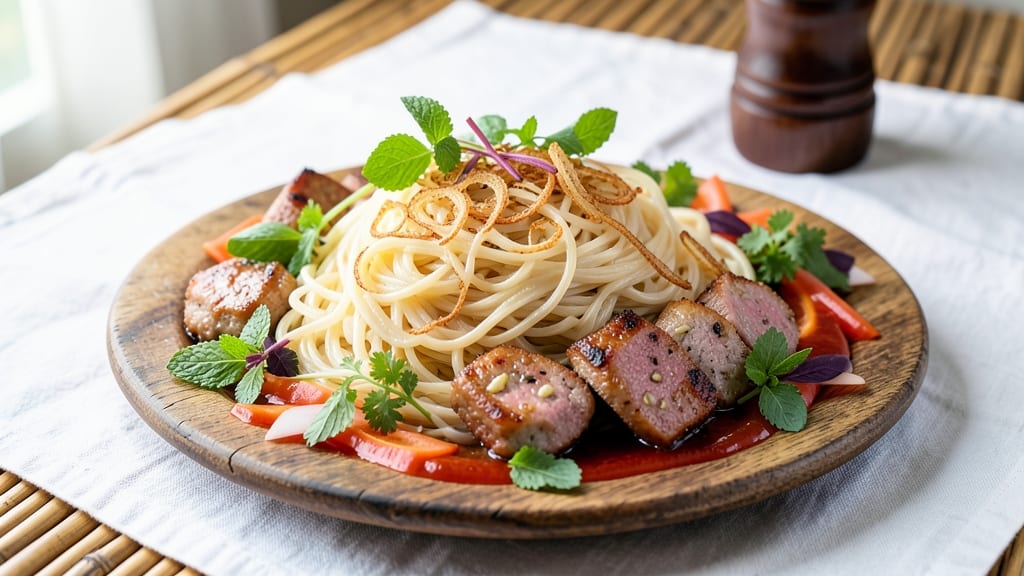
This Vietnamese dry egg noodles recipe brings the aromatic essence of Hanoi street food to your breakfast table. 🌟 The delicate, chewy noodles—made from simple eggs and water—absorb the fragrant lemongrass, chili, and fish sauce broth like a sponge, creating a perfect balance of tangy, spicy, and umami flavors.
What makes these noodles special is their traditional rolling and boiling technique, which ensures the right texture: tender yet resilient enough to hold up to the bold broth.
The recipe starts with homemade noodles, rolled thin and cut into delicate strands that cook in just 2-3 minutes. The broth, simmered with lemongrass, garlic, and chili, infuses every strand with its signature aroma, while shrimp or chicken adds protein and depth.
For a modern twist, you can substitute tofu for a vegetarian version or swap gluten-free noodles for a dietary-friendly adaptation. The key to success lies in the slow simmering of the broth—allowing the flavors to meld and develop into a rich, aromatic base.
What you’ll end up with is a bowl of golden noodles swimming in a vibrant, fragrant broth, topped with fresh herbs, bean sprouts, and a sprinkle of chili oil for that signature crunch.
Each bite delivers a harmonious blend of textures and flavors—chewy noodles, tender protein, and the bright, zesty kick of the broth. This dish is not just a meal; it’s a taste of Vietnam’s bustling street food culture, brought to life in your own kitchen.
Perfect for breakfast or a light lunch, these noodles pair beautifully with a side of fresh herbs or a simple green salad. Whether you’re serving a crowd or enjoying a solo meal, this recipe delivers restaurant-quality results with minimal effort.
Let’s get started on creating your own fragrant bowl of Vietnamese dry egg noodles.
Ingredients for vietnamese dry egg noodle
Simple eggs and flour for noodles, bold aromatics for the broth—street food magic in your kitchen.
| Ingredient | Amount | Notes |
|---|---|---|
| Large Eggs 🥚 | 1 ½ cups | Room temperature for even mixing |
| All-Purpose Flour 🌾 | 2 cups | Sifted for smooth dough |
| Water 💧 | ½ cup | Room temperature |
| Salt 🧂 | 1 tsp | Fine sea salt preferred |
| Lemongrass Stalks 🌿 | 4 whole | Bruised and cut into 2-inch pieces |
| Garlic Cloves 🧄 | 6 cloves | Peeled and smashed |
| Fresh Chili Peppers 🌶️ | 2 whole | Bird's eye or Thai chili |
| Fish Sauce 🍶 | 2 tbsp | Red Boat brand preferred |
| Shrimp 🦐 | 1 lb | Peeled and deveined |
| Fresh Bean Sprouts 🌱 | 1 cup | Rinsed and drained |
| Fresh Mint Leaves 🌿 | ¼ cup | Torn by hand |
| Fresh Cilantro Leaves 🌿 | ¼ cup | Chopped |
| Chili Oil 🌶️ | 2 tbsp | Store-bought or homemade |
| Lime Wedges 🍋 | 2 whole | For serving |
| Vegetable Oil 🫒 | 1 tbsp | For cooking noodles |
The eggs and flour are non-negotiable for that signature chewy texture. Use room-temperature eggs—they mix smoother and give you a more even dough. For the flour, King Arthur or Gold Medal brands work best (they're finely milled). The key is sifting the flour first—it prevents lumps and makes rolling easier. If you're in a pinch, King Arthur's 1-to-1 gluten-free flour works for a dietary-friendly version, though the texture will be slightly different. Lemongrass is the soul of this dish—look for bright green, firm stalks at Asian markets or the produce section. Avoid the woody bottom inch of the stalk, and always bruise it before using to release those essential oils.
No shrimp? Firm tofu or chicken breast works just as well—just cube it small so it cooks fast. Fresh chili peppers can be swapped for 1 tsp chili flakes plus 1 tsp sugar if you're sensitive to heat. Fish sauce is crucial for that umami punch, but if you're avoiding it, soy sauce plus a splash of coconut aminos gets you close. The bean sprouts should be crisp and bright green—yellow or slimy ones mean they're past their prime. For the herbs, Thai basil works better than Italian basil if you can find it, but regular basil in a pinch is fine. And trust me on the chili oil—store-bought is fine, but homemade (oil + dried chilies) tastes 100x better.
The noodle dough keeps 2 days wrapped in plastic in the fridge or 3 months frozen between parchment paper. Cooked noodles? 2 minutes max—they're done when they float. The broth can be made ahead and reheated gently (it tastes even better the next day). Store it in the fridge for 3 days or freeze for 1 month. Fresh herbs like mint and cilantro stay fresh 5 days wrapped in damp paper towels in the fridge. Make extra noodles—they're perfect for quick lunches all week.
Why You'll Love This Recipe
- No-Knead Magic: I swear by the simplicity here—just eggs, flour, water, and a pinch of salt. No rolling pins, no fancy equipment, just a bowl and your hands. The dough comes together faster than I can say "lemongrass," and the resting time is basically hands-off.
- Crispy-Creamy Contrast: That first bite? Chef’s kiss. The outside stays delightfully crispy while the inside melts like silk—thanks to the egg’s magic. And when you toast the dried noodles with lemongrass, the aroma alone makes my kitchen smell like a Hanoi street stall.
- Lunchbox Hero: Between us, these noodles are my go-to for packed lunches or quick dinners. Toss them with a protein, some fresh herbs, and a drizzle of fish sauce—boom, instant meal. They keep for days without sogging, so I’m always covered.
- Pantry Staple: Honestly, the ingredients cost next to nothing, and you’ll use them for everything. The flour and eggs are basics, and lemongrass? A single stalk lasts me weeks. Plus, dried noodles take up zero fridge space—just store them in a jar and forget about it.
Step-by-step instructions for Vietnamese dry egg noodles
Let's make these fragrant noodles with aromatic lemongrass and a perfect crunchy finish.
👨🍳 Step 1: Make the Noodle Dough and Rest
In a large bowl, whisk together the 1.5 cups large eggs until smooth and fully combined. Gradually add the 2 cups all-purpose flour while whisking continuously to prevent lumps. The mixture should form a shaggy dough that's still slightly sticky.
Slowly drizzle in the 0.5 cup room temperature water and 1 tsp salt, mixing until just combined. The dough should pull away from the sides of the bowl but still feel slightly tacky. Turn it out onto a lightly floured surface and knead for 5-7 minutes until smooth and elastic. If it feels too sticky, add a little more flour; if too dry, add a few drops of water.
Wrap the dough tightly in plastic wrap and let it rest at room temperature for 30 minutes. This resting period relaxes the gluten, making it easier to roll out thin and even. I like to place the wrapped dough in the fridge for 10 minutes after kneading to help it firm up slightly before rolling.
🥘 Step 2: Roll and Cut the Noodles
Set up your rolling station with a pasta machine or rolling pin. Divide the rested dough into 4 equal pieces and work with one piece at a time. Roll each piece through the pasta machine starting at the widest setting, then gradually decrease to the thinnest setting you can manage without tearing.
For perfect noodles, aim for a thickness of about 1/16-inch. If using a rolling pin, roll the dough as thin as possible, then fold it like a letter and roll again to build up even thickness. Lay the rolled sheets on a floured surface and let them relax for 5 minutes before cutting.
Use a sharp knife or noodle cutter to slice the sheets into 1/8-inch wide strips. Toss the cut noodles with a little flour to prevent sticking, then set aside. Repeat with the remaining dough pieces. The noodles should be long and thin, with clean edges that won't stick together when cooked.
🍳 Step 3: Prepare the Lemongrass-Chili Sauce
While the noodles rest, prepare the aromatic base. Using the flat side of a knife or rolling pin, bruise the 4 whole lemongrass stalks to release their oils. Cut them into 2-inch pieces and set aside. In a small bowl, combine the 6 cloves smashed garlic, 2 whole fresh chili peppers (seeds removed if you prefer less heat), and 2 tbsp fish sauce.
Heat a small skillet over medium heat and add 1 tbsp vegetable oil. Add the lemongrass pieces and cook for 2-3 minutes until fragrant but not browned. Remove the lemongrass and set aside, leaving the oil in the pan. Add the garlic-chili mixture and cook for 30 seconds until the garlic is golden but not burnt.
Remove from heat and let cool slightly. In a small bowl, whisk together the cooled lemongrass mixture, 2 tbsp chili oil, and 1 tbsp water to create a smooth sauce. This will be the fragrant base for your noodles. The sauce should have a vibrant red color from the chili and a strong lemongrass aroma.
🔥 Step 4: Cook the Noodles and Assemble
Bring a large pot of water to a rolling boil. Add the 1 lb shrimp and cook for 1-2 minutes until just opaque. Remove with a slotted spoon and set aside. Add the noodles to the boiling water and cook for 2-3 minutes until they float to the surface and are tender but still slightly chewy. Drain immediately and rinse briefly with cold water to stop the cooking process.
In a large serving bowl, combine the cooked noodles, shrimp, 1 cup fresh bean sprouts, 0.25 cup torn fresh mint leaves, and 0.25 cup chopped fresh cilantro leaves. Drizzle with the lemongrass-chili sauce and toss gently to combine. The noodles should be coated with the fragrant sauce while maintaining their individual strands.
Divide the noodles among 4 bowls and serve immediately with the 2 whole lime wedges on the side. The perfect Vietnamese noodle dish balances the chewy texture of the noodles with the bright, aromatic flavors of lemongrass and chili, finished with a squeeze of lime for that essential tang.
Pro Tips For Making Vietnamese Dry Egg Noodle
- Roll Thin, Roll Even: Vietnamese dry egg noodles need that signature paper-thin, silky texture—so don’t rush the rolling. Use a rolling pin (not your hands) and roll from the center outward in slow, even strokes, stopping to flip the dough every 5-6 presses. I learned this the hard way after making noodles that looked like they’d been through a blender.
- Salt the Water Right: The dough water should taste like the sea—salty enough that you’d hesitate to drink it. Too little salt makes the dough tough; too much makes it gummy. Aim for about 1.5–2 teaspoons of salt per 2 cups of water, then adjust by taste. (Yes, even if you’re impatient like me.)
- Rest the Dough Like Your Life Depends on It: After mixing, let the dough rest for at least 30 minutes under a damp towel. This isn’t optional—it relaxes the gluten so the noodles don’t snap when drying. I skipped this once and ended up with brittle, crumbly noodles that broke before they even hit the wok.
- Cut with a Sharp Knife: Use a razor blade or extremely sharp chef’s knife to slice the noodles—anything dull will mash the edges. Hold the knife at a 45-degree angle and cut in one smooth motion. (No sawing. No excuses.) The cleaner the cut, the better they’ll cook and the prettier they’ll look in your bowl.
Best sauces and condiments for this vietnamese dry egg noodle
Lemongrass-Chili Sauce
This vibrant sauce is the heart of your noodle dish, blending fragrant lemongrass with fiery chili and umami fish sauce. Start with 4 bruised lemongrass stalks (cut into 2-inch pieces) sautéed in 1 tbsp vegetable oil over medium heat for 2-3 minutes until fragrant.
Remove the lemongrass and set aside, then cook 6 smashed garlic cloves and 2 whole fresh chilies (seeds removed if preferred) for 30 seconds until golden. Whisk together with 2 tbsp fish sauce and 2 tbsp chili oil, and 1 tbsp water to create a smooth, aromatic sauce. 🌿
Fish Sauce Variations
Fish sauce is non-negotiable for that signature umami depth, but you can experiment with alternatives. For a vegetarian version, replace 2 tbsp fish sauce with 2 tbsp soy sauce plus 1 tsp coconut aminos—it mimics the salty, fermented profile.
If you prefer a sweeter balance, add ½ tsp sugar to the sauce. For extra richness, stir in 1 tsp miso paste at the end. Always taste as you go—Vietnamese flavors are all about balance. 🍶
Herb and Crunch Toppings
The fresh herbs and crunchy elements elevate every bite. Use 1 cup fresh bean sprouts for that satisfying crunch, and ¼ cup each of torn mint and chopped cilantro for brightness. For extra texture, add ½ cup sliced scallions or ¼ cup crushed roasted peanuts.
If you love heat, sprinkle 1 tsp chili flakes or a drizzle of sriracha on top. Pro tip: Toast the peanuts in a dry pan for 2 minutes until fragrant—they add a nutty depth. 🌱
Chili Oil Enhancements
Store-bought chili oil works, but homemade takes it to the next level. For a spicy-sweet version, blend ½ cup neutral oil with 2 tbsp dried Thai chilies, 1 tsp sugar, and ½ tsp garlic powder.
Heat gently for 5 minutes until fragrant, then strain. For a smoky twist, add ½ tsp smoked paprika or a pinch of ground coriander. Store in an airtight container for up to 2 months. 🌶️
Lime and Acid Balance
Fresh lime wedges are essential for cutting through the richness. Squeeze 1-2 wedges over each bowl before serving, but don’t skip the zest—it adds a bright, citrusy aroma. For extra tang, add 1 tsp lime juice directly to the sauce or stir in ½ tsp rice vinegar.
If you’re feeling adventurous, try yuzu juice (a Japanese citrus) for a subtly floral note. 🍋
Broth Boosters
If you’re making a brothier version (like bún bò Huế), simmer the lemongrass-chili base with 4 cups chicken or vegetable broth, 1 tbsp soy sauce, and 1 tsp sugar for 10 minutes.
For depth, add 1 star anise pod or 1 cinnamon stick while simmering. Strain before using to avoid bitterness. This enriched broth transforms the dish into a hearty, soup-like experience. 🥘
Nutrition facts
Frequently asked questions
Can I make these noodles gluten-free?
Replace the all-purpose flour with a 1:1 gluten-free flour blend (like King Arthur's) and use 1 extra egg to help bind the dough. The texture will be slightly different but still delicious. Roll the dough thinner than usual since gluten-free versions can be more delicate.
How do I prevent the noodles from sticking together?
After cutting, toss the noodles with a little extra flour or cornstarch to create a protective barrier. Keep them in a single layer on a floured tray until ready to cook. If they stick while cooking, separate them with chopsticks immediately after draining.
What's the secret to getting the right noodle thickness?
The perfect thickness is about 1/16-inch—thin enough to cook quickly but thick enough to hold shape. Use a pasta machine set to its thinnest setting or roll by hand until translucent. If using a rolling pin, fold the dough like a letter and roll again to build even thickness.
Can I make the sauce ahead of time?
Yes! The lemongrass-chili sauce keeps well in the fridge for 3 days or freezes for 1 month. Store it in an airtight container and reheat gently before using. The flavors actually deepen overnight, making it even more aromatic.
What if I don't have fresh lemongrass?
Use 1 tbsp lemongrass paste (found in Asian markets) or substitute with 1 tsp lemongrass powder plus ½ tsp citronella oil for aroma. For a different flavor, try 1 tbsp lime zest plus ½ tsp ginger powder as a backup. The dish will still taste great!