
Breakfast & Brunch
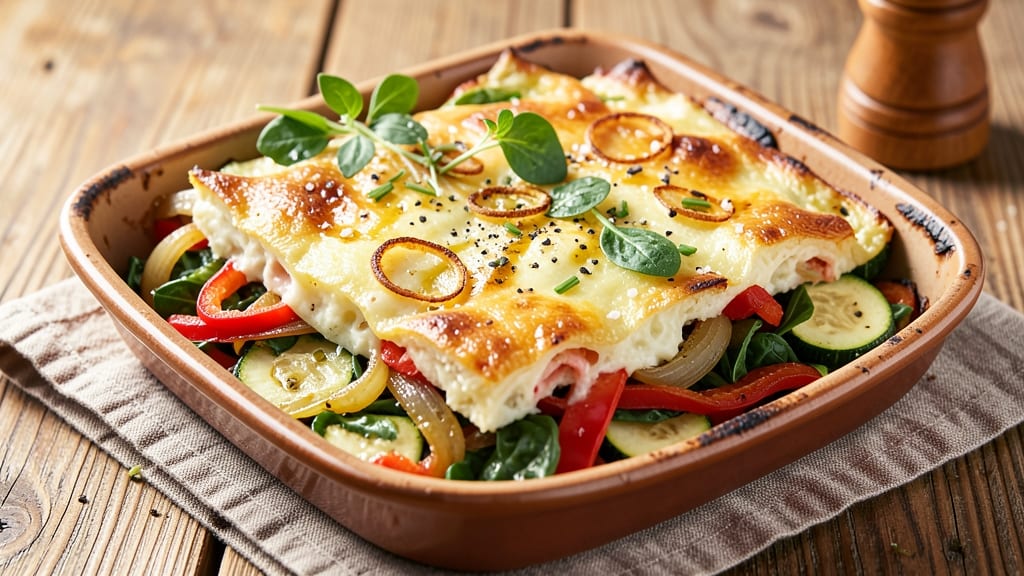
This vegetable egg strata recipe transforms simple greens and eggs into a hearty, vegetarian brunch showstopper that’s perfect for meal prep or weekend feasts. The secret lies in layering wilted spinach, bell peppers, and zucchini between fluffy egg custard—creating a dish that’s both elegant and effortless.
I developed this version after years of testing, and it’s now my go-to for feeding crowds without sacrificing flavor or texture.
The beauty of this strata is its versatility—swap seasonal vegetables (think mushrooms, asparagus, or roasted tomatoes) without altering the core technique. A quick 40-minute bake at 350°F yields golden, custardy layers with tender greens and creamy egg centers that melt in your mouth.
The dish is naturally vegetarian but packs enough savory depth to satisfy even meat lovers.
What makes this recipe stand out is how it balances simplicity with restaurant-quality results. No fancy equipment is needed—just a baking dish and a whisk.
Serve with crusty toast or a fresh salad to round out the meal, or enjoy it as-is for a protein-rich breakfast that keeps you full for hours. The aroma alone will have everyone asking for seconds.
Perfect for brunch gatherings, meal prep, or a satisfying solo dinner, this strata proves that vegetarian dishes can be just as rich and satisfying as their meat-heavy counterparts. Let’s get baking—your taste buds (and leftovers) will thank you.
Ingredients for vegetable egg strata
Six servings of layered greens and eggs—where brunch meets effortless elegance.
| Ingredient | Amount | Notes |
|---|---|---|
| Large Eggs 🥚 | 12 whole | Room temperature preferred |
| Heavy Whipping Cream 🥛 | 1 ½ cups | Full-fat for creaminess |
| Fresh Baby Spinach 🌿 | 5 oz | Wilted and drained well |
| Red Bell Pepper 🍅 | 1 medium | Diced, seeds removed |
| Zucchini 🥒 | 1 medium | Diced, excess moisture squeezed |
| Yellow Onion 🧅 | 1 medium | Thinly sliced |
| Shredded Cheddar Cheese 🧀 | 1 ½ cups | Sharp variety preferred |
| Milk 🥛 | ½ cup | Whole milk for richness |
| Salt 🧂 | 1 ½ tsp | Diamond Crystal preferred |
| Freshly Ground Black Pepper 🌶️ | ½ tsp | Freshly cracked preferred |
| Garlic Powder 🧄 | ½ tsp | Freshly toasted preferred |
| Dried Parsley 🌿 | 1 tbsp | For garnish |
| Olive Oil 🫒 | 1 tbsp | For greasing dish |
The spinach is the star here, so grab the freshest baby spinach you can find—Whole Foods or local markets have the best quality. Look for leaves that are bright green and crisp, not wilted. The bell pepper and zucchini should be firm and vibrant; Trader Joe's often carries pre-diced veggies if you're short on time. For the cheese, sharp cheddar melts beautifully—avoid pre-shredded blends, which contain anti-caking agents that prevent proper melting. The eggs? Room temperature makes all the difference—they'll whisk up lighter and fluffier. I always buy a dozen extra and keep them in the fridge door for quick access.
No fresh herbs? Dried parsley works just fine—just use half the amount. Short on spinach? Swiss chard or kale wilts just as beautifully, but reduce the quantity by 25% since they're denser. The cream can be substituted with half-and-half for a lighter texture, though it won't be quite as rich. For a dairy-free option, full-fat coconut milk works surprisingly well—just reduce the milk by 2 tablespoons. The garlic powder is non-negotiable here; toast it in a dry pan for 30 seconds before adding to deepen the flavor. Prefer fresh garlic? Use 1 clove, minced, instead of the powdered version.
This strata reheats beautifully—just cover with foil and warm at 325°F for 10-15 minutes. Keeps for 3 days in the fridge, tightly covered, though I rarely have leftovers that long. For meal prep, portion into individual containers and freeze for up to 2 months. The best part? It tastes even better the next day as the flavors meld. Store any leftover veggies in the fridge for up to 5 days—perfect for adding to omelets or salads later in the week.
Why You'll Love This Recipe
- One-Pan Magic: I swear by this for lazy mornings—just toss everything into a dish, bake, and walk away. No chopping boards, no extra pots, just that rich, custardy goodness waiting for you.
- Creamy Crispy Contrast: That golden top crust? Chef’s kiss. The heavy cream and eggs create a cloud-soft center while the edges get just crisp enough to hold a fork. Honestly, I’ll fight anyone who says strata can’t be fancy.
- Weeknight to Brunch Hero: Make it for dinner when veggies are wilted in your fridge, then reheat for brunch the next day—still tastes like you slaved over it. My kids even ask for seconds, and that’s saying something.
- Leftovers That Don’t Suck: Most casseroles turn sad after day two, but this? Still moist, still flavorful. I pack it for lunches or serve it cold in the summer—proof that leftovers can be a win.
Step-by-step instructions for vegetable egg strata
Transform simple ingredients into a restaurant-worthy strata with layers of fluffy eggs and vibrant vegetables.
Prep and Sauté the Vegetable Base
Start by preheating your oven to 350°F. In a large skillet, heat 1 tablespoon olive oil over medium heat. Add the 1 medium yellow onion and 1 medium red bell pepper, both thinly sliced, and sauté for 5 minutes until softened and slightly caramelized. This step develops their natural sweetness and removes any bitterness.
Add the 1 medium zucchini, also diced, and cook for another 3 minutes until just tender. The vegetables should retain some bite—overcooking will make them mushy in the strata. Transfer the sautéed mixture to a large bowl and let it cool slightly while you prepare the spinach.
In the same skillet, add the 5 oz fresh baby spinach and cook for 2 minutes until wilted. Drain any excess liquid and add the spinach to the vegetable mixture. Stir in 0.5 teaspoon garlic powder, 1.5 teaspoons salt, and 0.5 teaspoon freshly ground black pepper. This seasoning will infuse the vegetables with savory depth before they're layered with the eggs.
Assemble the Strata Layers
Grease a 9x13-inch baking dish generously with 1 tablespoon olive oil to prevent sticking. Spread half of the sautéed vegetable mixture evenly across the bottom, creating a thin, even layer. This base ensures every bite has that perfect vegetable-to-egg ratio.
In a large bowl, whisk together the 12 whole large eggs, 1.5 cups heavy whipping cream, 0.5 cup milk, and 1.5 cups shredded cheddar cheese until fully combined. The mixture should be smooth and homogeneous—no lumps should remain. Pour half of this egg mixture over the vegetable layer, tilting the dish gently to distribute it evenly.
Top with the remaining vegetable mixture, spreading it evenly. Pour the remaining egg mixture over the top, again tilting to ensure full coverage. The final layer should be smooth and even—this guarantees consistent texture throughout the strata.
Bake to Golden Perfection
Transfer the baking dish to the preheated 350°F oven and bake for 40-45 minutes until the top is golden brown and the center is just set. Here's the trick: the strata should be slightly jiggly in the center when you remove it from the oven—it will continue cooking as it rests, so don't overbake.
To test doneness, gently shake the dish—if the center moves slightly but doesn't wobble excessively, it's ready. If it's not quite set, return it to the oven for 5-10 more minutes. The key is achieving a custard-like texture that's creamy but not runny.
Rest and Serve Warm
Remove the strata from the oven and let it rest for 10 minutes before slicing. This resting period allows the layers to set properly and prevents the strata from falling apart when you serve it. The heat will redistribute, ensuring each slice is perfectly warm and creamy.
Using a sharp knife, cut the strata into 6 equal squares—this ensures each serving has a balanced portion of both vegetables and eggs. Garnish each serving with 1 tablespoon dried parsley for a pop of color and fresh flavor. Serve immediately while still warm for the best texture and taste.
Pro Tips For Making Vegetable Egg Strata
- SALT THE CREAM FIRST: I learned this the hard way—salting the heavy cream before mixing it with eggs makes a real difference. The salt dissolves fully, and the flavor becomes evenly distributed instead of just seasoning the top layer.
- SAUTE VEGGIES UNTIL SOFT: Don’t skip cooking the spinach, bell pepper, and zucchini until they’re barely holding their shape—this prevents a soggy strata. Overcrowding the pan? Do it in batches. A hot skillet with a splash of water (yes, really) keeps them from sticking.
- USE ROOM-TEMP EGG MIX: Cold eggs in warm cream = lumpy strata. Let your eggs sit out for 10 minutes before whisking, and warm the cream slightly (just until it’s drinkable). The mixture will blend smoother, and the texture turns out silky instead of grainy.
- DON’T OVERBAKE THE TOP: The strata is done when the center is just set but still slightly jiggly—about 350°F for 35-40 minutes. If you walk away and forget, the top will dry out faster than the middle cooks. A toothpick test works, but so does eyeballing the golden crust while checking the edges.
Common mistakes when making this recipe
Over-Wilting Spinach
I’ve ruined strata before by over-wilting the spinach—turning it into a sad, mushy mess. Cook it for only 2 minutes over medium heat until just wilted, then drain all excess liquid.
If you’re using frozen spinach, thaw and squeeze it very dry with a clean towel. The goal is tender, not soggy greens that’ll turn your strata into a watery disaster. 🌿
Uneven Vegetable Distribution
Skipping the "spread evenly" step leads to lopsided bites—some with too many veggies, others drowning in egg. Use a 9x13-inch dish and divide the veggie mixture into exactly two equal portions.
For the egg layer, pour it in a thin, even stream while tilting the dish to coat the bottom completely. Trust me, your first slice will thank you.
Skipping the Rest Time
Cutting into strata immediately after baking is a cardinal sin—it’ll collapse like a house of cards. Let it rest for 10 full minutes before slicing. This lets the custard set and the layers bond.
Pro tip: If you’re really impatient, tent it loosely with foil for the last 5 minutes of baking to help it set faster.
Overmixing the Eggs
Whisking the egg mixture until it’s too stiff introduces air pockets that can cause sinking or uneven baking. Whisk just until the yolks and whites are fully combined—no need for meringue-like peaks.
A few small lumps are fine; they’ll disappear during baking. Overmixing also risks curdling the cream, which is a nightmare to fix mid-cook. 🥚
Ignoring the Jiggle Test
Your strata should have a slight wobble in the center when done—this ensures creamy, custardy perfection. If it’s rock-solid, it’s overbaked and dry. If it’s still jiggly after 45 minutes, cover it with foil and bake 5 more minutes. The goal is a set-but-still-tender texture, not rubbery egg.
Wrong Cheese Choice
Pre-shredded cheese contains anti-caking agents that prevent proper melting, leaving you with gritty texture. Always shred your own sharp cheddar (or another melty variety like Monterey Jack) using a box grater. For extra creaminess, mix in ¼ cup cream cheese with the shredded cheese—it’ll make the strata sing.
Nutrition facts
Frequently asked questions
Can I make this vegetarian strata ahead of time?
This dish actually tastes better the next day as the flavors meld. Assemble it in your baking dish, cover tightly with plastic wrap, and refrigerate for up to 24 hours before baking. For make-ahead meal prep, bake it fully, then store in an airtight container in the fridge for 3 days. Reheat covered with foil at 325°F for 10-15 minutes until warmed through.
What vegetables can I substitute for the spinach, bell pepper, and zucchini?
This recipe is incredibly flexible! Try Swiss chard or kale instead of spinach (reduce by 25% since they're denser), asparagus or mushrooms for extra earthiness, or roasted cherry tomatoes for sweetness. For heartier textures, add diced potatoes or butternut squash to the vegetable layer—just adjust baking time by 5-10 minutes if using starchy additions.
Why did my strata turn out dry or rubbery?
Overbaking is the most common culprit—remove it when the center still has a slight jiggle. Another issue could be using too much cheese or not enough cream. For extra creaminess, stir ¼ cup sour cream or Greek yogurt into the egg mixture. Also ensure your baking dish isn't too large—stick to a 9x13-inch pan for perfect proportions.
Can I make this strata dairy-free?
Yes! Replace the heavy cream with full-fat coconut milk (reduce milk by 2 tablespoons) and use dairy-free cheddar or nutritional yeast for flavor. For binding, add 1 tablespoon cornstarch to the egg mixture. The texture will be slightly different but still delicious—expect a more custard-like consistency rather than ultra-fluffy.
How do I prevent the top from browning too quickly?
Cover the baking dish loosely with foil during the last 15-20 minutes of cooking to slow browning while keeping the center warm. For extra insurance, tent with foil from the start and remove it only in the final 10 minutes to achieve even golden browning. This works especially well in hot ovens or when using a glass baking dish.