
Breakfast & Brunch
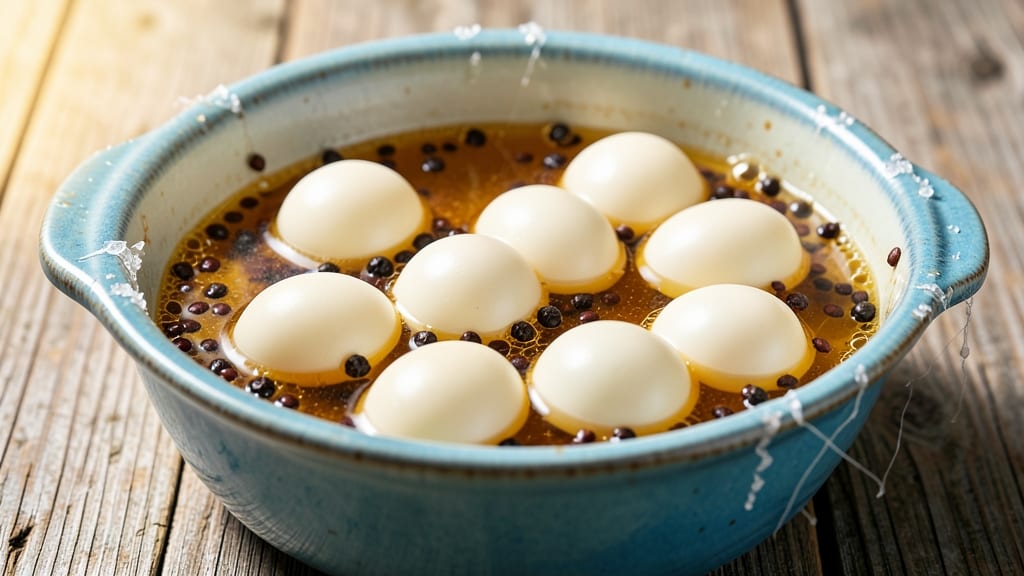
This traditional pickled egg recipe preserves the bold, tangy flavors that made them a pantry staple for generations. The process transforms simple hard-boiled eggs into crunchy, vinegar-bright bites that keep for months—perfect for charcuterie boards or quick snacks.
I’ve perfected the balance of vinegar, spices, and time to deliver that signature crunch and zesty kick every time.
The secret lies in the brine composition: white vinegar for sharpness, mustard seeds for subtle heat, and a touch of sugar to round out the acidity. Unlike modern shortcuts, this method relies on slow infusion—eggs develop their signature texture after at least two weeks in the jar.
The result? Eggs that stay crispy even after months of storage, with a tangy bite that cuts through rich cheeses or salty meats.
What makes these truly traditional is the patience required—they’re not an overnight project, but the payoff is worth it. Each jar yields eggs that taste like a taste of old-school preservation, where every bite delivers that satisfying crunch and bright vinegar punch.
Serve them alongside smoked meats or crusty bread for a taste of heritage.
This recipe honors the slow, flavor-building process that makes pickled eggs a timeless favorite. The instructions walk through every step—from boiling and cooling eggs to crafting the perfect brine—so you can achieve that authentic, crunchy texture at home. Let’s get started on preserving the old-fashioned way.
Ingredients for traditional pickled egg
Twelve eggs transform into tangy, crunchy bites with just vinegar, spices, and time.
| Ingredient | Amount | Notes |
|---|---|---|
| Large Eggs 🥚 | 12 whole | Hard-boiled and cooled completely |
| White Vinegar 🍶 | 2 cups | Distilled white vinegar preferred |
| Water 💧 | 2 cups | Filtered or distilled preferred |
| Granulated Sugar 🍚 | ½ cup | White sugar for balanced sweetness |
| Mustard Seeds 🌶️ | 1 tbsp | Yellow mustard seeds preferred |
| Black Peppercorns 🌶️ | 1 tbsp | Whole peppercorns for texture |
| Bay Leaves 🌿 | 2 whole | Dried bay leaves for aroma |
| Salt 🧂 | 1 tbsp | Kosher salt for balance |
| Red Wine Vinegar 🍷 | ½ cup | For depth of flavor |
| Pickling Spice Blend 🌶️ | 1 tbsp | Traditional blend for complexity |
| Clean Pint Mason Jars 🥫 | 2 jars | With lids for airtight seal |
The eggs are the foundation—fresh, large eggs work best, and they must be hard-boiled to a deep yellow center before cooling completely. For the vinegar, distilled white vinegar delivers the sharpest tang, but red wine vinegar adds depth. I always grab white vinegar from Trader Joe's—it's consistent and affordable. The mustard seeds? Yellow mustard seeds give subtle heat without overpowering. Look for them in the spice aisle near the pickling supplies. If you can't find yellow, brown mustard seeds work in a pinch, though they're stronger.
No mustard seeds? A pinch of ground mustard at half the amount will mimic the flavor. Running short on bay leaves? Dried thyme at one-third the amount adds earthy notes. The pickling spice blend can be homemade—combine 1 tsp black peppercorns, 1 tsp allspice berries, and 1 tsp coriander seeds—or bought pre-mixed. For the jars, sterilize them first by boiling lids and jars for 10 minutes. This prevents spoilage and ensures crispy eggs. The brine ratio of 2 cups vinegar to 2 cups water is key—too much water dilutes the tang, too little risks spoilage.
Once sealed, these eggs need at least 2 weeks to develop their signature crunch—the longer they sit, the better they taste. Store them in a cool, dark pantry for up to 6 months, though they’ll stay crispy for 3 months if kept in the fridge. For serving, chill the jars for 10 minutes before opening—the condensation makes them easier to handle. These eggs pair perfectly with smoked meats, sharp cheeses, or crusty bread—just what you’d expect from a traditional pantry staple.
Why You'll Love This Recipe
- No-Fuss Pantry Staples: I swear by this recipe because it uses things I already have—vinegar, sugar, and mustard seeds. No specialty shopping, no last-minute grocery runs. Just open the cabinet, mix, and go.
- Tangy Crunch Surprise: The mustard seeds add this pop—tiny, sharp bursts that cut through the sweet vinegar brine. It’s not just pickled eggs; it’s a flavor party in your mouth.
- Potluck Hero: Bring a jar to a picnic, BBQ, or holiday spread—everyone will ask for the recipe. It’s portable, stays fresh for weeks, and pairs with everything (sandwiches, salads, even straight from the jar).
- Cheap & Lasts Forever: A dozen eggs and a handful of spices stretch into months of snacks. I make a big batch, store it in the fridge, and pull out eggs for lazy breakfasts or emergency snacks when the fridge is bare.
Step-by-step instructions for traditional pickled eggs
Preserving eggs this way brings back the classic taste of old-fashioned pantries.
Hard-Boil and Cool the Eggs Completely
Place the 12 whole large eggs in a saucepan and cover with cold water by about 1 inch. Bring to a boil over medium-high heat, then immediately remove from heat, cover, and let sit for 12 minutes. This timed soak ensures perfectly set whites without overcooking the yolks.
Drain the hot water and transfer eggs to an ice bath for 10 minutes to stop cooking. Once cool, peel each egg carefully—don't crack the shells. The eggs must be completely cooled before pickling, or the vinegar mixture won't penetrate evenly. Store them in the refrigerator until ready to use.
Prepare the Pickling Liquid
In a clean saucepan, combine the 2 cups white vinegar, 2 cups water, 0.5 cup granulated sugar, 1 tbsp salt, 0.5 cup red wine vinegar, 1 tbsp mustard seeds, 1 tbsp black peppercorns, 2 whole bay leaves, and 1 tbsp pickling spice blend. Bring to a gentle simmer over medium heat, stirring until the sugar and salt dissolve completely.
Simmer for 5 minutes to infuse the flavors, then remove from heat. Let the liquid cool to room temperature—this prevents thermal shock to the eggs when they're submerged. The mixture should be clear with visible spices settled at the bottom.
Pack and Seal the Eggs
Divide the cooled hard-boiled eggs evenly between the 2 clean pint mason jars. Pour the cooled pickling liquid over the eggs until fully submerged, leaving about ½ inch of headspace at the top. Use a clean spoon to press the eggs down gently if needed to ensure complete coverage.
Wipe the jar rims with a damp cloth to remove any liquid or residue. Seal each jar tightly with the lid, then turn the jars upside down and let them sit for 5 minutes. This creates a vacuum seal as the liquid cools. Store in the refrigerator for at least 24 hours before serving to allow flavors to meld.
Rest and Serve
After 24 hours, your pickled eggs are ready. The tangy, slightly sweet brine will have fully infused, and the eggs will develop a satisfying crunch. Serve chilled as a snack, on charcuterie boards, or alongside sandwiches. The pickling liquid can be reused for up to 3 months if stored properly.
For best results, consume within 1 month for peak texture and flavor. The traditional method preserves the eggs' natural richness while adding the perfect balance of vinegar sharpness and spice complexity.
Pro Tips For Making Traditional Pickled Egg
- Boil Eggs Until Fully Set: I learned this the hard way—undercooked yolks turn mushy in vinegar. Simmer eggs for 12-14 minutes in gently boiling water (not rolling boil), then plunge into ice water. The shock stops cooking and makes peeling easier.
- Use Equal Parts Vinegar and Water: My grandmother swore by this ratio: 1 cup vinegar to 1 cup water for the brine. Too much vinegar makes eggs rubbery; too little water dilutes the flavor. Stir in sugar and mustard seeds after heating the liquid to dissolve everything.
- Skip the Crowding in the Jar: Stuffing jars too tightly traps air, which ruins the pickling. Pack eggs in single layers, then pour brine over them—no need to force them in. If they float, weigh them down with a small plate (but don’t let it touch the eggs).
- Add Spices Last, Then Seal Fast: Mustard seeds and other spices lose punch if simmered too long. Toss them into the cold brine just before pouring, then seal jars immediately. This keeps the heat gentle on the spices and locks in their sharpness for weeks.
Make-ahead tips for this dish
Prep Ahead Timeline
Start the pickling process 3 days ahead to let flavors develop fully. The first 24 hours are critical for initial infusion, but the real magic happens after 7 days when the eggs achieve their signature crunch.
I always begin on a Sunday so they’re ready for midweek snacking or holiday gatherings. 📅
Storage Strategies
For long-term storage, keep jars in the refrigerator where they’ll stay crisp and tangy for up to 6 months. If you prefer room-temperature storage, use a cool pantry (below 70°F) and consume within 2 months.
The brine actually improves over time—3 months in, the flavors deepen into something truly special.
Reusing Brine
After removing eggs, save the pickling liquid for another batch—it’s packed with flavor! Strain out spices if you prefer a cleaner look, then store the brine in an airtight container in the fridge for 3 months.
I’ve reused the same brine 4 times without losing potency, though I add 1 extra tablespoon of vinegar each time to maintain acidity. 🧂
Freezing Tips
While pickled eggs aren’t ideal for freezing (texture suffers), you can freeze the brine separately for future use. Pour cooled brine into freezer-safe containers, leaving ½ inch headspace for expansion. Thaw overnight in the fridge before using—it works perfectly for quick pickling projects later. 🥶
Portion Control
Divide eggs into smaller jars (like 4-ounce portions) for easy snacking. This also lets you experiment with different spice blends—try adding ½ tsp smoked paprika or 1 tsp dill seeds to individual jars.
Label each with the date and spice variation so you can track which combinations you love best. ✨
Gift-Worthy Jars
For presents, use amber glass jars to protect from light and add rustic charm. Attach a ribbon and include a handwritten note with serving suggestions (like “Pairs perfectly with sharp cheddar”). These make thoughtful hostess gifts—just ensure they’re sealed tightly and stored upright during transport. 🎁
Nutrition facts
Frequently asked questions
Why do traditional pickled eggs need to sit for at least 2 weeks?
The 2-week minimum is crucial for developing that signature crunch and deep flavor. The vinegar and spices need time to fully penetrate the eggs, transforming them from soft-boiled to crispy, tangy bites. Patience pays off—the longer they sit, the better they taste!
Can I use apple cider vinegar instead of white vinegar?
Yes, but expect a milder tang. Apple cider vinegar adds subtle sweetness and complexity, but white vinegar delivers that classic sharpness. For authenticity, stick with white vinegar, but apple cider works well if you prefer a fruitier profile. Just increase the sugar slightly (½ tsp extra) to balance the sweetness.
How do I fix soft eggs after pickling?
If your eggs turn out soft, it’s likely due to improper cooling or boiling. For future batches, ensure eggs cool completely in an ice bath and boil for exactly 12 minutes. If already pickled, remove them, re-boil for 5 extra minutes, then cool again before returning to fresh brine. The texture will improve within 48 hours.
What’s the best way to store pickled eggs long-term?
For maximum shelf life, store jars in the refrigerator where they’ll stay crisp and tangy for up to 6 months. If keeping at room temperature, use a cool pantry (below 70°F) and consume within 2 months. The brine actually improves over time—after 3 months, flavors deepen into something truly special!
Can I make pickled eggs without mustard seeds?
Skip the mustard seeds and boost the heat with ½ tsp cayenne pepper or 1 tsp crushed red pepper flakes instead. For a milder option, add ½ tsp ground mustard (use half the amount). The key is balancing the tangy brine with some spice—just adjust to your taste!