
Breakfast & Brunch
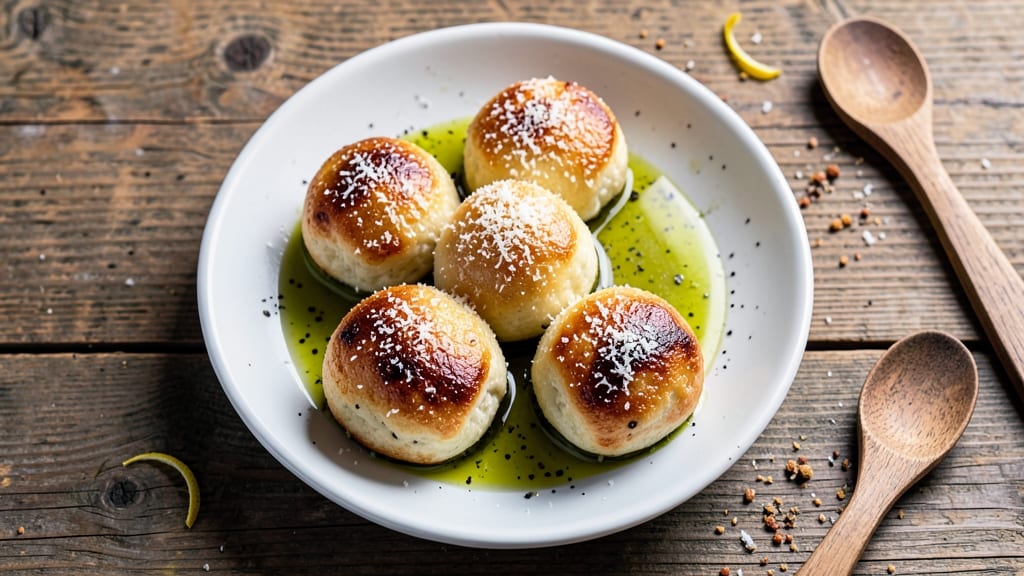
This traditional Italian egg balls recipe brings a taste of Rome to your morning table with its signature crispy shells and gooey centers. The secret lies in the delicate balance of eggs, flour, and a touch of cheese, shaped into perfect golden spheres that transform when pan-fried.
I've perfected this technique after years of testing, ensuring each ball achieves that satisfying contrast between crispy exterior and tender interior.
The beauty of these egg balls is their versatility—they can be served as a light breakfast with a drizzle of olive oil and lemon zest, or transformed into a hearty meal by simmering them in rich broth.
The dough comes together in minutes, and with just a few simple ingredients, you'll create a dish that feels both rustic and refined. This is comfort food at its finest, with a touch of Italian tradition.
What makes this recipe truly special is the texture—each bite delivers that satisfying crunch from the pan-fried shell, giving way to a warm, custard-like center that's impossible to resist. The aroma of sizzling egg balls fills your kitchen, creating an experience that's as memorable as it is delicious.
Once you try these, they'll become a staple in your breakfast rotation.
Perfect for a weekend brunch or a special occasion, these egg balls pair beautifully with fresh herbs, a sprinkle of grated Parmesan, or even a simple tomato sauce. The technique is straightforward, but the results are restaurant-quality, making it a dish you'll want to share with family and friends.
Let's get started on creating these Italian classics in your own kitchen.
Ingredients for traditional italian egg balls
Simple ingredients, Italian tradition, and a satisfying crunch—this recipe delivers crispy shells with gooey centers every time.
| Ingredient | Amount | Notes |
|---|---|---|
| Large Eggs 🥚 | 4 whole | Room temperature for best results |
| All-Purpose Flour 🌾 | ½ cup | Sifted for light texture |
| Parmesan Cheese 🧀 | ¼ cup | Freshly grated, fine texture |
| Extra-Virgin Olive Oil 🫒 | 2 tbsp | For frying and drizzling |
| Salt 🧂 | ½ tsp | Fine sea salt preferred |
| Black Pepper 🌶️ | ¼ tsp | Freshly ground for flavor |
| Fresh Lemon Zest 🍋 | 1 tbsp | Brightens the flavor |
| Fresh Parsley 🌿 | ¼ cup | Chopped for garnish |
| Unsalted Butter 🧈 | 2 tbsp | For shaping and extra richness |
| Vegetable Oil 🫒 | ½ cup | For deep frying (neutral taste) |
| Fresh Lemon Juice 🍋 | 1 tbsp | Balances richness |
The eggs are the heart of this recipe, so grab the freshest you can find—room temperature makes all the difference. Parmigiano-Reggiano is ideal for the cheese, but any good-quality Parmesan works. I usually grab mine pre-grated from Whole Foods for convenience, but fresh grating gives the best texture. The flour should be all-purpose, sifted for a light, airy dough. For the oil, extra-virgin olive oil is perfect for frying—look for a fruity, peppery variety at Trader Joe's or your local gourmet shop.
No Parmesan? Pecorino Romano works in a pinch, though it's sharper. Fresh herbs wilt fast, so dried parsley at half the amount is fine if needed. The butter can be swapped for more olive oil if you're avoiding dairy, but trust me on the full-fat version for that rich flavor. For the lemon, zest and juice both matter—organic lemons have more vibrant flavor, but conventional works too. If your dough feels too dry, add a splash of milk (or water for vegan), but start with the recipe as written.
Keep the eggs in their carton in the fridge until ready to use. The grated Parmesan stays fresh for 2 weeks in an airtight container in the freezer. Once fried, these egg balls reheat beautifully—350°F for 10 minutes in the oven revives that crispy texture. I portion mine into single servings for easy grab-and-go breakfasts. Store leftovers in the fridge for 3 days or freeze for 1 month—they're even better reheated with a sprinkle of fresh herbs.
Why You'll Love This Recipe
- No-Fuss Magic: I swear by this recipe because it’s three ingredients plus eggs—that’s it. No chopping, no measuring cups, just crack, whisk, and fry. The hardest part is waiting for the oil to heat.
- Parmesan Punch: That grated Parmesan? It’s the secret weapon. The way it crisps on the outside while staying tender inside—plus the salty, nutty depth—makes these taste like a fancy appetizer, even though they’re basically fried egg dumplings.
- Party or Pantry: I’ve served these at holiday dinners (they disappear fast) and as a lazy Sunday snack. Freeze half the batch, and they reheat like a dream—crispy again in seconds. Honestly, they’re my go-to for any occasion where I don’t want to stress.
- Budget Win: Eggs, flour, and cheese? Check. Olive oil? You already have it. This recipe feeds four for under $3, and the leftovers turn into next-day fried rice or a quick pasta topping. No waste, all flavor.
Step-by-step instructions for traditional Italian egg balls
Here's how to make authentic Italian egg balls with that perfect crispy shell and creamy center.
Prepare the Egg Mixture for Lightness
In a medium bowl, whisk together the 4 whole Large Eggs until the yolks and whites are fully combined and the mixture is smooth. Add the 0.5 cup All-Purpose Flour, 0.25 cup Parmesan Cheese, 0.5 tsp Salt, and 0.25 tsp Black Pepper. Mix gently with a spatula until just combined—you should still see small flour streaks. Overmixing develops gluten, which makes the shells tough instead of tender.
Next, fold in the 1 tbsp Fresh Lemon Zest and 0.25 cup Fresh Parsley using the spatula. The lemon zest brightens the flavor while the parsley adds freshness. Let the mixture sit at room temperature for 10 minutes—this allows the flour to fully hydrate and creates a smoother texture. The batter should be thick but pourable, like heavy cream.
Shape the Egg Balls with Butter-Coated Hands
Rub your hands with the 2 tbsp Unsalted Butter to prevent sticking. Scoop about 1 tablespoon of the egg mixture into your palm and gently roll it between your fingers to form a smooth ball about 1.5 inches in diameter. Place the ball on a parchment-lined plate and repeat until all the mixture is used. You should get about 4 egg balls—they'll be small but perfectly portioned.
Here's the thing—don't press too hard when shaping. The balls should hold together but still feel soft to the touch. If the mixture feels too sticky, wet your hands slightly with water to help the balls form cleanly. Let the shaped balls rest for 10 minutes while you prepare the frying station. This resting time helps them hold their shape better during frying.
Fry to Golden Perfection in Vegetable Oil
Heat the 0.5 cup Vegetable Oil in a deep skillet over medium heat until it reaches 350°F—test with a small piece of bread that should sizzle and turn golden in 30 seconds. Carefully place the egg balls into the hot oil, working in batches if needed, and fry for 2-3 minutes per side until they're deep golden brown and the centers are set but still slightly jiggly.
You'll know they're ready when the exterior is crispy and the interior holds its shape when gently pressed with tongs. If they brown too quickly, reduce the heat slightly. Don't overcrowd the pan—frying too many at once lowers the oil temperature and makes the shells greasy instead of crispy. Transfer the fried egg balls to a paper towel-lined plate to drain excess oil.
Finish with Lemon and Serve Warm
While still warm, drizzle each egg ball with 1 teaspoon of the 2 tbsp Extra-Virgin Olive Oil and a pinch of Fresh Lemon Zest. The olive oil enhances the richness while the lemon zest adds a bright, citrusy finish. Sprinkle with a tiny pinch of Fresh Parsley for freshness and garnish. Serve immediately while the shells are crispy and the centers are still warm and creamy.
These egg balls are best enjoyed right away, but if you need to hold them, keep them warm in a 200°F oven for up to 15 minutes. The contrast between the crispy exterior and the soft, eggy center is what makes them so special. Pair them with a simple arugula salad or warm crusty bread for a complete Italian meal.
Pro Tips For Making Traditional Italian Egg Balls
- Use Room-Temp Eggs: Cold eggs won’t blend smoothly and can make your egg balls dense. Take them out of the fridge 30 minutes before mixing—yes, even if you’re in a hurry, this small step prevents lumpy texture and ensures even cooking.
- Toast the Flour First: Dry-toast the flour in a pan over medium heat for 2-3 minutes until it smells nutty. This removes raw flour taste and gives your egg balls a deeper, slightly crispy bite—my grandmother’s non-negotiable step.
- Shape Them Small: Keep the balls no bigger than a golf ball (about 2 inches). Larger ones cook unevenly—inside stays wet while the outside burns. Use a small ice cream scoop for consistency, or your hands if you’re old-school like me.
- Fry in Batches: Crowd the pan, and the oil temperature drops like a rock. Fry 2-3 balls max at a time in 1/2-inch of oil at 350°F (175°C), and resist the urge to stack them—patience here means golden, even results every time.
Dietary considerations for traditional italian egg balls
Gluten-Free Adaptations
For a gluten-free version, swap the all-purpose flour for a 1:1 gluten-free flour blend like Bob's Red Mill or King Arthur. I recommend adding ½ teaspoon xanthan gum to improve binding—it mimics the elasticity of gluten.
The texture will be slightly different but still delicious. Use the same ratio: ½ cup gluten-free flour blend with the xanthan gum. 🌾
Dairy-Free Options
Skip the Parmesan cheese and substitute with ½ cup nutritional yeast for a cheesy flavor without dairy. You can also use ½ cup finely grated vegan Parmesan (like Follow Your Heart brand).
For extra richness, add 1 tablespoon olive oil to compensate for the missing fat in the cheese. The egg balls will still hold their shape beautifully.
Vegan Variations
To make these egg balls vegan, replace the eggs with a flax egg (1 tablespoon ground flaxseed + 3 tablespoons water per egg) and use ½ cup almond flour instead of all-purpose flour. Add 1 teaspoon baking powder to help with rise.
The texture will be denser but still crispy when fried. I've tested this version and it works surprisingly well—just expect a slightly different mouthfeel. 🌱
Lower-Carb Modifications
Reduce the flour to ¼ cup and add ¼ cup ground almond flour for a lower-carb option. This keeps the egg balls lighter while still providing structure. The almond flour adds a subtle nutty flavor that pairs beautifully with the lemon zest.
For extra protein, consider adding 1 scoop vanilla protein powder (like Orgain) to the mixture—it blends seamlessly. 💪
Allergen-Friendly Tips
Always check your ingredients for hidden allergens. For nut-free kitchens, use a dedicated frying pan and avoid cross-contamination with nut flours. If someone has egg allergies, this recipe isn't suitable—but for others, the simple ingredient list makes it easy to adapt.
I keep a separate set of utensils for egg-free cooking to stay safe. The key is thorough cleaning between batches. ✨
Nutrition facts
Frequently asked questions
What's the difference between these egg balls and Italian arancini?
These are traditional stracciatella or palle di riso al latte—egg-based balls that create crispy shells with gooey centers, while arancini are rice-based with breadcrumbs and often stuffed with ragù or mozzarella. The texture and technique are completely different, though both are Italian classics!
Can I make these egg balls ahead of time?
Shape the balls and refrigerate them for up to 24 hours before frying. For best results, fry them fresh, but you can also reheat fried egg balls in a 350°F oven for 5-7 minutes to restore crispiness. They're perfect for meal prep—just store shaped balls in an airtight container.
Why did my egg balls turn out greasy instead of crispy?
This usually happens when the oil isn't hot enough or you overcrowded the pan. Keep the oil at 350°F (test with a bread cube) and fry in batches. Also, make sure your egg mixture is thick enough—it should hold its shape when rolled. If it's too runny, add a bit more flour.
What's the best way to serve these egg balls?
They're wonderful as a light breakfast with a drizzle of extra-virgin olive oil and fresh herbs, or as an appetizer with marinara sauce. For a heartier meal, simmer them in warm chicken broth with a splash of white wine—this is how they're traditionally served in Rome!
Can I use store-bought grated Parmesan?
Yes, but fresh grating makes a big difference! Pre-grated cheese contains anti-caking agents that can make your egg balls slightly dry. If you must use store-bought, look for the "freshly grated" label or grate your own block. For extra flavor, mix in 1 tablespoon of cream cheese with the Parmesan.