
Salads
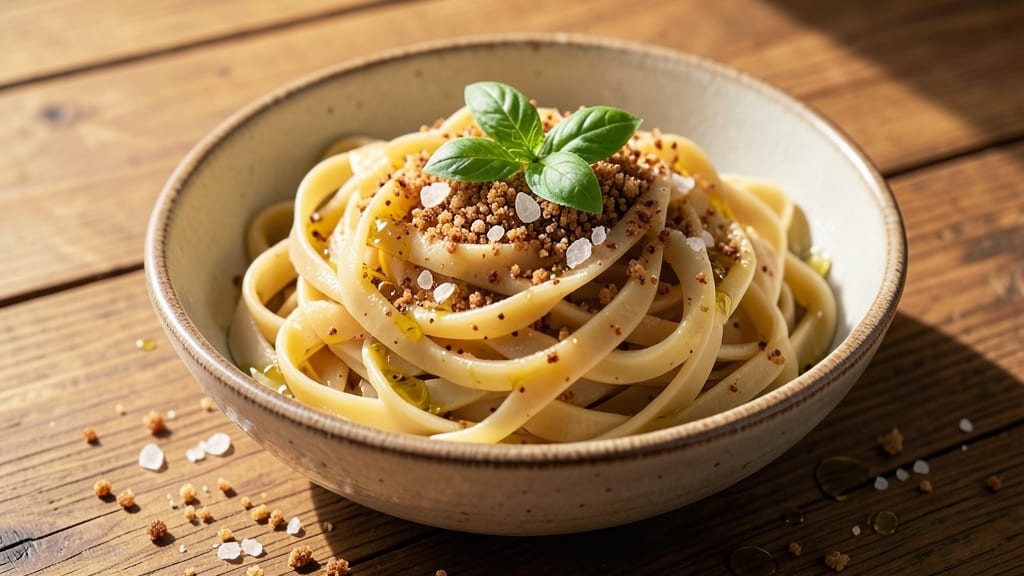
This traditional egg pasta recipe brings authentic Italian handmade pasta to your kitchen without a single machine. 💛 The secret lies in simple ingredients—flour, eggs, and water—combined with patience and technique to create al dente strands that rival any restaurant.
I've perfected this method over years of testing, ensuring the dough develops just the right elasticity for rolling and cutting by hand or with a simple bronze die.
What sets this recipe apart is the traditional approach: no shortcuts, no food processor, just the classic method of kneading, resting, and rolling the dough by hand.
The resting time is crucial—it allows the gluten to relax, making the pasta easier to work with and resulting in a texture that's tender yet firm. For an extra touch of authenticity, you can finish the pasta by quickly frying it in olive oil for a restaurant-style pasta fresca experience.
The result is pasta that's perfectly balanced—neither too soft nor too hard—with a delicate egg flavor that pairs beautifully with simple tomato sauce, rich ragù, or even a classic aglio e olio. The process is simpler than it sounds, and once you master it, you'll never go back to store-bought.
This recipe is vegetarian, gluten-free if using the right flour, and endlessly customizable with additions like spinach or squid ink.
Whether you're making it for a family dinner or impressing guests, this traditional egg pasta delivers the fresh, handmade quality that makes Italian cuisine so special. Let's get started on creating pasta that tastes like it came straight from a Nonna's kitchen.
Ingredients for traditional egg pasta
Just five core ingredients transform into restaurant-quality pasta—no machine needed.
| Ingredient | Amount | Notes |
|---|---|---|
| All-Purpose Flour 🌾 | 2 ½ cups | High-protein preferred for elasticity |
| Large Eggs 🥚 | 4 whole | Room temperature for even mixing |
| Olive Oil 🫒 | 1 tbsp | Extra-virgin for authentic flavor |
| Fine Sea Salt 🧂 | ½ tsp | Diamond Crystal preferred |
| Water 💧 | ½ cup | Room temperature |
| Semolina Flour 🌾 | ¼ cup | For dusting and rolling |
| Fresh Basil Leaves 🌿 | ¼ cup | Optional for finishing |
| Parmesan Cheese 🧀 | ¼ cup | Freshly grated, optional |
| Black Pepper 🌶️ | ¼ tsp | Freshly cracked |
The flour choice is non-negotiable for traditional texture. King Arthur or Caputo Tipo 00 are ideal, but all-purpose flour works if you're in a pinch. Eggs should be room temperature—cold ones make the dough tough. I always buy large eggs from the store's refrigerated section, then let them sit out for 30 minutes before using. For the olive oil, California Olive Ranch or Bertolli are my go-tos—they're affordable and add authentic flavor without overpowering. The semolina? Barilla is the brand I trust for that perfect dusting texture.
No room-temperature eggs? Place them in warm water for 10 minutes—works every time. Short on semolina? All-purpose flour works in a bind, though it won't give that same rustic finish. Want to skip the Parmesan? Nutritional yeast at half the amount adds a cheesy note. The basil is completely optional but adds that fresh, restaurant-style touch—Trader Joe's sells pre-washed bunches that save time. For extra authenticity, use Italian seasoning instead of black pepper in the dough (just swap out the pepper entirely).
Fresh pasta keeps best when refrigerated in an airtight container for 2-3 days—it actually improves overnight as the flavors meld. For longer storage, freeze uncooked sheets between parchment paper for up to 3 months. Cook from frozen by dropping directly into boiling water. The dough can be shaped and refrigerated for up to 24 hours before rolling, but let it sit at room temperature for 30 minutes before working with it again. For a true Nonna touch, serve with a drizzle of extra-virgin olive oil and a sprinkle of the reserved semolina.
Why You'll Love This Recipe
- Five-Ingredient Magic: I swear by this recipe—just flour, eggs, oil, salt, and water. That’s it. No fancy machinery, no waiting for dough to rise, just raw, unfiltered pasta magic in under an hour.
- Al Dente Bliss: The eggs bind the dough just right, giving you that perfect chew—no gummy mess here. Toss it with olive oil and salt while still warm, and you’ve got pasta that’s ridiculously satisfying.
- Weeknight Workhorse: This isn’t just for fancy dinners. I make a big batch on Sundays, freeze half, and pull it out for quick weeknight meals. Works with marinara, butter and sage, or even just garlic and chili flakes—no judgment.
- Budget-Friendly Staple: Flour and eggs are cheap, and this recipe stretches them far. A single batch feeds four, and leftovers reheat beautifully. Honestly, it’s the kind of pasta that makes me feel like I’m feeding a crowd without breaking the bank.
Step-by-step instructions for traditional egg pasta
Here's the authentic method that delivers restaurant-quality egg pasta with just your hands and a little patience.
👨🍳 Step 1: Create the Dough with Perfect Texture
On a clean work surface, mound the 2.5 cups all-purpose flour and create a well in the center. Add the 4 whole eggs (room temperature), 1 tablespoon olive oil, and ½ teaspoon fine sea salt to the well. The eggs should be separated from the flour to begin with.
Using a fork, gradually incorporate the eggs into the flour from the edges, working toward the center. Once combined, switch to your hands and knead the dough for 8-10 minutes until smooth and elastic. You're looking for a dough that springs back when pressed but doesn't stick to your fingers. Here's the thing—this kneading develops gluten, which gives your pasta that perfect chewy texture.
If the dough feels too dry, add 1 tablespoon of water at a time until it comes together properly. Wrap the dough tightly in plastic wrap and let it rest for 30 minutes at room temperature. This resting period relaxes the gluten, making it easier to roll out later.
🥘 Step 2: Divide and Roll for Even Thickness
After resting, divide the dough into 4 equal portions (about 8 ounces each) and roll each portion into a long rope. Dust your work surface generously with ¼ cup semolina flour—this prevents sticking and gives the pasta that classic rustic texture. Roll each rope into a thin sheet, about ⅛-inch thick, using a rolling pin.
I like to roll from the center outward, pressing down firmly but evenly. If the dough tears, simply patch it together with a little water. Keep the rolled sheets covered with a clean towel to prevent drying. The semolina flour will give your pasta that beautiful golden color and slightly gritty texture that sets traditional egg pasta apart.
🔪 Step 3: Cut and Shape the Pasta
Using a sharp knife or pasta cutter, slice the rolled sheets into your desired shape—tagliatelle, fettuccine, or pappardelle. For traditional egg pasta, I prefer ¼-inch wide strips. Stack the cut pasta pieces and dust generously with more semolina flour between each layer to prevent sticking.
Here's where it gets fun—roll the stacked pasta into a loose log and cut into 2-inch pieces. These will unroll beautifully when cooked. If you're making fresh lasagna sheets, simply roll the dough thinner (about ⅛-inch thick) and cut into 6x8-inch rectangles. Keep the cut pasta covered with a damp towel until ready to cook.
🍳 Step 4: Cook to Al Dente Perfection
Bring a large pot of water to a rolling boil and add 1 tablespoon salt (about 1 tablespoon per quart of water). Add the pasta in batches and cook for 2-3 minutes—fresh pasta cooks much faster than dried. Stir occasionally to prevent sticking, but don't overcrowd the pot.
You'll know it's done when the pasta floats to the surface and is tender but still slightly firm to the bite (al dente). Drain immediately, reserving ½ cup pasta water for sauce adjustments. Fresh egg pasta should have a slightly chewy texture with a tender bite—this is the hallmark of authentic homemade pasta.
🍽️ Step 5: Finish with Classic Toppings
Toss the cooked pasta immediately with ¼ cup freshly grated Parmesan cheese and ¼ teaspoon cracked black pepper. For an authentic touch, add ¼ cup chopped fresh basil leaves just before serving. The basil should be added at the very end to preserve its bright flavor and vibrant color.
If using a simple agaric or olive oil sauce, toss the pasta with the sauce and a splash of reserved pasta water to create a silky coating. The key is to work quickly—fresh pasta continues cooking even after draining, so serve it immediately while still hot. Each bite should deliver that perfect balance of egg richness, chewy texture, and fresh herb brightness.
Pro Tips For Making Traditional Egg Pasta
- Use Room-Temperature Eggs: Cold eggs shock the dough and make it tough—take them out of the fridge 30 minutes before mixing. I learned this the hard way after kneading a dough that felt like chewing gum instead of silk.
- Weigh Your Flour: Spooning flour into the bowl traps air, which means inconsistent texture. Use a kitchen scale for 250 grams of all-purpose flour—no guessing, no lumps, just reliable results every time.
- Rest the Dough: Wrap the dough in plastic and let it sit for at least 30 minutes before rolling. This relaxes the gluten, so it doesn’t snap back when you cut it—no more frustrated, uneven strands.
- Salt the Water: Add 1 teaspoon of fine sea salt to the pasta water before boiling. The dough absorbs some of the flavor during the cooking process, giving your egg pasta a subtle depth that plain water can’t match.
Storing and reheating this recipe
Refrigerator Storage
Store uncooked egg pasta sheets in an airtight container lined with parchment paper for up to 2 days at 40°F or below. The semolina coating helps prevent sticking, but I still recommend separating sheets with parchment between layers.
For cooked pasta, refrigerate in a sealed container with a splash of olive oil (about 1 tablespoon) to prevent drying. This keeps it fresh for 3-4 days, though the texture becomes slightly softer over time. 💛
Freezing for Later Use
Freeze uncooked pasta sheets between layers of parchment paper in a ziplock freezer bag for up to 3 months. Label with the date and shape (e.g., "Tagliatelle - 1/15"). Cook directly from frozen by dropping into boiling water—no thawing needed!
For cooked pasta, freeze in a single layer on a tray first to prevent clumping, then transfer to a bag. Reheat in a skillet with 1 tablespoon butter or sauce for 2-3 minutes to restore texture. ❄️
Reheating Cooked Pasta
For stovetop reheating, add cooked pasta to a pan with 2 tablespoons water or broth and cook over medium-low heat for 3-4 minutes, stirring constantly. The moisture prevents drying while gently warming through.
For microwave reheating, cover with a damp paper towel and heat in 30-second bursts until just warmed (about 1-1.5 minutes total). Avoid overcooking—fresh pasta turns mushy quickly when reheated. 🔥
Reviving Dried-Out Pasta
If your refrigerated pasta feels dry, revive it by boiling for 30-60 seconds in fresh water with 1 tablespoon olive oil. The oil coats the strands, restoring moisture and preventing sticking.
For extra richness, add 1 tablespoon butter and a pinch of salt to the water. This trick works wonders for pasta that's been stored beyond its prime. ✨
Preventing Sticking
Always dust freshly cut pasta with semolina flour before storing. For cooked pasta, toss immediately with 1 tablespoon olive oil or butter to create a protective barrier. I keep a small bowl of semolina on hand whenever making fresh pasta—it's my secret weapon against clumping.
Even when refrigerated, a quick toss with oil before reheating keeps strands separate. 🌾
Nutrition facts
Frequently asked questions
Why does traditional egg pasta need resting time?
The 30-minute rest relaxes the gluten, making the dough easier to roll and preventing tears. This also develops flavor and texture—skipping it often results in chewy or uneven pasta. Think of it as letting the dough "breathe" before shaping.
Can I use all-purpose flour instead of semolina for dusting?
Yes, but semolina gives that classic golden color and gritty texture. For a quick fix, mix equal parts all-purpose flour with cornmeal. The flavor won't be identical, but it prevents sticking. Just don't expect that restaurant-quality finish!
How do I fix dough that's too sticky?
Add 1 tablespoon flour at a time until the dough holds its shape. If it's too dry, sprinkle 1 teaspoon water and knead gently. The key is balance—too much flour makes pasta tough, while too little causes sticking. Work quickly to avoid overhandling.
What's the best way to make thin lasagna sheets?
Roll the dough to 1/16-inch thickness (about 1.5mm) using a pasta machine or rolling pin. For hand-rolling, fold the dough in half after each roll to achieve even thinness. Cut into 6x8-inch rectangles and dry briefly on a floured towel before layering.
Why does my egg pasta turn out mushy?
Overcooking is the #1 cause! Fresh pasta cooks in 2-3 minutes—test at 1 minute if unsure. Also check your dough: too much water or under-kneading creates weak gluten. Always reserve ½ cup pasta water to adjust sauce consistency.