
Breakfast & Brunch
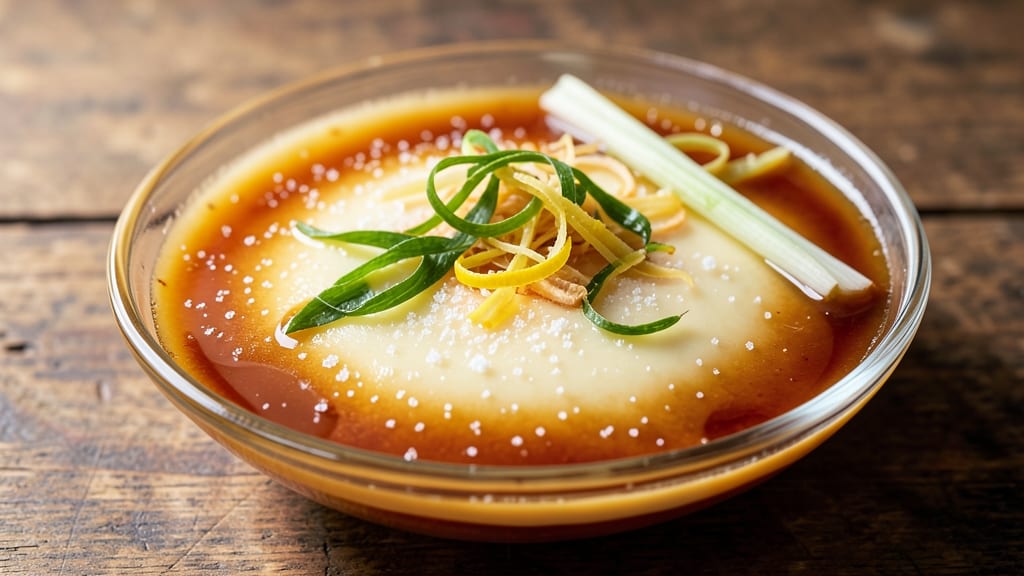
This Thai egg custard recipe delivers the delicate, silky texture and aromatic flavors of kanom krok—steamed coconut custard infused with ginger and lemongrass. The secret lies in a slow, gentle cooking method that transforms simple ingredients into a dessert with restaurant-quality elegance.
I’ve perfected this version to work in a home oven, using tortilla cups for that signature crispy edge while keeping the custard cloud-like inside.
The foundation is a smooth coconut milk base, lightly sweetened and enriched with egg yolks for that signature velvety mouthfeel. Fresh ginger and lemongrass add layers of warmth and brightness, while a touch of pandan leaf (optional but recommended) elevates the fragrance to something truly transporting.
The custard steams gently, developing a subtle caramelized aroma that fills your kitchen—and your home—with the essence of Thailand.
What you’ll achieve is a dish that’s equal parts comforting and sophisticated: tender tortilla cups holding custard so light it practically dissolves on your tongue, with just enough resistance to make each bite satisfying. The contrast between the crispy shell and the creamy center is what makes this dessert unforgettable.
Serve it warm, drizzled with a touch of honey or sprinkled with toasted coconut, for a taste of Thailand that’s impossible to resist.
This recipe adapts beautifully to both traditional clay pots (khanom krok) and modern ovens, making it accessible whether you’re recreating an authentic experience or simply craving something special. Let’s get started—your taste buds are about to embark on a journey.
Ingredients for thai egg custard
Six aromatic ingredients transform into silky custard with crisp tortilla cups—Thai elegance meets home kitchen magic.
| Ingredient | Amount | Notes |
|---|---|---|
| Large Egg Yolks 🥚 | 6 whole | Fresh, room temperature preferred |
| Full-Fat Coconut Milk 🥥 | 1 ½ cups | Canned, full-fat for richness |
| Granulated Sugar 🍯 | ½ cup | Light brown preferred for depth |
| Fresh Ginger Root 🧄 | 2 tbsp | Finely grated, aromatic variety |
| Lemongrass Stalks 🌿 | 2 whole | Bruised, lower 3 inches only |
| Pandan Leaf 🌿 | 1 whole | Optional, for fragrance |
| Unsalted Butter 🧈 | 2 tbsp | For greasing tortilla cups |
| Corn Tortillas 🌽 | 12 whole | Small, 4-inch size preferred |
| Honey 🍯 | 1 tbsp | For drizzling, optional garnish |
| Toasted Coconut Flakes 🥥 | ¼ cup | For garnish, unsweetened |
| Diamond Crystal Kosher Salt 🧂 | ¼ tsp | For delicate seasoning |
| Vanilla Extract 🍯 | ½ tsp | Pure, for subtle depth |
The coconut milk is non-negotiable here—full-fat canned gives that signature richness. I always grab Thai Kitchen brand from the Asian aisle, but any full-fat works. For ginger, young, plump roots are best—they’re milder and more aromatic. Lemongrass? Look for stalks that are bright green and firm—avoid any with brown spots. Pandan leaf is the secret weapon: find it at Asian markets or online if your local store doesn’t carry it. The tortillas should be thin and pliable—if they crack when folded, they’re too dry.
No pandan leaf? Vanilla extract at double the amount adds subtle fragrance. Running short on full-fat coconut milk? Mix equal parts light coconut milk and heavy cream for a similar texture. Fresh ginger too spicy? Peel it first—that removes some of the heat. For the tortillas, if you can’t find small 4-inch ones, cut larger tortillas into quarters. The butter matters too—unsalted so you control the seasoning. And if you’re feeling fancy, infuse the coconut milk with pandan by simmering the leaf in it for 10 minutes before straining.
Store the custard mixture in the fridge for up to 3 days—it actually improves overnight. The tortillas keep 1 week in a sealed bag. Assemble just before baking to prevent sogginess. For make-ahead prep, bake the empty tortilla cups ahead and store them in an airtight container. The custard reheats beautifully—just 10 seconds in the microwave or until warm to the touch. Garnish with honey and toasted coconut right before serving—that’s when it tastes best.
Why You'll Love This Recipe
- Foolproof Simplicity: I swear by this recipe because it’s literally three steps: whisk yolks, simmer coconut milk, and let the ginger-lemon grass aroma do its magic. No fancy equipment—just a saucepan and a whisk. (Yes, even on a Tuesday night.)
- Creamy-Spiced Magic: That first bite? Rich, custardy, with a whisper of ginger’s kick and lemongrass’s citrusy warmth cutting through the sweetness. The full-fat coconut milk makes it decadent without tasting heavy—like a hug from a Thai street vendor.
- Weeknight or Guest Night: Make a big batch on Sunday, and you’ve got dessert for breakfasts, potlucks, or last-minute dinner guests. (Pro tip: Chill leftovers—they thicken into a silky, spoonable treat.) Honestly, it’s my go-to when I don’t want to bake.
- Budget Luxury: Egg yolks and coconut milk stretch further than you’d think, and fresh ginger/lemongrass last ages in the freezer. For under $10, you feed four with something that tastes like a splurge. (My wallet thanks me.)
Step-by-step instructions for Thai egg custard in tortilla cups
Here's how to create silky, fragrant custards with aromatic Thai flavors—simple steps for perfect results.
Prepare the Ginger-Lemongrass Infusion
In a small saucepan, combine the 1.5 cups full-fat coconut milk, 2 tbsp finely grated fresh ginger root, and the bruised lower 3 inches of 2 lemongrass stalks. Bring to a gentle simmer over medium heat and let it steep for 5 minutes, allowing the flavors to meld. Here's the thing—don't let it boil, or the ginger will become bitter and overpower the delicate custard.
Strain the mixture through a fine-mesh sieve into a clean bowl, pressing gently on the solids to extract every drop of flavor. Discard the ginger and lemongrass. If using the pandan leaf, gently press it against the side of the saucepan while steeping to infuse its fragrance, then remove it before straining. The infusion should smell vibrantly aromatic—this is your flavor foundation.
Whisk the Custard Base
In a separate bowl, whisk together the 6 large egg yolks, 0.5 cup granulated sugar, and 0.5 tsp vanilla extract until the mixture is pale yellow and slightly thickened—about 2-3 minutes of vigorous whisking. This step is crucial because properly tempering the eggs with sugar prevents curdling when the hot coconut milk is added later.
Slowly pour the strained coconut milk infusion into the egg mixture while whisking continuously. The mixture will look curdled at first, but keep whisking until it smooths out completely. This gradual combination ensures the eggs cook gently rather than scrambling. Add the 0.25 tsp diamond crystal kosher salt and mix well. The custard should now have a velvety texture and a rich, golden hue—this is your signal that everything is properly combined.
Assemble and Bake the Tortilla Cups
Preheat your oven to 350°F. Melt the 2 tbsp unsalted butter in a small saucepan over low heat, then use a pastry brush to lightly coat the inside of each of the 12 corn tortillas. Press each tortilla gently into a 3-inch round mold (or use a small ramekin) to form cups. Place the filled molds on a baking sheet lined with parchment paper.
Divide the custard mixture evenly among the tortilla cups, filling each about ¾ full. Bake for 18-20 minutes until the custards are set but still slightly wobbly in the center—this ensures a silky texture rather than a firm, rubbery one. The edges should be golden while the centers remain tender. Real talk: if you see the custards browning too quickly, tent them loosely with foil to prevent over-browning while they finish cooking.
Finish and Garnish
Remove the custards from the oven and let them cool for 5 minutes before carefully unmolding them onto a serving platter. The tortilla cups should hold their shape, with the custards still slightly warm and glossy. Drizzle each with a small amount of honey and sprinkle with 0.25 cup toasted coconut flakes. The contrast of warm custard with the cool, nutty coconut adds a delightful textural element.
Serve immediately while the custards are still warm and the tortillas are tender. Each bite should deliver a perfect balance of creamy, aromatic custard with subtle ginger and lemongrass notes, all encased in a delicate corn tortilla cup. The honey adds a touch of sweetness that ties everything together beautifully—this is where the magic happens.
Pro Tips For Making Thai Egg Custard
- Whisk Yolks Like Mad: Beat those egg yolks with sugar until they’re pale, thick, and ribbon-like—about 3-5 minutes. I used to rush this, and the custard turned out grainy. Trust me, the extra elbow grease pays off with a silky texture.
- Toast Lemongrass First: Char the lemongrass stalks over a flame or in a dry pan for 30 seconds before blending. This deepens the aroma and prevents the custard from tasting like raw grass. (Yes, even if you’re impatient like me.)
- Low and Slow Wins: Simmer the custard on lowest heat—barely a bubble, or it’ll curdle. I learned this the hard way after a batch turned into scrambled eggs. A thermometer helps: aim for 170°F (77°C) max.
- Strain That Ginger: Mince the ginger fine, then strain the paste through a sieve to remove fibers. Rough ginger bits make the custard taste bitter and uneven. Sounds tedious, but it’s the thing that matters most for a smooth finish.
Dietary considerations for this dish
Gluten-Free Adaptations
Traditional Thai egg custard relies on corn tortillas, which are naturally gluten-free—perfect for those avoiding wheat. If you prefer a different vessel, use gluten-free tamari to brush the tortillas or opt for gluten-free rice paper cups (like those used in Vietnamese summer rolls) for a delicate alternative.
Just ensure all ingredients, including coconut milk and sugar, carry a certified gluten-free label to avoid cross-contamination. 🌱
Dairy-Free Options
This recipe is already dairy-free thanks to coconut milk, but if you're avoiding butter, swap the 2 tbsp unsalted butter for coconut oil (melted) or vegan butter—both work beautifully for greasing tortilla cups.
For extra richness, consider adding 1 tbsp coconut cream to the custard mixture. The flavor remains vibrant while keeping the dish entirely plant-based.
Lower Sugar Versions
To reduce sugar, cut the 0.5 cup granulated sugar to 0.3 cup and enhance natural sweetness with 1 tbsp honey or 1 tsp maple syrup in the custard mixture. Alternatively, use monk fruit sweetener (1:1 ratio) for a zero-calorie option—it preserves the custard’s silky texture while reducing glycemic impact.
Taste as you go; the ginger and lemongrass already add depth.
Nut-Free Considerations
The recipe is naturally nut-free, but if you’re avoiding coconut (a common allergen), replace the 1.5 cups full-fat coconut milk with equal parts light coconut milk and full-fat cashew cream (blend soaked cashews with water).
For garnish, skip toasted coconut flakes and use crushed sesame seeds or toasted pumpkin seeds instead. Always check labels—some brands process nuts in facilities with coconut.
Egg Substitutes
For an egg-free version, replace the 6 egg yolks with ½ cup aquafaba (chickpea brine) whipped to stiff peaks, mixed with 1 tbsp cornstarch to mimic the custard’s binding properties.
Alternatively, use ½ cup silken tofu blended smooth—it adds creaminess but requires adjusting the coconut milk ratio to 1.25 cups for proper texture. The result won’t be identical, but it’s a surprisingly close approximation! 🥚
Vegan Adaptations
Turn this into a fully vegan dessert by replacing egg yolks with ½ cup blended silken tofu + 1 tbsp arrowroot powder (for stability). Use vegan butter for greasing and ensure your honey is plant-based (like agave syrup).
The custard will be lighter but still fragrant—perfect for those who love Thai flavors without animal products. Garnish with vegan coconut yogurt drizzle for extra indulgence.
Nutrition facts
Frequently asked questions
Can I make this custard without a tortilla mold?
Use small ramekins or silicone cupcake liners instead. Line your baking pan with parchment paper, grease the molds with butter or coconut oil, then press the tortillas into them. The custard will still develop that perfect texture—just adjust baking time to 15-18 minutes for ramekins (they conduct heat differently).
Why did my custard come out grainy?
Graininess usually means the eggs cooked too quickly. Always whisk the egg yolks and sugar until pale and thick before adding hot coconut milk, and temper the mixture slowly. If it happens, strain the custard through a fine sieve before baking to remove any lumps. Also ensure your oven isn't too hot—350°F is ideal.
How do I store leftover custards?
Store them in an airtight container in the fridge for up to 3 days. Reheat individual custards in the microwave for 10-15 seconds or until warm to the touch. For longer storage, freeze for up to 1 month—thaw overnight in the fridge before reheating. The tortilla cups may soften slightly after refrigeration but crisp up again when warmed.
Can I use store-bought pandan extract instead of fresh leaf?
Yes, but with caution. Use ½ teaspoon pandan extract (not the stronger paste) dissolved in the coconut milk before straining. Fresh pandan leaf gives a more complex aroma, but extract works in a pinch. For best results, combine with ½ teaspoon vanilla extract to mimic the leaf's depth. Always taste before baking—extract can be overpowering.
What's the traditional way to make Thai egg custard?
The classic method uses clay pots (khanom krok) steamed over hot coals. The custard is poured into the pots, then steamed for 15-20 minutes until set. While our oven method adapts beautifully, traditional versions often include palm sugar instead of white sugar and sometimes a touch of turmeric for color. The tortilla cups recreate that crispy texture without needing special equipment.