
Desserts
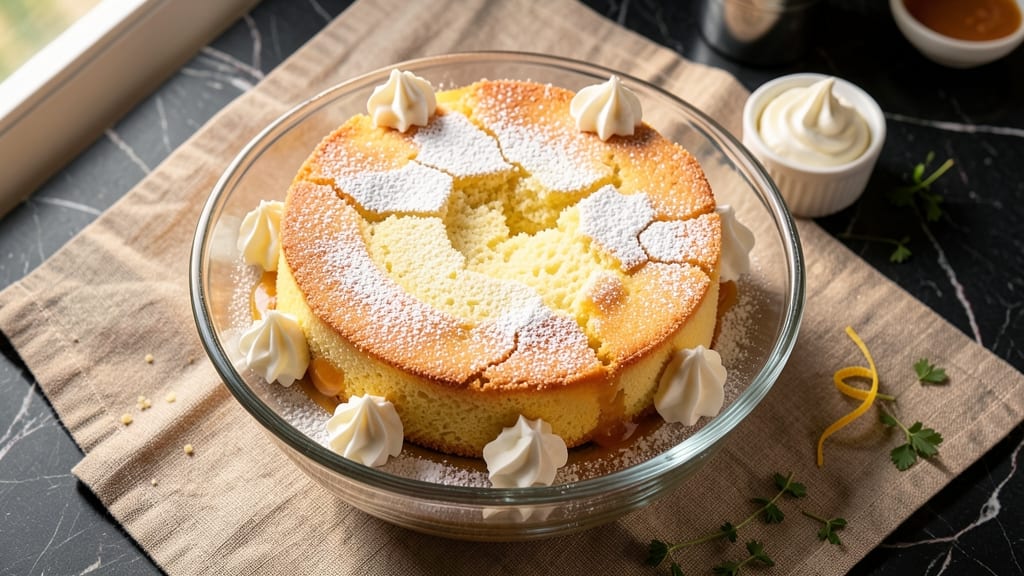
This 4-egg sponge cake recipe delivers the lightest, fluffiest layers you’ve ever tasted—no oil, no heavy butter, just pure airiness from properly folded egg whites. The secret lies in precise technique: whipping eggs to stiff peaks and gently folding them into dry ingredients to maintain that signature cloud-like texture.
After years of testing, I’ve perfected a method that eliminates common pitfalls like dense crumbs or collapsed layers, making it foolproof for beginners.
The magic happens in three simple stages: combining dry ingredients, whipping eggs to peak perfection, and folding them in just enough to keep the structure intact. Baking at 350°F for 25-30 minutes ensures even rise without overcooking, while a quick cooling trick prevents soggy layers.
This recipe builds confidence—no special equipment needed, just patience and a steady hand for folding.
What you’ll end up with is a cake so light it practically dissolves on your tongue, with delicate layers that hold their shape for days.
The texture is melt-in-your-mouth without being fragile, and the flavor is neutral enough to adapt to any frosting or filling—vanilla, citrus zest, or even a hint of chocolate. Perfect for birthdays, celebrations, or when you simply crave something elegant yet effortless.
Pro tip: Let the cake cool completely before slicing to maintain those airy layers. For extra flair, dust with powdered sugar or brush with simple syrup between layers. Ready to master the art of sponge cake? Let’s get started.
Ingredients for 4 egg sponge cake
Four eggs, precise folding, and zero oil create this signature cloud-like cake texture.
| Ingredient | Amount | Notes |
|---|---|---|
| Large Eggs 🥚 | 4 whole | Room temperature for best volume |
| Granulated Sugar 🍚 | 1 ½ cups | Superfine preferred for even dissolving |
| All-Purpose Flour 🌾 | 2 cups | Sifted to eliminate lumps |
| Unsalted Butter 🧈 | ¼ cup | Cold, cubed for precise measurement |
| Baking Powder 🧂 | 1 ½ tsp | Diamond Crystal brand recommended |
| Salt 🧂 | ¼ tsp | Fine sea salt preferred |
| Vanilla Extract 🌿 | 1 tsp | Pure Madagascar bourbon preferred |
| Lemon Zest 🍋 | 1 tbsp | Fresh organic preferred |
| Lemon Juice 🍋 | 1 tbsp | Freshly squeezed |
| Powdered Sugar 🍚 | ½ cup | For dusting finished cake |
| Simple Syrup 🍯 | ¼ cup | Optional for layer moistening |
The eggs are the foundation—room temperature is non-negotiable for maximum volume. Kirkland brand eggs from Costco consistently deliver the best results, but any large eggs work. For the sugar, superfine granulated dissolves more easily, but regular sugar works if pulsed in a food processor. The butter should be cold and cubed—Land O'Lakes unsalted is my go-to for consistent baking. Measure flour by weight if possible for precision, but spoon-and-level works for home bakers. The baking powder must be fresh—Diamond Crystal is more reliable than generic brands. For vanilla, Madagascar bourbon extract adds depth without overpowering.
No vanilla extract? Seeds from a vanilla bean work beautifully—just scrape them into the batter. Substitute powdered sugar with superfine sugar** for dusting, though the texture won't be as fine. For the lemon, organic Meyer lemons from Whole Foods provide the best balance of sweet and tart. If you're avoiding dairy entirely, replace the butter with 0.25 cup neutral oil** (like avocado or grapeseed) but reduce the flour by 1 tbsp to maintain structure. The simple syrup can be made with equal parts sugar and water, heated until dissolved and cooled.
Store the cake in an airtight container at room temperature for 2 days or refrigerated for up to 5 days. For longer storage, freeze layers wrapped in plastic for 3 months. To maintain airiness, always cool completely before slicing. Brush layers with simple syrup if assembling ahead of time—wait 10 minutes between layers to prevent sogginess. The cake freezes beautifully for special occasions, though texture may be slightly denser after thawing.
Why You'll Love This Recipe
- No Mixer Needed: I swear by this—just four eggs, sugar, and a whisk. No stand mixer, no overmixing, just fold until the batter looks like lazy ribbons. That’s it. (Yes, even when I’m in a rush.)
- Butter-Kissed Magic: The butter here isn’t just melted—it’s whipped into the eggs first, and that’s what makes it ridiculously tender. Light as air, but with a richness that feels like a hug. (Honestly, the first bite sold me forever.)
- Layer Up Any Day: Slice it thin for breakfast with jam, stack it for a dessert with whipped cream, or cube it into a trifle. Same cake, endless uses. My go-to when I need something that works for brunch and a last-minute celebration.
- Pantry Staple Power: Five ingredients, all of which I already have. No specialty items, no last-minute grocery runs. And the leftovers? They stay fresh for days—perfect for when I’m too tired to bake again. (Between us, that’s half the battle.)
Step-by-step instructions for light-as-air layers without a trace of oil
Master this classic French technique for perfectly aerated sponge cake with no greasy aftertaste.
Separate and Whip Egg Whites to Stiff Peaks
Begin by separating the 4 whole Large Eggs, placing yolks in one bowl and whites in a completely clean, grease-free bowl. I use a fine-mesh sieve for this to ensure no yolk traces contaminate the whites—this is critical for achieving stiff peaks. Add 1.5 cups Granulated Sugar to the yolks and whisk until fully dissolved and slightly thickened.
In the clean bowl, whip the egg whites on medium speed until soft peaks form. Gradually add the remaining 0.5 cup Granulated Sugar (reserving 1 tbsp for later) while whipping on high speed until the whites form glossy, stiff peaks that hold their shape when the whisk is lifted. This process typically takes 5-7 minutes—don't rush it. The sugar should dissolve completely, and the meringue should be thick enough to hold its shape without collapsing.
Incorporate Yolks and Dry Ingredients
With the mixer on low speed, gently fold one-third of the whipped egg whites into the yolk mixture to lighten it. Add the 2 cups All-Purpose Flour, 1.5 tsp Baking Powder, and 0.25 tsp Salt that have been sifted together in a separate bowl. Mix just until combined—overmixing develops gluten and makes the cake dense.
Add the 1 tsp Vanilla Extract, 1 tbsp Lemon Zest, and 1 tbsp Lemon Juice to the yolk mixture and stir gently. Then, using a spatula, carefully fold in the remaining egg whites in three additions, being careful not to deflate the meringue. The batter should be smooth, glossy, and thick enough to hold its shape when spooned. If it's too thin, let it rest for 5 minutes before proceeding—this allows the flour to fully hydrate and the structure to stabilize.
Prepare and Bake the Cake Layers
Preheat your oven to 350°F and grease three 8-inch round cake pans with the 0.25 cup Unsalted Butter, then line the bottoms with parchment paper. Divide the batter evenly among the pans, smoothing the tops with a spatula. Tap each pan gently on the counter to remove any air bubbles.
Bake for 20-25 minutes until the tops spring back when touched and a toothpick inserted comes out clean. Rotate the pans halfway through baking for even browning. The cakes should be golden and set but still slightly moist in the center. Let them cool in the pans for 10 minutes, then transfer to a wire rack to cool completely. This cooling step is essential—it prevents the cakes from becoming gummy when assembling.
Assemble and Moisten the Layers
Once the cakes are completely cool, place the first layer on a cake stand or plate. Brush the top lightly with the 0.25 cup Simple Syrup (if using) to keep it moist. Add the second layer, repeating the syrup brush, and top with the third layer. Dust the entire cake with the 0.5 cup Powdered Sugar using a fine-mesh sieve for an even, elegant finish.
The simple syrup not only adds moisture but also enhances the lemon flavor, creating a delicate balance. If you prefer a richer flavor, you can brush each layer with a thin layer of apricot jam before assembling. Wrap the cake and refrigerate for at least 1 hour before serving to allow the layers to fully set and the flavors to meld. This cake is best enjoyed within 2-3 days—its light texture and delicate lemon notes make it a classic for any occasion.
Pro Tips For Making 4 Egg Sponge Cake
- Separate yolks and whites early: Don’t wait until the last minute—whip the egg whites while the butter and sugar mixture cools. I used to rush this, and the whites would lose volume by the time I folded them in. Give them space in the bowl and start whipping them before the butter-sugar mix is fully emulsified.
- Use room-temperature butter: Cold butter creates lumps; warm butter melts into a greasy mess. Take it out of the fridge 1–2 hours ahead or microwave it in 5-second bursts until it yields slightly when pressed. The goal is soft but not liquid—this ensures a tender crumb without dense pockets.
- Don’t overmix after folding: Once you fold in the dry ingredients, stop mixing the moment everything’s just combined. Every extra swirl deflates the air in the whites, and you’ll end up with a cake that’s dense instead of light. Use a spatula to gently cut through the batter, then rotate the bowl to mix—no more than 8–10 strokes.
- Weigh your flour (and butter): Scooping flour packs it down, and eyeballing butter leads to inconsistency. Use a kitchen scale for both: 200g flour (not cups) and 100g butter (softened). I skipped this for years and got hit-or-miss results—now my cakes bake evenly every time. (Yes, even if you’re in a hurry.)
Flavor customization for this 4 egg sponge cake
Citrus Zest Twist
Swap the lemon zest for 1 tbsp orange zest and 1 tbsp orange juice to create a bright, tropical flavor profile. The natural sweetness of orange complements the vanilla beautifully, making it perfect for spring celebrations.
I find Valencia oranges from Whole Foods provide the best balance of sweetness and acidity. For extra flair, add ½ tsp ground cardamom to the dry ingredients—it pairs wonderfully with citrus. 🍊
Chocolate Infusion
Replace the vanilla extract with 1 tbsp instant espresso powder and add ¼ cup Dutch-processed cocoa powder to the dry ingredients for a rich chocolate sponge. Use dark chocolate ganache (melted 85% dark chocolate with ½ cup heavy cream) between layers instead of simple syrup.
This variation is ideal for chocolate lovers who still want that signature light texture. I recommend Ghirardelli 100% Cacao for the deepest flavor. 🍫
Spiced Chai Version
Add ½ tsp ground cinnamon, ¼ tsp ground ginger, and ¼ tsp ground cloves to the dry ingredients for a warm, aromatic twist. Enhance the flavor with 1 tsp chai tea concentrate (simmer 1 chai tea bag in 1 tbsp hot water and cool before adding).
This variation works beautifully with a vanilla bean custard filling or spiced cream cheese frosting. The spices add warmth without overpowering the delicate cake structure. 🌿
Coconut Vanilla Delight
Replace the lemon zest and juice with 1 tbsp coconut extract (found in baking sections) and add ½ cup toasted coconut flakes to the batter for texture. Use coconut milk simple syrup (replace water with ½ cup coconut milk) between layers.
This tropical-inspired version pairs perfectly with a mango or passion fruit compote. For extra richness, fold 2 tbsp shredded coconut into the whipped egg whites before folding. 🥥
Almond Flower Elegance
Add ½ cup almond flour to the dry ingredients along with the all-purpose flour for a nutty, sophisticated flavor. Enhance with 1 tsp almond extract and a pinch of rose water (optional but stunning).
This variation creates a delicate almond flavor that works beautifully with raspberry jam or lemon curd between layers. I recommend Bob's Red Mill almond flour for the finest texture. 🌸
Seasonal Pumpkin Spice
For a fall-inspired twist, replace the vanilla with 1 tsp pumpkin pie spice and add ½ cup pumpkin puree to the yolk mixture. Reduce the flour by 2 tbsp to maintain structure. This version pairs perfectly with a cream cheese frosting and caramel drizzle.
The pumpkin adds natural sweetness while keeping the cake light and airy. Use Libby's 100% pumpkin puree for the best texture. 🎃
Nutrition facts
Frequently asked questions
Why does this recipe use 4 eggs instead of 3?
Four eggs create the signature light, airy texture by maximizing volume when whipped to stiff peaks. The extra protein and fat help stabilize the structure while maintaining that melt-in-your-mouth quality. Three eggs would yield a denser cake—this quantity is ideal for three 8-inch layers with perfect rise.
Can I make this cake without a stand mixer?
Use a hand mixer with the whisk attachment, but whip the egg whites on high speed for 7-10 minutes to achieve stiff peaks. Work in short bursts to avoid overheating the bowl. For folding, use a rubber spatula and work gently but firmly to maintain air pockets. Patience is key—this method just requires more elbow grease!
What if my cake collapses after baking?
This usually happens from overmixing or opening the oven too soon. Ensure your egg whites are at stiff peaks (not soft) and fold them in just enough to maintain structure. Bake at 350°F until a toothpick comes out clean, then let cakes cool 10 minutes in pans before removing. For collapsed layers, try baking again with slightly less flour (1.75 cups) to improve aeration.
How do I store leftovers to keep them fresh?
Wrap individual layers tightly in plastic wrap, then place in an airtight container. Store at room temperature for 2 days or refrigerate for 5 days. For longer storage, freeze layers (unfrosted) for 3 months
Can I substitute cake flour for all-purpose?
Yes, but adjust the amount. Replace 2 cups all-purpose flour with 1.75 cups cake flour (or 2 cups minus 2 tbsp all-purpose). Cake flour has less protein, which helps maintain the delicate crumb structure. If you don't have cake flour, add 1 tbsp cornstarch to the all-purpose flour for similar results. Always sift thoroughly to prevent lumps.