
Breakfast & Brunch
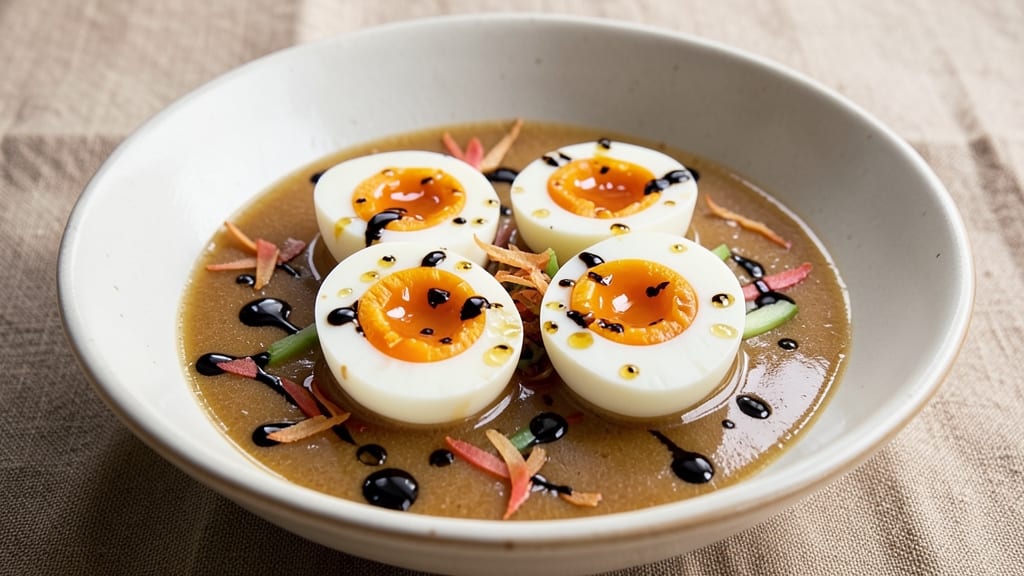
This sukiyaki egg dip recipe transforms a simple breakfast into an elegant, savory experience with its rich soy-ginger broth and silky yolk ribbons. The secret lies in balancing traditional Japanese flavors—umami from soy sauce, brightness from mirin, and depth from dashi—while keeping the technique approachable for home cooks.
Unlike typical egg dips, this version delivers a restaurant-worthy depth that pairs beautifully with vegetables, tofu, or even crispy bread.
The broth is where the magic happens, simmered just long enough to develop layers of flavor without overpowering the delicate eggs. Soft-boiled or poached eggs are gently sliced into ribbons, creating tender, creamy strands that melt in your mouth.
The key to success is precision in timing—both for the broth and the eggs—so every bite delivers that perfect harmony of textures and tastes.
What sets this recipe apart is its versatility. While traditionally served with sukiyaki ingredients, it adapts seamlessly to modern preferences—vegetarian, vegan, or with optional proteins like chicken or shrimp.
The result is a dip that’s as visually stunning as it is delicious, with golden yolk ribbons floating in a glossy, aromatic broth that’s impossible to resist.
Perfect for brunch gatherings, meal prep, or a sophisticated weeknight dinner, this recipe proves that Japanese-inspired dishes can be both authentic and effortlessly executable. Let’s dive into the steps that will bring this dish to life in your kitchen.
Ingredients for sukiyaki egg dip
Precision-crafted ingredients transform ordinary eggs into restaurant-quality sukiyaki egg dip.
| Ingredient | Amount | Notes |
|---|---|---|
| Soft-Boiled Eggs 🥚 | 4 whole | 6-7 minutes in boiling water |
| Vegetable Dashi Broth 🍜 | 2 cups | Homemade or quality store-bought |
| Light Soy Sauce 🥢 | ¼ cup | Kikkoman preferred for authenticity |
| Mirin 🍶 | 2 tbsp | Sweet cooking rice wine |
| Fresh Ginger 🧄 | 1 tbsp | Finely grated, aromatic |
| Sesame Oil 🫒 | 1 tbsp | Toasted sesame oil for aroma |
| Rice Vinegar 🍶 | 1 tbsp | Adds brightness to broth |
| Sugar 🍬 | 1 tbsp | Granulated or white sugar |
| Vegetable Oil 🫒 | 1 tbsp | For gentle simmering |
| Green Onions 🧅 | 2 whole | Thinly sliced for garnish |
| Toasted Sesame Seeds 🌾 | 1 tsp | For finishing touch |
| Vegetable Stock 🍲 | 1 cup | Low-sodium preferred |
| Cornstarch Slurry 🌾 | 1 tbsp | 1 tbsp cornstarch + 2 tbsp water |
The broth is the heart of this dish, where dashi and soy sauce create the umami foundation. For authentic flavor, Hondashi brand or homemade kombu-katsuobushi dashi works best—avoid instant granules that lack depth. Mirin should be genuine, not the sweetened variety, as it provides both sweetness and acidity. Fresh ginger is non-negotiable; organic ginger from the produce section has the most vibrant flavor. If you're using store-bought dashi, opt for brands like Marukome or Hondashi, which are widely available at Asian markets or well-stocked grocery stores. The vegetable stock should be low-sodium to avoid overpowering the delicate balance of flavors.
Substitutions can work, but with adjustments. No mirin? Substitute 1 tbsp sugar + 1 tbsp dry sherry, though the texture will differ slightly. Fresh ginger can be swapped for 1 tsp ground ginger, but the aroma will be less pronounced. For a vegetarian-friendly dashi, use kombu seaweed and shiitake mushrooms instead of bonito flakes. The cornstarch slurry is crucial for thickening—never skip it, as it creates that signature glossy finish. If you're short on time, arrowroot powder works identically. For a deeper soy flavor, add 1 tsp dark soy sauce at the end, but reduce light soy sauce by 1 tsp to balance.
Prep the eggs last minute—they should be soft-boiled for exactly 6-7 minutes, with runny yolks that ribbon beautifully. Store the broth components separately: keep the ginger, green onions, and sesame seeds fresh in the fridge for up to 3 days. The cornstarch slurry can be made ahead and stored in the fridge for 2 days. For meal prep, slice the eggs and store them in a sealed container with a thin layer of broth to prevent drying. Reheat gently on low heat, adding a splash of water if needed to restore the glossy consistency. This dip tastes even better the next day as flavors meld—ideal for brunch prep.
Why You'll Love This Recipe
- Five-Ingredient Magic: I swear by this—just eggs, broth, a splash of soy, mirin, and ginger. That’s it. No fancy prep, no hidden steps, and honestly? The hardest part is waiting for the eggs to soft-boil.
- Umami Bomb: The way the dashi broth and mirin marry with the runny yolk—smooth, salty-sweet, with that zing of ginger—it’s the kind of flavor that makes you pause mid-bite. (Yes, even on a Tuesday night.)
- Party in a Bowl: Serve it warm with rice for dinner, chill it for a picnic, or let the kids scoop it with crackers. I’ve used it as a dip for veggies at book club, a snack for game night, and a quick breakfast when I’m running late.
- Leftovers That Don’t Suck: Unlike most dips, this tastes just as good the next day—if not better. The broth thickens slightly, the flavors meld, and I’ve reheated portions for lunch without anyone batting an eye. Budget-friendly? Absolutely.
Step-by-step instructions for sukiyaki egg dip
This method transforms simple ingredients into a velvety, restaurant-quality dip with perfect yolk ribbons.
Prepare the Soft-Boiled Eggs
Place the 4 whole eggs in a small saucepan and cover them with cold water by about 1 inch. Bring to a gentle boil over medium-high heat, then immediately reduce to low heat and cook for exactly 6-7 minutes. The whites should be fully set while the yolks remain runny and jiggly.
Transfer the eggs to an ice bath for 5 minutes to stop further cooking. This chilling step makes peeling easier and keeps the yolks perfectly centered. Once cooled, peel the eggs under running water to remove any remaining membrane. Gently tap each egg on a cutting board to crack the shell, then peel away the shell in one piece—this preserves the yolk's integrity.
Build the Savory Broth Base
In a medium saucepan, combine the 2 cups vegetable dashi broth, 1 cup vegetable stock, 0.25 cup light soy sauce, 2 tbsp mirin, 1 tbsp rice vinegar, 1 tbsp sugar, and 1 tbsp freshly grated ginger. Bring to a gentle simmer over medium-low heat, stirring occasionally to dissolve the sugar completely.
Simmer uncovered for 5 minutes to allow the flavors to meld. The broth should smell aromatic with notes of umami from the soy and sweetness from the mirin and sugar. Taste and adjust seasoning—add a pinch more salt if needed, but the soy sauce should provide enough saltiness. Keep the broth at a gentle simmer; you don't want it to reduce significantly before adding the eggs.
Infuse with Aromatics and Thicken
Remove the pan from heat and stir in the 1 tbsp sesame oil and 1 tbsp vegetable oil. The oils will add depth and richness to the broth. Return the pan to low heat and gently whisk in the 1 tbsp cornstarch slurry until the mixture thickens slightly—about 2-3 minutes. The consistency should coat the back of a spoon but remain pourable.
Here's the thing—don't over-thicken the broth. You want it to cling to the eggs beautifully without being gluey. If it thickens too much, whisk in 1-2 tablespoons of hot water to adjust the texture. The broth should now have a glossy sheen and a balanced sweet-savory flavor profile.
Assemble and Serve the Dip
Using a spoon, gently transfer the peeled soft-boiled eggs to the warm broth. The heat will cause the yolks to begin softening slightly, creating those signature silky ribbons. Let the eggs sit in the broth for 5 minutes, then carefully remove them with a slotted spoon and place them in a serving dish.
Pour the remaining broth over the eggs, ensuring each one is coated. Garnish with thinly sliced green onions and sprinkle with toasted sesame seeds. Serve immediately while the eggs are still warm—this is when the yolk ribbons are at their most luxurious. The contrast of creamy yolks against the savory-sweet broth creates an irresistible texture and flavor combination.
Perfecting the Presentation
For an authentic touch, arrange the eggs in a shallow serving dish with the yolks facing upward. Ladle the broth generously over the eggs, creating gentle waves that ripple through the yolks when served. The presentation should look effortless—like a professional chef's creation.
This dip is best enjoyed immediately, but if you need to prepare ahead, keep the eggs and broth separate until serving. Reheat the broth gently before combining with the eggs to maintain the perfect texture. The balance of umami from the soy, sweetness from the mirin, and brightness from the rice vinegar makes this dip universally appealing—serve with steamed rice, fresh vegetables, or as a dipping sauce for sushi.
Pro Tips For Making Sukiyaki Egg Dip
- HALT AT 6 MINUTES: I learned this the hard way—soft-boiled eggs for this dip need to be just set in the center, not fully cooked. Six minutes in simmering water (from cold) gives you that runny yolk while keeping the whites tender enough to blend smoothly into the broth. Any longer, and you’ll end up with rubbery bits that ruin the silky texture.
- GRATE GINGER FINE: Skip the rough chopping—this isn’t a stir-fry. Use a microplane or the smallest holes on a box grater for the ginger, so it dissolves completely into the broth. Lumpy ginger just sits there, unyielding, while finely grated pieces infuse the dip with bright, warm depth. Trust me, your spoon will thank you.
- SIMMER, DON’T BOIL: The broth should bubble gently—think tiny, lazy bubbles, not a rolling boil. Overheating turns the dashi cloudy and dulls the mirin’s sweetness. If it starts to splutter, lower the heat and let it recover. The dip’s flavor builds slowly, and rushing it makes the whole thing taste flat.
- STRAIN THE BROTH: Even vegetable dashi can get gritty, and nothing kills the vibe of this dip like a mouthful of sediment. Strain it through a fine-mesh sieve or cheesecloth before mixing in the eggs and soy. Yes, it’s an extra step, but the result is a velvety, clean-tasting dip that actually lets the ginger and mirin shine.
Perfect pairings for sukiyaki egg dip
Vegetable Pairings
This dip shines when paired with fresh, crisp vegetables that complement its rich flavors. I love serving it with steamed bok choy—its mild bitterness balances the sweet-savory broth beautifully.
For extra crunch, add shredded daikon radish or jicama sticks, which hold up well to dipping and add refreshing texture. 🥬
Protein Additions
For a heartier version, include soft tofu cubes or thinly sliced shiitake mushrooms—both absorb the broth's flavors while adding protein. I also recommend sliced avocado, which provides creamy contrast and healthy fats.
If you're not vegetarian, grilled shrimp or thinly sliced chicken breast work wonderfully with the umami-rich dip.
Bread & Crunchy Bites
Crispy elements elevate the texture contrast. Japanese milk bread or steamed buns are perfect for soaking up the broth, while panko-crusted nuggets add satisfying crunch. For a lighter option, try rice crackers or wonton strips—they’re sturdy enough to hold up to dipping without becoming soggy. 🍞
Drink Pairings
A crisp Japanese lager like Asahi Super Dry cuts through the richness without overpowering the flavors. For non-alcoholic options, yuzu soda or sparkling green tea adds a refreshing contrast. If you prefer wine, a light dry Riesling complements the soy and ginger notes beautifully.
Garnish Upgrades
Elevate the presentation with microgreens or shiso leaves for a pop of color and freshness. A drizzle of chili oil adds subtle heat, while crispy garlic chips provide a savory crunch. For a smoky touch, sprinkle toasted nori flakes on top—it’s a simple but effective upgrade that adds depth. ✨
Nutrition facts
Frequently asked questions
Can I make this egg dip ahead of time?
Yes! Prepare the broth base up to 2 days ahead and store it in an airtight container in the fridge. Keep the eggs separate until serving to maintain their perfect texture. When ready to serve, gently reheat the broth (don't boil) and add the fresh soft-boiled eggs just before serving. This keeps the yolk ribbons silky and luxurious.
What's the secret to perfect yolk ribbons?
The key is 6-7 minute soft-boiled eggs with runny yolks and a gentle warm-up in the broth. Use eggs at room temperature (take them out of the fridge 30 minutes before cooking) for even cooking. When slicing, cut the eggs lengthwise into thin ribbons—this creates the signature delicate strands that melt in your mouth.
Can I substitute mirin if I don't have any?
Mix 1 tbsp sugar with 1 tbsp dry sherry or white wine for a similar sweetness and acidity. For a non-alcoholic version, use 1 tbsp apple cider vinegar + 1 tbsp sugar. The flavor won't be identical, but it will still create a delicious, balanced dip. The mirin adds that special depth that's hard to replicate.
How do I make this dip vegetarian?
This recipe is already vegetarian-friendly! The base uses vegetable dashi (made with kombu and shiitake) and vegetable stock. For extra protein, add soft tofu cubes, shiitake mushrooms, or avocado slices. The umami from the soy sauce and dashi provides all the richness you need without any animal products.
What if my broth gets too thick?
Don't worry—just whisk in 1-2 tablespoons of hot water to adjust the consistency. The broth should coat the back of a spoon but remain pourable. If it's still too thick after adding water, you can thin it further with a splash of the vegetable stock you used in the recipe. The perfect texture should be glossy and cling to the eggs without being gluey.