
Beverages
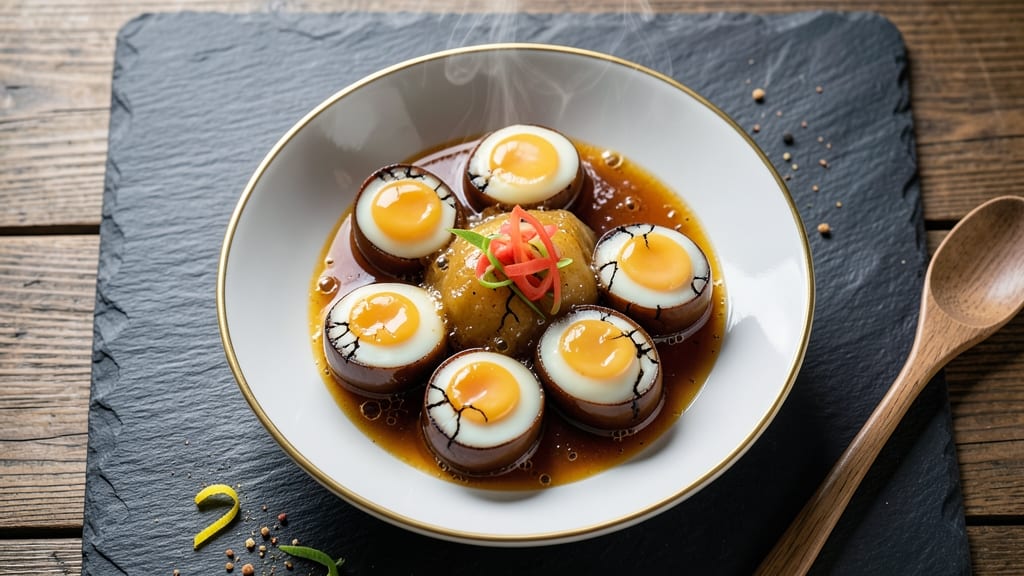
This steamed egg with century egg recipe delivers a perfect balance of silky, custardy texture and the bold, briny depth of preserved eggs—an umami experience unlike any other.
The contrast between the delicate, jiggly steamed egg and the firm, marbled century egg creates a sensory journey that's both traditional and sophisticated. I've perfected this dish by combining authentic techniques with modern adaptations that make it accessible for home cooks.
The foundation of this dish lies in two distinct components: the steamed egg custard, traditionally prepared in a bamboo basket for that signature silky texture, and the century egg, which requires careful preparation to achieve its signature dark shell and creamy yolk.
What makes this recipe special is how these two elements come together—each bite offers a harmony of textures and flavors that's both surprising and satisfying. The century egg adds a salty, funky depth that cuts through the custard's gentle sweetness.
By the time you plate this dish, you'll have a visually stunning presentation with the steamed egg's glossy top and the century egg's striking appearance. Garnishing with pickled ginger or black vinegar adds an extra layer of complexity that elevates the dish from simple to extraordinary.
This recipe is perfect for special occasions or when you want to impress guests with a dish that's both elegant and deeply flavorful.
The beauty of this recipe is its versatility—you can adapt it with additions like mushrooms or scallions to suit your taste. Just remember that century eggs are vegetarian but not vegan, so keep that in mind when planning your menu.
Let's dive into the step-by-step process that brings this dish to life.
Ingredients for steamed egg with century egg
Eight eggs, bold flavors, and a bamboo basket—this vegetarian dish delivers umami magic.
| Ingredient | Amount | Notes |
|---|---|---|
| Century Eggs 🥚 | 4 whole | High-quality, marbled yolk preferred |
| Large Eggs 🥚 | 8 whole | Room temperature for even cooking |
| Soy Sauce 🥢 | ½ cup | Light or dark, to taste |
| Rice Wine Vinegar 🍶 | 2 tbsp | For brightness and acidity |
| Granulated Sugar 🍚 | 2 tbsp | Adjust for sweetness preference |
| Pickled Ginger 🍈 | ¼ cup | Thinly sliced for garnish |
| Black Vinegar 🍶 | 1 tbsp | For finishing drizzle |
| Sesame Oil 🌾 | 1 tbsp | Toasted, for aroma |
| Green Onions 🧅 | 4 whole | Thinly sliced, for garnish |
| Bamboo Steaming Basket 🌿 | 1 whole | Or heatproof bowl |
| Heavy Cream 🥛 | ¼ cup | For custard richness |
| Salt 🧂 | ½ tsp | Fine sea salt preferred |
| Mushrooms 🍄 | ½ lb | Shiitake or oyster, sliced |
| Scallions 🧅 | 3 whole | Optional, for extra flavor |
Century eggs are the star—look for ones with deep marbling in the yolk and a firm texture when gently squeezed. Asian grocery stores usually carry them, or check specialty markets. If you can't find them, preserved quail eggs work in a pinch, just halve the quantity. The bamboo steaming basket is key for that signature texture—if you don't have one, a heatproof bowl with a tight lid works. For the mushrooms, shiitake or oyster add the most depth, but cremini or button mushrooms will do in a bind. Always buy extra century eggs—you'll want to practice cutting them before serving.
No soy sauce? Coconut aminos work in a pinch, though the flavor won't be identical. The rice wine vinegar can be swapped for apple cider vinegar, but the dish loses some authenticity. If you're short on time, pre-sliced pickled ginger from a jar saves steps—just drain it well. For the custard, half-and-half can replace heavy cream, though it'll be slightly lighter. The green onions and scallions are totally optional but add freshness that balances the richness. If you're feeling adventurous, try adding a dash of white pepper to the custard for a subtle kick.
Century eggs keep for weeks in the fridge once opened, stored in their brine. The steamed egg custard is best eaten fresh but reheats beautifully—just warm gently in a water bath. Garnishes like pickled ginger and black vinegar should be added right before serving to keep their bright flavors. If you're prepping ahead, make the custard mixture the night before and steam it in the morning. The mushrooms can be sautéed ahead and stored in the fridge for 3 days—just reheat gently before serving.
Why You'll Love This Recipe
- Steam in Minutes: I swear, this takes less time than microwaving leftovers. Just crack the eggs into a heatproof bowl, nestle in those dark, jammy century eggs, and let the steamer do its magic. No flipping, no fuss—just hands-off perfection.
- Umami Bomb: That first bite? The century egg’s salty, creamy center paired with the bright vinegar and silky steamed egg? It’s like a flavor explosion in your mouth. Soy sauce ties it all together—savory, tangy, and impossible to stop eating.
- Party Trick Ready: Here’s what sold me—this dish looks impressive but takes zero effort. Serve it at room temp or chilled, and suddenly you’re the host who nailed the spread. (Yes, even on a Tuesday night.)
- Budget Powerhouse: Century eggs last forever in the fridge, and eggs? Cheap protein. A few splashes of vinegar and sugar stretch this into multiple servings without breaking the bank. My wallet and my family’s taste buds win every time.
Step-by-step instructions for steamed egg with century egg
Here's how to create this luxurious dish with perfect silky texture and bold umami contrast.
Prepare the Century Egg Mixture
Crack all 8 whole large eggs into a heatproof bowl or the bamboo steaming basket. Add the 0.5 cup soy sauce, 2 tbsp rice wine vinegar, 2 tbsp granulated sugar, 0.5 tsp salt, and 0.25 cup heavy cream. Whisk vigorously until completely combined and smooth.
Gently place the 4 whole century eggs into the center of the mixture. They should float slightly above the other ingredients. The century eggs will provide that signature marbled yolk contrast when steamed. Cover the bowl with a damp cloth to prevent evaporation during steaming.
Steam the Egg Mixture
Fill a wok or large pot with 3-4 inches of water and bring to a rolling boil. Reduce heat to maintain a gentle simmer and place the steaming basket or bowl with the egg mixture inside. Cover tightly with a lid and steam for 12-15 minutes until the egg custard is just set but still slightly wobbly in the center.
This steaming time is crucial - you want the eggs to be fully cooked but still maintain that luxurious custard texture. The mixture should be firm around the edges but slightly jiggly in the center when gently shaken. If using a bamboo steamer, ensure proper airflow to prevent soggy results.
Prepare the Mushroom Garnish
While the eggs steam, heat 1 tbsp sesame oil in a small pan over medium heat. Add the 0.5 lb sliced mushrooms and cook for 4-5 minutes until they release their moisture and begin to brown. Season lightly with a pinch of salt and remove from heat.
Thinly slice all 4 whole green onions and 3 whole scallions for garnish. Thinly slice the 0.25 cup pickled ginger as well. These vibrant garnishes will provide both visual appeal and complementary flavors that balance the rich egg mixture.
Assemble and Finish the Dish
Remove the steamed egg mixture from the steamer and let it rest for 2-3 minutes to set slightly. Gently invert onto a serving plate, being careful not to break the century eggs. Spoon the mushroom mixture around the base of the egg custard.
Drizzle with 1 tbsp black vinegar for that signature tangy finish. Arrange the sliced green onions, scallions, and pickled ginger artistically around the dish. The contrast of the century eggs' dark yolks against the silky white custard creates a stunning visual effect that's as impressive as it is delicious.
Serve Immediately
Cut the egg custard into diamond shapes and serve immediately while still warm. Each bite should offer that perfect contrast of textures - the creamy egg custard with the intense, marbled flavor of the century eggs. The mushrooms add earthy depth while the pickled ginger and black vinegar provide that essential bright, tangy finish.
This dish is best enjoyed fresh from the steamer when the textures are at their peak. The combination of techniques - precise steaming, careful garnishing, and thoughtful assembly - creates a dish that's both visually stunning and packed with complex flavors that will impress any diner.
Pro Tips For Making Steamed Egg With Century Egg
- USE COLD EGGS: Crack your fresh eggs into ice water first—this keeps the whites tight and prevents them from spreading into a sad, flat puddle. I learned this the hard way after making a batch where the eggs looked more like omelet scraps than silky curls.
- PEEL CENTURY EGGS RIGHT: Don’t just slice—roll the century egg under running water while peeling. The skin clings less, and you’ll save time scrubbing off that stubborn black residue. (Yes, even if you’re impatient like me.)
- STEAM ON HIGH HEAT: Blast the steamer with full heat for the first 2 minutes—this creates a tight seal so the eggs don’t turn out waterlogged. After that, drop to medium-low. My first batches were soggy until I realized the steam needed to build pressure fast.
- SALT THE WATER: Add 1 teaspoon of salt to the steaming water—it firms up the egg whites and cuts through the century egg’s funk. Skip this, and you’ll taste that preserved-egg aftertaste lingering where it shouldn’t. (Your future self will notice.)
Creative variations of these flavors
Modern Fusion Twist
Add ½ cup diced crispy shallots to the custard mixture before steaming for a sweet, crunchy contrast. I also like incorporating ½ cup finely chopped black truffle (if available) into the mushroom sauté—this adds luxurious earthiness that elevates the dish to restaurant-level sophistication.
For a smoky depth, finish with a drizzle of 1 tsp chili oil instead of black vinegar. 💫
Vegetarian Protein Boost
Replace 2 century eggs with 4 marinated tofu cubes (firm tofu, pressed and cubed, marinated in 1 tbsp soy sauce + 1 tsp sesame oil for 15 minutes). The tofu absorbs the custard flavors beautifully while adding a silky texture.
For extra protein, fold ¼ cup cooked edamame into the mushroom garnish. This version keeps the dish vegetarian-friendly while maintaining the signature textures.
Spicy Sichuan Version
Infuse the custard with 1 tbsp Sichuan peppercorn oil (or ½ tsp ground Sichuan peppercorns toasted in 1 tsp neutral oil for 1 minute) for that signature numbing heat.
Add 1 tbsp doubanjiang (Sichuan chili bean paste) to the mushroom sauté along with 1 minced garlic clove and ½ tsp gochujang. Garnish with extra pickled mustard greens instead of ginger for a fiery, tangy finish. 🌶️
Sweet & Savory Adaptation
Reduce the soy sauce to ¼ cup and add 1 tbsp honey to the custard mixture for a delicate sweetness. Fold in ¼ cup finely chopped dried shiitake mushrooms (rehydrated) for umami depth.
Garnish with thinly sliced lychee and a sprinkle of toasted sesame seeds for a dessert-like presentation that still delivers savory satisfaction. This version works beautifully as a brunch centerpiece.
Quick Weeknight Hack
For a faster version, use store-bought chawanmushi custard (found in Asian grocery freezer sections) and simply steam it with 2 century eggs for 8-10 minutes. Top with pre-sliced mushrooms sautéed in 1 tsp sesame oil and a quick drizzle of black vinegar.
This cuts prep time by 20 minutes** while keeping the essential flavor contrast. Perfect for when you want to impress without spending hours in the kitchen. ⏰
Nutrition facts
Frequently asked questions
Can I substitute regular eggs for century eggs in this recipe?
While you can technically use regular eggs, you'll miss the signature bold umami and creamy texture that century eggs provide. For a similar effect, try using quail eggs or preserved duck eggs—they offer a richer flavor profile. If you're set on regular eggs, increase the soy sauce to 0.75 cup to compensate for the lost depth.
How do I know when the steamed egg custard is perfectly cooked?
The custard should be firm around the edges but still slightly wobbly in the center when gently shaken. It should hold its shape when cut but remain silky rather than rubbery. Overcooking by even 1 minute will make it dry—watch closely during the last 2 minutes of steaming.
What's the best way to cut century eggs without making a mess?
Use a sharp chef's knife and cut the egg in half lengthwise first, then slice each half into 4 wedges. Place the egg on a cutting board with the flat side down, then press firmly but steadily. The yolk should release cleanly if the egg is fresh. For extra stability, hold the egg with a damp towel.
Can I make this dish ahead of time?
You can prep the custard mixture the night before, but steam it fresh before serving for the best texture. The century eggs can be peeled and stored in their brine for up to 1 week in the fridge. Garnishes like pickled ginger and mushrooms should be added right before serving to keep their crispness and vibrant colors.
Why does my steamed egg custard look dry or grainy?
This usually happens from oversteaming or using eggs that are too cold. Always use room-temperature eggs and whisk the mixture vigorously until completely smooth. If using a bamboo steamer, ensure proper airflow—cover with a damp cloth but don't seal it completely. For extra silkiness, add 1 extra tbsp heavy cream to the mixture.