
Beverages
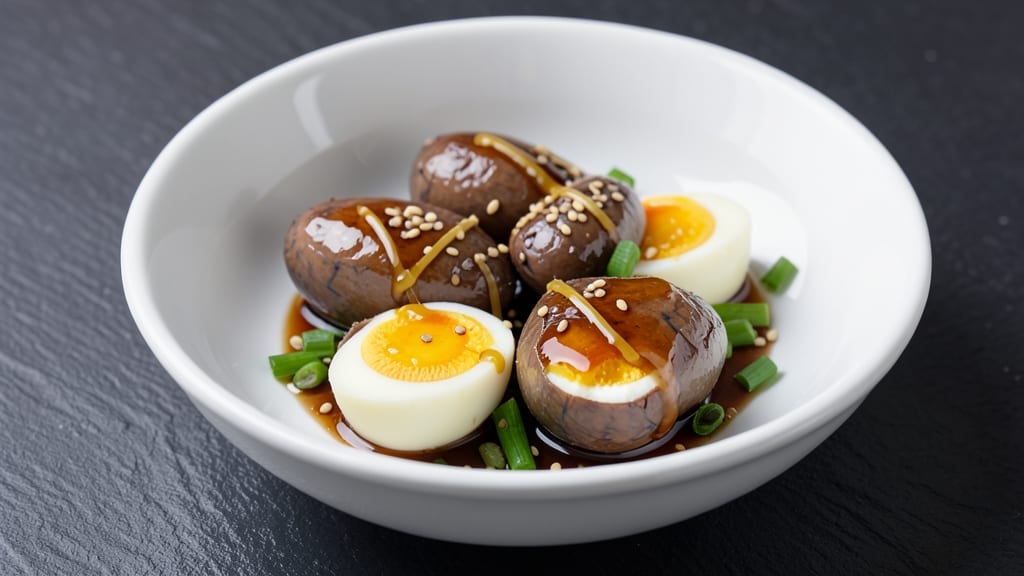
This steam egg with century egg recipe transforms a classic Chinese dish into a modern culinary experience where delicate silken egg custard meets the bold, salty depth of preserved century eggs.
The contrast between the smooth, jiggly texture of the steamed egg and the firm, briny bite of century egg creates a flavor profile that’s both traditional and unexpected.
I developed this recipe after experimenting with different steaming techniques and brine curing methods to achieve the perfect balance of textures and umami richness.
The foundation of this dish lies in two key techniques: steaming the egg until it reaches that signature wobbling, custard-like consistency and properly preparing the century eggs—whether using store-bought or homemade versions.
The steamed egg requires precise timing and a gentle heat source, while the century egg adds a layer of complexity with its dark, marbled yolk and salty-sweet preservation. Together, they create a dish that’s as visually striking as it is flavorful.
What makes this recipe stand out is how it elevates both components to restaurant-quality levels without requiring advanced skills. The steamed egg turns out silky and glossy, while the century egg—whether sliced thin or served whole—brings a bold, almost funky umami that cuts through the richness.
Serve it chilled as a sophisticated appetizer, paired with steamed rice and a drizzle of soy-glazed chili oil for extra depth.
This fusion dish is perfect for those who love textural contrasts and layered flavors, offering a taste of both tradition and innovation. Whether you're introducing someone to Chinese cuisine or looking to impress at a dinner party, this recipe delivers a bold, memorable bite that’s sure to spark conversation.
Let’s get started on creating this harmonious balance of textures and tastes.
Ingredients for steam egg with century egg
Eight fresh eggs and four century eggs form the heart of this fusion dish.
| Ingredient | Amount | Notes |
|---|---|---|
| Fresh Eggs 🥚 | 8 whole | Large, room temperature |
| Century Eggs 🍳 | 4 whole | Store-bought or homemade |
| Light Soy Sauce 🥄 | ¼ cup | For brining century eggs |
| Shaoxing Wine 🍶 | 2 tbsp | For steamed egg marinade |
| Sesame Oil 🌰 | 1 tbsp | Toasted, for finishing |
| Sugar 🍚 | 1 tbsp | White granulated |
| White Peppercorns 🌶️ | ½ tsp | Freshly ground |
| Jasmine Rice 🌾 | 1 cup | Uncooked, for serving |
| Soy-Glazed Chili Oil 🌶️ | ¼ cup | For drizzling |
| Rock Sugar 🍬 | ½ oz | Optional, for balancing |
| Black Vinegar 🍶 | 1 tbsp | For century egg marinade |
| Spring Onions 🧅 | 2 whole | Thinly sliced, for garnish |
The century eggs are the star here—look for marbled yolks with a deep, dark exterior when shopping. Asian specialty markets like H Mart or 99 Ranch Market typically stock high-quality versions. If making your own, the curing process takes weeks, so store-bought is ideal. The eggs should be firm yet tender when sliced, with a salty-sweet brine that balances the delicate steamed egg. For the eggs, room-temperature fresh eggs steam more evenly—cold eggs can create uneven textures. If using organic, ensure they're free of cracks or discoloration.
No century eggs? Substitute with salted duck eggs—slice them thin and marinate in light soy sauce and black vinegar for 30 minutes to mimic the umami depth. Fresh eggs can be swapped for duck eggs, but the texture will differ slightly. The soy-glazed chili oil can be homemade by simmering red chili flakes in neutral oil with a touch of soy sauce, or Trader Joe's brand works perfectly. For the steamed egg marinade, Shaoxing wine is essential—mirin or dry sherry can substitute in a pinch. The rock sugar balances the saltiness; omit if you prefer a more pronounced umami flavor.
Century eggs keep for up to 2 weeks refrigerated once opened, stored in their brine. Fresh eggs should be used within 3 days for optimal texture. The steamed egg custard is best served chilled, so prepare it a day ahead and store in an airtight container. The soy-glazed chili oil can be made 1 week in advance and stored in the fridge. For presentation, slice the century eggs thinly against the grain—a sharp serrated knife works best—and arrange them on a chilled platter alongside the silken egg custard.
Why You'll Love This Recipe
- Five-Ingredient Magic: I swear by this recipe—just eggs, century eggs, a splash of soy, a glug of Shaoxing, and sesame oil. That’s it. No chopping, no fuss, and no last-minute grocery runs. Honestly, I keep the ingredients stocked just for this.
- Umami Bomb: The century egg’s deep, salty funk meets the fresh egg’s silky softness—it’s like a flavor explosion in your mouth. A drizzle of sesame oil ties it all together with that nutty, aromatic punch. (Yes, even on a Tuesday night.)
- Lunchbox Hero: This dish reheats beautifully, so I make a big batch on Sundays. Pack it cold in bento boxes or serve it warm with rice—it’s my go-to for work lunches or kids’ school meals. My daughter picks out the century eggs first, but still asks for seconds.
- Budget Powerhouse: Century eggs last ages in the fridge, and fresh eggs are cheap. A little soy sauce and wine stretch far, so this recipe feeds four for under $5. Between us, it’s how I stretch my grocery budget without sacrificing taste.
Step-by-step instructions for steamed egg with century egg
Master this iconic Chinese dish with precise technique and bold umami balance.
Prepare the Century Egg Marinade
In a small bowl, whisk together the 0.25 cup Light Soy Sauce, 2 tbsp Shaoxing Wine, 1 tbsp Black Vinegar, and 1 tbsp Sugar until fully dissolved. This marinade will enhance the century eggs' natural funk while balancing their intense flavor. Add the 4 whole Century Eggs to the mixture, ensuring they're fully submerged. Let them marinate for at least 30 minutes at room temperature—this allows the flavors to penetrate and softens the eggs slightly.
While the eggs marinate, rinse the 1 cup Jasmine Rice thoroughly under cold water to remove excess starch. Soak the rice in fresh water for 20 minutes before draining. This step ensures fluffy rice that won't turn gummy when steamed alongside the eggs. Use the rice as a base layer in your serving dish, spreading it evenly to create a ½-inch thick bed.
Create the Steamed Egg Center
Crack the 8 whole Fresh Eggs into a heatproof bowl or ramekin that fits snugly in your steamer. Using a whisk, gently combine the eggs until just blended—no need to overbeat, as we want a silky texture rather than fluffy volume. In a separate small bowl, mix the 0.5 tsp freshly ground White Peppercorns with 0.5 oz Rock Sugar (if using) until evenly distributed. Sprinkle this mixture evenly over the eggs, then drizzle in the 1 tbsp Sesame Oil. Gently fold these ingredients into the eggs using a spatula, being careful not to create bubbles.
Place the bowl of egg mixture on top of the prepared rice bed in your serving dish. The rice will absorb any excess liquid during steaming, preventing a watery texture. Position the dish in your steamer basket, ensuring it sits on the rack rather than touching the bottom—this promotes even heat circulation and prevents soggy rice.
Steam to Perfect Texture
Bring water in your steamer to a rolling boil, then reduce to a gentle simmer—you should see small bubbles breaking the surface but no vigorous boiling. Place the steamer over the heat and cover tightly. Steam for exactly 12-14 minutes until the egg center reaches 160°F internally and the top shows a slightly set, custard-like surface. The egg should still have a jiggly center when gently shaken—this indicates perfect doneness for that signature silky texture.
During the last 2 minutes of steaming, place the marinated century eggs on the steamer rack as well. This allows them to heat through while maintaining their delicate texture. Remove both the steamed egg and century eggs from the steamer and let them rest for 5 minutes at room temperature—this resting period allows the proteins to fully set without overcooking.
Assemble and Finish
Using a small offset spatula, carefully transfer the steamed egg to a serving plate, maintaining its shape. The top should be smooth and slightly domed with a matte finish—this indicates proper steaming. Slice the century eggs in half horizontally and arrange two halves on either side of the steamed egg. Drizzle 2 tbsp Soy-Glazed Chili Oil over the entire dish in a zigzag pattern, allowing it to pool slightly in the center.
Garnish with thin slices from the 2 whole Spring Onions, distributing them evenly around the plate. The contrast between the bright green onions and deep red century eggs creates visual appeal while adding freshness. Serve immediately while the steamed egg is still warm—its texture will begin to firm up as it cools. The combination of silky egg, funky century egg, and aromatic chili oil creates a perfect balance of textures and flavors in every bite.
Pro Tips For Making Steam Egg With Century Egg
- CRACK EGGS LAST MINUTE: Only crack the fresh eggs into the pot right before steaming—no waiting around. The whites oxidize fast and turn rubbery if exposed to air too long, and you don’t want that texture ruining your dish. I learned this the hard way after a batch of eggs came out gummy instead of silky.
- PEEL CENTURY EGGS WET: Soak century eggs in warm water for 5 minutes before peeling—it loosens the membrane and makes the black skin slide off cleanly. Skip this, and you’ll end up with bits of membrane stuck to the yolk, which no one wants in their bite. (Yes, even if you’re impatient like me.)
- STEAM ON HIGH HEAT: Bring the water to a rolling boil first, then add the pot with eggs—don’t simmer-start. The initial high heat seals the egg whites faster, keeping them tender and preventing that sad, watery center. I used to simmer gently and wondered why my eggs always felt undercooked.
- USE SESAME OIL LAST: Drizzle the sesame oil after removing from steam—heat destroys its delicate aroma. A quick toss with chopsticks is enough to coat the eggs evenly. I was skeptical until I tried it; now I swear by it for that nutty finish.
Troubleshooting this dish
Steamed Egg Too Firm
If your steamed egg turns out too firm instead of silky, you likely oversteamed it. The ideal texture should have a jiggly center—this means stopping at 160°F internal temperature, not waiting for the top to fully set.
I’ve found using a thermometer probe (like the ThermoWorks Egg Thermometer) gives precise control. Also, ensure your eggs are at room temperature before steaming—cold eggs cook unevenly. 🌡️
Century Eggs Too Salty
The intense saltiness of century eggs can overpower the delicate steamed egg if not balanced. To fix this, marinate them in a mix of light soy sauce, Shaoxing wine, and black vinegar for just 20-30 minutes—longer marinating intensifies the salt.
If they’re still too strong, slice them thin and pat dry with a paper towel before serving. A drizzle of soy-glazed chili oil adds sweetness that cuts through the saltiness beautifully. 🍶
Steamed Egg Breaks When Serving
This usually happens if the egg mixture wasn’t fully set or the bowl was too large for the steamer. For a sturdy center, use a smaller heatproof ramekin (about 4-6 inches wide) and ensure the eggs reach 160°F before removing.
Let it rest for 5 minutes after steaming—this helps the proteins fully coagulate. If it still breaks, try adding ½ tsp cornstarch to the egg mixture to stabilize it. ✨
Century Eggs Too Soft
If your century eggs feel mushy when sliced, they were likely undercured or over-steamed. Store-bought century eggs should be firm but tender—if they’re too soft, they may not have been properly preserved. For a firmer texture, chill them for 10 minutes before slicing.
If making your own, ensure the curing brine includes lye and tea for proper firmness. A quick fix: Slice them thin and arrange on a chilled plate to firm up slightly before serving. ❄️
Rice Turns Mushy
Steaming rice directly with the eggs can make it gummy because the eggs release moisture. To prevent this, spread the rice in a ½-inch thick layer on a separate tray and steam it for 5 minutes before adding the egg mixture.
This pre-steaming step removes excess starch. Alternatively, use jasmine rice (it holds up better) and avoid overcrowding the steamer. 🌾
Flavor Imbalance
If the dish tastes too salty or one-note, adjust with rock sugar (to balance salt) or a pinch of white pepper (to enhance depth). For extra umami, add a splash of fish sauce to the century egg marinade.
The key is contrast—pair the rich, funky century egg with the smooth, mild steamed egg and finish with bright spring onions or a drizzle of chili oil** for balance. 💫
Nutrition facts
Frequently asked questions
What makes this steamed egg different from regular silken egg custard?
This recipe elevates silken egg custard by incorporating century eggs for a bold umami contrast. The key difference is the marinade technique—century eggs are soaked in Shaoxing wine and black vinegar to soften their intense saltiness, while the steamed egg is infused with white pepper and sesame oil for depth. The result is a textural fusion where creamy meets funky.
Can I use duck eggs instead of chicken eggs for the steamed egg?
Yes! Duck eggs work beautifully—they have a richer yolk and firmer texture, which holds up better during steaming. Use the same quantity (8 eggs) but expect a slightly denser custard. For best results, let duck eggs sit at room temperature for 30 minutes before steaming to prevent cracking. The flavor pairs especially well with century eggs' funk.
How do I know when the steamed egg is perfectly done?
The ideal texture has a slightly jiggly center with a set but smooth top. Use a thermometer to check for 160°F internal temperature—this ensures silky perfection without overcooking. Visually, the top should look matte and slightly domed, not glossy or fully firm. If unsure, cut a test piece: it should hold shape but still wobble gently.
What if I can't find century eggs? Are there good substitutes?
Try salted duck eggs as the closest substitute—slice them thin and marinate in light soy sauce and black vinegar for 30 minutes to mimic century egg's funk. For a vegetarian option, use preserved black garlic cloves (sliced) or marinated mushrooms (shiitake or oyster) with a dash of fish sauce. The key is balancing the dish's saltiness with something umami-rich.
Can I make this dish ahead of time?
The steamed egg custard can be prepared 1 day ahead and stored in an airtight container in the fridge. Reheat gently in a steamer for 3-4 minutes before serving. Century eggs keep for 2 weeks refrigerated in their brine—slice them just before serving to maintain texture. The soy-glazed chili oil should be made fresh, but the rice can be pre-cooked and reheated separately.