
Salads
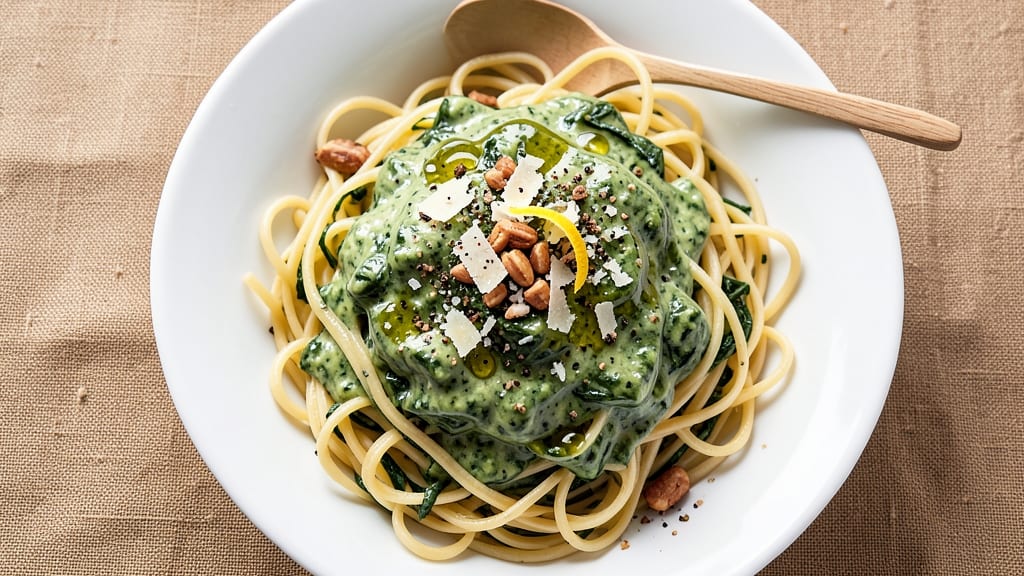
This spinach egg pasta recipe transforms simple ingredients into a vibrant, creamy masterpiece that’s packed with fresh greens and rich, velvety texture. The secret lies in blending spinach directly into the dough, creating a lush green pasta that’s as nutritious as it is delicious—no artificial colors here.
What makes this recipe stand out is the one-pan approach, where the pasta cooks in its own sauce, cutting down on cleanup while maximizing flavor.
The process starts with a foolproof dough made from flour, eggs, and finely blended spinach, which keeps the texture tender yet sturdy.
After rolling and cutting the pasta, it boils in a simmering broth infused with garlic, lemon zest, and a touch of cream, ensuring every strand absorbs that creamy, herby goodness. The result? A dish that’s elegant enough for dinner parties but simple enough for a weeknight.
What you’ll end up with is a plate of golden-brown, creamy pasta swirled with bright green strands and a light, tangy sauce that clings perfectly. The spinach adds a subtle earthiness that balances the richness, while the egg in the dough ensures a silky bite.
This recipe proves you don’t need fancy ingredients to create something extraordinary—just a few staples and a little patience.
For extra indulgence, top with toasted pine nuts, shaved parmesan, or a sprinkle of red pepper flakes. The possibilities are endless, but the base recipe is restaurant-quality without the fuss. Let’s get cooking!
Ingredients for spinach egg pasta
Fresh spinach and eggs blend into vibrant green pasta strands that cook in their own creamy sauce.
| Ingredient | Amount | Notes |
|---|---|---|
| All-Purpose Flour 🌾 | 2 cups | Sifted for smooth dough |
| Large Eggs 🥚 | 4 whole | Room temperature for even blending |
| Fresh Spinach Leaves 🌿 | 8 oz | Baby spinach, stems removed |
| Extra-Virgin Olive Oil 🫒 | ¼ cup | High quality for richness |
| Parmesan Cheese 🧀 | ½ cup | Freshly grated, fine texture |
| Heavy Cream 🥛 | ½ cup | Full-fat for velvety sauce |
| Garlic Cloves 🧄 | 3 cloves | Minced for aromatic base |
| Lemon Zest 🍋 | 1 tbsp | Brightens the creamy sauce |
| Salt 🧂 | 1 ½ tsp | Kosher or sea salt preferred |
| Black Pepper 🌶️ | ½ tsp | Freshly ground for warmth |
| Vegetable Broth 💧 | 1 ½ cups | Low-sodium for balanced flavor |
| Pine Nuts 🥜 | ¼ cup | Toasted for garnish (optional) |
The spinach is the star—baby spinach is ideal because it blends smoothly without bitterness. Whole Foods or any grocery store has it pre-washed, which saves time. For the flour, King Arthur or Bob's Red Mill brands are reliable for tender dough. The eggs should be large and fresh—room temperature ensures even blending. If you're short on time, pre-minced garlic from the jar works, but fresh is always better. The Parmesan? Freshly grated from a block makes all the difference—pre-grated gets clumpy and lacks flavor.
No heavy cream? Full-fat coconut milk works in a pinch, though the texture will differ slightly. Short on spinach? Swiss chard or kale can substitute at the same weight, but blanch them first to soften. The pasta dough can be made ahead and rested for 30 minutes for better texture. For the sauce, vegetable broth is key—avoid chicken broth unless you're okay with a meaty undertone. The lemon zest can be zested fresh or bought pre-zested from Trader Joe's in their spice section. Pine nuts are pricey, but walnuts or pecans toasted work just as well for garnish.
The dough keeps for 2 days wrapped in plastic in the fridge, but it's best used fresh. The cooked pasta reheats beautifully—just add a splash of water or broth to loosen it. Store leftovers in an airtight container for 3 days in the fridge. For freezing, portion the cooked pasta into containers with a little sauce and freeze for up to 1 month. The sauce thickens as it cools, so thin with a splash of broth when reheating. Garnishes like pine nuts or Parmesan can be added fresh after reheating to keep them crisp.
Why You'll Love This Recipe
- No-Fuss Freshness: I’ll be real—this pasta takes five minutes to mix the dough (just flour, eggs, and spinach) and another 10 to roll it out. No fancy machines, no waiting for dough to rise. The spinach blends right into the pasta, so you get vibrant color and nutrients without extra effort.
- Rich Without the Guilt: That egg-to-flour ratio gives it a tender, almost custardy bite, while the olive oil and Parmesan add depth without heaviness. Honestly, it tastes like a restaurant dish but costs less than half the price—plus, the spinach makes it feel lighter than your average carb load.
- Weeknight to Weekend: Make a big batch on Sunday, and you’ve got lunch or dinner covered all week. It reheats beautifully (just toss with a splash of water) and works for everything: a quick weeknight meal, a potluck side, or even a fancy-ish dinner when you want to impress with minimal work.
- Pantry Staple Power: Between us, this recipe uses ingredients you already have—flour, eggs, and olive oil are basics, and spinach is one of the cheapest greens out there. I’ve made it with wilted leftovers from my salad, and it still comes out amazing. No wasted trips to the store, just pure, satisfying pasta.
Step-by-step instructions for spinach egg pasta
Transform simple ingredients into a luxuriously creamy, vibrant green pasta dish with this foolproof method.
Make the Pasta Dough
In a large mixing bowl, combine the 2 cups all-purpose flour and 1.5 teaspoons salt. Create a well in the center and add the 4 whole large eggs at room temperature. Using a fork, gradually incorporate the eggs into the flour, mixing until a shaggy dough begins to form.
Switch to your hands and knead the dough on a lightly floured surface for 8-10 minutes until smooth and elastic. Wrap tightly in plastic wrap and rest at room temperature for 30 minutes. This resting period relaxes the gluten, making rolling easier. The dough should feel pliable and slightly tacky but not sticky.
Cook the Spinach and Build the Sauce
While the dough rests, heat the 0.25 cup extra-virgin olive oil in a large skillet over medium heat. Add the 3 minced garlic cloves and sauté for 30 seconds until fragrant but not browned. Add the 8 ounces fresh spinach leaves and cook, stirring frequently, until just wilted—about 2-3 minutes. Transfer the spinach to a plate and set aside.
In the same skillet, pour in the 1.5 cups vegetable broth and bring to a gentle simmer. Reduce heat to low and whisk in the 0.5 cup heavy cream and 1 tablespoon lemon zest. Let the sauce simmer for 3-4 minutes until slightly thickened. Season with 0.5 teaspoon black pepper and taste—it should be bright and balanced. Keep warm over low heat.
Roll, Cut, and Cook the Pasta
Divide the rested dough into 4 equal pieces and roll each piece into a thin sheet using a rolling pin or pasta machine (set to the thinnest setting). Cut the sheets into 1-inch wide strips and transfer to a floured baking sheet. Keep the remaining dough covered to prevent drying.
Bring a large pot of well-salted water to a rolling boil. Cook the pasta strips in batches for 2-3 minutes until al dente. Reserve 1 cup pasta water before draining, then add the drained pasta to the skillet with the sauce. Toss vigorously, adding reserved pasta water 1 tablespoon at a time until the sauce clings smoothly to the pasta.
Finish with Cheese and Garnish
Remove the skillet from heat and stir in the 0.5 cup freshly grated parmesan cheese until fully melted and creamy. If the sauce seems too thick, add another splash of pasta water. Taste and adjust seasoning—you may need a pinch more salt or lemon zest to brighten the flavors.
For the optional garnish, toast the 0.25 cup pine nuts in a dry skillet over medium heat for 2-3 minutes until golden and fragrant. Sprinkle them over the finished pasta along with an extra grating of parmesan. Serve immediately while the sauce is still velvety and the pasta is hot.
Pro Tips For Making Spinach Egg Pasta
- WILT SPINACH QUICKLY: Use a dry skillet over medium-high heat—no oil needed. Toss in chopped spinach and let it sizzle for 30 seconds before folding; it’ll soften fast and keep its bright color. (Yes, even if you’re impatient like me.)
- REST THE DOUGH: Let the egg-spinach dough sit covered for 20 minutes before rolling. This relaxes the gluten, so it doesn’t spring back when you cut it—no more wonky shapes or uneven thickness.
- SALT THE PASTA WATER: Add a full tablespoon of salt to the boiling water before adding the pasta. Egg pasta absorbs flavor like a sponge, and this ensures every bite has depth—not just the surface.
- STORE EGGS ROOM TEMP: Take eggs out of the fridge 30 minutes before using. Cold eggs mix unevenly into the dough, creating pockets of raw flour that won’t cook properly. (I learned this the hard way—lumpy pasta is no fun.)
Make-ahead tips for leftovers
Dough Prep Ahead
Make the dough the night before to save time—wrap it tightly in plastic and refrigerate for up to 2 days. The cold rest enhances gluten relaxation, so your pasta rolls out smoother.
Let it sit at room temperature for 30 minutes before rolling to prevent cracking. I always prep dough first thing in the morning so it’s ready when I’m cooking later. 🌿
Sauce Prep Shortcut
Prep the sauce components separately and store them in airtight containers in the fridge. Keep the garlic, lemon zest, and broth in one container and the cream in another. When ready to cook, simply reheat the broth and whisk in the cream—this keeps the sauce fresh and prevents curdling.
The spinach can be blanched and frozen in ice cube trays for easy portioning later. 🥛
Cooking in Batches
For large gatherings, cook the pasta in batches and keep it warm in the sauce on low heat. Cover the skillet with a lid to retain moisture, and stir occasionally.
If the sauce thickens too much, add reserved pasta water 1 tablespoon at a time to maintain creaminess. I’ve cooked this for 6 servings at once with no issues. 🍽️
Freezing Finished Pasta
Portion the cooked pasta into airtight containers with a little sauce and freeze for up to 1 month. When reheating, add a splash of water or broth to loosen the sauce.
The texture holds up well, though the sauce may thicken slightly—just thin it with extra broth when reheating. I love making double batches for lazy weeknights. ❄️
Garnish Freshness
Toast pine nuts or walnuts just before serving to keep them crisp. Store garnishes separately in the fridge and add them fresh after reheating. The Parmesan should be grated fresh at the table for the best flavor.
I keep a small container of pre-grated cheese on hand for convenience, but freshly grated makes a difference. 🧀
Reheating Leftovers
Reheat in a skillet over medium-low heat with a splash of water or broth to revive the sauce. Stir frequently to prevent sticking. If the pasta seems dry, add more liquid gradually. I’ve reheated this dish 3 times with great results—it’s just as delicious the second time around. 🔥
Nutrition facts
Frequently asked questions
Why does my spinach egg pasta turn out pale green instead of vibrant?
Fresh baby spinach blends more smoothly into the dough than mature leaves, creating that bright green color. If yours looks pale, try using more spinach (up to 10 oz) or adding a pinch of turmeric (just 1/8 teaspoon) for extra vibrancy—it's a natural food coloring that won't affect flavor. Always blend the spinach finely before mixing into the dough.
Can I make this pasta without a pasta machine?
Roll the dough as thin as possible with a rolling pin, then use a sharp knife to cut 1-inch strips. For even thickness, fold the dough in thirds like a letter, roll again, then cut. The strips will be slightly thicker but still delicious. Pro tip: Dust your work surface with extra flour to prevent sticking during rolling.
What's the best way to prevent the pasta from sticking together?
Work with one piece of dough at a time and keep the rest covered with a damp towel. After cutting, immediately toss the strips in flour before cooking. When draining, shake them gently in the colander to separate strands. For extra insurance, add 1 tablespoon olive oil to the boiling water—it creates a protective layer that keeps pasta from clumping.
How can I make this vegetarian pasta more protein-rich?
Add 1/2 cup cottage cheese or 1/4 cup nutritional yeast to the dough for extra protein without altering texture. For the sauce, stir in 2 tablespoons Greek yogurt or blend in 1/2 cup silken tofu for creaminess. These additions boost nutrition while keeping the dish vegetarian-friendly. The nutritional yeast also adds a cheesy flavor if you're avoiding dairy.
Can I substitute heavy cream with something lighter?
Yes! Use 1/2 cup evaporated milk plus 2 tablespoons cream cheese for a lighter texture, or 1/2 cup full-fat coconut milk for a dairy-free option. The sauce will still be creamy but slightly less rich. For extra tang, add 1 teaspoon lemon juice when combining.