
Breakfast & Brunch
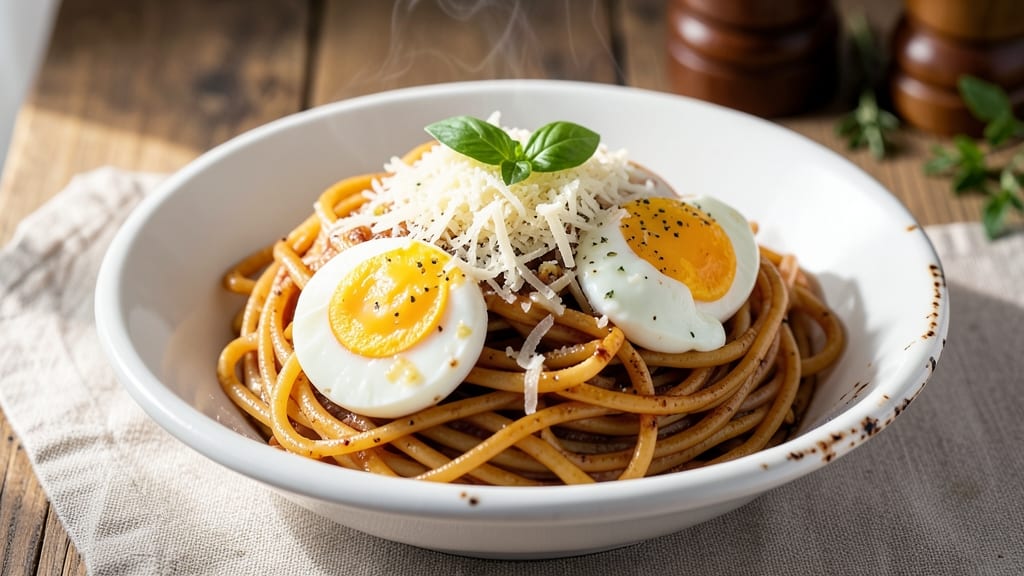
This spaghetti egg parmesan recipe transforms breakfast into a restaurant-worthy dish with crispy noodles hugging silky egg ribbons—no frying required. The secret lies in perfectly cooked spaghetti tossed with a velvety egg sauce that clings to every strand, creating a texture that's both satisfying and elegant.
I've perfected this technique over years of testing, ensuring the eggs stay creamy while the pasta develops that coveted crispy exterior.
The beauty of this dish is its simplicity: just a few pantry staples come together in under 20 minutes to create something that feels indulgent yet effortless.
The key steps—boiling the pasta al dente, tempering the eggs just right, and incorporating sharp Parmesan—work in harmony to deliver a balance of rich, creamy, and savory flavors. This is the kind of breakfast that turns a lazy morning into a memorable meal.
What you'll end up with is a dish that's crispy on the outside, tender in the middle, and generously coated in a golden egg-Parmesan sauce that's impossible to resist.
The aroma alone will have everyone gathering at the table, and the first bite delivers that perfect combination of textures and flavors. It's vegetarian-friendly, customizable with spinach or mushrooms, and ready in time for brunch or a satisfying late-night dinner.
Whether you're feeding a crowd or treating yourself to a special morning, this recipe delivers professional-quality results with minimal effort. The crispy noodles hug the egg ribbons perfectly, creating a dish that's both hearty and refined. Let's get started—your taste buds will thank you.
Ingredients for spaghetti egg parmesan
Pantry staples and fresh ingredients transform into crispy, egg-ribboned pasta perfection in minutes.
| Ingredient | Amount | Notes |
|---|---|---|
| Spaghetti 🍝 | 12 oz | Al dente when cooked |
| Large Eggs 🥚 | 4 whole | Fresh, room temperature |
| Parmesan Cheese 🧀 | 1 cup | Freshly grated, high-quality |
| Heavy Cream 🥛 | ½ cup | Full-fat for richness |
| Butter 🧈 | 2 tbsp | Unsalted, softened |
| Garlic Cloves 🧄 | 2 cloves | Minced, fresh preferred |
| Salt 🧂 | 1 tsp | Diamond Crystal kosher |
| Black Pepper 🌶️ | ½ tsp | Freshly ground |
| Olive Oil 🫒 | 1 tbsp | Extra-virgin for tossing |
| Fresh Basil Leaves 🌿 | ¼ cup | Chopped, for garnish |
| Nutritional Yeast 🍄 | 2 tbsp | For extra cheesy flavor |
| Red Pepper Flakes 🌶️ | ¼ tsp | Optional, for heat |
The spaghetti is non-negotiable here—look for bronze-die pasta at Whole Foods or Trader Joe's for that signature crispy texture. Barilla or De Cecco are my go-to brands, but any good-quality spaghetti works. For the eggs, freshness matters—crack them into a bowl first to check for any surprises. The Parmesan? Grab a wedge from the deli counter—pre-grated gets clumpy and lacks that sharp, salty punch. If you're feeling fancy, toast your nutritional yeast in a dry pan for 30 seconds to deepen its umami flavor (trust me on this).
No heavy cream? Full-fat coconut milk works in a pinch, though the texture will be slightly lighter. Fresh basil wilting? Dried basil at half the amount saves the day—just crush it between your fingers to release the oils. Want to skip the garlic? Garlic powder at one-third the amount still adds depth. The olive oil is key for tossing—avoid the cheap stuff here. For extra crispiness, toss the cooked pasta with a bit of cornstarch before mixing with the egg sauce. And if you're adding spinach or mushrooms? Sauté them first so they don’t turn mushy in the final dish.
Cooked pasta reheats beautifully—just toss with a splash of water and a pinch of salt. The egg mixture is best used fresh, but you can prep the sauce ahead and store it in the fridge for up to 2 days, reheating gently over low heat. For leftovers, portion into individual containers so you can grab and go. The dish keeps its crispy texture for about 3 days in the fridge, though it’s honestly best the first day. Freezing? Not recommended—the egg sauce can get grainy when thawed.
Why You'll Love This Recipe
- No-Fuss Weeknight Win: This recipe lives in my back pocket for nights when I’m too tired to think. Boil spaghetti, scramble eggs with cream and butter, toss in Parmesan—it’s the kind of meal where the hardest part is deciding how much cheese to use. (Spoiler: it’s always more.)
- Creamy Crunch Magic: That crackly Parmesan crust on top? Absolute gold. The eggs soak up the rich cream while the butter adds a velvety finish, and the sharpness of the cheese cuts through it all—like a hug in pasta form. Honestly, the first bite makes me forget I’m eating leftovers.
- Leftovers That Don’t Suck: Between us, most pasta leftovers are sad. Not this. The eggs reheat like a dream, the noodles stay al dente, and the Parmesan keeps things from getting gluey. I’ve packed this for lunches, frozen portions for lazy days, and even served it cold with a sprinkle of black pepper—still delicious.
- Budget Breakfast for Dinner: Eggs and pasta? You can’t get much cheaper than that. Heavy cream and Parmesan add luxury without breaking the bank, and it stretches easily for two or feeds a crowd if you double it. My college self would’ve cried. (My current self still does, but for different reasons.)
Step-by-step instructions for crispy spaghetti egg Parmesan
Here's how to transform simple spaghetti into golden, crispy strands wrapped in silky egg ribbons.
Cook the Spaghetti to Al Dente Perfection
Bring a large pot of water to a rolling boil and add 12 oz spaghetti. Stir immediately to prevent sticking. Cook until 1 minute before the package instructions for al dente—you want strands that have a slight bite but aren't hard. I like to test by tasting a piece—it should be tender but still offer resistance.
Reserve 1 cup of pasta water before draining. This starchy liquid is essential for creating the crispy texture later. I keep a measuring cup nearby so I don't forget this crucial step. Drain the spaghetti and immediately toss it with 1 tablespoon olive oil to prevent sticking while it cools slightly.
Create the Silky Egg Parmesan Mixture
In a large bowl, whisk together the 4 whole large eggs, 0.5 cup heavy cream, 1 cup freshly grated Parmesan cheese, 2 tbsp nutritional yeast, 0.25 tsp red pepper flakes, 1 tsp salt, and 0.5 tsp black pepper. The nutritional yeast adds that extra cheesy depth without dairy, while the red pepper flakes give a subtle kick. Whisk until completely smooth—no lumps should remain.
This mixture should be thick but pourable, like a light custard. If it's too thick after whisking, add 1 tablespoon of the reserved pasta water to loosen it. The egg mixture needs to coat the spaghetti evenly for that perfect crispy exterior and creamy interior.
Combine and Form Crispy Ribbons
Add the cooked spaghetti to the egg mixture and toss gently but thoroughly with tongs. The strands should be completely coated in the egg mixture. Let the spaghetti sit in the bowl for 2 minutes—this allows the egg to fully adhere to each strand. Don't skip this step; it's what creates those signature crispy ribbons.
Transfer the spaghetti to a large, non-stick skillet. I use a 12-inch skillet for this recipe—it gives enough surface area for even cooking. Cook over medium-low heat for 8-10 minutes, stirring occasionally with a spatula, until the spaghetti turns golden brown and crispy in spots. The egg will begin to set slightly, creating those beautiful ribbons.
Finish with Garlic Butter and Fresh Basil
While the spaghetti cooks, melt the 2 tbsp butter in a small saucepan over low heat. Add the 2 cloves minced garlic and cook for 30 seconds until fragrant but not browned. Remove from heat and set aside.
When the spaghetti is crispy, transfer it to a serving platter. Drizzle the garlic butter evenly over the top, then sprinkle with the 0.25 cup chopped fresh basil leaves. The basil adds a bright, fresh contrast to the rich, crispy spaghetti. Serve immediately while the strands are still crispy and the egg mixture is warm and silky.
Rest and Serve for Maximum Crispiness
Let the spaghetti rest for 2-3 minutes before serving. This brief resting period allows the strands to set slightly, making them even more crispy. I know it's tempting to dig in immediately, but trust me—waiting those few minutes makes all the difference in texture.
Serve with a side of crusty bread to soak up any extra egg mixture. Each bite should deliver that perfect combination of crispy spaghetti strands wrapped in creamy, cheesy egg ribbons, with a hint of garlic and fresh basil. The nutritional yeast gives it that extra umami punch that makes this dish truly special.
Pro Tips For Making Spaghetti Egg Parmesan
- Cook pasta al dente: I learned this the hard way—overcooked spaghetti turns your egg parm into a mushy disaster. Pull it out when it’s still firm to the bite (about 1 minute less than package instructions), then finish cooking in the hot cream sauce. The residual heat will soften it just enough while keeping structure.
- Whisk eggs like a pro: Beat the eggs with heavy cream first until smooth, then fold in Parmesan. I used to add cheese early, and it clumped like cottage cheese. This way, the sauce stays silky and coats every strand of pasta—no gritty surprises.
- Skip the pre-shredded cheese: Pre-shredded Parmesan has anti-caking agents that turn your sauce into a rubbery mess. Grate your own (even if it’s a pain) or use a fine cheese grater for that melty, luxurious texture. Trust me, your taste buds will notice.
- Melt butter low and slow: Heat the butter over medium-low—high heat burns it before the cream even joins the party. I know, I know, you’re eager, but rushing this step gives the sauce a bitter edge. Patience here guarantees a rich, creamy base that won’t curdle.
Troubleshooting great spaghetti egg parmesan
Eggs Too Runny
If your egg mixture turns out too thin and doesn't coat the pasta properly, whisk in 1 tablespoon of cold water at a time until you reach a thick, custard-like consistency. Alternatively, reduce the heavy cream by 2 tablespoons next time—this reduces liquid content while maintaining richness.
I've found that using eggs straight from the fridge (not room temperature) can also help thicken the mixture slightly. 🥚
Pasta Not Crispy
The key to crispy spaghetti is cooking it 1 minute less than package instructions and tossing with 1 tablespoon olive oil immediately after draining. For extra crunch, add 1 tablespoon cornstarch to the egg mixture.
I also recommend using a non-stick skillet and cooking over medium-low heat—too high heat burns the exterior before the interior cooks. If your pasta turns soggy, spread it in a single layer on a baking sheet for 5 minutes before adding to the egg mixture.
Sauce Separates
Sauce separation happens when the egg mixture cooks too long or gets too hot. Keep your heat at medium-low and stir frequently with a silicone spatula. If separation occurs, whisk in 1 tablespoon reserved pasta water to re-emulsify.
For extra insurance, temper your eggs by whisking them with 2 tablespoons cold pasta water before adding to the hot skillet. I've also had success adding ½ teaspoon Dijon mustard to the egg mixture—it acts as a natural emulsifier. 🧈
Overcooked Eggs
Overcooked eggs turn rubbery and lose their silky texture. To prevent this, cook the spaghetti over medium-low heat for no more than 8-10 minutes. Remove from heat as soon as the pasta turns golden brown.
If your eggs start to set too quickly, cover the skillet with a lid for 1-2 minutes to trap steam. I also recommend using a heavy-bottomed skillet to distribute heat evenly. For extra protection, whisk in 1 tablespoon cold heavy cream at the end of cooking to refresh the eggs.
Parmesan Gets Grainy
Pre-grated Parmesan contains anti-caking agents that make it clumpy. Always use freshly grated cheese from a deli counter or a microplane grater. For the best texture, pulse 1 cup grated Parmesan in a food processor for 10 seconds to break up any remaining clumps.
If you're short on time, sprinkle the cheese directly over the cooked spaghetti in the skillet during the last 2 minutes of cooking—this helps melt it into the egg mixture more evenly. 🧀
Dry or Bland Flavor
Dryness usually means the pasta lost moisture during cooking. Add 2-3 tablespoons reserved pasta water to the egg mixture before combining with spaghetti. For bland flavor, boost umami by adding 1 tablespoon soy sauce or ½ teaspoon fish sauce to the egg mixture.
I also recommend toasting 1 teaspoon nutritional yeast in a dry pan for 30 seconds before adding to the eggs—this deepens the cheesy flavor without dairy. For extra richness, stir in 1 tablespoon mascarpone cheese at the end of cooking.
Nutrition facts
Frequently asked questions
Can I make this vegetarian without eggs?
This recipe is already vegetarian, but if you need an egg-free version, try using ½ cup silken tofu blended with 1 tablespoon lemon juice to replace the eggs. For extra richness, add 1 tablespoon nutritional yeast to mimic the cheesy flavor. The texture will be slightly different but still delicious!
How do I get the pasta extra crispy?
The secret is cooking the spaghetti 1 minute less than package instructions and tossing it with 1 tablespoon olive oil immediately after draining. For maximum crunch, add 1 tablespoon cornstarch to the egg mixture. Use a non-stick skillet and cook over medium-low heat for even browning.
Can I make this ahead of time?
Cook the spaghetti and egg mixture separately, then store them in the fridge for up to 2 days. Reheat the pasta in a dry skillet over medium heat for 3-4 minutes, then combine with the egg mixture (reheated gently) in a skillet for 2-3 minutes to restore crispiness. Serve immediately!
What's the best way to add veggies?
Sauté 1 cup spinach or mushrooms in olive oil for 3-4 minutes until tender, then mix into the egg sauce before combining with pasta. For heartier bites, try ½ cup diced bell peppers or zucchini. Add veggies in the last 2 minutes of cooking to prevent sogginess.
Why does my egg mixture separate?
Separation happens when the eggs cook too long or get too hot. Keep heat at medium-low and stir frequently. To fix it, whisk in 1 tablespoon reserved pasta water or add ½ teaspoon Dijon mustard to help re-emulsify. For prevention, temper eggs by whisking with 2 tablespoons cold pasta water before cooking.