
Soups & Stews
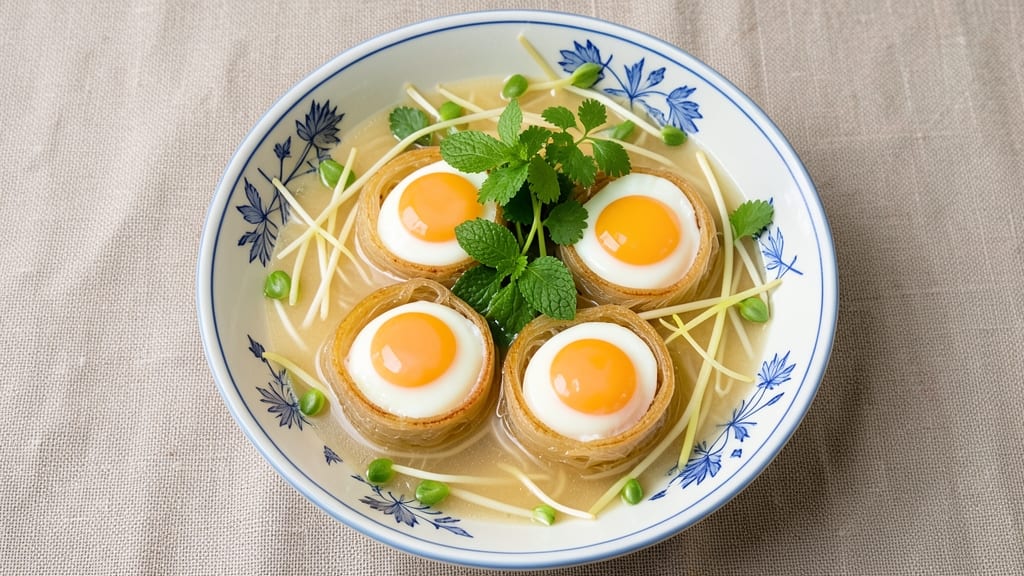
This sotanghon soup with egg recipe delivers the perfect balance of crispy tortilla cups and silky yolk hearts, a Vietnamese classic that feels both comforting and sophisticated.
The secret lies in the delicate preparation of the herbs—fresh bean sprouts, tender mint, and fragrant cilantro—all simmered in a light, aromatic broth until they release their bright, earthy flavors.
What makes this dish truly special is the contrast: the crispy tortilla cups, which hold the warm, runny egg yolk at their center, creating a satisfying bite that’s both textural and flavorful.
The broth is the heart of this soup, where ginger, garlic, and fish sauce build a savory foundation that’s light yet deeply flavorful. I’ve found that simmering the herbs just until they’re tender—never mushy—preserves their vibrant colors and freshness.
The egg, poached directly in the hot broth, absorbs the surrounding flavors while maintaining its silky texture, making every spoonful a harmonious blend of warmth and richness.
What you’ll end up with is a bowl of soup that’s as visually appealing as it is delicious—crispy tortilla cups floating in a sea of bright green herbs, their centers filled with golden, runny egg yolks.
The combination of textures and flavors makes this dish a standout, perfect for a light lunch or a cozy dinner. The best part? It’s easier to make than it looks, and the results are always impressive.
Serve it with a side of steamed rice to soak up every last drop of that flavorful broth, or add a sprinkle of fried shallots for extra crunch.
This recipe is a beautiful marriage of tradition and simplicity, bringing a taste of Vietnam to your kitchen with minimal effort. Let’s get cooking!
Ingredients for sotanghon soup with egg
Fresh herbs, tender noodles, and silky eggs create this Vietnamese masterpiece—crispy, comforting, and full of flavor.
| Ingredient | Amount | Notes |
|---|---|---|
| Fresh Bean Sprouts 🌱 | 3 cups | Thinly sliced for brightness |
| Fresh Mint Leaves 🌿 | ½ cup | Stems removed, loosely packed |
| Fresh Cilantro Leaves 🌿 | ½ cup | Chopped, stems removed |
| Large Eggs 🥚 | 4 whole | Room temperature for perfect poaching |
| Rice Vermicelli Noodles 🍜 | 8 oz | Soaked in hot water for 10 minutes |
| Fresh Ginger Root 🧄 | 2 tbsp | Finely grated, aromatic base |
| Garlic Cloves 🧄 | 4 cloves | Minced, pungent flavor |
| Fish Sauce 🍶 | 1 ½ tbsp | Red Boat preferred for quality |
| Vegetable Oil 🫒 | 2 tbsp | For frying tortilla cups |
| Lime Juice 🍋 | 2 tbsp | Freshly squeezed, bright finish |
| Salt 🧂 | 1 tsp | Kosher or sea salt |
| White Pepper 🌶️ | ¼ tsp | Freshly ground for subtle heat |
| Fried Shallots 🧅 | 2 tbsp | Store-bought or homemade |
| Steamed Jasmine Rice 🍚 | 2 cups | For serving, cooked separately |
| Chicken or Vegetable Broth 💧 | 4 cups | Homemade or high-quality store-bought |
The herbs are non-negotiable here. Vietnamese markets have the freshest bean sprouts, mint, and cilantro, but your grocery store’s produce section works too—just grab the brightest, most vibrant leaves. Mint and cilantro should smell fresh, not wilted. For the noodles, rice vermicelli is a must—those thin, chewy strands are the soul of sotanghon. Soak them in hot water for exactly 10 minutes, then drain and rinse under cold water to stop the cooking. The broth? Homemade chicken or veggie broth elevates this, but even a good store-bought version will work if you’re in a pinch.
No fish sauce? Soy sauce at half the amount gets you close, though it won’t be quite the same. The eggs are the star—room temperature is key for perfect poaching, so take them out of the fridge 30 minutes before cooking. For the tortilla cups, rice vermicelli noodles are fried until crispy in small batches (don’t overcrowd the pan!). If you can’t find fried shallots, toasted sesame seeds add a similar nutty crunch. The lime juice should be freshly squeezed—bottled just won’t cut it here.
This soup tastes even better the next day, so make extra broth if you’re hosting. Store leftovers in the fridge for 3-4 days, but keep the fried tortilla cups separate—they’ll stay crispy if you reheat them in a dry pan for 30 seconds. For serving, I always keep a small bowl of extra hot broth on the table so everyone can adjust the temperature of their soup. The crispy cups and silky yolks are best served immediately, so assemble right before eating—trust me, it’s worth the extra minute!
Why You'll Love This Recipe
- No-Chop Night Saved: I swear by this when I’m too tired to dice anything—just rinse the bean sprouts and tear the herbs. The noodles cook in minutes, and the eggs slide in whole before poaching. Honestly, it’s the kind of meal that turns a "I don’t wanna cook" night into a "wait, this took 15 minutes?"
- Herb-Packed Freshness: That burst of mint and cilantro? It’s like a cool breeze in a bowl—bright, alive, and way more exciting than takeout. The bean sprouts add a satisfying crunch, while the eggs soak up just enough flavor to be creamy but not heavy. Between us, this soup tastes like a summer day in a mug.
- Lunchbox or Dinner: Make a big batch on Sunday and it’s your go-to for days: cold with extra herbs for lunch, or reheated with a splash of broth for dinner. My college-aged son takes it to campus—no complaints, just empty containers. It’s the kind of simple dish that works for picnics, lazy afternoons, or when you’re feeding a crowd without stressing.
- Budget Meal Magic: Fresh sprouts, eggs, and herbs stretch farther than you’d think, and the noodles cost pennies. I’ll be real: this is the recipe I turn to when I’m broke but still want something that feels special. Plus, leftovers? They taste just as good the next day—no sad, soggy noodles here.
Step-by-step instructions for crispy egg cups in sotanghon soup
Here's how to create the signature crispy tortilla cups that hold silky yolk hearts—this is where the magic happens.
Prepare the Vermicelli Noodle Cups
Cut the 8 oz rice vermicelli noodles into 4-inch lengths—this will make perfect cups for your eggs. Heat 2 tablespoons vegetable oil in a non-stick skillet over medium-high heat until shimmering. Working in batches, carefully press noodle strands together to form 1-inch wide cups using your fingers or a small mold. Fry for 30-45 seconds per side until golden brown and crispy—you'll smell that delicious toasted aroma. Transfer to a paper towel-lined plate to drain excess oil. These cups should hold their shape when flipped; if they fall apart, fry them a few seconds longer next time.
Here's the thing—don't overcrowd the pan or the oil temperature will drop, making them greasy instead of crispy. I like to work in batches of 6-8 cups at a time to maintain even cooking. Keep the fried cups warm in a 200°F oven while you prepare the rest of the soup components.
Assemble the Silky Egg Centers
Crack the 4 whole large eggs into a bowl and whisk gently until just combined—no need to make them frothy, just enough to blend the yolks and whites evenly. Season with ½ teaspoon salt and ¼ teaspoon white pepper. Using a small spoon, carefully fill each crispy noodle cup with 1 tablespoon of egg mixture, leaving about ½ inch of space at the top. Place the filled cups on a plate and refrigerate for 10-15 minutes—this chilling step is crucial for setting the egg slightly while keeping the center runny.
The reason we chill is simple: it prevents the eggs from cooking too quickly when we add them to the hot broth later. You'll know they're ready when the egg mixture holds its shape but still looks slightly glossy on top. If you skip this step, your yolk hearts might overcook and turn rubbery instead of silky.
Build the Flavorful Broth Base
In a clean pot, combine 4 cups chicken or vegetable broth, 2 tablespoons finely grated fresh ginger root, 4 minced garlic cloves, 1.5 tablespoons fish sauce, 2 tablespoons lime juice, and 1 teaspoon salt. Bring to a gentle simmer over medium heat and let it reduce by about ¼—this concentrates the flavors beautifully. You're looking for a broth that coats the back of a spoon but still has enough liquid to create that signature silky texture when combined with the egg cups.
While the broth simmers, add 3 cups thinly sliced fresh bean sprouts and cook for just 1 minute—they should remain vibrant green and crisp. Remove from heat and stir in 0.5 cup chopped fresh cilantro leaves and 0.5 cup loosely packed fresh mint leaves. The herbs should wilt slightly but still retain their bright color. This is where the soup gets its signature fresh, herbal brightness that balances the richness of the egg cups.
Create the Perfect Egg Cup Presentation
Return the broth to medium-low heat and carefully add the chilled egg cups. Let them heat through for 1-2 minutes—you'll see the egg centers gently set while maintaining their silky texture. Using a slotted spoon, transfer the egg cups to individual bowls. Ladle the hot broth evenly around each cup, making sure to distribute the bean sprouts and herbs throughout. Sprinkle with 2 tablespoons fried shallots for that irresistible crunch and garnish with additional fresh mint and cilantro if desired.
Here's the moment that matters: serve immediately with 2 cups steamed jasmine rice on the side. The contrast of the crispy noodle cups with the silky egg centers, surrounded by the warm, aromatic broth, is what makes this dish truly special. Each bite should deliver that perfect combination of textures and flavors—crunchy, creamy, fresh, and savory all in one spoonful.
Pro Tips For Making Sotanghon Soup With Egg
- Blanch Sprouts Fast: Dump the bean sprouts into boiling water for exactly 30 seconds—no more, no less. Overcooking turns them mushy, and the soup loses that crisp texture we all love. I used to drag it out, thinking they’d soften more, but they just get sad and limp.
- Crack Eggs Cold: Keep the eggs in the fridge until the very last second, then crack them into a cold bowl before sliding them into the simmering broth. This prevents the whites from scrambling into a rubbery mess the second they hit the heat. Trust me, your soup will thank you.
- Soak Noodles Separately: Don’t toss the vermicelli into the hot soup straight from the package—soak them in warm water for 8-10 minutes first, then drain and rinse with cold water. This guarantees they’ll stay tender and not turn to gluey strings in the broth. I learned this after a disastrous batch where the noodles clung together like overcooked spaghetti.
- Swirl Eggs Gently: Once the eggs are in the broth, resist the urge to stir them like you’re trying to win a cooking contest. Let them settle for 30 seconds, then gently swirl the soup in one direction with a spoon—this creates those signature silky ribbons without breaking them apart. I’ve seen too many people turn them into scrambled bits by over-mixing.
Storing and reheating your leftovers
Broth Storage Secrets
The aromatic broth is the soul of sotanghon soup, and it actually tastes better the next day! Store it in an airtight container in the refrigerator for up to 4 days. The flavors deepen as the ginger and garlic infuse further, creating a more complex base.
I like to keep it in a glass container—it’s easier to reheat evenly and won’t absorb odors like plastic. 💧
Crispy Cup Revival
Those golden noodle cups lose their crunch when reheated, but you can revive them! Place them in a dry non-stick skillet over medium heat for 30-45 seconds per side until they crisp up again.
Work in batches so they don’t steam and soften. This trick keeps the texture perfect for serving—just like fresh from the fryer. 🔥
Egg Cup Make-Ahead
Assemble the egg cups 1 day ahead and store them in the fridge, but only fill the cups with egg—don’t add them to the broth yet. When ready to serve, gently reheat the broth and add the chilled cups for 1-2 minutes to warm through.
This ensures the yolks stay silky rather than overcooked. Trust me, this shortcut saves time without sacrificing quality! ⏰
Herb Freshness Tip
The herbs wilt over time, so store them separately from the broth. Keep them in a separate airtight container with a damp paper towel to maintain freshness for up to 2 days.
When reheating, add them back to the hot broth just before serving to keep that vibrant green color and bright flavor. Fresh herbs make all the difference! 🌿
Reheating the Full Soup
Combine all components in a pot and heat over low heat—never microwave, as it turns the egg yolks rubbery. Stir occasionally and add 1-2 tablespoons of hot water if the broth gets too thick.
The goal is to warm everything through without overcooking the eggs. Serve with fresh herbs and fried shallots for that restaurant-quality finish. 💡
Freezer-Friendly Broth
For longer storage, freeze the broth in ice cube trays—this makes it easy to thaw just what you need. Once frozen, transfer the cubes to a freezer bag with the date labeled.
Thaw overnight in the fridge, then reheat gently. The texture remains smooth, and the flavors stay vibrant. Perfect for meal prep! ❄️
Nutrition facts
Frequently asked questions
Can I make sotanghon soup without rice vermicelli noodles?
While rice vermicelli is traditional, you can substitute with thin rice noodles or even egg noodles if needed. For the crispy cups, try using thin wonton wrappers or rice paper—just fry them until golden. The texture will differ slightly, but the concept remains the same.
Why do the egg yolks turn rubbery when reheating?
Overcooking is the main culprit! Eggs should only warm through for 1-2 minutes in hot broth—never microwave. For leftovers, reheat just the broth separately and add chilled egg cups last minute. The key is gentle heat to maintain that silky texture.
What's the best way to make the broth more flavorful?
Simmer the broth longer to concentrate flavors, or add 1 star anise pod or ½ cinnamon stick while cooking. For depth, toast 1 tsp coriander seeds until fragrant, then grind and add to the broth. Remove spices before serving.
Can I use store-bought fried shallots instead of homemade?
Store-bought fried shallots work perfectly—they add the same crunchy, savory quality. Look for ones with a deep golden color. For extra flavor, lightly toast them in a dry pan for 10 seconds before sprinkling.
How do I adjust the spice level for sensitive eaters?
Reduce or omit the white pepper and fish sauce slightly. For extra mildness, add 1 tsp sugar to balance flavors. Serve with additional lime wedges so guests can adjust to taste. The herbs naturally provide freshness without heat.