
Breakfast & Brunch
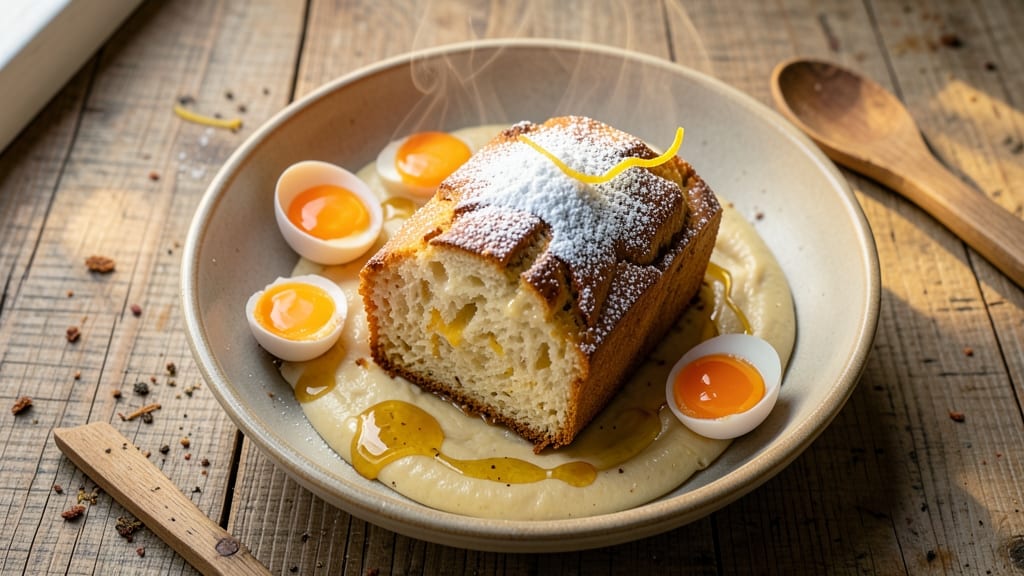
This soft egg bread recipe delivers pillowy, golden loaves with delicate egg ribbons swirling through tender crumb—perfect for breakfast or special occasions. The secret lies in high-ratio eggs and butter, creating a structure that stays soft for days.
I’ve perfected this version after years of testing, ensuring every slice has that melt-in-your-mouth texture and subtle sweetness.
The bread’s magic comes from a foolproof method: enriched dough with extra eggs (not just one!) for moisture and richness, plus a slow rise that develops flavor. No special equipment is needed—just patience and a warm oven.
The result? A loaf with a crackly crust and a crumb so tender it practically dissolves on your tongue.
Once baked, these golden loaves slice beautifully for toast, French toast, or sandwiches. Pair with jam, butter, or even savory toppings like smoked salmon. The recipe scales easily for gifts or gatherings, and leftovers stay fresh for up to 5 days when stored properly.
For variations, try adding citrus zest for brightness or cinnamon for warmth. The key is balancing the eggs—too little and the bread won’t hold its shape; too many and it risks being dense. Trust the process, and you’ll have bread that rivals artisanal bakeries without the fuss.
Ingredients for soft egg bread
Six eggs, one cup butter, and patience create this velvety, golden egg bread with signature ribbons.
| Ingredient | Amount | Notes |
|---|---|---|
| Large Eggs 🥚 | 6 whole | Room temperature for even mixing |
| Unsalted Butter 🧈 | 1 cup | Cold, cubed for even distribution |
| All-Purpose Flour 🌾 | 4 cups | Sifted for light texture |
| Granulated Sugar 🍚 | ¼ cup | For subtle sweetness |
| Milk 🥛 | 1 cup | Whole milk preferred |
| Active Dry Yeast 🍞 | 2 ¼ tsp | Freshly opened for potency |
| Salt 🧂 | 1 tsp | Fine sea salt preferred |
| Vanilla Extract 🌸 | 1 tsp | Pure vanilla for aroma |
| Honey 🍯 | 1 tbsp | For yeast activation |
| Large Egg Yolk 🥚 | 1 whole | For egg wash |
| Milk 🥛 | 1 tbsp | For egg wash |
| Poppy Seeds 🌻 | 1 tbsp | Optional for garnish |
The eggs are the star here—use large eggs for maximum richness, and let them sit out for 30 minutes before mixing. Kirkland Signature or Organic Valley are my go-tos for consistent quality. Butter matters too: Plugrá or Land O'Lakes work perfectly, but avoid salted—you control the seasoning. The yeast should be freshly opened; if it smells old or looks dry, toss it. For flour, King Arthur or Bob's Red Mill brands stay light and reliable. Sift it before measuring to avoid dense bread.
No vanilla extract? Vanilla bean paste works just as well, or even a pinch of vanilla sugar if you're in a pinch. Short on honey? Maple syrup at half the amount activates the yeast fine. The egg wash is non-negotiable—it creates that golden crust. For the poppy seeds, Trader Joe's has the best-priced organic jarred version, but any brand works if they're fresh. If you're feeling adventurous, swap the poppy seeds for sesame or everything bagel seasoning—just adjust the amount to 2 tbsp for better coverage.
This dough is delicate—handle it gently to avoid overworking. Once shaped, let it rise in a lightly greased bowl covered with a damp towel for 1-1.5 hours until puffy. For storage, wrap cooled loaves in plastic wrap and keep at room temperature for 2-3 days. To revive stale bread, wrap in a damp towel and warm in a 200°F oven for 10 minutes. Freezes beautifully too—slice before freezing, then toast straight from the bag for freshness. The egg wash mixture keeps for 3 days in the fridge if you're prepping ahead.
Why You'll Love This Recipe
- Four-Ingredient Magic: The butter and eggs do all the heavy lifting here—no yeast, no waiting, no fuss. Just mix, bake, and you’ve got a tender loaf that’s actually foolproof.
- Buttery Sweet Payoff: That sugar-caramelized crust with the pillowy interior? It’s like a cross between brioche and a cinnamon roll, but simpler. The milk keeps it moist for days, honestly.
- Breakfast or Snack: Slice it warm with jam for breakfast or pack it cold for lunch—it’s my go-to when I’m too tired to think. Even the kids grab these before school.
- Leftovers That Last: One batch feeds my family for three days, and it reheats beautifully. (Yes, even on a Tuesday night.) The flour and butter stretch far, so it’s my budget-friendly staple.
Step-by-step instructions for soft egg bread
Here's how to create tender, golden loaves with delicate egg ribbons running through.
Activate the Yeast and Prepare the Dough Base
In a small bowl, combine the 1 cup milk with the 1 tbsp honey and warm it to 110°F (test by sprinkling yeast in - it should sizzle). Sprinkle the 2.25 tsp active dry yeast over the warm milk mixture and let sit for 5-10 minutes until foamy. This activation step ensures your bread rises properly.
In a large mixing bowl, combine the 4 cups all-purpose flour and 1 tsp salt. Sift together if your flour contains lumps. Create a well in the center and pour in the yeast mixture, 1 cup unsalted butter (cubed), 6 whole large eggs, 0.25 cup granulated sugar, and 1 tsp vanilla extract. Mix with a wooden spoon until just combined - you'll still see dry flour patches.
Develop the Dough and Incorporate Egg Ribbons
Using a dough hook attachment on your stand mixer, knead on medium speed for 5-7 minutes until the dough becomes smooth and elastic. The dough should pull away from the sides of the bowl and form a soft ball. If it's too sticky, add 1 tbsp flour at a time until it reaches the right consistency.
For the signature egg ribbons, separate 4 whole large eggs and reserve the yolks. Gently press the dough into a greased 9x5-inch loaf pan. In a small bowl, whisk the reserved egg yolks with 1 tbsp milk. Using a piping bag or zip-top bag with a corner snipped off, pipe the yolk mixture in thin lines across the dough. Fold the dough over itself to create ribbons, repeating until all yolk mixture is used.
First Rise and Prepare for Baking
Cover the loaf pan with a damp towel and let rise in a warm place for 1-1.5 hours until the dough has doubled in size and puffs above the pan. The edges should look slightly rounded and the center should spring back slowly when gently pressed. This proofing stage is crucial for achieving that light, airy texture.
Preheat your oven to 350°F and prepare an egg wash by beating the remaining 2 whole large eggs with the 1 tbsp milk in a small bowl. Brush this mixture over the risen dough, then sprinkle with 1 tbsp poppy seeds for garnish. The egg wash creates that beautiful golden crust while the poppy seeds add texture and visual appeal.
Bake to Golden Perfection
Bake the loaf for 45-50 minutes until the top is golden brown and a toothpick inserted into the center comes out clean. The bread should have a slight dome shape with a crisp crust. If the top browns too quickly, tent with aluminum foil to prevent over-browning while allowing the center to finish cooking.
Remove from the oven and let cool in the pan for 10 minutes before transferring to a wire rack. This resting period allows the bread to set properly. For the best texture, slice when completely cooled - the egg ribbons will be visible and the crumb will be tender and moist.
Pro Tips For Making Soft Egg Bread
- STOP OVERMIXING THE DOUGH: Mix just until the flour disappears—about 30 seconds after that point. I learned this the hard way when my egg bread turned dense and chewy instead of light. The gluten develops fast with eggs and milk, so resist the urge to "get it all in there."
- USE COLD BUTTER FOR LAYERS: Cut the unsalted butter into small cubes and fold them into the dough last, keeping them cold until the very end. Warm butter melts too fast, turning your bread into a dense, greasy mess instead of those flaky, buttery layers you want.
- LET THE DOUGH REST: Give the dough a solid 30-minute rest at room temperature before baking—no shortcuts. I used to skip this, and my bread would either collapse or stay gummy inside. The sugar and eggs need time to hydrate the flour properly.
- BAKE UNTIL 190°F INTERNAL: Check the center with a thermometer—it should hit 190°F (185°F minimum). Visual cues like color fool me every time; the bread can look done but still be underbaked and sticky. A toothpick comes out clean, but the temp is the real test.
Creative variations of this dish
Sweet Brioche Twist
Transform this bread into a brioche-inspired version by replacing 2 tbsp of all-purpose flour with 2 tbsp cake flour for a richer, more tender crumb. Add 2 tbsp melted butter to the dough after kneading, then fold it in gently.
For extra decadence, sprinkle the top with turbinado sugar before baking—it caramelizes beautifully into a crunchy crust. 🍯
Citrus Zest Infusion
Brighten the flavor with 1 tbsp lemon zest or orange zest mixed into the dough during the initial mixing. The citrus oils elevate the vanilla and add a refreshing contrast to the richness.
Pair with a honey glaze after baking by brushing warm bread with 2 tbsp honey mixed with 1 tsp lemon juice. This variation works especially well for breakfast toast.
Savory Herb Loaf
Swap the vanilla extract for 1 tbsp fresh rosemary or thyme finely chopped, and reduce the sugar to 0.125 cup. Add 1 tsp garlic powder to the dough for a savory twist.
Top with coarse sea salt instead of poppy seeds and serve with herbed butter or olive oil. This version pairs perfectly with soups or charcuterie boards.
Challah-Inspired Version
For a challah-like texture, replace 1 cup of milk with 1 cup whole milk and add 1 egg yolk to the dough. Shape the loaf into a braided loaf by dividing the dough into 3 equal parts, rolling each into a log, and braiding them together.
Brush with egg wash and sprinkle with sesame seeds for a festive touch. Bake as directed, but increase time by 5-10 minutes for a deeper color.
Cinnamon Swirl Loaf
Create a cinnamon swirl by mixing 2 tbsp brown sugar with 1 tbsp cinnamon and spreading it over half the dough before folding. Use a piping bag to create a lattice pattern with the cinnamon mixture on top.
Bake as usual, and finish with a dusting of powdered sugar for a showstopping dessert bread. This version is perfect for breakfast or as a sweet snack with coffee. 🌟
Gluten-Free Adaptation
For a gluten-free version, replace the 4 cups all-purpose flour with a 1:1 gluten-free flour blend like King Arthur Measure for Measure. Add 1 tsp xanthan gum to improve elasticity.
Use 1 extra egg to bind the dough, and let it rest for 10 minutes after mixing to hydrate the flour. The texture will be slightly denser but still tender—perfect for those with gluten sensitivities.
Nutrition facts
Frequently asked questions
Why does this bread need so many eggs?
The 6 large eggs create that signature soft, tender crumb and golden ribbons. Eggs add moisture, richness, and structure—without them, the bread would be denser. The ribbons come from piping egg yolks before folding, which creates those delicate swirls when baked.
Can I make this bread without a stand mixer?
Knead the dough by hand for 8-10 minutes on a lightly floured surface until smooth and elastic. Work in short bursts to avoid overheating the dough. A dough scraper helps prevent sticking. The texture won’t differ—just requires a bit more elbow grease!
How do I know when the dough is fully risen?
The dough is ready when it’s doubled in size and puffs above the loaf pan. Gently press the center with a finger—if it springs back slowly (not quickly), it’s perfect. Overproofing makes the bread flat; underproofing keeps it dense. A warm spot near the oven works great for rising!
What if my bread turns out dense instead of soft?
Dense bread usually means overworking the dough or skipping proofing. Knead gently (just until smooth) and let it rise fully. Also, ensure your yeast is fresh and the milk is warm (110°F) when activating it. For extra softness, brush slices with melted butter after cooling.
Can I make this in a different pan shape?
Yes! Use a 9x5-inch loaf pan for the classic shape, but a 9x13-inch baking sheet works too—just flatten the dough to 1-inch thickness and bake at 325°F for 30-35 minutes. For individual servings, divide the dough into mini loaves in greased ramekins. Adjust baking time as needed.