
Breakfast & Brunch
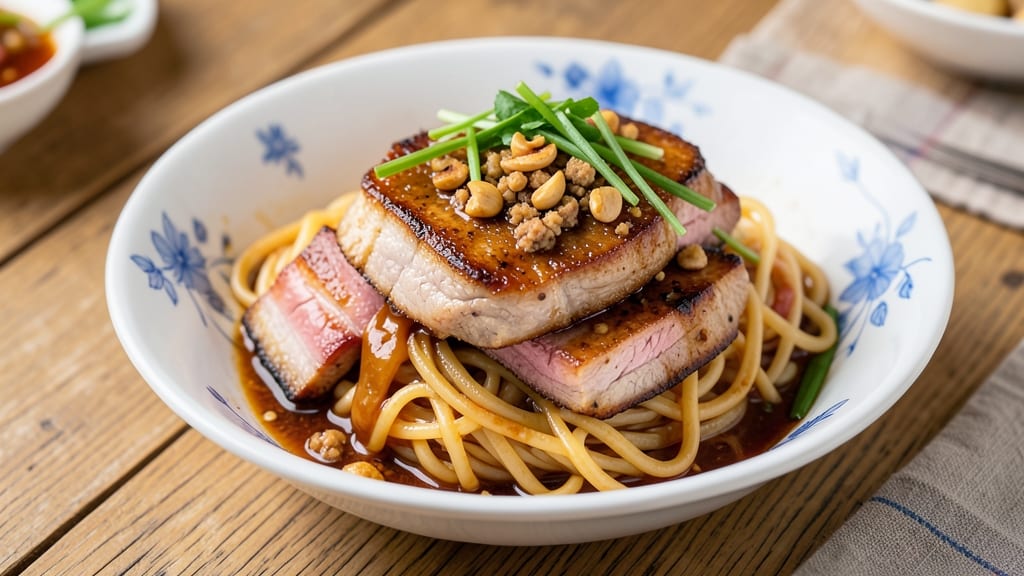
This Singapore egg noodles recipe brings the bold flavors of bustling street markets to your breakfast table with its signature soy-garlic aroma and silky egg noodles.
The dish starts with homemade egg noodles—light yet sturdy—stir-fried with crispy pork, tender eggs, and a fragrant sauce that balances sweet, salty, and umami notes.
What makes this recipe special is the authentic technique of frying the eggs just until the whites set, leaving the yolks runny for that signature Singaporean touch.
The foundation lies in the noodles themselves, made with simple ingredients like flour, eggs, and water, rolled thin and cut into delicate ribbons.
The sauce combines soy sauce, garlic, and a touch of sugar for depth, while toppings like fried shallots, chili sauce, and lime add layers of texture and heat.
This dish is more than just a meal—it’s a taste of Singapore’s vibrant street food culture, where every bite delivers a perfect harmony of flavors.
By the time you finish assembling this dish, you’ll have a fragrant, satisfying bowl of egg noodles with crispy edges on the noodles, perfectly cooked pork, and silky eggs that glisten under the sauce.
The aroma alone will draw everyone to the table, and the first bite delivers that unmistakable Singaporean comfort food experience. It’s the kind of dish that feels like a hug in a bowl.
Whether you’re making it for a weekend brunch or a quick weeknight dinner, this recipe scales beautifully and keeps well for leftovers. The key is balancing the sauce and garnishes—don’t skip the fried shallots and lime, as they elevate the dish from good to unforgettable. Let’s get cooking!
Ingredients for singapore egg noodles
Simple ingredients transform into silky noodles and aromatic stir-fry magic.
| Ingredient | Amount | Notes |
|---|---|---|
| All-Purpose Flour 🌾 | 2 cups | High-protein for chewiness |
| Large Eggs 🥚 | 4 whole | Room temperature preferred |
| Water 💧 | 1 ½ cups | Cold for elasticity |
| Pork Shoulder 🐖 | 1 lb | Thinly sliced, fat cap kept |
| Garlic Cloves 🧄 | 8 cloves | Minced finely for aroma |
| Light Soy Sauce 🥄 | ½ cup | Kikkoman preferred |
| Dark Soy Sauce 🥄 | 1 tbsp | For color depth |
| Granulated Sugar 🍚 | 1 tbsp | Balances flavors |
| Vegetable Oil 🫒 | ½ cup | High smoke point |
| Shallots 🧅 | 2 whole | Thinly sliced for garnish |
| Fresh Chili Sauce 🌶️ | 2 tbsp | Sambal oelek preferred |
| Lime Wedges 🍋 | 2 whole | For serving |
| Green Onions 🧅 | 4 whole | Thinly sliced |
| Salt 🧂 | 1 tsp | Adjust to taste |
| White Pepper 🌶️ | ½ tsp | Freshly ground |
The flour is non-negotiable—King Arthur or Gold Medal work best for that signature chewy texture. Pork shoulder with fat is essential for authentic flavor, and you'll find it pre-sliced at Asian markets or butcher shops. If using store-bought pork, look for thinly sliced cuts with visible fat marbling. For the soy sauce, Kikkoman light soy is the gold standard, but any high-quality brand works. The sugar might seem odd, but it's crucial for balancing the salty-sweet umami profile that defines this dish. Buy it in bulk—it lasts forever and you'll use it often.
No pork shoulder? Chicken thigh works in a pinch, but the flavor won't be identical. Short on garlic? Garlic powder at half the amount gets you close, though fresh is ideal. The chili sauce can be swapped for Sriracha or chili crisp, but sambal oelek gives that authentic heat. For the noodles, if you can't make them fresh, udon noodles are the closest store-bought substitute—just blanch them first. The shallots? Fried until crispy—don't skip this step, they're the dish's crowning glory.
Freshly made noodles keep for 2 days in the fridge, wrapped tightly in plastic. The pork can be prepped ahead and stored separately for 3 days. Once assembled, this dish reheats beautifully—just add a splash of water and stir. For leftovers, store in airtight containers with parchment between layers to prevent sticking. The noodles soften when reheated, so it's best to serve fresh. Portion into individual containers for easy grab-and-go meals.
Why You'll Love This Recipe
- No-Fuss Homemade Noodles: I make the dough in 5 minutes—just flour, eggs, and water—no fancy tools. The rest is about searing pork shoulder until it’s fall-apart tender, then tossing everything in one pan. That’s it. Honestly, the hardest part is waiting for the garlic to perfume the whole kitchen.
- Umami Bomb: The pork shoulder, slow-cooked until it’s rich and fatty, melts into the noodles like a dream. Add that minced garlic at the end? Instant flavor explosion. Between us, the first bite makes me forget I’m even making dinner.
- Leftover Goldmine: This dish begs to be reheated—better the second day, if you ask me. Toss cold noodles with a splash of soy sauce and a fried egg on top, and suddenly you’ve got a whole new meal. My kids fight over the leftovers, and I don’t even pretend to care.
- Budget Meal Hero: Pork shoulder is cheap, and a few eggs stretch this into three meals. The noodles? Cheaper than takeout, and way more satisfying. I’ll be real: this is my go-to when I’m broke but still want to feel like I’m eating something special. (Yes, even on a Tuesday night.)
Step-by-step instructions for Singapore egg noodles
Master the art of these fragrant stir-fried noodles with tender pork and aromatic soy-garlic sauce.
👨🍳 Step 1: Prepare the Noodle Dough
In a large mixing bowl, combine the 2 cups all-purpose flour and 1 tsp salt. Create a well in the center and add the 4 whole large eggs. Gradually incorporate the 1.5 cups cold water while mixing vigorously with chopsticks or a fork until a shaggy dough forms.
Transfer the dough to a lightly floured surface and knead for 8-10 minutes until smooth and elastic. The dough should be pliable but not sticky—if it feels too dry, add a few drops of water; if too sticky, sprinkle a bit more flour. Wrap tightly in plastic wrap and rest at room temperature for 30 minutes. This resting period relaxes the gluten, making rolling easier and resulting in smoother noodles.
🍳 Step 2: Roll and Cut the Noodles
Divide the rested dough into 4 equal portions. Working with one portion at a time, roll it out on a floured surface using a rolling pin until it's ⅛-inch thick. Fold the rolled dough like a letter and roll again to create even thickness. Cut the sheet into ¼-inch wide strips with a sharp knife or noodle cutter.
As you cut, sprinkle the noodles with a little flour to prevent sticking. The noodles should be uniform in width for even cooking. Once all portions are rolled and cut, toss them with 1 tbsp vegetable oil to prevent sticking and set aside. These will be cooked fresh just before assembling the dish.
🔥 Step 3: Cook the Pork Shoulder
Slice the 1 lb pork shoulder into ¼-inch thick strips, keeping the fat cap intact for flavor. Heat ¼ cup vegetable oil in a wok or large skillet over high heat until shimmering. Add the pork in a single layer and sear for 2-3 minutes until the edges turn opaque and the fat begins to render.
Remove the pork and set aside, leaving the rendered fat in the wok. This fat will form the flavorful base of your stir-fry. If the pork releases too much liquid during searing, drain it from the wok before proceeding—this ensures a crispy texture in the final dish.
🍳 Step 4: Stir-Fry the Aromatics and Sauce
Return the wok to high heat and add the remaining ¼ cup vegetable oil. Swirl to coat the bottom, then add the 8 minced garlic cloves and 2 thinly sliced shallots. Stir-fry for 30 seconds until fragrant—you should smell a sweet, pungent aroma that fills your kitchen.
Add 1 tbsp dark soy sauce and 1 tbsp granulated sugar to the wok, stirring constantly for 1 minute until the mixture darkens slightly. This creates the signature deep, caramelized flavor of Singapore egg noodles. Pour in the ½ cup light soy sauce and 2 tbsp fresh chili sauce, stirring to combine. The sauce should coat the back of a spoon but remain slightly thick.
🥘 Step 5: Assemble and Finish the Noodles
Bring a large pot of water to a rolling boil and cook the noodles for 1-2 minutes until just tender—they should still have a slight bite. Drain immediately and rinse briefly under cold water to stop the cooking process. Shake off excess water and return the noodles to the pot.
Add the cooked pork shoulder and the sauce to the noodles, tossing vigorously over high heat for 2-3 minutes until everything is evenly coated and heated through. The noodles should absorb the sauce while maintaining their silky texture. Finish with 4 thinly sliced green onions and serve immediately with 2 lime wedges on the side for brightness.
🍽️ Step 6: Garnish and Serve
Divide the noodles among 4 bowls, ensuring each portion has an equal distribution of pork and sauce. Garnish each serving with an additional sprinkle of green onions and a squeeze of lime juice from the wedges. The acidity of the lime cuts through the richness of the pork and soy sauce, balancing the dish perfectly.
Serve immediately while hot, as these noodles are best enjoyed fresh. The contrast of tender noodles, crispy pork, and fragrant sauce makes every bite satisfying. Pair with a cold beer or jasmine tea for an authentic Singaporean dining experience.
Pro Tips For Making Singapore Egg Noodles
- STRETCH THE DOUGH LONG: The noodles’ signature chew comes from kneading until the dough is silky, not just pliable. I used to stop when it looked smooth—turns out, you need to stretch it thin (about 1/8-inch) and fold it 30 times like a letter. This isn’t about strength; it’s about breaking down the gluten just enough for that melt-in-your-mouth texture.
- SALT THE PORK WATER: Skip the dry rub—soak the pork shoulder in cold water with 1 tablespoon salt and 1 teaspoon sugar for at least 30 minutes before cooking. The salt penetrates deeper than seasoning alone, and the sugar helps caramelize the edges later. (Yes, even if you’re using pre-cut pork—give it 15 minutes minimum.)
- STOP WHEN GARLIC GLAZES: The moment the minced garlic turns golden and sticky, pull the pan off the heat. I learned this after burning three batches—garlic burns faster than you think, especially when stir-frying with pork. A quick splash of water or soy sauce can reset it if it gets too dark, but better to stop early and let the residual heat finish the job.
- USE COLD NOODLES, HOT BROTH: Boil the noodles, drain, and rinse briefly with cold water before tossing them into the hot pork broth. The temperature shock stops the cooking process instantly, so they absorb the flavors instead of turning mushy. (Pro move: Shock them in an ice bath for 30 seconds if you’re worried.)
Storing and reheating your leftovers
Noodle Storage
Freshly made egg noodles keep beautifully in the fridge for 2 days when stored in an airtight container with plastic wrap pressed directly against the surface. I like using glass containers with snap-on lids—they prevent drying while allowing the noodles to maintain their delicate texture.
For longer storage, freeze them for up to 1 month by spreading them on a tray first (to prevent clumping), then transferring to a freezer bag with excess air removed. 💫
Pork Prep Ahead
The pork shoulder can be prepped and stored separately for 3 days in the fridge, sealed in a ziplock bag with parchment paper between layers. For freezing, cook the pork completely first—it reheats best when fully done.
Store in single-serving portions for easy reheating later. The fat will render differently when frozen, so I recommend keeping it refrigerated if possible.
Reheating Noodles
For the best texture, reheat noodles in a nonstick skillet over medium heat with 1 tbsp water or oil to prevent sticking. Toss constantly for 3-4 minutes until heated through.
If using leftover sauce, add it back during reheating to restore that signature glossy finish. The noodles will soften slightly, but they’ll still hold their shape better than microwave reheating.
Sauce Refresh
The sauce loses some of its vibrancy when stored, so revive it by adding ½ tsp soy sauce and ½ tsp chili sauce per serving when reheating.
For extra freshness, stir in 1 tsp lime juice and a pinch of white pepper—this brightens the flavors and cuts through any richness. I also like adding a splash of hot water to loosen the sauce if it thickens during storage.
Garnish Like a Pro
Don’t skip the fresh garnishes when reheating! Sprinkle with fried shallots (store them separately in a cool, dark place for up to 2 weeks) and green onions to add crunch and color. A squeeze of lime at the table ensures every bite tastes restaurant-fresh.
For extra heat, add a dash of chili oil—just ½ tsp per bowl is enough to wake up the dish. 🌶️
Make-Ahead Tips
Assemble the dish completely (noodles, pork, and sauce) up to 1 day ahead and store in an airtight container. When ready to serve, reheat gently in a pot with 2 tbsp water, covered, over low heat for 5-6 minutes.
The key is patience—rushing reheating turns noodles mushy. For meal prep, portion into individual containers and store garnishes separately to keep everything crisp. 💡
Nutrition facts
Frequently asked questions
Can I make these noodles without a rolling pin?
Use a heavy pan or even a wine bottle with a smooth base. Roll the dough between two sheets of parchment paper for easier handling. For extra-thin noodles, fold the dough like a letter and roll again—this creates uniform thickness without special tools.
What's the secret to getting the eggs just right?
Fry the eggs in batches over medium-low heat until the whites are set but yolks remain runny. The key is timing—about 2-3 minutes per side. For extra authenticity, crack them directly into the wok and cover briefly to trap steam, keeping the yolks glossy.
Can I substitute chicken for pork?
Yes, but use chicken thigh instead of breast for juiciness. Marinate it in 1 tbsp soy sauce and ½ tsp white pepper for 30 minutes before cooking. Chicken has less fat, so add 1 tsp vegetable oil to the stir-fry for richness. The flavor won't be identical, but it's still delicious!
How do I make the noodles less chewy?
Reduce the flour to 1¾ cups and add 1 extra egg to the dough. This increases moisture content while keeping structure. Also, cook the noodles for 30 seconds less than package instructions—al dente noodles absorb sauce better without turning mushy.
Is this dish spicy?
The recipe includes 2 tbsp chili sauce, which adds mild heat. For more spice, increase to 3 tbsp or add ½ tsp chili flakes. The lime balances the heat, so serve it on the side for adjustable spice levels.