
Breakfast & Brunch
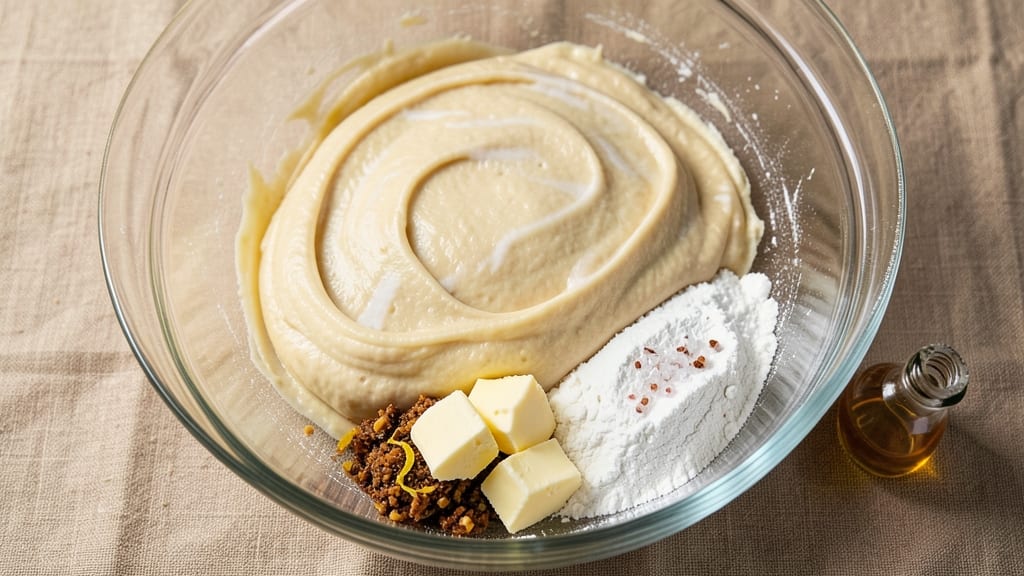
This shortbread recipe with egg yolk transforms classic buttery cookies into delicate layers of crisp edges and velvety centers. The secret lies in that single yolk—it creates a tender crumb while maintaining signature shortbread structure.
I developed this version after years of testing, and the difference is undeniable: traditional shortbread can be too crumbly, but this version balances crispness with melt-in-your-mouth tenderness.
The egg yolk adds subtle richness that rounds out the buttery flavor while improving texture. For best results, use cold butter and work quickly to avoid overmixing—this ensures those signature flaky layers.
The dough comes together in just 10 minutes, then bakes to golden perfection in 12-15 minutes at 325°F, creating cookies that stay crisp at room temperature for days.
What makes these shortbreads special is how they satisfy two cravings at once: the satisfying crunch of classic shortbread and the luxurious mouthfeel of the yolk-infused centers. The aroma of vanilla and butter fills your kitchen as they bake, making it impossible to resist pulling them out early.
Perfect for holiday gifting, afternoon tea, or pairing with coffee.
Once you try this version, you'll never go back to traditional shortbread. The technique is straightforward but yields restaurant-quality results at home—crisp edges that shatter between your fingers and centers that melt gently. Let's get baking!
Ingredients for shortbread recipe with egg yolk
Nine ingredients creating delicate layers of buttery crunch and velvety yolk magic.
| Ingredient | Amount | Notes |
|---|---|---|
| Unsalted Butter 🧈 | 2 cups | Cold, cubed for flaky texture |
| Granulated Sugar 🍚 | ½ cup | Superfine preferred for smooth texture |
| Large Egg Yolks 🥚 | 2 whole | Room temperature for even mixing |
| All-Purpose Flour 🌾 | 2 ½ cups | Sifted for light crumb structure |
| Pure Vanilla Extract 🌿 | 1 tsp | High-quality, alcohol-free preferred |
| Fine Sea Salt 🧂 | ¼ tsp | Diamond Crystal preferred |
| Vanilla Bean Seeds 🌿 | ½ tsp | Scraped from 1/2 vanilla bean |
| Almond Extract 🌰 | ¼ tsp | Pure, no alcohol additives |
| Powdered Sugar 🍚 | ¼ cup | For dusting finished cookies |
The butter is non-negotiable here—European-style unsalted butter like Plugrá or Land O'Lakes has higher fat content, which translates to richer flavor. Grab it cold from the fridge and cut it into cubes the size of your thumb—this ensures those signature flaky layers. If you can't find European butter, Kirkland Signature from Costco works beautifully. Pro tip: let the butter sit out for 20 minutes before creaming to soften slightly, but don't let it melt. The vanilla bean seeds add depth that extract alone can't match—Madagascar beans from specialty stores like Williams Sonoma have the most complex flavor. If you're using extract, Nelson & James
No vanilla bean? Double the extract—just know it won't have the same complexity. Short on almond extract? Skip it entirely—these cookies will still be delicious. Using salted butter? Reduce the added salt to 1/4 tsp. For the sugar, superfine is ideal (like Domino SuperfineConfectioners' sugar works too—just sift it to avoid lumps. And if you're making these for holiday gifting, use parchment paper between layers to prevent sticking during storage. The dough must stay cold—press it into a flat disk and wrap tightly in plastic before refrigerating. Keeps for 3 days in the fridge or 3 months frozen, wrapped in parchment. For best results, let the dough rest 1 hour at room temperature before rolling. Baked cookies stay crisp for 5 days at room temperature, but if you're making a big batch, store them in an airtight container with parchment paper between layers. The aroma alone will have you pulling them out early—resist the urge until they're golden at the edges.
Why You'll Love This Recipe
- I swear by this method: just cream the butter and sugar, then fold in yolks and flour—no food processor, no overworking. The dough comes together faster than I can put on a pot of coffee, and honestly? That’s all it takes.
- No Fuss Mixing: I swear by this method: just cream the butter and sugar, then fold in yolks and flour—no food processor, no overworking. The dough comes together faster than I can put on a pot of coffee, and honestly? That’s all it takes.
- Buttery Vanilla Magic: That extra egg yolk makes it rich, but the vanilla? It’s the secret weapon. A single drop turns this from good to oh-my-gosh-I-need-another-piece in one bite. The edges get crispy, the center stays tender—no baking drama, just pure satisfaction.
- Holiday or Snack Attack: Between us, this is my go-to for Christmas gifts, but I also keep a batch in the freezer for lazy afternoons. Wrap it in parchment, tie it with twine, and boom—you’ve just made someone’s day. Or just eat it all yourself. No judgment.
Step-by-step instructions for buttery egg yolk shortbread
Here's how to craft melt-in-your-mouth shortbread with that signature yolk richness.
Cut and Mix the Cold Butter
Place the 2 cups unsalted butter in the bowl of a stand mixer fitted with the paddle attachment. Cut the cold butter into small cubes—this helps it incorporate more evenly into the dough. Mix on low speed for 2 minutes until the butter becomes smooth and creamy but not melted.
I like to press down on the butter with a spatula during mixing to ensure even distribution. The butter should look like wet sand when finished—this texture is crucial for achieving that signature flaky, crumbly texture. If any pieces remain cold or clumpy, pulse briefly in a food processor to break them down before continuing.
Add Sugar and Egg Yolks
With the mixer running on low speed, gradually add the 0.5 cup granulated sugar and the 2 whole large egg yolks. Mix for 1-2 minutes until the sugar dissolves completely and the mixture becomes pale and fluffy. The yolks add that luxurious richness that sets this shortbread apart from classic versions.
Here's the thing—don't rush this step. The sugar needs time to fully incorporate, and the yolks should be completely emulsified. You'll know it's ready when the mixture looks like wet, pale sand with no visible sugar crystals. If it looks too thick, let it sit at room temperature for 5 minutes to soften slightly before proceeding.
Incorporate Flavorings and Flour
Remove the bowl from the mixer and stir in the 1 teaspoon pure vanilla extract, 0.5 teaspoon vanilla bean seeds, and 0.25 teaspoon almond extract using a rubber spatula. These flavorings will infuse deeply during baking, creating layers of aroma. In a separate bowl, whisk together the 2.5 cups all-purpose flour and 0.25 teaspoon fine sea salt.
With the mixer on low speed, gradually add the flour mixture to the butter-sugar-yolk blend. Mix just until combined—you should still see small streaks of flour. Overmixing develops gluten, which can make the shortbread tough instead of delicate. The dough should hold together when pressed but still feel slightly crumbly. If it's too sticky, chill for 15 minutes before shaping.
Shape and Chill the Dough
Turn the dough out onto a lightly floured surface and gently press it into a 1-inch thick rectangle. Wrap tightly in plastic wrap and refrigerate for at least 1 hour (or up to 24 hours). Chilling firms up the butter, preventing the cookies from spreading too much in the oven and ensuring clean edges. This step is non-negotiable for perfect results.
While the dough chills, preheat your oven to 325°F. Line two baking sheets with parchment paper. The dough will be easier to handle when cold, so work quickly when you're ready to slice. For classic shortbread fingers, use a sharp knife to cut the dough into ¼-inch thick strips. For rounds, use a 2-inch round cutter. Place the cut pieces 1 inch apart on the prepared baking sheets.
Bake to Golden Perfection
Bake the shortbread for 20-25 minutes until the edges are light golden brown and the centers look just slightly underdone. The cookies should feel firm to the touch but still soft in the middle. Rotate the baking sheets halfway through for even baking—your oven might have hot spots.
Remove the cookies from the oven and let them cool on the baking sheets for 5 minutes before transferring to a wire rack. While still warm, dust the tops generously with the 0.25 cup powdered sugar using a fine-mesh sieve. This creates that signature snowy finish while the cookies are still soft enough to absorb the sugar. Let them cool completely before serving—they'll firm up as they sit.
Pro Tips For Making Shortbread Recipe With Egg Yolk
- Chill the Dough Firmly: I learned this the hard way—skipping the 30-minute fridge rest makes cutting those clean edges nearly impossible. Wrap it tightly in plastic and pop it in the freezer for 10 minutes if you're impatient (yes, even if you're impatient like me). The butter needs to firm up enough to hold its shape when you roll it.
- Use Cold Butter, Not Soft: That creamy butter straight from the fridge might look inviting, but it’ll turn your shortbread into a greasy mess. Cut the unsalted butter into small cubes and let it sit at room temperature for just 20-30 minutes—no more—until it’s pliable but still cool to the touch. Cold butter = crisp edges, not a cakey disaster.
- Don’t Overmix the Dough: After burning three batches of shortbread, I finally figured out that the moment the flour disappears is the only moment you should stop mixing. Once you see streaks of flour, resist the urge to keep going—overworking the dough introduces gluten, and suddenly you’re dealing with shortbread that’s more like a biscuit. A few gentle folds with a spatula are all it takes.
- Press for Even Thickness: This isn’t the prettiest method, but it’s the tastiest: use a bench scraper or the flat side of a knife to press the dough into the pan instead of rolling it. It’s faster, ensures even thickness (no thick edges that bake faster), and gives you those perfect, crisp layers. Aim for about ¼-inch thickness—any thicker, and the center stays doughy.
Serving suggestions for this shortbread recipe with egg yolk
Classic Coffee Pairing
Nothing complements these buttery shortbreads like a rich, medium-roast coffee. I reach for a lightly sweetened chai latte or a dark roast with notes of caramel—the warmth of the spices or chocolate in the coffee balances the cookies' delicate sweetness.
For an extra treat, serve the shortbread alongside a dolce latte made with Starbucks' Vanilla Sweet Cream syrup. The vanilla in both the shortbread and latte creates a harmonious flavor bridge. ☕
Tea Time Elegance
Shortbread and tea are a match made in heaven, especially with Earl Grey or English Breakfast blends. The bergamot in Earl Grey adds a citrusy brightness that cuts through the richness of the butter, while the malty notes of English Breakfast provide a satisfying contrast.
For a luxurious touch, serve with Lapsang Souchong, a smoky tea that pairs beautifully with the cookies' vanilla and almond undertones. A few cookies on a tiered tray with a steaming cup of tea makes for an effortless yet impressive afternoon treat. 🍵
Fruit Accompaniments
Fresh berries add a vibrant pop of color and acidity that brightens the sweetness of the shortbread. I love serving them with raspberries or blackberries, which have just enough tartness to balance the buttery richness.
For a more decadent option, try sliced strawberries lightly drizzled with honey—the natural sweetness enhances the cookies' vanilla notes. If you're feeling festive, arrange the cookies on a platter with fresh figs and a sprinkle of flaky sea salt for a sophisticated dessert. 🍓
Holiday Gift Presentation
These shortbreads are perfect for gifting, and a little presentation goes a long way. Package them in clear cellophane bags tied with ribbon and a sprig of rosemary for a festive touch. For a rustic look, use mini mason jars layered with parchment paper between each cookie.
Add a handwritten note about the recipe or a small vanilla bean as a bonus. I also love using wooden cookie boxes lined with tissue paper for a cozy, homemade feel. These make thoughtful gifts for hosts, neighbors, or coworkers. 🎁
Dessert Course Finale
Elevate your dessert table by serving these shortbreads alongside dark chocolate ganache or whipped cream. The contrast of the warm, buttery cookies with cool, creamy chocolate creates a showstopping combination. For a lighter option, pair them with lemon curd—the citrusy tang balances the richness perfectly.
If you're serving a cheese course, these cookies also pair wonderfully with aged cheddar or brie, especially when sprinkled with black pepper for a savory twist. 🍫
Seasonal Variations
Adjust the presentation based on the season. In winter, dust the cookies with edible gold leaf and serve with mulled wine for a festive touch. For spring, add a sprinkle of freeze-dried raspberries and pair with sparkling lemonade.
In summer, serve them chilled with vanilla ice cream and a drizzle of caramel sauce. And for fall, add a pinch of cinnamon to the powdered sugar and pair with pumpkin spice latte. Each season brings new ways to enjoy these versatile treats! 🍂
Nutrition facts
Frequently asked questions
Why use egg yolks instead of whole eggs in shortbread?
The yolks add luxurious richness and tender texture without making the cookies too soft. Whole eggs would introduce moisture from the whites, potentially causing the shortbread to spread too much in the oven. The fat in yolks also enhances the buttery flavor while maintaining that signature crispness.
Can I substitute butter with another fat?
Not recommended! Butter's fat content creates the signature flaky layers. For a lighter version, you could use half butter and half coconut oil, but the flavor will differ. Shortening would work in a pinch (like Crisco), but it lacks butter's depth. Always keep the fat cold for best results.
How do I prevent my shortbread from spreading too much?
Chill the dough for at least 1 hour before cutting and bake at 325°F for 20-25 minutes. Use a sharp knife to slice through the dough cleanly, and place cookies 1 inch apart on the baking sheet. Underbaking slightly (firm edges but soft centers) also helps prevent excessive spreading.
Can I make these shortbreads ahead of time?
The dough keeps for 3 days in the fridge or 3 months frozen. Baked cookies stay crisp for 5 days at room temperature in an airtight container with parchment paper between layers. For gifting, freeze the baked cookies and package them with a vanilla bean for freshness.
What if my dough is too sticky?
Chill it for 15-20 minutes before handling. If it's still too soft, sprinkle a little more flour (1 tablespoon at a time) while mixing. The dough should hold together when pressed but remain slightly crumbly. Avoid overworking it—this develops gluten and makes the cookies tough.