
Breakfast & Brunch
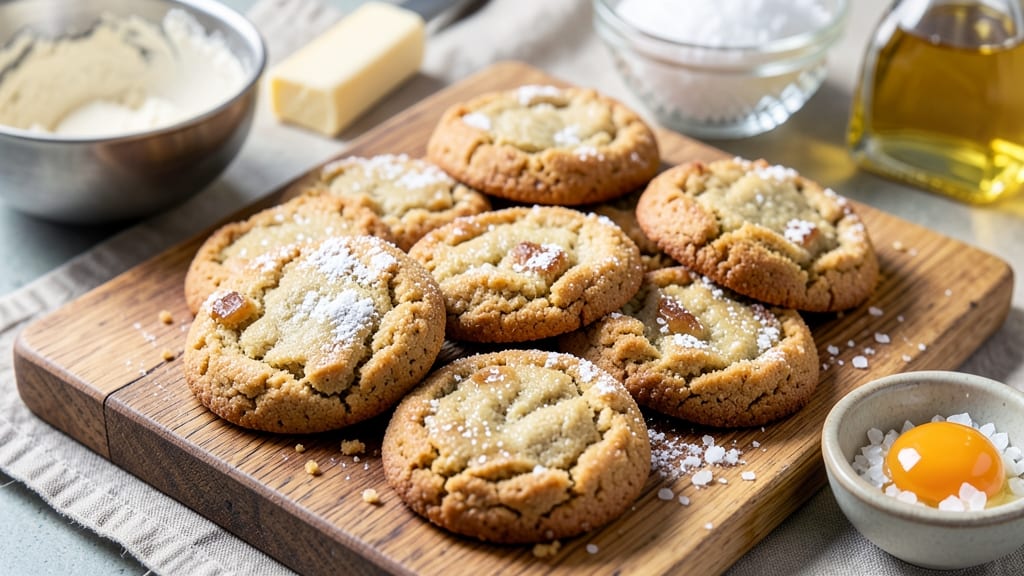
This shortbread cookie recipe with egg yolk transforms classic buttery shortbread into something extraordinary—where crispy edges meet velvety richness. The secret lies in that single egg yolk, which adds moisture and depth without altering the signature crunch.
I've perfected this version after years of baking, and it consistently delivers cookies that are tender yet firm, with a melt-in-your-mouth texture that keeps them from turning into cakey disappointments.
The beauty of this recipe is in its simplicity: just four core ingredients—flour, butter, sugar, and that golden egg yolk—come together to create cookies that taste like they belong in a high-end patisserie.
The egg yolk plays a crucial role, binding the dough while adding a subtle richness that elevates the buttery flavor. Baking at 350°F for 12–15 minutes ensures the perfect balance of crisp edges and a tender interior, with just the right amount of golden browning.
What makes these shortbread cookies truly special is their versatility. You can keep them classic with a sprinkle of flaky sea salt, or add lemon zest for a bright citrus twist, vanilla for warmth, or chocolate chips for indulgence.
The dough is forgiving enough for beginners but refined enough to impress seasoned bakers. Each batch yields about 24 cookies, making them ideal for holidays, gifts, or satisfying a sudden craving.
The result is a cookie that's crisp on the outside, tender within, and infused with that irresistible buttery richness from the egg yolk. These aren't just cookies—they're a testament to how a single ingredient can transform a classic recipe into something extraordinary. Ready to bake?
Ingredients for shortbread cookie recipe with egg yolk
Four core ingredients plus a few finishing touches create these extraordinary shortbread cookies.
| Ingredient | Amount | Notes |
|---|---|---|
| All-Purpose Flour 🌾 | 2 cups | Sifted for even texture |
| Unsalted Butter 🧈 | 1 cup | Cold, cubed for even baking |
| Granulated Sugar 🍚 | ½ cup | Superfine preferred for smoothness |
| Large Egg Yolk 🥚 | 1 whole | Room temperature for blending |
| Flaky Sea Salt 🧂 | ½ tsp | For finishing, optional but recommended |
| Vanilla Extract 🌸 | ½ tsp | Pure vanilla for authentic flavor |
| Lemon Zest 🍋 | 1 tsp | Freshly grated for brightness |
| Semisweet Chocolate Chips 🍫 | ½ cup | Optional for indulgence |
The butter is non-negotiable here—European-style unsalted butter (like Plugrá or President) gives the best flavor, but any good-quality brand works. Grab it cold from the fridge and cut it into uniform cubes for even baking. Flour matters too: King Arthur or Gold Medal brands are my go-tos—they bake consistently. The egg yolk? Room temperature is key—it blends better and adds that velvety texture. If you're in a rush, let it sit in warm water for 5 minutes.
No vanilla extract? Vanilla bean paste works just as well, or skip it entirely—these cookies are delicious plain. Short on lemon zest? Orange zest at the same amount gives a similar brightness. Chocolate chips optional, but if you add them, chop them roughly for a more rustic look. Prefer white chocolate? Swap in the same quantity—just know it'll melt differently. The salt is the secret weapon: Maldon or Jacobsen flakes melt beautifully on top, but any flaky sea salt will do.
Store dough in an airtight container in the fridge for up to 3 days—it actually improves with time. Baked cookies keep at room temperature for 5 days in a sealed container, or 2 weeks in the freezer. For gifts, package them in cellophane bags with a ribbon—parchment paper between layers prevents sogginess. These reheat beautifully: 30 seconds in the microwave restores that warm-from-the-oven magic.
Why You'll Love This Recipe
- No Mixer Needed: I swear by this recipe because it’s all about the fingers-and-a-bowl method—just rub butter into flour until it looks like wet sand. No electric mixer, no fuss, and honestly? The texture comes out richer for it.
- Buttery Magic: That single egg yolk? It’s the secret weapon. It keeps the cookies tender without being cakey, and the butter—real unsalted butter—melts into pure, golden, melt-in-your-mouth goodness. Flaky sea salt on top? Just the right kick to make them irresistible.
- Holiday or Snack Attack: These work for everything—gift boxes, coffee dates, or when you’re craving something sweet at 3 PM. They’re sturdy enough to ship (if you’re fancy like that) but still disappear fast at home.
- Pantry Staple Power: You’re already using what’s in your cupboard: flour, sugar, butter. The egg yolk might be the only extra, and it’s worth it. Plus, they keep for weeks in an airtight container—no sad, stale cookies here.
Step-by-step instructions for shortbread cookies with egg yolk
These delicate cookies rely on precise technique—follow each step carefully for perfect texture.
Prepare the Dough Base
In a stand mixer fitted with the paddle attachment, combine the 1 cup unsalted butter and 0.5 cup granulated sugar. Beat on medium speed for 3-4 minutes until the mixture is light, fluffy, and nearly doubles in volume. You'll see the butter emulsify completely with the sugar, creating a pale, airy consistency.
This creaming process is critical—it incorporates air that will create those signature tender layers. If your butter isn't cold enough, the dough may spread too much in the oven. I press down gently on the butter mixture during the first minute to help break it down evenly.
Incorporate Wet Ingredients
Add the 1 whole large egg yolk, 0.5 teaspoon vanilla extract, and 1 teaspoon lemon zest to the butter mixture. Mix on low speed for 1 minute until fully combined. The egg yolk adds richness and helps bind the dough, while the lemon zest brightens the buttery flavor profile.
I like to add the lemon zest last—this prevents the citrus oils from breaking down the butter too quickly. The mixture should look smooth and slightly thicker than cake batter. If it appears too loose, let it sit at room temperature for 5 minutes before proceeding.
Combine Dry Ingredients
In a separate bowl, whisk together the 2 cups all-purpose flour and 0.5 teaspoon flaky sea salt. Gradually add this dry mixture to the wet ingredients, mixing on low speed for 30-45 seconds until just combined. You should still see small flour streaks—overmixing develops gluten, which makes cookies tough.
This is where the texture magic happens. The flour should be fully incorporated but not fully developed. I use a silicone spatula to gently fold in the 0.5 cup semisweet chocolate chips by hand, ensuring even distribution throughout the dough.
Chill and Shape the Dough
Divide the dough into 2 equal discs and flatten each into a 6-inch round. Wrap tightly in plastic wrap and refrigerate for at least 1 hour (up to 24 hours). Chilling firms the butter, which prevents excessive spreading during baking and creates those signature crisp edges.
I press the dough discs between two sheets of parchment paper before wrapping—this helps them maintain their shape. If your kitchen is warm, consider freezing the discs for 20 minutes before rolling to ensure proper firmness.
Bake to Golden Perfection
Preheat your oven to 325°F and line two baking sheets with parchment paper. Using a sharp knife, cut each chilled dough disc into 12 wedges. Arrange the wedges 1 inch apart on the prepared baking sheets, pressing down gently to ensure even contact with the pan.
Bake for 25-30 minutes until the edges are golden brown and the centers look just slightly underbaked. The cookies will firm up as they cool. Let them rest on the baking sheets for 5 minutes before transferring to a wire rack to cool completely.
Pro Tips For Making Shortbread Cookie Recipe With Egg Yolk
- Chill the Dough Properly: I used to just toss the dough in the fridge for an hour, but that’s not enough—give it a solid 45 minutes to overnight in the coldest part of your fridge. The butter needs time to firm up completely, or your cookies will spread like sad pancakes. (Yes, even if you’re impatient like me.)
- Use Cold Butter, Not Room-Temp: If your butter’s soft when you start, pop it back in the freezer for 10 minutes. Cold butter creates tiny pockets of steam when baking, which makes those cookies light and crumbly. I learned this the hard way when my first batch turned out dense and greasy.
- Skip Overmixing the Dough: Once you add the egg yolk, mix just until combined—about 10-12 strokes. Overworking the dough develops gluten, and suddenly you’ve got chewy cookies instead of melt-in-your-mouth shortbread. Feel the texture: it should be shaggy, not smooth.
- Press for Even Thickness: Use a bench scraper or your hands to press the dough to ¼-inch thickness—no thinner, or it’ll burn before baking through. Uneven spots mean some cookies will be underdone while others turn into hockey pucks. (Your future self will thank you.)
Dietary considerations for shortbread cookie recipe with egg yolk
Egg Yolk Allergy?
If you or someone you're baking for has an egg yolk allergy, don’t worry—this recipe can still work! Replace the 1 large egg yolk with 1 tablespoon of aquafaba (chickpea brine) mixed with ½ teaspoon cream of tartar.
Whisk until frothy to mimic the binding properties of the yolk. For a neutral flavor, 1 tablespoon unsweetened applesauce is another great substitute. Always test for allergies first, especially with aquafaba, as reactions can vary. 🌱
Gluten-Free Adaptation
For a gluten-free version, swap the 2 cups all-purpose flour with a 1:1 gluten-free flour blend (like King Arthur or Bob’s Red Mill). Add ½ teaspoon xanthan gum to help bind the dough. If your blend doesn’t include it, this step is crucial for preventing crumbly cookies.
Chill the dough for an extra 30 minutes to firm up, as gluten-free doughs can be stickier. Bake at 325°F for 28-32 minutes—they’ll need a little more time to crisp. 💪
Dairy-Free Option
To make these dairy-free, replace the 1 cup unsalted butter with 1 cup dairy-free butter (like Miyoko’s or Earth Balance). For extra richness, add 1 tablespoon coconut oil to the creamed mixture.
The egg yolk’s moisture will still work beautifully, but the texture may be slightly less crisp. Sprinkle with dairy-free flaky salt (like Redmond’s) for that same finishing touch. 🧈
Lower Sugar Version
Cutting back on sugar? Reduce the ½ cup granulated sugar to ⅓ cup and add ½ teaspoon vanilla bean paste for depth. The egg yolk’s natural sweetness will help balance the flavor.
For a healthier twist, replace ¼ cup of the sugar with 2 tablespoons maple syrup (ensure it’s cooled before mixing). These cookies will still be buttery and rich but with fewer refined carbs. 🍯
Nut-Free Kitchen?
If you’re avoiding nuts (or just chocolate chips), skip the semisweet chocolate chips and try freeze-dried strawberry bits or crushed pretzels for a salty-sweet contrast. For a festive touch, add ½ teaspoon ground cinnamon or ¼ teaspoon cardamom to the dry ingredients.
The egg yolk’s creaminess will still shine, and the dough remains just as easy to handle. 🍓
Nutrition facts
Frequently asked questions
Why use egg yolk instead of whole egg in shortbread?
The egg yolk adds rich moisture and depth without making the cookies cakey. Whole eggs introduce too much liquid, which can create a softer texture. The yolk's fat content also enhances the buttery flavor while keeping the signature crisp edges intact.
Can I make these without a mixer?
Use a sturdy wooden spoon or your hands to cream the butter and sugar. Work the mixture for 5-7 minutes until light and fluffy. The key is patience—keep pressing down on the butter to help emulsify it properly. For the dough, fold in the flour gently with a spatula.
How do I prevent my shortbread from spreading too much?
Chill the dough for the full 1 hour (or up to 24 hours) before cutting. Use a sharp knife to slice the wedges, and press them gently onto the baking sheet. Bake at 325°F—lower heat prevents excessive spreading. If your kitchen is warm, freeze the dough discs for 20 minutes before rolling.
What's the best way to store these cookies?
Keep them in an airtight container at room temperature for up to 5 days. For longer storage, freeze between parchment layers for 2 weeks. To revive, warm for 10-15 seconds in the microwave—they'll taste fresh-baked! Avoid refrigerating, as moisture can make them soft.
Can I add other flavors besides lemon or vanilla?
Try orange zest for brightness, cinnamon for warmth, or matcha powder for earthiness. For savory options, add 1 teaspoon dried rosemary or ½ teaspoon smoked paprika. Just remember: start with small amounts (½ teaspoon) and taste before baking—flavors intensify!