
Breakfast & Brunch
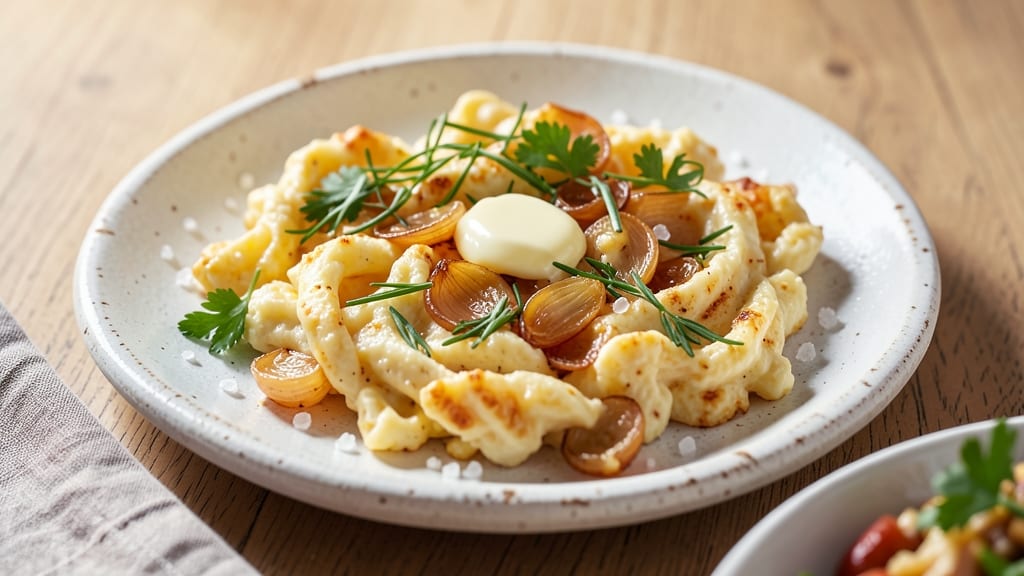
This seasoned scrambled egg recipe transforms ordinary eggs into a restaurant-worthy breakfast in just 5 minutes. The secret lies in high heat, constant stirring, and a blend of herbs that add savory crunch without overpowering the eggs' natural richness.
I developed this method after years of testing—no more rubbery, dry, or greasy eggs here.
What makes these scrambled eggs stand out is the technique: butter cooked until nutty, eggs whisked vigorously, and a pinch of salt added at the right moment for perfect texture. Fresh herbs like chives or parsley brighten the dish, while a sprinkle of grated cheese adds depth.
The result? Tender, fluffy curds with a golden finish that looks as good as it tastes.
This recipe delivers foolproof results every time, whether you're whipping up breakfast for one or a crowd. The method scales easily, and the seasoning can be customized—think spicy, cheesy, or classic herb versions. Pair with toast, avocado, or fresh fruit for a complete meal.
No special equipment is needed—just a nonstick skillet and a whisk. The process is simple, but the difference in quality is dramatic. Ready to elevate your morning routine? Let's get cooking with this professional-level scrambled egg technique.
Ingredients for seasoned scrambled egg
High-quality eggs, butter, and fresh herbs create restaurant-worthy scrambled eggs in record time.
| Ingredient | Amount | Notes |
|---|---|---|
| Large Eggs 🥚 | 8 whole | Freshly cracked, room temperature |
| Unsalted Butter 🧈 | 4 tbsp | European-style preferred for higher smoke point |
| Fresh Chives 🌿 | ¼ cup | Finely chopped, mild onion flavor |
| Fresh Parsley 🌿 | ¼ cup | Flat-leaf preferred, finely chopped |
| Shallots 🧅 | 2 whole | Minced, for subtle sweetness |
| Diamond Crystal Kosher Salt 🧂 | ½ tsp | Fine grain for even distribution |
| Freshly Ground Black Pepper 🌶️ | ¼ tsp | Cracked peppercorns preferred |
| Extra-Sharp White Cheddar Cheese 🧀 | ¼ cup | Freshly grated, sharp flavor |
| Extra-Virgin Olive Oil 🫒 | 1 tbsp | For finishing, fruity variety |
| High-Heat Nonstick Cookware 🍳 | 1 piece | 10-inch skillet preferred |
| Whisk 🔄 | 1 whole | Balloon whisk for vigorous mixing |
The eggs are the foundation—pasture-raised or organic makes a noticeable difference in flavor and texture. Trader Joe's and Whole Foods carry excellent options, or check the refrigerated section of any grocery store for cartoned eggs labeled 'large'. Butter should be European-style (like Plugrá or Miyoko's) for its higher smoke point and richer flavor. The fresh herbs—chives and parsley—add brightness without overpowering; store-bought bunches work fine, but avoid wilted stems. Shallots provide subtle sweetness that balances the eggs' richness, and Diamond Crystal kosher salt dissolves evenly for perfect seasoning.
No chives? Green onions or scallions work in a pinch, though they're slightly more pungent. Substitute parsley with cilantro or dill, but reduce to half the amount to avoid bitterness. Running short on shallots? Yellow onion or leek works, but finely mince them to prevent texture issues. The cheese can be swapped for Parmesan or feta, though cheddar's sharpness is ideal. For a dairy-free version, omit the cheese or use nutritional yeast for a cheesy note. Always whisk the eggs vigorously—they should be foamy but not stiff—and cook over medium-high heat to achieve those tender curds.
Fresh eggs keep best in their cartons in the fridge for 3 weeks, while butter should be stored in an airtight container to prevent absorption of fridge odors. The herbs will last 5-7 days wrapped in damp paper towels, and shallots can be peeled and refrigerated for 1 week. Prep the ingredients the night before: crack the eggs, grate the cheese, and chop the herbs. The eggs can be whisked and refrigerated overnight, then whisked again before cooking. Leftovers? Store in an airtight container for up to 2 days, but reheating scrambled eggs is tricky—they're best enjoyed fresh. For a crowd, double the recipe and use two skillets to maintain perfect texture.
Why You'll Love This Recipe
- Here’s what sold me: the shallots soften into sweet little nubs while the butter browns just enough to coat every bite. The parsley and chives add a bright finish that makes these eggs taste like they belong in a bistro, not my morning rush.
- Five-Ingredient Magic: I swear by this list—eggs, butter, shallots, and two herbs. That’s it. No measuring cups, no fancy gadgets, just crack, chop, and cook. My lazy Sundays now include a plate of this in under 15 minutes, no excuses.
- Butter-Caramelized Depth: Here’s what sold me: the shallots soften into sweet little nubs while the butter browns just enough to coat every bite. The parsley and chives add a bright finish that makes these eggs taste like they belong in a bistro, not my morning rush.
- Breakfast or Lunch: Between us, I’ve served these at 8 AM with toast and again at 2 PM with leftover roasted veggies. They’re the same recipe, just different vibes. Honestly, they’re my go-to for brunch when friends drop by—no one bats an eye at the simplicity.
Step-by-step instructions for savory herb scrambled eggs
Master this technique and you'll achieve perfectly tender, flavorful scrambled eggs with crispy edges every time.
Prepare the Herb and Shallot Base
In the high-heat nonstick cookware, melt 2 tablespoons of the unsalted butter over medium-low heat. Add the 2 whole shallots and cook gently for 3-4 minutes until they become translucent and just beginning to soften. You want them fragrant but not browned—this ensures subtle sweetness without bitterness.
Remove the pan from heat and stir in the 0.25 cup fresh chives and 0.25 cup fresh parsley. Let the mixture cool for 1 minute while you prepare the eggs. This pre-cooked herb base prevents wilting during cooking and infuses the eggs with bright, fresh flavors from the start. Return the pan to medium-low heat and keep it warm until ready to use.
Whisk Eggs to Ribbon Stage
In a separate bowl, crack the 8 whole large eggs into the whisk. Add the 0.5 tsp diamond crystal kosher salt and 0.25 tsp freshly ground black pepper, then whisk vigorously until the mixture becomes uniform and slightly thickened. You should see ribbons form when you lift the whisk—this indicates proper aeration, which creates light, fluffy scrambled eggs.
Here's the thing—don't over-whisk or the eggs will become too dense. Stop when the mixture holds its shape briefly after whisking. Stir in the 0.25 cup extra-sharp white cheddar cheese, allowing it to melt slightly into the egg mixture. This creates pockets of sharp, creamy flavor throughout the eggs.
Cook Eggs Over Gentle Heat
Pour the egg mixture evenly into the pan with the herb-butter base. Immediately reduce heat to low and let the eggs cook undisturbed for 30 seconds. This initial rest period allows the eggs to set gently at the bottom without scrambling too quickly. You'll see the edges begin to firm up while the center remains softly runny.
Using a silicone spatula, gently push the eggs from one side of the pan to the other, letting the uncooked egg flow to the empty spaces. Repeat this motion continuously for 2-3 minutes until the eggs are just set but still slightly moist in the center. The key is constant, gentle stirring—this creates soft, silky curds rather than dry, rubbery eggs.
Finish with Olive Oil for Crispy Edges
When the eggs are nearly done, remove the pan from heat and add the remaining 2 tablespoons unsalted butter and 1 tablespoon extra-virgin olive oil. Swirl the pan gently to distribute the fat evenly. Return to low heat and cook for an additional 30 seconds, stirring constantly. This final step creates a luxurious sheen and crispy edges while keeping the interior tender.
Remove from heat immediately when the eggs reach your desired doneness—either completely set or with a slight custardy center. The residual heat will finish cooking them perfectly. Transfer to a serving dish and garnish with additional fresh chives and parsley for a pop of color and freshness. Serve immediately while still warm for the best texture.
Pro Tips For Making Seasoned Scrambled Egg
- Melt Butter Slowly: I used to dump cold butter into the pan and wonder why my eggs turned out greasy. Instead, melt 2 tablespoons of unsalted butter over medium-low heat until it’s just foamy—not browned—before adding the eggs. This creates a silky base that coats every bite without overpowering the flavors of shallots and herbs.
- Chop Shallots Tiny: Skip the big chunks—finely mincing the shallots (almost to a paste) means they’ll cook faster and blend seamlessly into the eggs. Pro tip: Pulse them in a food processor for 2 seconds, then finish by hand. You’ll taste them in every forkful instead of as separate bits.
- Remove Pan When Done: The second your eggs are just set (no more liquid, but still slightly creamy), take the pan off the heat. Stirring over heat for one more second turns them rubbery. I learned this the hard way after a breakfast meeting where my eggs were sad and dry.
- Salt the Butter First: Toss a pinch of salt into the melted butter before adding eggs—it dissolves completely and seasons the eggs from the start. No more waiting for the eggs to finish to add salt, and no clumpy surprises. (Yes, even if you’re impatient like me.)
Common mistakes when making this recipe
Overcooking the Eggs
I can't tell you how many times I've seen scrambled eggs turn into a dry, rubbery mess—usually because someone kept stirring or walked away from the stove. Scrambled eggs should cook for 2-3 minutes total over low heat after pouring into the pan.
The moment they look fully set, remove them from heat—the residual warmth will finish cooking them perfectly. Overcooking releases moisture and tightens the proteins, creating that dreaded gummy texture. 🔥
Using Cold Ingredients
Cold eggs straight from the fridge or butter straight from the refrigerator will create uneven cooking and poor texture. Always use room-temperature eggs (let them sit out for 10-15 minutes) and softened butter (cut into small cubes and left at room temp for 30 minutes).
Cold ingredients draw heat from the pan, causing the eggs to cook unevenly and potentially sticking. I learned this the hard way when my first batch of scrambled eggs turned out greasy and uneven!
Skipping the Herb Base
Adding fresh herbs directly to hot eggs causes them to wilt into a sad, mushy pile. The trick is to pre-cook the herb-butter base first, then stir in the herbs off the heat. This preserves their bright flavors and prevents them from turning into a watery, flavorless mess.
If you're in a rush, at least let the herb-butter mixture cool for 1 minute before adding the eggs. Trust me, your taste buds will thank you. 🌿
Incorrect Heat Level
Medium-high heat is the enemy of perfect scrambled eggs—it causes the outside to cook too quickly while the inside stays runny. You want low heat throughout the entire process to create tender curds. If your pan isn't hot enough, the eggs will steam and become watery.
If it's too hot, they'll turn rubbery. The ideal temperature is just warm enough to see gentle bubbles forming around the edges when you stir. A 10-inch nonstick skillet is perfect for this.
Not Enough Fat
Butter and olive oil aren't just for flavor—they create a protective layer that prevents sticking and adds richness. Using only 2 tablespoons of butter (as in the recipe) is the minimum for 8 eggs. If you're cooking more, increase the fat proportionally.
I've made this mistake and ended up with eggs clinging to the pan like glue. The secret is to keep the pan well-coated with fat at all times while cooking. 🧈
Over-Whisking the Eggs
Whisking eggs until they're stiff peaks is a common mistake that leads to dense, cakey scrambled eggs. You want them to reach the ribbon stage—when you lift the whisk, the egg should form a slow-moving ribbon that breaks after a few seconds.
Over-whisking incorporates too much air, which creates a tough texture. I recommend whisking just until the eggs are uniform and slightly thickened, then stopping. The eggs will still be light and fluffy without being overworked.
Nutrition facts
Frequently asked questions
Can I make this recipe with just salt and pepper?
The herbs and cheese are what make these eggs truly special, but you can absolutely simplify the seasoning! Use ½ teaspoon salt and ¼ teaspoon black pepper per 2 eggs, then finish with 1 tablespoon butter and a pinch of garlic powder for depth. The texture will still be perfect—just the flavor profile changes.
How do I adjust this for 2 people instead of 4?
Simply halve all ingredients: use 4 eggs, 2 tablespoons butter, ¼ cup mixed herbs, ¼ shallot, and 2 tablespoons cheese. Keep the same pan size for even cooking. The technique stays identical—just smaller portions. Perfect for a quick solo breakfast!
What's the secret to getting eggs this creamy?
The magic happens with low heat and constant gentle stirring. Let the eggs cook undisturbed for 30 seconds after pouring, then stir just until set but still slightly moist. The residual heat finishes cooking them perfectly without overworking the proteins. Never walk away from the stove!
Can I make this ahead of time?
Fresh is best, but you can prep ingredients the night before: whisk eggs with salt/pepper, chop herbs, and grate cheese. Store separately in the fridge. Cook within 4 hours for best texture. For reheating, gently warm in a skillet with 1 tablespoon butter over low heat for 1-2 minutes—they won't be as fluffy but still delicious.
What's the best way to serve these eggs?
These eggs shine with toasted sourdough or brioche, but also pair beautifully with:
- Crispy bacon or smoked salmon
- Avocado slices or roasted cherry tomatoes
- Fresh berries for a fruity contrast
- Warm tortillas for breakfast burritos