
Breakfast & Brunch
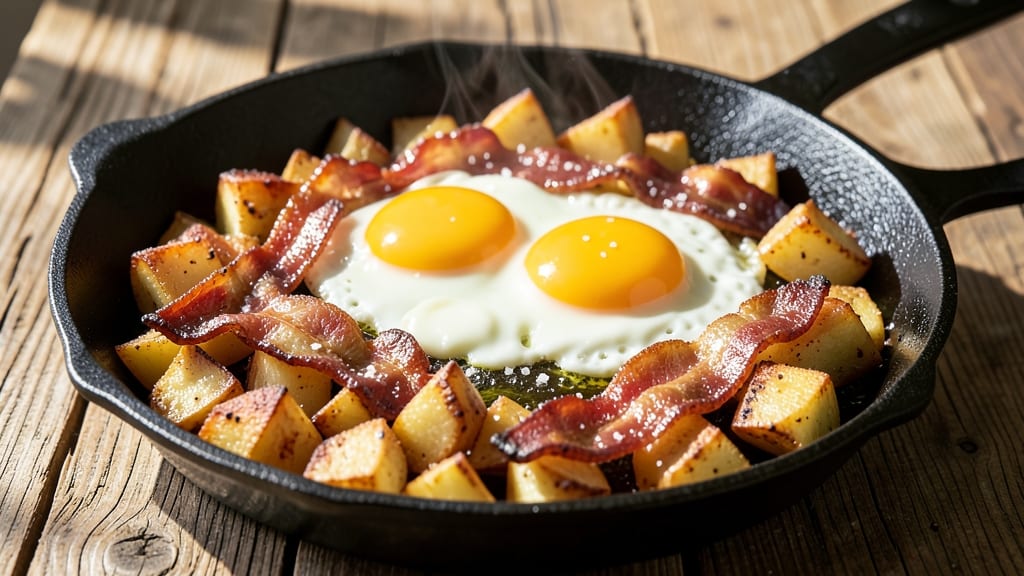
This bacon egg potato skillet recipe delivers restaurant-quality breakfast in a single pan, where crispy potato edges meet perfectly runny yolks and smoky bacon in every bite. The secret lies in layering ingredients strategically—potatoes first to crisp up, then eggs nestled into the warm skillet for that signature creamy center.
I developed this after perfecting the technique over countless weekend brunches, and it never fails to impress even skeptical guests.
What makes this dish truly special is its versatility—equally at home as a hearty breakfast, satisfying brunch, or even a quick dinner. The potatoes develop a golden, crispy exterior while staying tender inside, while the eggs cook just until their yolks remain gloriously runny.
Bacon adds that essential smoky depth, tying all the elements together into one cohesive, flavorful skillet. With just a few simple ingredients and one pan, you'll achieve restaurant-quality results that taste even better than takeout.
The magic happens in the timing—potatoes get their head start to develop that perfect crispiness, while the eggs cook quickly in the residual heat. This method ensures you won't have to flip or fuss, making it ideal for busy mornings or lazy weekends.
The result is a dish that's as visually appealing as it is delicious, with layers of texture and flavor that keep everyone coming back for seconds. Trust me, once you try this, your go-to breakfast will never be the same.
This skillet works beautifully with optional garnishes like fresh chives, hot sauce, or crumbled feta for extra flavor. It's the kind of dish that transforms a simple weeknight into something special without requiring any special skills. Let's get cooking—your taste buds will thank you.
Ingredients for bacon egg potato skillet
Crispy potatoes, smoky bacon, and runny yolks—just 10 ingredients for a skillet that tastes like a restaurant breakfast.
| Ingredient | Amount | Notes |
|---|---|---|
| Russet Potatoes 🥔 | 2 lb | Cut into 1-inch cubes, skin on |
| Thick-Cut Bacon 🥓 | 8 oz | Thick-cut preferred for crispiness |
| Large Eggs 🥚 | 4 whole | Room temperature for even cooking |
| Unsalted Butter 🧈 | 4 tbsp | For crisping potatoes |
| Extra-Virgin Olive Oil 🫒 | 2 tbsp | For skillet coating |
| Kosher Salt 🧂 | 1 ½ tsp | Diamond Crystal preferred |
| Freshly Ground Black Pepper 🌶️ | ½ tsp | Freshly cracked preferred |
| Fresh Chives 🌿 | 2 tbsp | Chopped, for garnish (optional) |
| Hot Sauce 🔥 | 1 tsp | For serving (optional) |
| Shredded Cheddar Cheese 🧀 | ½ cup | Sharp cheddar preferred (optional) |
The potatoes are everything here. Russets are your best bet—they crisp up perfectly while staying tender inside. Cut them into even 1-inch cubes so they cook consistently. I always use a sharp chef's knife for this, and I don't peel them—the skin adds texture. For the bacon, thick-cut is non-negotiable—it gets crispier and holds up better to the potatoes. Grab the best-quality you can find; Oscar Mayer Thick Cut or Applewood-smoked from the deli counter are my go-tos. The eggs? Room temperature makes all the difference—they slide right into the skillet without breaking.
No thick-cut bacon? Regular bacon works in a pinch, but it won't be as crispy. Short on potatoes? Sweet potatoes add a nice twist, though they take a bit longer to crisp. The butter and olive oil combo is key for that perfect crisp—don't skimp on either. If you're avoiding dairy, avocado oil works just as well. For the optional cheese, sharp cheddar melts best, but Pepper Jack or Monterey Jack add great flavor too. The chives and hot sauce are just for topping, but they take this dish from good to 'wow'—trust me, they're worth the extra minute.
Potatoes keep best in the fridge for 3-4 days after cutting, but I always cook them fresh for maximum crisp. Bacon stays good for 5 days in the fridge, but it's best used within 2 days for peak crispiness. Eggs last 3 weeks in the fridge, but bring them to room temp before cooking. This skillet reheats beautifully—just pop it in the oven at 350°F for 10 minutes. Leftovers? I portion mine into containers for quick breakfasts all week. The cheese, chives, and hot sauce can be added fresh when serving.
Why You'll Love This Recipe
- One-Pan Magic: I swear by this recipe—just slice, cook, and let the skillet do the work. No chopping boards, no extra pots, and honestly? The mess stays in one place.
- Crispy-Creamy Obsession: That thick-cut bacon renders into golden flakes while the potatoes get buttery and tender—then you crack eggs right into the pan? The runny yolks soak up all the bacon fat, and it’s ridiculously good.
- Breakfast or Dinner: Honestly, I make this for both. Serve it with a side salad for brunch, or pile it high for a lazy weekend dinner. Even my picky college-aged son asks for seconds.
- Budget Breakfast Hack: Russets are cheap, eggs are cheap, and thick-cut bacon stretches further than you’d think. I’ve fed my family of four for under $10—and the leftovers? Just as good reheated the next day.
Step-by-step instructions for bacon egg potato skillet
Here's how to create the perfect harmony of crispy potatoes, smoky bacon, and silky eggs.
Cook the Potatoes Until Golden and Crispy
Heat a large oven-safe skillet over medium-high heat. Add 2 tablespoons extra-virgin olive oil and swirl to coat the bottom evenly. Add the 2 lb Russet Potatoes, cut into 1-inch cubes, in a single layer. Cook undisturbed for 5 minutes until the potatoes begin to brown in spots.
I like to press down gently on the potatoes during the first minute—this prevents them from curling and ensures even contact with the pan. After 5 minutes, carefully flip the potatoes and add 4 tablespoons unsalted butter. Cook another 5 minutes until the potatoes are deep golden brown and crispy in spots. If they're not brown enough, continue cooking in batches if needed.
Crisp the Bacon and Remove from Skillet
Push the potatoes to one side of the skillet, leaving space for the 8 oz thick-cut bacon. Cook the bacon over medium heat for 8-10 minutes, flipping occasionally, until deep brown and crispy. Use tongs to transfer the bacon to a paper towel-lined plate, leaving the rendered fat in the skillet.
Here's the thing—don't drain the bacon fat. That golden, smoky liquid is pure flavor and will help create the rich base for your eggs. If the potatoes look dry at this point, add a splash of water to the skillet and let it evaporate before proceeding.
Season the Potatoes and Make Nest for Eggs
Sprinkle the potatoes with 1.5 teaspoons kosher salt and 0.5 teaspoon freshly ground black pepper. Use a spatula to gently toss them, coating evenly with the bacon fat. Create 4 nest-shaped depressions in the potatoes using the back of a spoon—these will cradle your eggs perfectly.
This is the moment that matters: the nests should be deep enough to hold the eggs without spilling, but not so deep that they don't get the full benefit of the crispy potato edges. If your skillet is too crowded, work in batches and keep the potatoes warm in a 200°F oven while you finish.
Fry the Eggs to Perfect Runny Yolk Perfection
Crack 4 whole large eggs gently into the nests, being careful not to break the yolks. Return the skillet to medium-low heat—you want the eggs to cook slowly and gently. Cook for 3-4 minutes until the whites are just set but the yolks remain completely runny. If the skillet gets too hot, reduce the heat immediately to prevent overcooking.
Don't walk away. Eggs cook fast, and you want that glorious, creamy yolk center. The edges of the whites should look opaque but still slightly translucent—this is your visual cue that they're ready. If the potatoes start to brown too much, move the skillet to a cooler part of the burner.
Finish and Serve with Optional Toppings
Remove the skillet from heat and let it sit for 1 minute to allow the eggs to set slightly. Sprinkle with 0.5 cup shredded cheddar cheese and 2 tablespoons chopped fresh chives. For a kick, drizzle with 1 teaspoon hot sauce and serve immediately.
Here's where it gets fun—each bite delivers crispy potato edges, smoky bacon crumbles, and that perfect runny yolk. The cheese melts just enough to create a creamy sauce that ties everything together. Serve with toasted sourdough to soak up any extra egg or bacon fat—trust me, you'll want every last bite.
Pro Tips For Making Bacon Egg Potato Skillet
- CRISP THE POTATOES FIRST: I used to try to cook everything together, but the potatoes end up soggy. Instead, par-cook them in the oven at 400°F (200°C) for 20 minutes—cut into ½-inch slices, toss with olive oil, salt, and pepper—until they’re fork-tender but still hold shape. Then finish them in the skillet with the bacon.
- SALT THE BACON LIKE IT’S 1950: Skip the pre-packaged bacon seasoning. Thick-cut bacon needs just a pinch of salt (about ¼ teaspoon per 4 slices) before cooking—it crisps faster and doesn’t turn bitter. Trust me, the salt you add later in the skillet will do the rest.
- DON’T RUSH THE EGGS: The eggs are the star, but they’ll turn rubbery if the skillet’s too hot. Let the potatoes and bacon cook until they’re nearly done, then reduce heat to medium-low before cracking the eggs in. A runny yolk is worth the wait—this isn’t a scramble.
- USE BUTTER AT THE END: Add the butter only in the last 2 minutes. It’ll melt into the eggs and potatoes, creating a silky sauce that ties everything together. If you add it earlier, it’ll burn before the eggs are ready—waste not, want not.
Make-ahead tips for bacon egg potato skillet
Prep Ahead for Potatoes
Cut your Russet potatoes into 1-inch cubes the night before and store them in an airtight container in the fridge. This saves 15 minutes of prep time in the morning. Just give them a quick rinse under cold water before cooking to remove excess starch.
I also like to pre-portion the bacon into 8-ounce batches and store it in the fridge for faster cooking later. 🥔
Bacon Pre-Cooking Shortcut
Cook the bacon completely ahead of time and store it in a 200°F oven for up to 2 hours before serving. This keeps it crispy and ready to crumble over your skillet. Save the bacon fat in a jar—it's perfect for cooking the potatoes later.
I often make a big batch of bacon on Sunday so I can use it in multiple recipes all week.
Egg Prep for Perfect Runs
Bring your eggs to room temperature by setting them in a bowl of warm water for 10 minutes before cooking. This ensures even cooking and prevents cracked yolks.
I also like to make my egg nests in the skillet while the potatoes are still warm—this helps the eggs cook faster and keeps the potatoes from getting soggy. 🥚
Skillet Assembly Strategy
Assemble the entire skillet (potatoes, bacon, and eggs) up to 30 minutes ahead of time and refrigerate. When ready to serve, simply reheat the skillet over medium heat for 5-7 minutes, adding fresh bacon if needed.
The eggs will finish cooking perfectly during this process. This works especially well for brunch parties where you want everything ready at once.
Cheese and Garnish Prep
Chop your fresh chives and measure out your optional toppings (cheese, hot sauce) in small bowls before cooking. This makes serving faster and keeps everything organized. I also keep a small bowl of extra bacon fat nearby to drizzle over the finished skillet for extra richness.
These little prep steps make the final presentation look restaurant-quality. 🧀
Reheating Leftovers
Store leftovers in an airtight container for up to 3 days. To reheat, cover the skillet with foil and warm in a 350°F oven for 10-12 minutes. Add a splash of water or bacon fat to keep things moist.
For microwave reheating, cover with a damp paper towel and heat in 30-second intervals until warmed through. The potatoes stay crispy and the eggs reheat surprisingly well this way. 🔥
Nutrition facts
Frequently asked questions
Can I make this skillet ahead of time?
Assemble everything (potatoes, bacon, and eggs) up to 30 minutes ahead and refrigerate. When ready to serve, reheat over medium heat for 5-7 minutes—the eggs will finish cooking perfectly. For crispy potatoes, cover with foil during reheating and remove just before serving. Pro tip: Keep cooked bacon in a 200°F oven to stay crispy for up to 2 hours.
Why are my potatoes soggy instead of crispy?
Soggy potatoes usually mean one of two things: either they weren't cooked long enough or the heat was too low. Start with medium-high heat and let them cook undisturbed for 5 minutes per side. If your skillet isn't oven-safe, transfer to a 400°F oven for 10 minutes after adding butter to finish crisping. Also, avoid overcrowding—cook in batches if needed.
How do I get perfectly runny yolks?
Low and slow is key! Cook eggs on medium-low heat for just 3-4 minutes after cracking. The whites should look opaque but still slightly translucent at the edges. If your skillet gets too hot, reduce the heat immediately—overcooked yolks are nearly impossible to fix. A 10-inch cast-iron skillet works best for even heat distribution.
Can I use sweet potatoes instead?
Yes, but they require extra time! Sweet potatoes need 10-12 minutes per side to crisp up properly. Cut them ½-inch thicker than regular potatoes (about 1.5 inches) and cook at medium heat to prevent burning. Their natural sweetness pairs beautifully with the smoky bacon—just expect a slightly softer texture.
What's the best skillet material for this recipe?
Cast iron is ideal—it retains heat perfectly and develops a natural nonstick surface over time. If you don't have cast iron, a heavy stainless steel or enameled skillet works well. Avoid nonstick coatings—they can't handle the high heat needed for crispy potatoes. Season your cast iron well before using for even better results.