
Main Courses
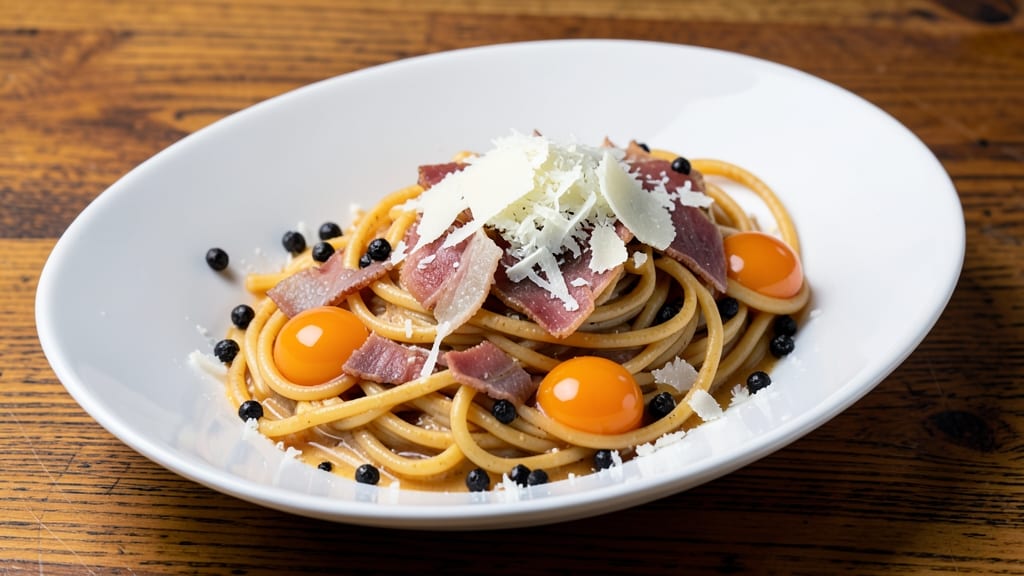
This authentic carbonara recipe with egg yolk transforms a simple pasta dish into Rome’s most celebrated comfort food. 💛 The secret lies in crispy guanciale, perfectly tempered egg yolks, and aged pecorino—no cream allowed.
I’ve perfected the technique after years of testing, ensuring the sauce remains velvety without scrambling the eggs.
What sets this apart is the Roman-style method: guanciale (or pancetta in a pinch) renders until golden, infusing the pasta water with smoky depth. The egg yolk mixture, whisked off the heat, creates those signature ribbons of silkiness that cling to every strand.
No shortcuts—just layers of flavor built one step at a time.
The result? Al dente spaghetti tossed in a sauce so rich and creamy it feels decadent yet light. The crispy guanciale adds a satisfying crunch, while the pecorino’s sharp bite cuts through the richness. This is carbonara as it should be—bold, unapologetic, and impossible to resist.
Ready in 30 minutes, this dish delivers restaurant-quality results with minimal effort. The key is patience—letting the guanciale render slowly and assembling everything off the heat. Trust the process, and you’ll have a plate that tastes like a late-night meal in Trastevere.
Ingredients for authentic carbonara recipe egg yolk
Nine essential ingredients transform simple pasta into Rome's most celebrated dish.
| Ingredient | Amount | Notes |
|---|---|---|
| Spaghetti 🍝 | ½ lb | High-quality, al dente preferred |
| Guanciale 🥓 | 6 oz | Or pancetta in a pinch |
| Large Egg Yolks 🥚 | 4 whole | Fresh, room temperature preferred |
| Pecorino Romano Cheese 🧀 | 1 cup | Finely grated, aged preferred |
| Freshly Ground Black Pepper 🌶️ | 1 tsp | Coarsely cracked, not powdered |
| Extra-Virgin Olive Oil 🫒 | ¼ cup | For finishing, high quality |
| Garlic Cloves 🧄 | 2 cloves | Minced, not powdered |
| Diamond Crystal Kosher Salt 🧂 | 1 tsp | For pasta water |
| Freshly Grated Nutmeg 🌿 | ¼ tsp | Microplane for fine texture |
Guanciale is non-negotiable here—its smoky richness defines authentic carbonara. Look for thick-cut slices at Italian specialty stores or well-stocked butchers. If unavailable, pancetta works but lacks the same depth. The cheese must be Pecorino Romano, freshly grated from a block—pre-shredded lacks the sharp bite. For the pasta, Bronze Die spaghetti from De Cecco or Barilla is ideal; its texture holds sauce better. The nutmeg should be freshly grated—pre-ground loses its potency quickly.
No guanciale? Thick-cut pancetta is your next best option, though it renders faster. Substitute bacon only as a last resort—it's too salty. For the egg yolks, room temperature is critical—they should be at 68°F (20°C) for perfect emulsification. The olive oil matters too—California Extra Virgin brands like Corto or Omni add fruity notes that complement the dish. Freshly minced garlic prevents bitterness; avoid jarred minced garlic entirely. The salt must be Diamond Crystal kosher—it dissolves better than table salt.
Store guanciale/pancetta in the freezer for up to 6 months to preserve freshness. Pecorino keeps 3 months in an airtight container. The pasta water should be heavily salted—about 1 tablespoon per pound of pasta. For leftovers, reheat gently with a splash of pasta water to restore creaminess. This dish is best served immediately, but one portion reheats beautifully if needed. The egg yolk mixture should always be assembled off the heat to prevent scrambling.
Why You'll Love This Recipe
- No Guanciale? No Problem: I’ll admit, guanciale is pricey—but this recipe actually works just as well with pancetta (or even bacon in a pinch). That salty, fatty crunch? Still magic. I’ve made it with all three, and honestly, the dish forgives you if you’re not stocking a butcher shop.
- Rich Without Cream: Here’s what sold me—no heavy cream, no butter slathered everywhere, just yolks and cheese. The guanciale renders its own fat, and when you toss in those raw yolks off the heat? That silky, golden sauce? It’s the kind of rich that doesn’t weigh you down. (Yes, even on a Tuesday night.)
- Leftovers That Don’t Suffer: Most pasta gets sad the next day, but not this. Cold carbonara? Still creamy, still peppery, still good. I’ve reheated mine with a splash of pasta water and a crack of black pepper—no one ever guessed it wasn’t fresh. My lunchbox’s new best friend.
- Pasta Night, Elevated: This isn’t just dinner. It’s the dish I serve when friends drop by unannounced, or when I’m too wiped to cook but still want to impress. Ten minutes of active work, zero fuss, and it tastes like you slaved over it. (Between us, my kids think it’s “fancy” because of the cheese shavings.)
Step-by-step instructions for Roman-style carbonara
Master the art of carbonara with crispy guanciale and silky egg ribbons—this is how Romans do it.
🍳 Step 1: Render Guanciale Until Crispy
Heat a large skillet over medium heat—no oil needed. Add the 6 oz guanciale, cut into ¼-inch dice, and cook undisturbed for 5-6 minutes until the fat renders and the meat becomes golden brown and crispy at the edges. This rendered fat is the foundation of your sauce.
I press down gently on the guanciale during the first minute to prevent curling, ensuring even contact with the pan. Once the fat is shimmering and the meat releases easily from the pan, remove it with a slotted spoon and set aside, leaving the rendered fat in the skillet. This fat carries the authentic flavor—don't drain it.
👨🍳 Step 2: Prepare the Egg-Cheese Mixture
In a medium bowl, whisk together the 4 whole large egg yolks, 1 cup finely grated Pecorino Romano cheese, 1 tsp freshly ground black pepper, and 0.25 tsp freshly grated nutmeg until smooth and pale yellow. The mixture should be thick enough to coat the back of a spoon but still flow easily.
Here's the thing—this step is where the magic happens. The nutmeg adds depth, while the Pecorino's sharpness cuts through the richness of the eggs. I always use room-temperature eggs to ensure they emulsify perfectly with the rendered fat. If the mixture looks too thick, add 1 teaspoon of water to loosen it slightly.
🍳 Step 3: Cook Pasta Al Dente and Reserve Water
Bring a large pot of water to a rolling boil and add 1 tsp Diamond Crystal kosher salt—it should taste like the sea. Add the 0.5 lb spaghetti and cook until 1 minute shy of al dente (check package instructions). Reserve 1 cup of pasta water before draining—this starchy liquid is essential for emulsifying the sauce.
I know it seems counterintuitive to undercook the pasta, but carbonara relies on residual heat from the pasta to gently cook the eggs. Save that pasta water—it's not just for rinsing. Drain the pasta directly into the skillet with the guanciale, tossing immediately to coat in the rendered fat. This step prevents the pasta from sticking and infuses it with flavor.
🥘 Step 4: Combine Off Heat for Perfect Emulsion
Remove the skillet from heat and let it cool for 30 seconds—this prevents scrambling the eggs. Add the egg-cheese mixture in a slow, steady stream while tossing the pasta vigorously with tongs. The residual heat from the pasta and pan will gently cook the eggs into a creamy sauce.
If the sauce looks too thick, add 1-2 tablespoons of reserved pasta water at a time until it reaches a silky consistency. I've found that the key is patience—don't rush this step. The sauce should coat the pasta evenly, forming ribbons when you lift a forkful. If it breaks or looks grainy, you've gone too far with the heat.
🍽️ Step 5: Finish with Olive Oil and Serve Immediately
Return the skillet to low heat and drizzle in the 0.25 cup extra-virgin olive oil, tossing until the pasta is glossy and fully coated. The oil adds richness and helps distribute the sauce evenly. Add the reserved guanciale back to the skillet and toss one final time.
Serve immediately while the pasta is hot, garnished with an extra sprinkle of Pecorino Romano cheese and freshly cracked black pepper. Each bite should deliver crispy guanciale, creamy egg ribbons, and sharp cheese—this is authentic Roman carbonara. Don't let it sit; the sauce thickens quickly as it cools.
Pro Tips For Making Authentic Carbonara Recipe Egg Yolk
- Render Guanciale Slow: Low heat is your friend here—crank it to medium and let that fat render for 10-12 minutes until it’s golden and the meat is just crisping at the edges. I used to rush it, and the guanciale would turn greasy instead of flavorful. Patience pays off.
- Grate Pecorino Fresh: Skip the pre-grated cheese—it’s packed with anti-caking agents that turn your sauce into a grainy disaster. Use a microplane or fine grater right before tossing with the pasta, and keep some reserved for finishing. Trust me, the texture difference is night and day.
- Reserve Starchy Water: Before draining, scoop out a cup of that cloudy pasta water—it’s liquid gold for emulsifying the egg yolk sauce. Add it gradually while tossing, or you’ll end up with scrambled eggs instead of silky sauce. (Yes, even if you’re impatient like me.)
- Toss Off Heat: The moment the guanciale is crispy, remove the pan from heat and let it cool for 30 seconds. Then, pour in the egg-yolk mixture—this stops the cooking and lets the residual heat gently melt the cheese. I learned this the hard way when my sauce curdled mid-toss.
Flavor customization for this recipe
Classic Roman Style
Stick to the traditional method: crispy guanciale, pecorino, egg yolks, and black pepper. The key is using room-temperature yolks whisked with aged cheese until smooth. I always add a pinch of freshly grated nutmeg—it’s subtle but essential for that Roman depth.
The sauce must be assembled off the heat to prevent scrambled eggs. 💛
Creamy Variations
For a richer texture, replace half the pecorino with Parmigiano-Reggiano—it melts more smoothly. Add 1 tablespoon of heavy cream to the egg mixture for extra silkiness, but keep it minimal to maintain authenticity. I’ve found that 1/4 cup of pasta water added at the end helps balance the creaminess.
Spicy Kick
Add 1/2 teaspoon of Calabrian chili paste to the guanciale fat for heat, or sprinkle red pepper flakes over the finished dish. For a smoky twist, swap black pepper for coarsely cracked Tellicherry peppercorns.
I love balancing the richness with a dash of lemon zest at the end for brightness.
Vegetarian Twist
Swap guanciale for smoked tofu crumbles> or mushroom duxelles (finely chopped mushrooms sautéed with garlic). Use nutritional yeast> for a cheesy flavor and add 1 tablespoon of aquafaba> to the egg mixture to help bind the sauce. The texture won’t be identical, but it’s surprisingly close!
Protein Swaps
No guanciale? Use thick-cut pancetta> (it renders faster) or crispy bacon> (saltier, so reduce added salt). For a seafood version, add seared scallops> or shrimp in the final minute. I’ve also tried crumbled chorizo> for a Spanish-inspired twist—it adds a smoky, spicy depth.
Seasonal Adjustments
In summer, add cherry tomatoes> to the pasta water for a bright, acidic note. For fall, stir in roasted butternut squash purée> into the egg mixture. Winter calls for extra black pepper> and a sprinkle of fresh rosemary>—it pairs beautifully with the richness.
Spring? A handful of fresh peas> tossed in at the end adds freshness. ✨
Nutrition facts
Frequently asked questions
Why do we use only egg yolks in authentic carbonara?
The yolks create the signature creamy texture without adding excess moisture that whites would introduce. Their natural fats emulsify beautifully with the rendered guanciale fat and cheese, forming those iconic ribbons. Plus, yolks add rich, velvety depth that egg whites simply can't match—it's what makes carbonara so luxurious yet light.
Can I make carbonara ahead of time?
Never cook the egg mixture ahead—it will curdle. You can prep everything except the egg-cheese mix (store it separately in the fridge for up to 2 hours), but assemble and serve immediately. For leftovers, reheat gently with a splash of pasta water to restore creaminess, but expect the texture to change slightly. The magic happens fresh off the stove!
What's the difference between guanciale and pancetta?
Guanciale is cured from pork jowl and has a smoky, meaty depth that defines authentic carbonara. Pancetta (cured belly) is more widely available and renders faster, but lacks guanciale's complexity. If substituting, use thick-cut pancetta and reduce added salt since it's saltier. For bacon, use only crispy bits—never the fatty parts, or your sauce will become greasy.
Why does my carbonara turn out grainy or scrambled?
This usually happens from too much heat or not enough residual heat from the pasta. Always assemble off the heat using the pasta's warmth to gently cook the eggs. If the sauce looks too thick, add reserved pasta water 1 tablespoon at a time. Room-temperature eggs and a slow, steady stream when combining are key—rushing causes scrambling. Patience is everything here!
Can I use whole eggs instead of just yolks?
Whole eggs will make the sauce too watery and dilute the richness. The whites contain too much moisture and won't emulsify properly. If you're worried about consistency, separate the yolks and whites but only use the yolks in the sauce. Save the whites for another use—like scrambled eggs or a quick omelet. The yolks alone give you that perfect creamy texture without breaking the sauce.